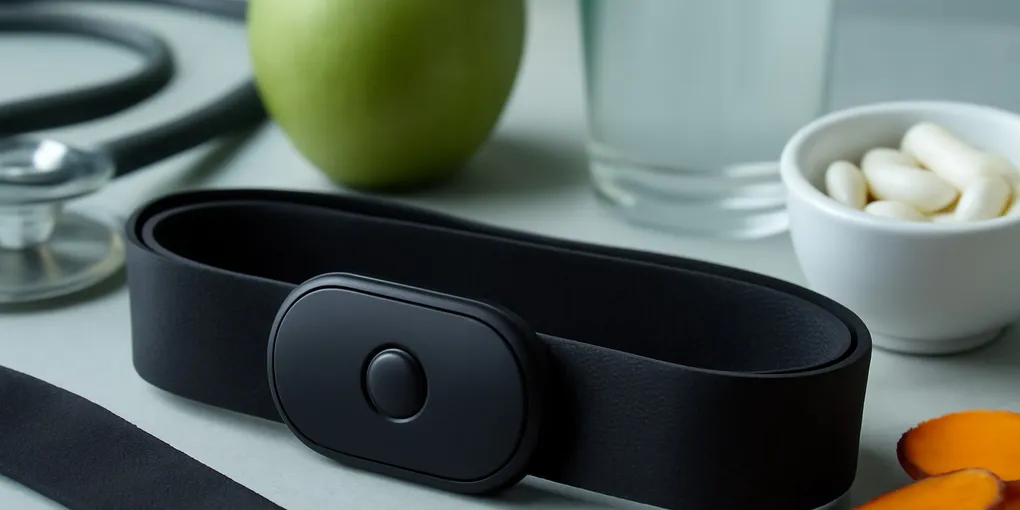
Polar H10 Heart Rate Strap Review: Still the Chest-Strap Standard for Training Zones
ReviewPolar H10 heart rate sensor
Best chest-strap pickBest Use: Zone 2, intervals, cycling, rowing, treadmill work, and watch calibration
$80-110
Quick picks
Polar H10 heart rate sensor
★ Top pick Best chest-strap pick- Best Use: Zone 2, intervals, cycling, rowing, treadmill work, and watch calibration
- Caveat: Not a medical ECG or all-day wellness tracker
Polar Pro replacement strap
Best upkeep buy- Best Use: Fixing erratic readings after sweat, washing, or electrode wear
- Caveat: Confirm size and H10 compatibility
Bottom line
The Polar H10 is still the heart-rate strap I would choose first for serious but normal training. It is not a smartwatch replacement, it has no screen, and it will not diagnose heart rhythm problems. Its value is simpler: a chest-worn ECG-style sensor that broadcasts reliable workout heart rate over Bluetooth and ANT+.
If you use heart-rate zones for easy aerobic work, intervals, rowing, cycling, or treadmill sessions, the See current Polar H10 heart rate sensor prices is a practical upgrade over most wrist-only optical readings. If an older H10 becomes erratic, a See current Polar Pro replacement strap prices often fixes the problem before you replace the pod.
For broader context, compare this review with our best chest strap heart-rate monitors for zone 2 and wearable reviews such as Oura Ring 4 and Garmin Venu 3.
Quick picks
- See current Polar H10 heart rate sensor prices — best for zone 2, intervals, cycling, rowing, treadmill work, and checking wrist-wearable drift.
- See current Polar Pro replacement strap prices — best if readings become erratic after months of sweat, washing, or electrode wear.
Top-pick card
Best for: zone 2 training, intervals, cycling, running, rowing, gym machines, and checking wrist-wearable drift.
Skip if: you hate chest straps, need a display on the device, or want medical ECG interpretation.
Key specs: Bluetooth Low Energy, ANT+, replaceable CR2025 battery, chest electrodes, internal session recording with compatible Polar apps.
Main upkeep habit: wet the electrodes before training, rinse the strap after sweaty sessions, and unsnap the pod while it dries.
Practical score
| Factor | Weight | Score | Rationale |
|---|---|---|---|
| Research | 30% | 8.6 | Chest-strap HR measurement is well supported for exercise monitoring. |
| Evidence Quality | 25% | 8.2 | Validation work supports the H10/RR signal in sport contexts; it is not a diagnostic ECG. |
| Value | 20% | 8.0 | It costs more than generic straps but avoids many accuracy and compatibility headaches. |
| User Signals | 15% | 8.0 | Comfort is good for a strap, though some users will always prefer wrist-only convenience. |
| Transparency | 10% | 8.4 | Polar publishes compatibility, battery, water-resistance, and care details. |
| Composite | 100% | 8.3 | A strong buy for workout heart-rate accuracy if you accept strap maintenance. |
Accuracy and why chest still matters
Wrist wearables use optical sensors. They can be excellent for resting trends and many steady workouts, but readings can drift with motion, cold skin, grip tension, tattoos, fit, and rapid intensity changes. The H10 measures from the chest and detects electrical activity associated with heartbeats through strap electrodes.
That difference matters in three scenarios. During zone 2, a cleaner signal helps you avoid turning easy aerobic work into moderate-hard training. During intervals, faster response helps you see recoveries and peaks more clearly. During wearable calibration, the H10 can show whether a watch reading is plausible or whether the watch is cadence-locked, loose, or lagging.
The H10 is not a medical ECG. Chest pain, fainting, suspected arrhythmia, or new exercise intolerance belongs with a clinician, not a consumer strap.
Setup and compatibility
The setup is simple but not automatic. Snap the pod onto the strap, wet the electrode areas, tighten the strap below the chest muscles, then pair from the watch, app, bike computer, rower, or treadmill sensor menu. Pairing through the phone’s general Bluetooth menu can create confusion; use the training app or device sensor screen when possible.
Bluetooth and ANT+ are the reason the H10 is easy to recommend. It can work with many watches, bike computers, rowing monitors, phone apps, and indoor-training platforms. Confirm your exact device, but the cross-platform support is much stronger than proprietary-only sensors.
Comfort, battery, and maintenance
The Polar Pro strap is comfortable for a chest strap. The grippy contact points help it stay put, and the fabric feels better than many cheap straps. Fit still matters: snug enough to avoid sliding, not so tight that breathing feels restricted.
The replaceable CR2025 battery is a plus. It means the sensor can live for years if you care for the strap. Most failures that appear as “bad sensor” problems are actually strap issues: dry electrodes, sweat residue, stretched elastic, worn contacts, or a low battery.
After sweaty sessions, rinse the strap and let it air-dry. Unsnap the pod so it does not keep transmitting in a damp gym bag. If readings become spiky after months of good performance, replace the battery first, then consider the strap.
Who should buy it
Buy the H10 if workout heart rate guides your decisions: easy-run caps, bike intervals, rowing sessions, treadmill work, or cardiac-rehab-adjacent exercise that your clinician has cleared. It is also useful if you review watch data and keep asking whether the watch or your body is wrong.
Skip it if you only want all-day wellness trends. A ring or watch is better for sleep, steps, recovery scores, and notifications. The H10 is a workout instrument, not a lifestyle wearable.
FAQ
Is the Polar H10 better than wrist heart rate?
For workouts, usually yes. Wrist sensors are convenient, but the H10 is generally more reliable when movement, sweat, grip, or rapid intensity changes challenge optical sensors.
Does it work for zone 2?
Yes. It is especially useful for zone 2 because small heart-rate errors can change how you pace easy aerobic work.
Do I have to wet the electrodes?
Yes. Wetting the pads helps the signal from the first minute. Dry electrodes are a common reason for spikes or dropouts.
Can it diagnose heart rhythm problems?
No. It is a training heart-rate sensor, not a medical ECG. Use medical care for symptoms or diagnostic questions.
Sources
- Polar H10 specifications. Polar.
- Polar H10 user manual and care guidance. Polar Support.
- RR interval signal quality of a heart rate monitor and ECG Holter. PubMed.
- Accuracy of wrist-worn heart rate monitors. PubMed.