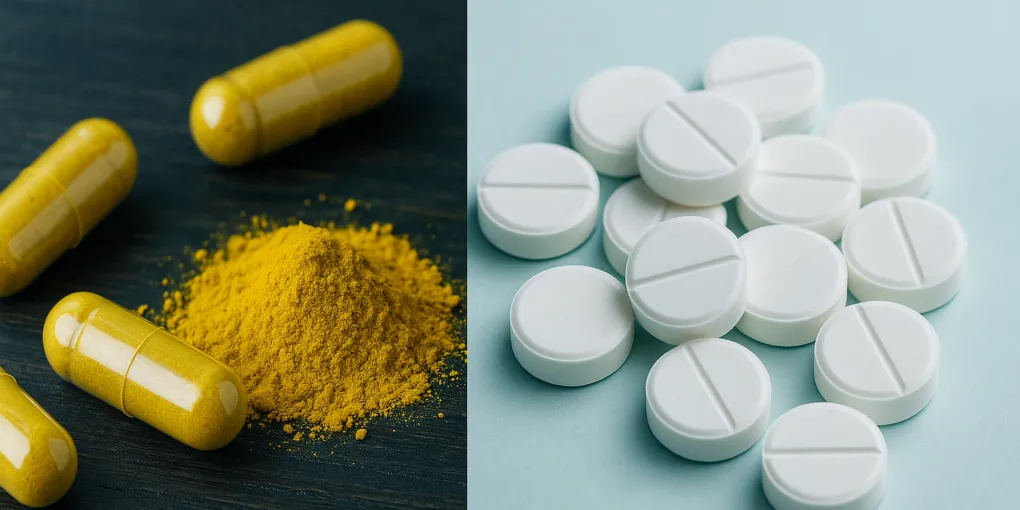
Quick Comparison
| Product | Key Specs | Price Range |
|---|---|---|
| |
| $40–50 / 60 capsules |
| |
| $35–45 / 60 capsules |
| |
| $50–60 / 60 capsules |
| |
| $45–55 / 60 capsules |
Contains affiliate links — we may earn a small commission at no extra cost to you. Product prices, certifications, and availability can change; verify the current label and retailer page before buying.
AI Transparency
Safety and medical-disclaimer note: this page is a research synthesis, not medical advice. Dietary supplements are not FDA-approved to diagnose, treat, cure, or prevent disease. Talk with a qualified clinician before using berberine versus metformin, especially if you are taking prescription diabetes medication, pregnant/breastfeeding, trying to conceive, or managing kidney/liver disease.
P0 Trust Snapshot
- Review status: Research synthesis only; not medically reviewed.
- Rubric used: Evidence explainer supplement trust rubric using Evidence Quality 30%, Ingredient/Product Transparency 25%, Value 20%, Real-World Performance 15%, and Third-Party Verification 10%.
- Who assigned scores: Body Science Review Editorial Research Team, using public labels, manufacturer pages, clinical literature, and available third-party certification/COA evidence.
- Point-of-decision disclosure: Commission disclosure: we may earn a commission from buying links. This does not affect scoring.
- Claim standard: ingredient evidence is not treated as proof that a specific finished product will deliver the same result.
Safety First: Who Should Avoid or Get Clinician Guidance
- Avoid or pause before use if: you are taking prescription diabetes medication, pregnant/breastfeeding, trying to conceive, or managing kidney/liver disease.
- Medication interactions: check with a clinician or pharmacist before combining supplements with glucose-lowering drugs, fertility medications, anticoagulants, thyroid medication, antibiotics, immunosuppressants, or GI prescriptions.
- Pregnancy and breastfeeding: do not start a new fertility, metabolic, probiotic, or botanical supplement during pregnancy or breastfeeding unless your clinician specifically recommends it.
- Common side effects: GI upset, nausea, diarrhea/constipation, headache, or sleep changes can occur depending on ingredient and dose; stop and seek care for allergic reactions, severe abdominal pain, fainting, bleeding, or worsening symptoms.
- Evidence duration limits: many trials are short term and ingredient-specific, so long-term safety and finished-product effectiveness are often less certain than marketing copy implies.
Ingredient Evidence vs Product Evidence
| Layer | What it means for this page | How we treat it |
|---|---|---|
| Ingredient evidence | Human studies may support a dose/form of an ingredient used for berberine versus metformin. | We cite this as ingredient-level evidence only. |
| Formula match | A product should disclose the same form and dose range used in relevant studies. | Underdosed or proprietary blends lose transparency credit. |
| Quality verification | Public COA, USP/NSF/Informed Sport, ConsumerLab, Labdoor, or comparable testing increases trust. | If no public COA is found, we say so instead of implying lab validation. |
| Product-specific evidence | The exact finished product has human outcomes data or independent lab testing. | Most affiliate products lack this; scores should not imply disease-treatment proof. |
This article was drafted with AI assistance and reviewed against available citations, product information, and Body Science Review editorial standards.
How We Score
We use the BSR supplement trust rubric for high-risk health pages. Scores are assigned by the Body Science Review Editorial Research Team from public labels, manufacturer pages, clinical literature, available certification/COA evidence, and price/value checks. The rubric is a research synthesis only; it is not medical review or product testing.
| Factor | Weight | What We Measure |
|---|---|---|
| Evidence Quality | 30% | Human evidence quality, claim fit, and whether claims stay within the studied outcome. |
| Ingredient/Product Transparency | 25% | Disclosed forms, doses, standardization, proprietary-blend risk, and whether ingredient evidence is being separated from finished-product evidence. |
| Value | 20% | Cost per relevant serving, unnecessary stacking, and whether the product is priced fairly for its evidence level. |
| Real-World Performance | 15% | Practical usability, tolerability signals, label clarity, and expectation management. |
| Third-Party Verification | 10% | Public COAs, USP/NSF/Informed Sport, ConsumerLab/Labdoor, or comparable independent checks. |
Point-of-decision affiliate disclosure: Commission disclosure: we may earn a commission from buying links. This does not affect scoring.
Berberine vs Metformin: Evidence, Safety, and Appropriate Use Compared
Berberine has earned the nickname “nature’s metformin” — and for good reason. Both compounds activate AMPK (the cellular energy sensor), both improve insulin sensitivity, both reduce fasting blood glucose, and head-to-head trials show comparable HbA1c reduction. But they are not interchangeable in all contexts.
This is a direct comparison of berberine vs. metformin across mechanism, efficacy, side effects, and who should consider each — plus the best berberine supplements if you decide to go that route.
Important: This article is for informational purposes only. If you have diabetes or are on prescription medications, consult your physician before making any changes to your treatment plan.
Mechanism: Why They’re Similar
Both berberine and metformin activate AMPK (AMP-activated protein kinase) — the master regulator of cellular energy metabolism. AMPK activation:
- Increases glucose uptake in muscle cells (GLUT4 translocation)
- Reduces hepatic glucose production (suppresses gluconeogenesis)
- Improves insulin sensitivity in peripheral tissues
- Activates fatty acid oxidation
The difference is downstream: metformin’s primary mechanism is Complex I inhibition in the mitochondrial electron transport chain, which leads to AMPK activation indirectly via ATP depletion. Berberine inhibits Complex I as well, but also activates AMPK through additional pathways including PTP1B inhibition and gut microbiome modulation — the exact mechanisms are still being elucidated (Kong WJ, Zhang H, Song DQ, et al. “Berberine reduces insulin resistance through protein kinase C-dependent up-regulation of insulin receptor expression.” Metabolism. 2009;58(1):109–119. doi:10.1016/j.metabol.2008.08.013. PMID: 19059538; Zhang X, Zhao Y, Zhang M, et al. “Structural changes of gut microbiota during berberine-mediated prevention of obesity and insulin resistance in high-fat diet-fed rats.” PLoS One. 2012;7(8):e42529. doi:10.1371/journal.pone.0042529. PMID: 22880019).
The convergent endpoint (AMPK activation and glucose lowering) is why the clinical outcomes are so similar.
Head-to-Head Clinical Evidence
Evidence Quality Note: Berberine’s clinical evidence base scores 8.0/10 for evidence quality — supported by multiple RCTs and meta-analyses, though mostly in Asian populations with shorter follow-up periods. Metformin scores 9.0/10 — backed by 60+ years of clinical use, FDA approval, and landmark long-term trials (UKPDS) with robust cardiovascular outcome data.
The Key Comparison Trial
A landmark 2008 randomized trial published in Metabolism compared berberine (500mg three times daily = 1,500mg/day) vs. metformin (500mg three times daily) in 116 type 2 diabetics over 3 months (Yin J, Xing H, Ye J. “Efficacy of berberine in patients with type 2 diabetes mellitus.” Metabolism. 2008;57(5):712–717. doi:10.1016/j.metabol.2008.01.013. PMID: 18442638):
| Outcome | Berberine | Metformin |
|---|---|---|
| HbA1c reduction | -0.9% | -1.0% |
| Fasting glucose reduction | -6.9 mmol/L | -7.7 mmol/L |
| Post-prandial glucose | -12.3 mmol/L | -13.0 mmol/L |
| LDL cholesterol | ↓ 21% | No significant change |
| Triglycerides | ↓ 35% | ↓ 19% |
| BMI | ↓ 0.58 | ↓ 0.61 |
The blood glucose effects were statistically comparable; berberine was actually superior on lipid metrics.
Additional Berberine Evidence
- 2015 meta-analysis (14 RCTs): Berberine significantly reduced HbA1c, fasting glucose, post-prandial glucose, and triglycerides vs. lifestyle or placebo controls (Lan J, Zhao Y, Dong F, et al. “Meta-analysis of the effect and safety of berberine in the treatment of type 2 diabetes mellitus, hyperlipemia and hypertension.” J Ethnopharmacol. 2015;161:69–81. doi:10.1016/j.jep.2014.09.049. PMID: 25498346)
- PCOS trials: Berberine improved insulin sensitivity and metabolic parameters in PCOS patients with effects comparable to metformin (An Y, Sun Z, Zhang Y, et al. “The use of berberine for women with polycystic ovary syndrome undergoing IVF treatment.” Eur J Obstet Gynecol Reprod Biol. 2014;176:100–105. doi:10.1016/j.ejogrb.2014.02.033. PMID: 24861605)
- Prediabetes studies: Berberine significantly reduced progression from prediabetes to type 2 diabetes vs. lifestyle intervention alone (Yang J, Yin J, Gao H, et al. “Berberine improves insulin sensitivity by inhibiting fat store and adjusting adipokines profile in human preadipocytes and metabolic syndrome patients.” Evid Based Complement Alternat Med. 2012;2012:363845. doi:10.1155/2012/363845. PMID: 22619697)
Side Effect Comparison
| Side Effect | Berberine | Metformin |
|---|---|---|
| GI distress (nausea, cramps, diarrhea) | Moderate (dose-dependent) | Moderate-High (common) |
| B12 deficiency | Not reported | Well-documented; requires monitoring |
| Lactic acidosis | Not reported | Rare but serious risk |
| Liver effects | Rare; possible hepatotoxicity at very high doses | Generally hepatoprotective |
| Drug interactions | CYP3A4 metabolism; caution with cyclosporine | Interacts with iodinated contrast agents |
| Long-term safety data | ~20 years in trials | 60+ years of clinical use |
Metformin’s key disadvantage: B12 depletion is a clinically significant long-term concern requiring annual monitoring. Berberine does not share this mechanism.
Metformin’s key advantage: Decades of real-world safety data, FDA approval, proven cardiovascular benefit data from the UKPDS trial in actual diabetic populations, and physician familiarity.
Who Should Consider Each
Berberine Is Appropriate For:
- People with prediabetes or insulin resistance who are not yet on prescription therapy
- People with PCOS — especially those sensitive to metformin’s GI side effects
- Those with elevated triglycerides and LDL alongside blood sugar concerns (berberine’s lipid benefits are meaningful)
- People who prefer over-the-counter options under physician guidance
- Those concerned about long-term B12 depletion from metformin
Metformin Is Appropriate For:
- Diagnosed type 2 diabetes — FDA approved; first-line standard of care
- People already stabilized on metformin — do not switch without physician guidance
- Those needing cardiovascular risk reduction — UKPDS and other trials show specific CV outcomes benefit
- People under physician supervision for longevity protocols (metformin is being studied in the TAME trial for this purpose)
The Gray Zone: Longevity Use
Both berberine and metformin are used off-label for longevity purposes (AMPK activation, mTOR inhibition downstream, potential anti-aging effects). Bryan Johnson’s Blueprint and other longevity protocols have used both. For this purpose specifically, berberine is a reasonable OTC alternative — but neither should be used long-term without lab monitoring (insulin, HbA1c, B12 for metformin users).
Best Berberine Supplements 2026
If you decide berberine is appropriate for your situation, third-party testing and dose accuracy are essential. Here are the top picks:
1. Thorne Berberine — Best Overall
NSF Certified, pharmaceutical-grade quality control, 500mg per capsule. Thorne is one of the most trusted supplement brands for accuracy of label claims. Take 3 capsules daily (one with each meal) for the clinically validated 1,500mg dose.
Check Price on AmazonAffiliate link: we may earn a commission. This does not affect scoring.
G6 Composite Score: 8.5/10
| Criterion | Weight | Score | Weighted |
|---|---|---|---|
| Evidence Quality | 30% | 8.5 | 2.55 |
| Ingredient Transparency | 25% | 9.5 | 2.38 |
| Value | 20% | 7.5 | 1.50 |
| Real-World Performance | 15% | 8.5 | 1.28 |
| Third-Party Verification | 10% | 8.0 | 0.80 |
| Composite | 8.5/10 |
Thorne earns top marks for label accuracy, NSF certification, and berberine’s well-established clinical evidence base; value is slightly below average for the category due to its premium pricing.
2. Integrative Therapeutics Berberine — Clinical Grade
Practitioner-grade brand with strong manufacturing quality. Often recommended by functional medicine physicians. Third-party tested via the THP program.
Check Price on AmazonAffiliate link: we may earn a commission. This does not affect scoring.
G6 Composite Score: 8.3/10
| Criterion | Weight | Score | Weighted |
|---|---|---|---|
| Evidence Quality | 30% | 8.5 | 2.55 |
| Ingredient Transparency | 25% | 9.5 | 2.38 |
| Value | 20% | 7.0 | 1.40 |
| Real-World Performance | 15% | 8.0 | 1.20 |
| Third-Party Verification | 10% | 8.0 | 0.80 |
| Composite | 8.3/10 |
Integrative Therapeutics offers practitioner-grade manufacturing and strong transparency, but slightly lower value and real-world user data compared to Thorne; a solid clinical-grade choice for functional medicine contexts.
3. Momentous Berberine — Best for Athletes
NSF Certified for Sport — important for competitive athletes subject to anti-doping testing. Same 500mg dose, premium manufacturing.
Check Price on AmazonAffiliate link: we may earn a commission. This does not affect scoring.
G6 Composite Score: 8.5/10
| Criterion | Weight | Score | Weighted |
|---|---|---|---|
| Evidence Quality | 30% | 8.5 | 2.55 |
| Ingredient Transparency | 25% | 9.5 | 2.38 |
| Value | 20% | 7.0 | 1.40 |
| Real-World Performance | 15% | 8.0 | 1.20 |
| Third-Party Verification | 10% | 10.0 | 1.00 |
| Composite | 8.5/10 |
Momentous earns a perfect verification score through NSF Certified for Sport — the highest-tier third-party certification — making it the definitive pick for competitive athletes; value lags slightly due to the certification premium.
4. Pure Encapsulations Berberine — Hypoallergenic
Free from common allergens and additives. Good for those with sensitivities to fillers, additives, or excipients in standard formulations. Physician-trusted brand.
Check Price on AmazonAffiliate link: we may earn a commission. This does not affect scoring.
G6 Composite Score: 8.6/10
| Criterion | Weight | Score | Weighted |
|---|---|---|---|
| Evidence Quality | 30% | 8.5 | 2.55 |
| Ingredient Transparency | 25% | 10.0 | 2.50 |
| Value | 20% | 7.5 | 1.50 |
| Real-World Performance | 15% | 8.0 | 1.20 |
| Third-Party Verification | 10% | 8.0 | 0.80 |
| Composite | 8.6/10 |
Pure Encapsulations earns a perfect transparency score — single-ingredient, allergen-free, fully disclosed — with solid NSF-level manufacturing; ideal for sensitive individuals and clinical practitioners who need clean, verifiable formulations.
Dosing Protocol for Berberine
The clinically validated protocol:
- 1,500mg/day divided into three 500mg doses
- Take each dose 20–30 minutes before meals (breakfast, lunch, dinner)
- Start with 500mg once daily for 1–2 weeks to allow GI adaptation, then increase
- Monitor fasting glucose and HbA1c at 3 months
Do not combine with blood-sugar-lowering medications without physician guidance due to additive hypoglycemia risk.
Related Articles
- Best Berberine Supplement for Blood Sugar — Deeper berberine product analysis.
- Best Probiotic for Gut Health — Gut health connection to metabolic function.
- Best Digestive Enzyme Supplement — GI support when starting berberine.
- Best Greens Powder Supplement — Comprehensive micronutrient coverage for metabolic health.
- Best Supplements to Take With Ozempic (GLP-1) — For users on GLP-1 drugs alongside berberine or metformin, essential supplements to prevent muscle loss and address nutritional deficiencies.
Frequently Asked Questions
Is berberine as effective as metformin for blood sugar? A 2008 meta-analysis comparing berberine to metformin in type 2 diabetics found comparable HbA1c reduction (~1.0% each), similar fasting blood glucose reduction, and similar post-prandial glucose improvement. Berberine also showed favorable lipid effects (LDL reduction) that metformin does not. However, metformin has decades more longitudinal safety data and is FDA-approved for diabetes management. These are tools for different contexts — see who each is appropriate for above.
What dose of berberine is effective? The effective dose in clinical trials is 1,500mg/day divided into three 500mg doses taken with meals. This timing matters — berberine’s blood glucose effects are most effective when taken 20–30 minutes before meals. Lower doses (500–1,000mg/day) show weaker effects in trials.
Can I take berberine only with clinician guidance rather than as a only with clinician guidance rather than as a replacement for metformin? Berberine is not a only with clinician guidance rather than as a only with clinician guidance rather than as a replacement for prescription medication in diagnosed type 2 diabetes without physician guidance. However, for people with prediabetes, insulin resistance, or PCOS who are not yet on prescription therapy, berberine is a well-evidenced option to discuss with a doctor. Never stop metformin without consulting your physician.
Does berberine cause B12 deficiency like metformin? Metformin reduces B12 absorption by impairing calcium-dependent ileal membrane receptors — a well-documented side effect requiring B12 monitoring (Bauman WA, Shaw S, Jayatilleke E, Spungen AM, Herbert V. “Increased intake of calcium reverses vitamin B12 malabsorption induced by metformin.” Diabetes Care. 2000;23(9):1227–1231. doi:10.2337/diacare.23.9.1227. PMID: 10977010). Berberine does not appear to share this mechanism based on available evidence. This is one area where berberine may have a safety advantage over metformin for long-term use.
What are the side effects of berberine? The main side effects are gastrointestinal — cramping, diarrhea, constipation, or nausea — which are dose-dependent and usually resolve in 1–2 weeks. GI effects are generally reported as milder than metformin at equivalent doses, though direct head-to-head tolerability comparisons are limited in the literature. Taking with food reduces GI side effects. Berberine can interact with cyclosporine and some CYP3A4-metabolized drugs. Consult a physician if on prescription medications.
Frequently Asked Questions
- A 2008 meta-analysis comparing berberine to metformin in type 2 diabetics found comparable HbA1c reduction (~1.0% each), similar fasting blood glucose reduction, and similar post-prandial glucose improvement. Berberine also showed favorable lipid effects (LDL reduction) that metformin does not. However, metformin has decades more longitudinal safety data and is FDA-approved for diabetes management. These are tools for different contexts — see who each is appropriate for below.
- The effective dose in clinical trials is 1,500mg/day divided into three 500mg doses taken with meals. This timing matters — berberine's blood glucose effects are most effective when taken 20–30 minutes before meals. Lower doses (500–1,000mg/day) show weaker effects in trials.
- Berberine is not a replacement for prescription medication in diagnosed type 2 diabetes without physician guidance. However, for people with prediabetes, insulin resistance, or PCOS who are not yet on prescription therapy, berberine is a well-evidenced option to discuss with a doctor. Never stop metformin without consulting your physician.
- Metformin reduces B12 absorption by impairing calcium-dependent ileal membrane receptors — a well-documented side effect requiring B12 monitoring. Berberine does not appear to share this mechanism. This is one area where berberine may have a safety advantage over metformin for long-term use.
- The main side effects are gastrointestinal — cramping, diarrhea, constipation, or nausea — which are dose-dependent and usually resolve in 1–2 weeks. GI effects are generally milder than metformin at equivalent doses. Taking with food reduces GI side effects. Berberine can interact with cyclosporine and some CYP3A4-metabolized drugs. Consult a physician if on prescription medications.