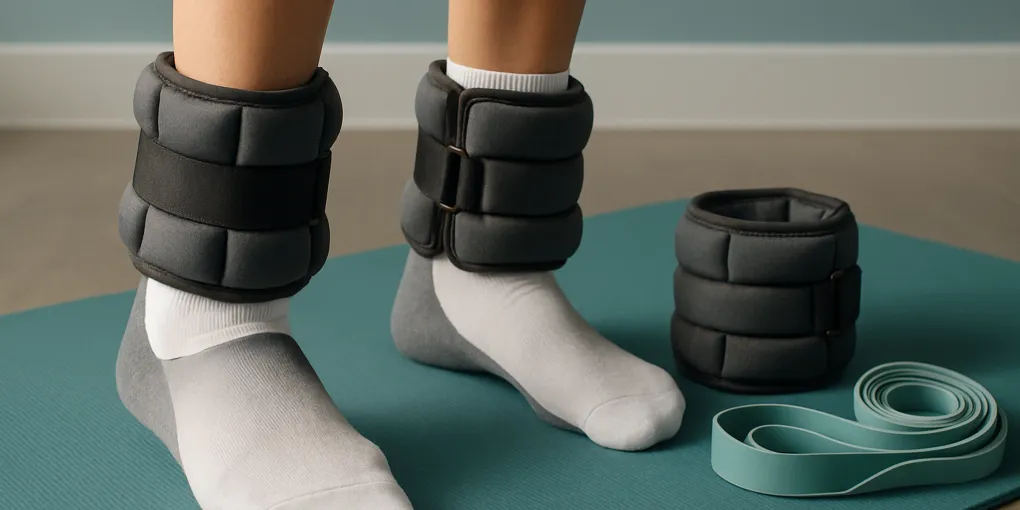
Best Ankle Weights for Walking and Mobility in 2026
Buyer's GuideAdjustable 1-5 lb Ankle Weights
Best OverallBest for: Progressive walking and mobility
$20-45
Quick picks
| Product | Key Specs |
|---|---|
| See price on Amazon |
|
| See price on Amazon |
|
| See price on Amazon |
|
| See price on Amazon |
|
Product availability, certifications, and retailer details can change; check the current Amazon page before buying.
Best Ankle Weights for Walking and Mobility in 2026
Ankle weights look simple, but the use case matters. A one-pound cuff used for a 10-minute walk is very different from a 10-pound cuff strapped on for a long neighborhood route. The first can add a little muscular work. The second can change gait mechanics enough to irritate knees, hips, shins, or the low back.
This guide focuses on ankle weights for walking, mobility flows, and controlled low-impact strength. It does not recommend running with ankle weights.
Compare current ankle-weight listings by cuff comfort, secure closure, stated pair weight, return policy, and recent buyer feedback before choosing.
How We Score
We evaluate each product category using a 5-factor composite scoring system:
| Factor | Weight | What We Measure |
|---|---|---|
| Research Quality | 30% | Biomechanics, safety guidance, and training relevance |
| Evidence Quality | 25% | Load appropriateness, progression logic, and use-case fit |
| Value | 20% | Price, durability, and adjustability |
| User Signals | 15% | Comfort, strap security, and ease of repeated use |
| Transparency | 10% | Clear limitations, affiliate-link clarity, and no invented ASINs |
For ankle weights, safety and fit matter more than maximum load. A heavier cuff is not automatically a better cuff.
Quick Picks
Use the structured comparison card above as the quick-pick set for this guide:
- Best overall: adjustable 1–5 lb ankle weights give enough range for progression without forcing heavy walking loads.
- Best beginner: soft 1–2 lb cuffs reduce joint stress and make the habit easier to test.
- Best low-profile: slim silicone wrist/ankle weights suit short walks and mobility flows where bulk gets annoying.
- Best for strength: heavy-duty adjustable cuffs belong in controlled drills, not long walks.
How We Chose
We evaluated ankle-weight categories using five criteria:
- Load adjustability.
- Comfort and padding.
- Strap security.
- Suitability for walking versus controlled exercise.
- Risk management based on gait and joint-stress concerns.
We did not rank by brand claims or influencer popularity. For this category, the safest choice is usually a boring adjustable cuff that lets you start light.
Best Overall: Adjustable 1-5 lb Ankle Weights
Search link: adjustable ankle weights 1-5 lb — see current price on Amazon
A 1-to-5-pound adjustable set is the most flexible option for most healthy adults. You can begin at 1 pound per ankle, test short walks, then reserve heavier settings for leg raises, hip abductions, and mobility work.
Look for:
- Removable weight packets.
- A wide strap that does not dig into the Achilles area.
- Soft inner fabric.
- A secure closure that does not bounce.
Avoid using the full 5 pounds per ankle for long walks unless you have a specific reason and tolerate it well.
Best for Beginners: Soft 1-2 lb Walking Weights
Search link: soft ankle weights 1-2 lb — see current price on Amazon
Beginners should not chase heavy loads. A soft 1 or 2 pound cuff adds mild resistance while keeping gait disruption lower. This is also the better choice for older adults, smaller users, or anyone returning after time off.
Use them for:
- 5 to 15 minute walks.
- Standing hip abductions.
- Seated knee extensions.
- Slow marching drills.
Stop if you notice knee pain, shin discomfort, hip pinching, or low-back tightness.
Best Low-Profile: Slim Silicone Wrist/Ankle Weights
Search link: slim silicone wrist ankle weights — see current price on Amazon
Slim silicone weights are popular because they look less medical and move less fabric around the ankle. They can be useful for short walks, Pilates-style flows, and travel workouts.
The tradeoff is fit. Bangle-style designs may feel great on one ankle and awkward on another. If you have larger calves, sensitive skin, or very small ankles, choose a soft adjustable cuff instead.
Best for Strength Drills: Heavy-Duty Adjustable 5-10 lb Set
Search link: adjustable ankle weights 5-10 lb — see current price on Amazon
Heavier ankle weights belong in controlled strength work, not long walks. They can make sense for:
- Side-lying hip abductions.
- Standing hamstring curls.
- Straight-leg raises.
- Glute kickbacks.
- Slow high-knee marches.
Use smooth reps, keep the range pain-free, and treat these like resistance-training accessories.
Safety: When Ankle Weights Are the Wrong Tool
Choose a weighted vest, backpack, or normal strength training instead if you:
- Have knee osteoarthritis that flares with walking.
- Have hip, shin, ankle, or low-back pain.
- Are training for running performance.
- Want to add a large load to long walks.
- Notice your foot swing, stride length, or posture changing.
A weighted vest keeps load closer to the center of mass, which usually interferes less with gait than loading the distal limb.
A Simple Progression
Week 1: 1 pound per ankle, 5 to 10 minutes, two or three walks.
Week 2: 1 pound per ankle, 10 to 15 minutes, three walks.
Week 3: 2 pounds per ankle if symptom-free, two short walks, plus one controlled strength session.
Week 4: Keep the same load and add repetitions to strength drills before adding weight.
Progress only if your joints feel normal the next day.
Evidence Snapshot
- Biomechanics research shows that added distal limb load can alter walking mechanics and muscular demands.
- Exercise guidelines for older adults generally favor progressive resistance training and balance work, which can include light cuff weights when movements are controlled.
- Sports medicine guidance commonly discourages running with ankle weights because of altered mechanics and injury risk.
Sources worth reading: American College of Sports Medicine resistance-training guidance; Franz et al. on load carriage and gait mechanics; review literature on resistance training for older adults and functional performance.
Buying Criteria in Detail
Load Range
For walking, the lower end matters more than the upper end. A set that starts at 1 pound per ankle is more useful than a set that forces 5 pounds immediately. The ability to progress slowly is what protects joints.
Strap Design
A secure strap prevents bouncing. Bouncing is not just annoying. It changes how the load pulls on the ankle and may create rubbing near the Achilles tendon. Look for wide closures and enough overlap for your ankle size.
Padding
Padding matters for longer wear. Thin cuffs can feel fine for one minute and irritating after ten. If you plan to walk, prioritize comfort over sleek aesthetics.
Cleanability
Ankle weights collect sweat. Removable or wipeable materials are better if you plan to use them several times per week.
Best Exercises Besides Walking
Ankle weights are often better for controlled strength drills than for loaded walking.
Try these:
- Standing hip abduction: hold a wall and lift the leg out to the side.
- Standing hip extension: squeeze the glute and move the leg behind you.
- Seated knee extension: straighten the knee slowly, pause, then lower.
- Side-lying leg raise: keep the pelvis stacked and move slowly.
- Dead bug variation: use very light cuffs and control the rib cage.
Use 2 to 3 sets of 10 to 20 controlled reps. Stop before form changes.
Ankle Weights vs Weighted Vest
A weighted vest loads the torso, closer to your center of mass. That usually makes it better for walking, hiking, and general conditioning. Ankle weights load the distal limb, which increases leverage and can change swing mechanics.
Choose ankle weights when:
- The load is very light.
- The session is short.
- You are doing controlled accessory exercises.
- You want local hip or leg muscle work.
Choose a vest when:
- You want to make long walks harder.
- You want progressive load without changing foot swing.
- You have tolerated walking well and want more intensity.
Sample 20-Minute Mobility Session
Warm-up, 3 minutes: easy walking without weights.
Block 1, 6 minutes: standing hip abduction, standing hip extension, and slow marching.
Block 2, 6 minutes: side-lying leg raises, glute bridges, and seated knee extensions.
Finisher, 5 minutes: easy walk with 1 pound per ankle or no weight if fatigue changes gait.
This structure keeps the loaded work controlled and uses walking only as a light finisher.
Fit and Return Policy Tips
Fit is personal. If possible, choose products with clear sizing, customer photos, and a reasonable return policy. Pay attention to comments about slipping, skin irritation, and Velcro durability. Those issues matter more than marketing claims about “toning.”
Who Should Skip Them
Skip ankle weights or get professional guidance if you have recent surgery, unexplained joint pain, neuropathy, balance problems, stress-fracture history, or pain that changes your walking pattern. Load that makes you move worse is not productive load.
How to Test a Pair at Home
When a new pair arrives, do not start with a full walk. Run a simple fit test.
- Put the cuffs on over socks or leggings.
- Walk around the house for two minutes.
- Do 10 slow marches per side.
- Do 10 standing hip abductions per side.
- Check for rubbing, slipping, pinching, or strap looseness.
If the cuff slides during this test, it will probably slide outdoors. If it rubs near the ankle bone, try a thicker sock or a different design.
Common Programming Mistakes
The first mistake is adding ankle weights to every walk. Use them as a small dose, not a lifestyle uniform. Two or three short sessions per week is enough for most beginners.
The second mistake is using them when tired. Fatigue changes mechanics. If your stride gets sloppy at the end of a long day, skip the load.
The third mistake is chasing soreness. Soreness around the hip flexors, shins, or knees is not proof that the product works. It may be proof that the load is poorly placed.
Better Alternatives for Some Goals
For calorie burn: increase walking time or pace first.
For bone loading: consider a weighted vest, strength training, and impact work if appropriate.
For glute strength: use bands, split squats, step-ups, hip thrusts, or cable work.
For balance: use single-leg stands, heel-to-toe walking, and progressive strength drills.
Ankle weights are useful, but they are not the universal answer.
Maintenance and Durability
Check seams and Velcro regularly. Sand-filled cuffs can leak over time, and removable weight packets can shift if the pockets stretch. If a cuff no longer closes securely, retire it. A cheap product becomes expensive if it causes a fall or changes your gait.
For most readers, that means buying the lighter adjustable option first and proving that the habit feels good before considering heavier cuffs.
Bottom Line
The best ankle weights for walking are light, comfortable, adjustable, and used conservatively. Start with 1 to 2 pounds per ankle, keep walks short, and move heavier loads to controlled strength drills. If your goal is serious walking load, a weighted vest is usually the cleaner tool.
Frequently Asked Questions
- Light ankle weights can be safe for some healthy adults, but heavy loads may alter gait and increase stress at the knees, hips, and low back. Start with 1 to 2 pounds per ankle and keep walks short.
- For walking, use the lightest effective load, usually 1 to 3 pounds per ankle. Save heavier weights for controlled strength drills, not long walks.
- A weighted vest usually preserves gait mechanics better for walking. Ankle weights are better for targeted hip and leg accessory exercises.
- Usually no. Running with ankle weights changes mechanics and raises injury risk. Runners are better served by strength training, hill strides, or a vest for walking.