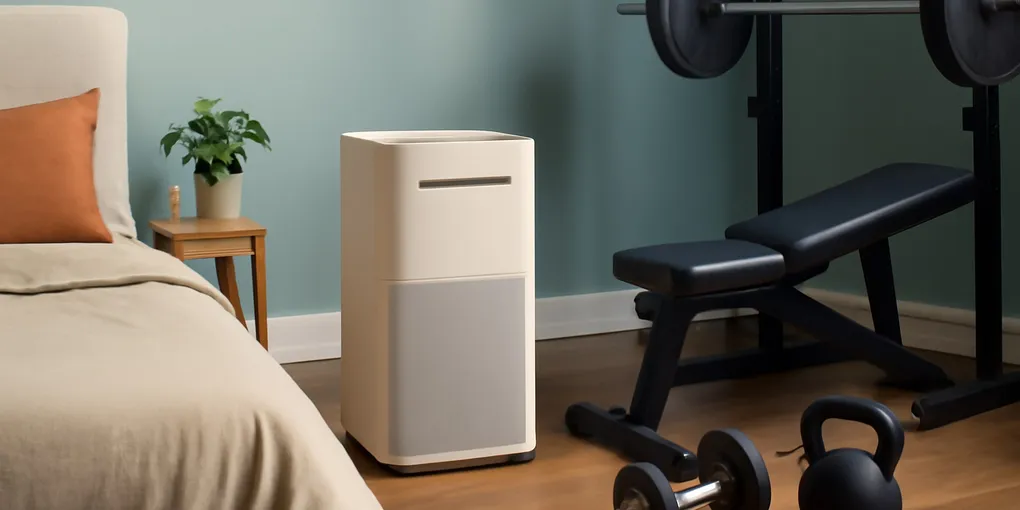
Best HEPA Air Purifiers for Home Gyms and Bedrooms: Evidence-Based Buyer Criteria
Buyer's GuideCoway Airmega AP-1512HH-style HEPA purifier
Best compact bedroom pickBest Use: Bedrooms and small training rooms
$150-230
Quick picks
| Product | Key Specs |
|---|---|
| See price on Amazon |
|
| See price on Amazon |
|
| See price on Amazon |
|
Product availability, certifications, and retailer details can change; check the current Amazon page before buying.
Bottom line
A HEPA air purifier is worth considering when your bedroom, home gym, or recovery space has visible dust, wildfire smoke exposure, pets, traffic pollution, or poor ventilation. It is not a wellness shortcut. It is a particle-control tool. The practical question is whether the unit can move enough clean air for the room while staying quiet enough that you actually leave it running. Source: EPA residential air-cleaner guidance.
For most Body Science Review readers, the best first pick is a compact true-HEPA purifier sized for the bedroom or the room where you train. Choose by clean-air delivery rate, room size, replacement-filter cost, low-speed noise, and whether the intake can sit unobstructed. Do not buy based on vague detox claims, ionizer language, or a giant theoretical square-foot number measured at one air change per hour.
Quick picks for health-focused rooms
- Search Amazon for Coway Airmega AP-1512HH HEPA purifiers — best compact bedroom-style pick when you want proven airflow, ordinary filters, and a quiet low setting.
- Compare Levoit Core 300S HEPA purifiers on Amazon — best for smaller rooms where app scheduling and filter reminders help keep the unit running.
- Check Blueair Blue Pure 211i Max-style large-room purifiers on Amazon — best when the room is larger, leakier, or shares air with pets and kitchen particles.
Practical score
| Factor | Weight | Score | Rationale |
|---|---|---|---|
| Research | 30% | 7.4 | Filtration and ventilation guidance is strong; direct sleep or training outcome trials are more limited. |
| Evidence Quality | 25% | 7.0 | Particle reduction is measurable, but health effects depend on pollutant source, room leakage, and run time. |
| Value | 20% | 7.2 | A correctly sized purifier can be a sensible purchase if filter costs are planned. |
| User Signals | 15% | 7.8 | Noise, dust, odor, and sensor trends provide practical feedback. |
| Transparency | 10% | 7.1 | CADR and filter specs are visible when brands publish them clearly. |
| Composite | 100% | 7.3 | Useful for particle control in specific rooms, especially when ventilation is constrained. |
| Source: EPA residential air-cleaner guidance. |
What the evidence supports
Portable HEPA air cleaners remove airborne particles from the air that passes through the filter. That matters for smoke, dust, pet dander, and some aerosol particles. The U.S. EPA describes portable air cleaners as a useful adjunct for improving indoor air quality when source control and ventilation are not enough. The American Society of Heating, Refrigerating and Air-Conditioning Engineers also emphasizes clean-air delivery and room context rather than miracle claims.
The health leap is where buyers need discipline. Cleaner air can be relevant to asthma, allergies, sleep comfort, and exercise tolerance for some people, but a purifier is only one part of the exposure picture. If you train in a garage next to solvents, store dusty boxes near the intake, burn candles nightly, or leave windows open during wildfire smoke, a small purifier running on low may not overcome the source. If your bedroom already has good ventilation and low particulate exposure, the benefit may be modest. Source: EPA residential air-cleaner guidance.
This is similar to the principle in our home blood pressure monitor protocol: a device helps when it changes a controllable environment, not when it becomes another number to stare at. With air purifiers, the controllable environment is room size, source control, run time, filter maintenance, and fan speed. Source: EPA residential air-cleaner guidance.
How to size a purifier without marketing math
Start with the actual room where you want cleaner air. Measure length and width, then note ceiling height if it is unusually high. A bedroom that is 12 by 14 feet is a different job than an open basement gym connected to storage, laundry, and a stairwell. Look for a unit with a clean-air delivery rate that can produce multiple air changes per hour in the real room.
Marketing pages often advertise a large square-foot number based on a low air-change target. For sleep and smoke events, you usually want stronger circulation. If the unit has to run on turbo to make sense, assume you will not use it that way overnight. Pick the model that can do the job on a tolerable medium or low setting. Source: EPA residential air-cleaner guidance.
Filter cost is part of sizing. A cheap purifier with expensive proprietary filters can cost more than a better unit after one year. Check replacement interval, price, third-party availability, and whether the listing includes real HEPA-style performance or only a vague multi-layer filter phrase. Avoid ozone generators and ionizing features if the room is used for sleep or exercise. Source: EPA residential air-cleaner guidance.
Compact bedroom HEPA purifier
The Coway Airmega AP-1512HH category fits small to medium bedrooms, offices, and compact training rooms. It is a strong default when the room has a door, the purifier can sit several inches from walls, and the sleeper is sensitive to noise. The buyer criteria are simple: true HEPA filtration, carbon prefilter for mild odor support, clear filter replacement, and a low setting quiet enough for overnight use.
This is not the best choice for a large open basement or a garage gym with sawdust, solvents, or open doors. For that situation, either improve source control or choose a larger airflow unit. Check whether replacement filters are easy to buy before you commit.
Search Amazon for compact Coway-style bedroom HEPA purifiers.
Small-room smart HEPA purifier
A Levoit Core 300S-style unit makes sense for a smaller bedroom where scheduling, sleep mode, and filter reminders make you more likely to run the purifier consistently. The health value is not the app. The value is that quiet automation keeps air moving when you would otherwise forget.
Check the exact model and filter family. Small cylindrical purifiers can work well in a closed room, but they are easy to oversell for large spaces. Confirm the filter you plan to buy matches the pollutant you care about. A standard particle filter is different from a stronger carbon filter aimed at odors or volatile compounds.
Compare Levoit Core 300S-style HEPA purifiers on Amazon.
Large-room HEPA purifier
A Blueair Blue Pure 211i Max-style unit is the better direction for an open bedroom, larger living area, or home gym that shares air with pets and kitchen particles. The reason to pay more is airflow at a usable noise level. Bigger filters can also mean higher annual cost, so check replacement price before treating the purchase as a one-time expense.
Large-room units are not magic. They still need placement with open intake and exhaust, and they still lose ground if the pollutant source is constant. Put the purifier where air can circulate, not tucked behind a treadmill, laundry basket, or nightstand.
Check large-room Blueair-style HEPA purifiers on Amazon.
Bedroom versus home-gym priorities
A bedroom purifier should be quiet, dim, and easy to leave alone. Bright LEDs, loud ramping, and complicated menus are real problems if they disturb sleep. Choose a unit with a sleep mode that does not turn filtration into symbolic airflow. If the purifier is mainly for allergy season, start running it before bedtime with the door closed, then keep it on a low setting while sleeping. Source: EPA residential air-cleaner guidance.
A home-gym purifier has a different job. Exercise increases ventilation rate, so particles and odors become more noticeable. Choose higher airflow and a washable prefilter if chalk, pet hair, or garage dust is present. Keep powders, sprays, and cleaning chemicals away from the intake. If you train near an open garage door, pay attention to outdoor air quality rather than pretending the purifier controls the whole neighborhood.
Mistakes that make a good purifier perform badly
The most common mistake is buying too small. The second is putting the unit in a corner with blocked intake. The third is turning it off because the high setting is annoying, which means you bought the wrong size for the noise you can tolerate. A purifier that runs quietly for ten hours usually beats a stronger unit used only during a panic cleaning session.
Do not ignore filters. A clogged prefilter reduces airflow, and a mystery replacement filter can change performance. Put a filter reminder on your calendar and inspect the prefilter monthly if the room has pets, dust, or frequent workouts. If a listing claims washable HEPA, read carefully; many true HEPA filters are not meant to be washed.
Room setup checklist before you buy
Before ordering, walk through the room with the purifier location in mind. A bedroom with a closed door, washable bedding, and no indoor smoke source is a friendly target. A garage gym with open doors, rubber flooring odor, stored paint, and dust from tools is a harder target. The same purifier can look impressive in one room and disappointing in the other.
Place the purifier where intake and exhaust are clear on all sides. Do not hide it behind a sofa, treadmill, curtain, or laundry hamper. If the unit has a front intake, aim the front toward open room air. If it has a 360-degree intake, give it space around the cylinder. Use the highest tolerable speed before sleep, then a sustainable setting overnight. During smoke events, close windows and doors unless outdoor-air guidance says otherwise.
For home gyms, clean the source before asking the purifier to do all the work. Vacuum dust with a good filter, store chalk in a sealed container, avoid aerosol sprays in the room, and keep litter boxes or solvent storage elsewhere. Air cleaning works best after the obvious particle sources have been reduced.
Maintenance costs that change the value score
Calculate one year of ownership, not only the checkout price. Include the unit, two or three replacement filters if the room is dusty, and prefilter cleaning time. A lower-priced purifier with filters that are hard to find can be a worse deal than a more expensive model with predictable replacements. If wildfire smoke or pet dander is the reason for buying, assume filters will load faster than in a clean office.
Check whether third-party filters are available, but be cautious. A cheap replacement that fits physically may not match the original airflow or filtration. If the purifier is being used for smoke or allergy control, use reputable replacement filters and watch for changed noise, weak airflow, or odd smells after installation.
FAQ
Can a HEPA purifier improve sleep quality?
It may help if particles, allergens, smoke, or odors are disrupting breathing comfort. It is less likely to change sleep if the room already has low particle exposure, good ventilation, and no relevant symptoms. Source: EPA residential air-cleaner guidance.
Should I use an air purifier during indoor workouts?
Use one if the training room is dusty, smoky, poorly ventilated, or shared with pets. Put airflow and source control ahead of decorative features.
Is a purifier with an ionizer better for a bedroom?
Usually no. For sleep spaces, choose mechanical filtration and avoid features that intentionally produce ozone or reactive byproducts.
How often should I replace the filter?
Follow the model guidance, then adjust for dust, pets, smoke, and run time. A purifier used every night in a pet bedroom will need closer attention than one used occasionally in a clean office.
Evidence notes
- U.S. EPA guidance on air cleaners and air filters in the home explains source control, ventilation, and portable cleaners.
- ASHRAE materials on filtration and clean air delivery emphasize matching filtration to the room and exposure.
- Reviews of indoor particulate exposure and filtration consistently show that measured particle reduction depends on room volume, airflow, and source control, not just the filter label.