Best Lactate Threshold Testing Tools for Endurance Training
Buyer's GuideThe Edge Lactate Analyzer
Best dedicated lactate meterBest for: Coached athletes doing repeat threshold tests
Varies by kit
Quick picks
| Product | Key Specs |
|---|---|
| See price on Amazon |
|
| See price on Amazon |
|
| See price on Amazon |
|
| See price on Amazon |
|
| See price on Amazon |
|
Product availability, certifications, and retailer details can change; check the current Amazon page before buying.
The bottom line
The best lactate threshold testing tool depends on what you actually need to decide. If you are a coach or data-driven athlete doing repeated step tests, a dedicated lactate analyzer is the most direct option. If you simply want better training zones, a reliable chest strap plus a repeatable field test will get most of the practical benefit at a fraction of the cost.
Lactate threshold is not a magic number. It is a marker of how hard you can work before lactate production and clearance stop balancing cleanly. In endurance training, that tipping point correlates with sustainable race effort and is often more useful than a simple percentage of maximum heart rate. Classic exercise physiology work by Wasserman and colleagues helped establish ventilatory and lactate thresholds as markers of metabolic transition, and later endurance research has shown threshold power or pace to be strongly tied to performance.
This guide ranks tools by decision value: whether they help you set zones, pace workouts, and retest progress without turning training into lab theater.
How we evaluated
We prioritized tools that improve repeatability, not gadgets that only add noise. Criteria were:
- Measurement relevance: direct lactate, heart rate, power, or pace reliability
- Repeatability in real training conditions
- Total cost including strips, subscriptions, and accessories
- Ease of use for solo athletes
- Compatibility with common apps and watches
- Whether the tool changes training decisions
Because Amazon inventory changes, product links below use shopping links with the bodysciencereview-20 affiliate tag rather than stale or mismatched listings.
1. The Edge Lactate Analyzer: best dedicated lactate meter
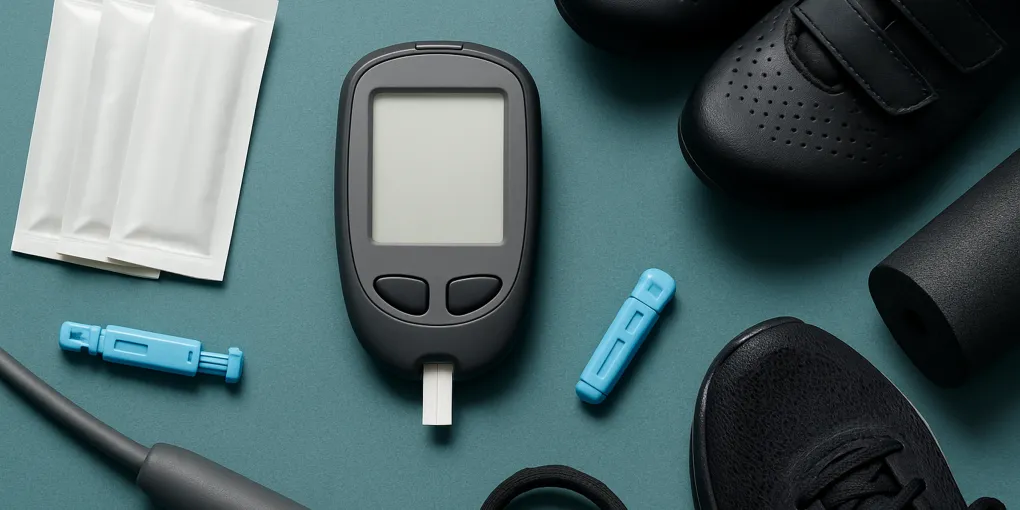
A blood lactate analyzer is the closest at-home equivalent to a physiology lab measurement. The value is not a single reading after one hard effort; it is the ability to run a standardized step test, plot lactate against pace or power, and compare the curve over time.
A practical protocol is 4–6 stages of 3–5 minutes each, with a small finger-prick sample near the end of each stage. The stage where lactate begins rising disproportionately can help define aerobic threshold, lactate turn point, and high-end tempo limits. This is especially helpful when heart rate is distorted by heat, caffeine, dehydration, or accumulated fatigue.
The downside is friction. Test strips cost money, sampling technique matters, and contaminated sweat can distort readings. If you will only test once, a meter is overkill. If you coach multiple athletes or retest every training block, it becomes much more reasonable.
2. Polar H10: best heart-rate anchor
For most runners and recreational cyclists, a chest strap is the first threshold tool to buy. Wrist optical heart rate can be acceptable at steady intensities, but it often lags during intervals and can misread cadence or arm movement. A chest strap gives cleaner data for a 30-minute time trial, tempo progression, or talk-test validation workout.
A common field method is a 30-minute hard, even effort after a good warm-up. Average heart rate for the final 20 minutes is often used as a practical lactate-threshold heart-rate estimate. This is not the same as a laboratory lactate turn point, but it is repeatable enough to set training zones for many athletes.
Use heart rate as a response metric, not a command. If your threshold heart rate is 172 bpm, that does not mean every threshold workout must lock to 172. Heat, sleep, illness, and glycogen status all shift the signal.
3. Garmin HRM-Pro Plus: best Garmin ecosystem pick
The Garmin HRM-Pro Plus is useful when your watch ecosystem already drives workouts, recovery prompts, and threshold estimates. Garmin’s model-based lactate-threshold estimate can be convenient, especially when paired with structured workouts and consistent chest-strap data.
The key word is estimate. Watch algorithms infer threshold from heart-rate and pace or power behavior; they do not know your blood lactate concentration. The best use is trend monitoring. If the estimate moves upward while workout RPE falls at the same pace, that is a useful sign. If it jumps after a single odd workout, ignore the drama.
4. Stryd Footpod: best power-based running option
Running power can make threshold training more stable on hills and in wind than pace alone. Stryd is popular because it provides a consistent power estimate from a footpod, letting runners prescribe workouts as watts rather than minutes per mile.
This is useful for threshold intervals because pace is context-sensitive. A 6:45 mile on a flat road is not the same metabolic demand as 6:45 on a rolling route. Power can smooth that decision. The catch is that running power is device-specific and not the same as cycling power measured at the crank. Do not compare numbers across systems as if they were universal physiology.
5. Wahoo KICKR: best controlled cycling platform
Cyclists have an advantage: power measurement is mature. A smart trainer lets you run controlled ramp, step, or 20-minute tests indoors with fewer environmental confounders. If your goal is cycling zones, a trainer or bike power meter may matter more than a blood lactate meter.
Functional threshold power is not identical to lactate threshold, but it is useful for programming. Pairing power with heart rate gives a richer picture: if power rises at the same heart rate after a training block, aerobic fitness likely improved.
A simple threshold-testing decision tree
- You are new to endurance training: buy a chest strap and learn RPE first.
- You train for running races: use chest-strap HR plus a repeatable 30-minute field test.
- You run hilly courses: consider running power after you already have consistent training habits.
- You cycle seriously: prioritize power measurement or a smart trainer.
- You coach athletes or love lab-style data: add a lactate analyzer.
How to run a cleaner field test
Choose a route or indoor setup you can repeat. Warm up for 15–20 minutes with a few short pickups. Then complete either a 30-minute steady maximal effort or a step test where intensity rises every few minutes. Record pace, power if available, heart rate, RPE, temperature, caffeine intake, sleep, and fueling.
Retest under similar conditions. The absolute number matters less than whether your pace or power at a given heart-rate and RPE improves.
Safety and interpretation
Do not perform maximal testing when sick, sleep-deprived, injured, or under medical restriction. People with cardiovascular risk factors should ask a clinician before hard testing. Threshold testing is stressful by design.
Also avoid false precision. A lactate threshold estimate of 168 bpm is not meaningfully different from 170 bpm in real outdoor training. Use zones as ranges and adjust by perceived effort.
How We Score: G6 Composite
For this guide, the G6 composite score uses a 30/25/20/15/10 weighted breakdown: Research fit 30%, Evidence Quality 25%, Value 20%, User Signals 15%, and Transparency 10%. Research fit asks whether the tool actually measures or improves a threshold decision. Evidence Quality rewards direct physiological measurement and repeatable field protocols over vague wellness claims. Value weighs total ownership cost, including strips, subscriptions, replacement straps, and whether the device replaces guesswork. User Signals include long-term usability, ecosystem support, and how often athletes report actually using the tool after the first month. Transparency favors products with clear measurement limits and protocols rather than black-box promises.
That weighting is why a boring chest strap can outrank a more exciting gadget for many people. A Polar H10 does not measure lactate, but it gives cleaner field-test data than most wrist sensors and costs much less than a meter. Conversely, a lactate analyzer scores highly on research fit but loses value points unless you will retest often.
Example protocols by athlete type
Recreational runner
Use a chest strap and a flat route. Warm up, run 30 minutes as hard as you can sustain evenly, then average heart rate for the last 20 minutes. Repeat every 8 weeks. Use the result to define broad zones, then keep most easy runs clearly below threshold. This is less precise than a lab, but it is actionable.
Marathoner
Pair threshold testing with long-run fueling notes. Threshold pace is useful, but marathon performance also depends on durability and carbohydrate tolerance. If threshold improves but long-run pace still collapses after 90 minutes, the limiter may be fueling or musculoskeletal endurance rather than lactate dynamics.
Cyclist
Use a smart trainer or power meter for repeatable indoor tests. A ramp test is convenient, but a longer 20- or 40-minute effort may better represent sustained performance. Track heart rate drift during long tempo sessions; rising heart rate at stable power can suggest heat stress, dehydration, or inadequate aerobic durability.
Coach or lab-minded athlete
A lactate analyzer is most useful when you standardize everything: warm-up, stage length, sampling time, carbohydrate intake, room temperature, and recent training load. Random single readings after workouts are usually less useful than a clean curve collected under repeatable conditions.
Buying mistakes to avoid
Do not buy a lactate meter if you are unwilling to prick your finger correctly or pay for strips. Do not buy a running power meter because you dislike easy running; it will not fix pacing discipline by itself. Do not trust a watch threshold estimate after one unusually hot or cold session. And do not compare threshold numbers across tools as if they are interchangeable.
The best tool is the one that makes your next training decision clearer: easier easy days, more controlled tempo work, and better block-to-block comparisons. If a device creates more anxiety than insight, it is not the right threshold tool for you.
Practical interpretation ranges
Use threshold as a zone anchor, not a cliff edge. A runner whose field-test threshold pace is 7:00 per mile may do threshold intervals around 6:55–7:10 depending on heat, terrain, and fatigue. A cyclist with an estimated FTP of 250 watts may perform tempo work at 190–220 watts and threshold intervals around 235–260 watts. These are training ranges, not courtroom evidence.
If two tests disagree, trust the one with better conditions and more relevant modality. A treadmill run does not perfectly transfer to hilly trails, and a cycling ramp test does not define running zones. Retest only when the answer will change training.
What to record after each test
A threshold test is only useful if the next test can be compared fairly. Record the route or device, warm-up, footwear, temperature, wind, caffeine, carbohydrate intake, previous night’s sleep, and the last hard session you completed. For lactate testing, record strip lot, sample timing, and any sampling problems. For heart-rate tests, note whether the strap was wet, secure, and paired correctly. These details look obsessive until a result changes by 5% and you need to know whether fitness improved or conditions changed.
References
- Wasserman K, McIlroy MB. Detecting the threshold of anaerobic metabolism in cardiac patients during exercise. American Journal of Cardiology. 1964.
- Faude O, Kindermann W, Meyer T. Lactate threshold concepts: how valid are they? Sports Medicine. 2009. PMID: 19530753.
- Jones AM, Vanhatalo A. The critical power concept: applications to sports performance. International Journal of Sports Physiology and Performance. 2017.
- Bourdon PC et al. Monitoring athlete training loads: consensus statement. International Journal of Sports Physiology and Performance. 2017. PMID: 28463642.
Frequently Asked Questions
- No. A lactate meter is useful for repeated testing, but many athletes can set practical zones from a 30-minute time trial, race data, ventilatory cues, and heart-rate or power trends.
- They can be directionally helpful, but they are indirect model estimates. Treat them as a starting point and validate with repeatable workouts, race performance, or lab/field testing.
- Every 6–10 weeks is enough for most recreational endurance athletes, or after a training block where fitness has clearly changed.