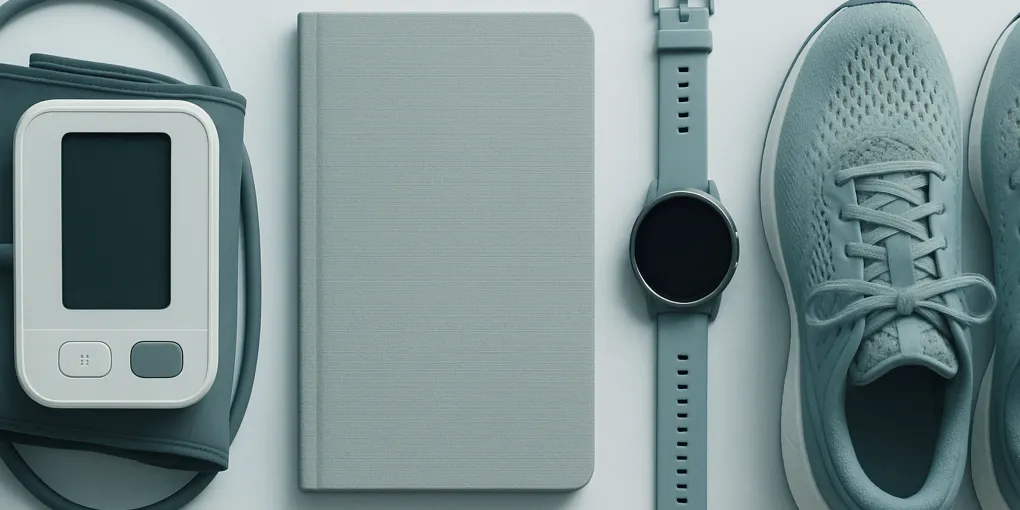
Best Blood Pressure Monitors for Athletes and Home Health Tracking
Buyer's GuideOmron Platinum Upper Arm Blood Pressure Monitor
Best overallCuff type: Upper arm
Usually mid-range
Quick picks
| Product | Key Specs |
|---|---|
| See price on Amazon |
|
| See price on Amazon |
|
| See price on Amazon |
|
| See price on Amazon |
|
| See price on Amazon |
|
Product availability, certifications, and retailer details can change; check the current Amazon page before buying.
The bottom line
Use this best blood pressure monitor for athletes product comparison as the buying shortlist, then read the article sections for the evidence limits, fit notes, and safety caveats that decide whether a pick belongs in your routine.
The best blood pressure monitor for athletes is a validated upper-arm cuff that fits your arm, stores repeat readings, and is simple enough that you will use it correctly. For most people, that means an Omron upper-arm model or another clinically validated cuff, not a wrist monitor or a smartwatch estimate.
Athletes can have unusual blood-pressure context. Endurance training often lowers resting blood pressure, heavy resistance training can transiently increase it, and larger arm circumference can make standard cuffs inaccurate. The device matters, but the protocol matters more. Source: https://www.cdc.gov/high-blood-pressure/measure/index.html.
This guide focuses on home monitors that help you collect cleaner data for conversations with a clinician. It is not a diagnosis tool.
Why blood pressure tracking matters even if you are fit
Cardiorespiratory fitness lowers cardiovascular risk, but it does not make blood pressure irrelevant. Hypertension can occur in lean, active people because of genetics, sleep apnea, kidney disease, stimulant use, alcohol, stress, high sodium intake, or simply aging. The American Heart Association and American College of Cardiology define normal blood pressure as below 120/80 mmHg and stage 1 hypertension as 130–139 systolic or 80–89 diastolic, but diagnosis should be based on repeated, properly measured readings rather than one bad number. Source: PMID: 29133356.
Home monitoring can reduce white-coat effects and show patterns. The U.S. Preventive Services Task Force recommends confirming elevated office readings with measurements outside the clinical setting before starting treatment decisions. Source: PMID: 33904861.
How we evaluated monitors
We ranked monitors by:
- Upper-arm cuff design rather than wrist-first measurement
- Fit options for different arm sizes
- Ease of taking repeated morning/evening measurements
- Memory or app logging
- Brand track record and availability
- Practical use for athletes with larger arms
Before buying, confirm the live listing includes the cuff size you need, the validated model name, return terms, and enough recent owner feedback for fit and setup.
1. Omron Platinum: best overall
Omron’s upper-arm monitors are common in home blood-pressure tracking because they are easy to use, widely available, and familiar to many clinicians. The Platinum tier is useful if two people will use the monitor or if you want app syncing and stored history.
For athletes, the key step is not buying the fanciest Omron; it is making sure the cuff fits. Measure the midpoint of your upper arm while relaxed. If your arm circumference is near the top of the cuff range, buy a compatible large cuff rather than hoping the standard cuff is close enough.
Best for: households that want a reliable, low-friction monitor with memory and app features.
2. Omron Bronze: best budget pick
The Omron Bronze line is the practical choice if you do not care about advanced app features. It is an upper-arm monitor intended for simple home logs: sit, rest, measure, record.
This is often enough. A clean paper or spreadsheet log can be more useful than a messy app history full of post-workout readings. If your clinician asks for a week of morning and evening values, a simple monitor gets it done.
Best for: people who want the least complicated credible setup.
3. Withings BPM Connect: best app experience
Withings is a good fit for people already tracking weight, sleep, or activity in an app. Automatic syncing reduces transcription errors and makes long-term trends easier to share. Source: https://www.validatebp.org/.
The tradeoff is complexity. Bluetooth or Wi-Fi setup can fail, accounts add friction, and some people stop measuring when the app becomes annoying. If you are the kind of athlete who loves dashboards, this is a strength. If you hate app setup, buy a simpler cuff.
Best for: data-driven users who want automatic trend storage.
4. A&D Medical Premium: best simple clinical-style option
A&D Medical makes straightforward upper-arm monitors that often appeal to people who want fewer lifestyle features and more measurement focus. Exact model names and validation status can vary, so check the specific model on a validation registry when possible.
Best for: users who want a simple monitor from a medical-device brand and do not need a polished consumer app.
5. Greater Goods kit: best value kit
Greater Goods kits are popular because they are inexpensive and usually easy to operate. They can be a reasonable entry point if cost is the limiting factor, but again, check cuff range and the exact model.
Best for: basic household screening when budget matters.
Athlete-specific measurement protocol
Use this before you worry about product differences:
- Avoid hard exercise, caffeine, nicotine, and pre-workout stimulants for at least 30 minutes before measuring.
- Empty your bladder.
- Sit quietly for 5 minutes with back supported and feet flat.
- Place the cuff on bare skin at heart level.
- Take two readings one minute apart and record the average.
- Measure at the same times for 7 days, often morning and evening.
- Ignore the first day if your clinician asks for a standardized weekly average.
Do not take readings immediately after squats, sauna, cold plunge, stressful calls, or a huge salty meal and then treat that number as your baseline.
Common athlete pitfalls
A too-small cuff can falsely raise readings. This is common in strength athletes with large arms. A cuff placed over clothing or below heart level can also distort results. Talking during measurement, crossing legs, or holding your arm unsupported can shift values.
Supplements and stimulants matter too. Caffeine, nicotine, yohimbine, high-dose pre-workout formulas, decongestants, and some ADHD medications can increase blood pressure in susceptible people. Do not stop prescribed medication without your clinician, but do include it in your log context. Source: PMID: 29133356.
When to call a clinician
Repeated home readings in the hypertensive range deserve medical follow-up even if you feel healthy. Seek urgent medical advice for very high readings, especially if accompanied by chest pain, shortness of breath, neurological symptoms, severe headache, or visual changes.
How We Score: G6 Composite
This ranking uses the Body Science Review G6 composite score with a 30/25/20/15/10 weighted breakdown: Research fit 30%, Evidence Quality 25%, Value 20%, User Signals 15%, and Transparency 10%. Research fit prioritizes upper-arm monitors that match guideline-based home measurement practices. Evidence Quality rewards models and brands more likely to appear in validation discussions or clinical use. Value accounts for cuff size options, durability, memory, and whether app features are worth paying for. User Signals cover ease of repeat use, readability, and household practicality. Transparency rewards clear cuff ranges and avoids devices that imply smartwatch-style convenience can replace proper measurement technique. Source: https://www.cdc.gov/high-blood-pressure/measure/index.html.
That is why a basic upper-arm cuff can beat a flashier wrist device. Blood-pressure tracking is not about novelty; it is about repeatable, properly positioned readings you can share with a clinician.
How to verify a monitor before buying
Look for exact model numbers, not just brand names. Validation registries, clinician recommendations, and manufacturer cuff-range documents are more useful than marketplace star ratings. A monitor can have thousands of reviews and still be the wrong choice if the cuff does not fit your arm or the model differs from the validated version.
For strength athletes, cuff range is the main failure point. Measure the arm relaxed, halfway between shoulder and elbow. If your circumference is near the upper limit, choose a larger cuff. A cuff that is too small can compress the arm incorrectly and overestimate pressure. A cuff that is too large can also distort results.
Reading patterns athletes should discuss
Bring a clinician a structured log rather than isolated screenshots. Useful context includes:
- Morning reading before caffeine and training
- Evening reading away from workouts
- Training performed that day
- Caffeine, nicotine, alcohol, or pre-workout use
- Sleep quality and travel
- Any illness, pain, or medication changes
Athletes sometimes dismiss elevated numbers because they feel fit. That is risky. Fitness improves risk, but untreated hypertension still matters. Conversely, a single high reading after heavy deadlifts, cold exposure, or an argument is not a diagnosis. Pattern quality is everything.
Special situations
Large arms
Buy the cuff before the monitor if needed. Some brands sell wide-range cuffs, but not every cuff works with every base unit. Confirm compatibility.
Low resting heart rate
Endurance athletes may have low resting heart rates. Most modern monitors handle this, but irregular rhythms or frequent ectopic beats can confuse automated devices. If readings vary wildly, compare with a clinical measurement. Source: PMID: 33904861.
White-coat effect
Some people read higher in medical offices than at home. Home monitoring helps, but only if the home protocol is standardized. A week of careful readings is more useful than dozens of random checks.
Strength blocks
Heavy lifting phases can temporarily increase sympathetic tone, soreness, and fluid shifts. If blood pressure rises during a hard block, do not ignore it, but retest after a lighter week and discuss the pattern if it persists. Source: https://www.nhlbi.nih.gov/health/high-blood-pressure/diagnosis.
What numbers mean in practice
Home blood pressure is usually interpreted from repeated averages. If your seven-day average is consistently elevated, schedule medical follow-up. If your readings are normal at rest but spike after training, record timing and symptoms. If you get a very high reading, sit quietly and repeat it; if it remains very high or symptoms appear, seek urgent care.
A home cuff is a monitoring tool, not a treatment plan. Lifestyle factors that commonly move the needle include sodium intake, alcohol, body weight, sleep apnea treatment, aerobic training, medication adherence, and stress management. Supplements should not replace medical care. Source: PMID: 29133356.
Final buying advice
Choose the monitor that makes correct measurement easiest. For many athletes that means a simple upper-arm cuff with a large enough cuff and readable display. App syncing is helpful only if it improves consistency. The best device is the one that produces a clean log your clinician can trust.
Morning versus evening readings
Morning readings are often the cleanest because they happen before training, caffeine, work stress, and large meals. Evening readings can still be useful, especially for seeing whether pressure remains elevated after the day. The important point is consistency. Do not compare a calm Sunday morning value with a reading taken after a late workout and a salty dinner.
If you train early, measure before the workout when possible. If you train at night, wait until breathing, body temperature, and arousal have settled before measuring. A 10-minute quiet buffer is better than grabbing a cuff while still sweating.
What not to buy
Avoid devices that hide cuff size, rely primarily on wrist positioning, or promise medical-grade insight without model-specific validation. Smartwatch blood-pressure features may be interesting for trends, but they should not replace a proper cuff for home monitoring. Also avoid buying based only on a discount bundle if the included cuff is too small. Accuracy starts with fit.
References
- Whelton PK et al. 2017 ACC/AHA guideline for high blood pressure in adults. Hypertension. 2018. PMID: 29133356.
- U.S. Preventive Services Task Force. Screening for hypertension in adults: reaffirmation recommendation statement. JAMA. 2021. PMID: 33904861.
- Stergiou GS et al. A universal standard for the validation of blood pressure measuring devices. Hypertension. 2018. PMID: 30012800.
- Muntner P et al. Measurement of blood pressure in humans: A scientific statement from the American Heart Association. Hypertension. 2019. PMID: 30827125.
Frequently Asked Questions
- Usually no. Wrist monitors are more position-sensitive. A validated upper-arm cuff is the better default unless a clinician recommends otherwise.
- Yes. Blood pressure can remain elevated after hard training, caffeine, heat exposure, or stress. Standardize readings before making conclusions.
- Measure mid-upper-arm circumference and buy a cuff that explicitly covers that range. A too-small cuff can overestimate blood pressure.