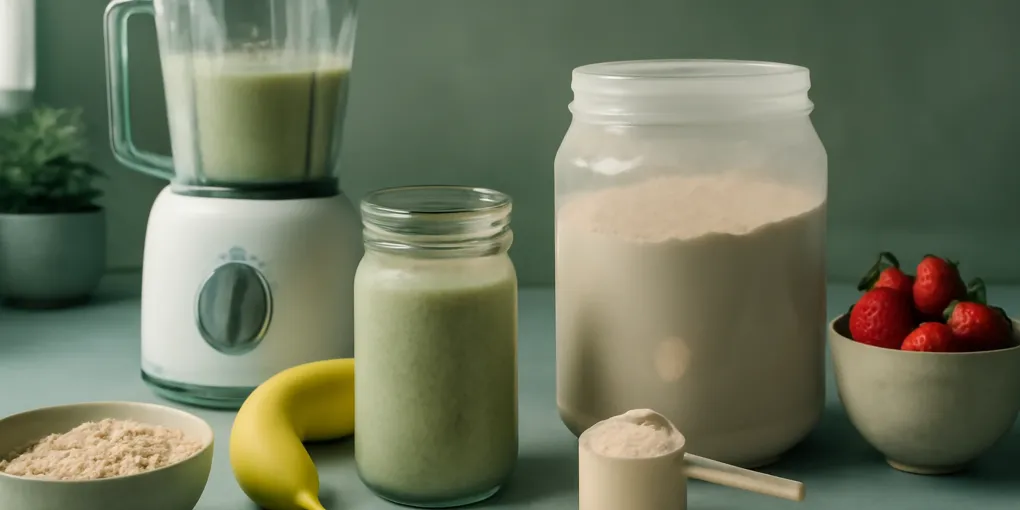
Best Protein Powder for Morning Smoothies
Buyer's GuideDymatize ISO100 Hydrolyzed Whey Isolate
Smooth whey-isolate smoothie pickProtein: Usually 25 g per scoop
$35-$50 / tub
Quick picks
| Product | Key Specs |
|---|---|
| See price on Amazon |
|
| See price on Amazon |
|
| See price on Amazon |
|
Product availability, certifications, and retailer details can change; check the current Amazon page before buying.
Use this Best Protein Powder for Morning Smoothies product comparison as the buying shortlist, then read the article sections for the evidence limits, fit notes, and safety caveats that decide whether a pick belongs in your routine.
Best Protein Powder for Morning Smoothies
A morning smoothie can be a balanced breakfast or a sugary drink with a health halo. Protein powder is often the difference. The right powder helps the smoothie deliver enough essential amino acids to support muscle protein synthesis, satiety, and daily protein targets. (PMID: 28642676.)
This guide uses marketplace search links as a starting point. Confirm the current label, serving size, seller, and return policy before buying.
What matters most
Protein per serving
Look for 20–30 grams of protein per serving. If the scoop only provides 10–15 grams, you may need extra Greek yogurt, milk, soy milk, or a second half-scoop to make the breakfast meaningful. (PMID: 28642676.)
Protein quality
Whey, casein, egg, soy, and well-formulated pea/rice blends provide stronger essential amino acid profiles than collagen. Collagen can be useful for some connective-tissue goals, but it is not a complete protein and should not anchor a muscle-focused smoothie. (PMID: 28642676.)
Ingredient fit
Morning smoothies often include fruit, nut butter, oats, yogurt, or greens. A powder that tastes fine in water may be too sweet or too strongly flavored in a smoothie. Check sweeteners, gums, caffeine, added creatine, digestive enzymes, and sugar alcohols if your stomach is sensitive. (PMID: 28642676.)
Best use-case picks
Best overall: whey protein isolate
Whey isolate usually blends smoothly, has a high leucine content, and works well with fruit, yogurt, oats, and coffee-style smoothies. It is lower in lactose than whey concentrate but not necessarily lactose-free for every sensitive person.
Affiliate search: Whey protein isolate powder on Amazon
Best dairy-free: plant protein blend
A blend of pea and rice protein usually has a better amino acid profile than pea alone. Texture is the main tradeoff. Plant proteins can thicken quickly, so start with more liquid and blend longer. (PMID: 28642676.)
Affiliate search: Pea rice plant protein blend on Amazon
Best thick smoothie: casein protein
Casein absorbs more liquid and creates a pudding-like texture. That can be a feature if you want a very filling breakfast. It is less ideal if you want a light, juice-style smoothie.
Affiliate search: Casein protein powder on Amazon
Simple smoothie formulas
High-protein berry smoothie
- 1 scoop whey isolate or plant blend
- 1 cup frozen berries
- 1 cup milk, soy milk, or high-protein dairy milk
- 1 tablespoon ground flax or chia
- Ice and water as needed
High-satiety chocolate smoothie
- 1 scoop casein or whey
- 1 banana or frozen cauliflower rice
- 1 tablespoon peanut butter
- 1 cup milk or soy milk
- Cinnamon and ice
Dairy-free green smoothie
- 1 scoop pea/rice protein blend
- 1 cup soy milk
- 1 cup frozen mango
- Spinach
- Lemon juice or ginger
Evidence notes
Morton RW, Murphy KT, McKellar SR, et al. A systematic review, meta-analysis and meta-regression of the effect of protein supplementation on resistance training-induced gains. British Journal of Sports Medicine. 2018;52(6):376-384. doi:10.1136/bjsports-2017-097608.
Phillips SM, Van Loon LJC. Dietary protein for athletes: from requirements to optimum adaptation. Journal of Sports Sciences. 2011;29 Suppl 1:S29-S38. doi:10.1080/02640414.2011.619204.
How we score breakfast protein powders
Breakfast protein powders were judged by complete-protein quality, grams per serving, smoothie texture, sweetener tolerance, cost per useful serving, third-party testing where relevant, and whether the label avoids unsupported body-composition claims.
That means a simple whey isolate or complete plant blend can outrank a trendier formula if it provides more usable protein, fewer unnecessary add-ons, and clearer labeling. Collagen is scored differently because it is not a complete protein; it may be useful for specific connective-tissue goals, but it should not be presented as equivalent to whey, casein, soy, pea-rice blends, or other complete proteins for breakfast muscle-protein support. (PMID: 28642676.)
Ingredient checks before you buy
First, check the protein grams against the serving size. Some tubs advertise a large number on the front label but require two scoops to reach it. For a morning smoothie, one practical serving should usually provide about 20 to 30 grams of protein before you add milk, yogurt, or other high-protein ingredients. If the scoop provides much less, the smoothie may still be useful, but it becomes more of a flavored ingredient than the main protein source. (PMID: 28642676.)
Second, look for a complete amino-acid profile when the smoothie is meant to replace a meal. Whey, casein, milk protein, egg, soy, and well-designed pea-rice blends are the easiest options. Single-source plant proteins can still work, but the label should make the amino-acid strategy clear. If the product leans heavily on collagen, treat it as a supplemental ingredient rather than the primary breakfast protein. (PMID: 28642676.)
Third, review sweeteners and thickeners. A little sucralose, stevia, monk fruit, gum blend, or cocoa powder is not automatically a problem. The practical question is whether the powder helps you repeat the habit without stomach upset or cravings. If a powder tastes like dessert but leaves you hungry two hours later, it may not be the right breakfast tool even if the macro label looks impressive.
When whey isolate makes the most sense
Whey isolate is the default recommendation for many dairy-tolerant adults because it blends smoothly, delivers a high percentage of protein by weight, and is naturally rich in leucine. It is especially useful when the rest of the smoothie already includes fruit, oats, greens, or nut butter and you do not want the powder to make the texture too heavy.
Choose isolate when you want a lighter smoothie after training, when lactose tolerance is a concern, or when you need a clean protein bump without turning breakfast into a large meal. The tradeoff is that isolate can be less filling than casein or thicker plant blends, so it often works best with fiber-rich add-ins such as berries, oats, chia, or ground flax. (PMID: 28642676.)
When casein is the better breakfast tool
Casein is slower-digesting and noticeably thicker. In a morning smoothie, that can be an advantage if the goal is fullness through a long work block. It can make a smoothie feel more like a shake or pudding, especially with frozen fruit or Greek yogurt.
The downside is texture. Casein can become chalky or overly thick if you use too much powder or not enough liquid. Start with a standard serving, blend longer than you would with whey, and add liquid gradually. Casein is not automatically better for weight management, but it can make the same protein target feel more substantial. (PMID: 28642676.)
When a plant blend is the right pick
A plant protein blend is the cleanest choice for vegan, dairy-free, or dairy-sensitive readers. Pea and rice together are common because their amino-acid profiles complement each other. Soy protein is another strong complete option, though not everyone prefers the taste or wants soy as a daily staple.
Plant proteins often need more liquid and stronger flavors. Cocoa, cinnamon, berries, banana, coffee, or peanut butter powder can help cover earthy notes. If digestive comfort is the issue, avoid immediately jumping to the highest-fiber blend. Some plant powders include added fibers or gums that improve thickness but can be rough on sensitive stomachs.
Smoothie mistakes that reduce satiety
The most common mistake is building a smoothie around fruit juice, sweetened yogurt, honey, and nut butter, then assuming the scoop of protein makes it automatically lean. Those ingredients can be useful, but they add calories quickly. If weight management is part of the goal, measure calorie-dense add-ins for a week before estimating by eye. (PMID: 28642676.)
The second mistake is relying on protein powder alone. A scoop in water is convenient, but a breakfast smoothie usually works better when it includes volume and fiber. Frozen berries, spinach, oats, chia, and Greek yogurt can make the same protein dose more filling. (PMID: 28642676.)
The third mistake is changing too many variables at once. If you switch protein type, serving size, milk base, and fiber add-ins in the same week, it becomes hard to know what caused better fullness or worse digestion. Change one piece at a time and track hunger, training, and stomach comfort.
Practical selection examples
A strength-training reader who lifts in the morning and eats a full lunch soon after can usually start with whey isolate. The smoothie can stay simple: protein powder, milk or soy milk, frozen berries, and oats if more carbohydrates are needed. That combination keeps the amino-acid signal high without forcing a huge breakfast. (PMID: 28642676.)
A reader who has a long commute, back-to-back meetings, or a tendency to snack mid-morning may do better with casein or a thicker plant blend. The goal is not that casein has magical fat-loss properties; it is that a thicker, slower-digesting smoothie may be easier to stick with than a thin drink that disappears quickly.
A dairy-free reader should prioritize repeatability over chasing the highest protein number. A complete plant blend that tastes good and digests well is more useful than a technically superior formula that sits unused in the pantry. If texture is gritty, blend with frozen banana, cocoa, cinnamon, or a small amount of nut butter, but keep calorie-dense add-ins measured. (PMID: 28642676.)
A reader using smoothies for weight management should decide whether the smoothie is a meal or a snack. A meal smoothie needs enough protein, fiber, and total volume to replace food. A snack smoothie should be smaller and should not accidentally become a second breakfast. This is why the same powder can be a smart tool in one recipe and an overeating trap in another. (PMID: 28642676.)
Safety and medical context
Healthy adults generally tolerate common protein powders well, but individual needs vary. People with kidney disease, severe gastrointestinal conditions, pregnancy-specific nutrition needs, eating-disorder history, or complex medication regimens should ask a clinician or registered dietitian before using protein powder as a daily meal replacement. Protein powder should support a food pattern; it should not be used to avoid balanced meals indefinitely. (PMID: 28642676.)
Also check allergens and manufacturing disclosures. Dairy proteins are not appropriate for milk allergy. Many powders are made in facilities that also process soy, tree nuts, eggs, or gluten-containing ingredients. Competitive athletes should look for third-party testing when supplement contamination risk matters. (PMID: 28642676.)
Related reading
- Compare fast and slow dairy proteins in our whey vs casein guide.
- If fullness is the main goal, use the protein powder satiety protocol before adding extra scoops.
- For a ranked buying shortlist, see our best whey protein powder guide.
Bottom line
For most morning smoothies, whey isolate is the easiest default, plant blends are the best dairy-free option, and casein is ideal when you want a thicker, more filling breakfast. Prioritize a complete protein source, enough grams per serving, and a flavor you can actually repeat. (PMID: 28642676.)
Frequently Asked Questions
- No. Collagen is low in essential amino acids and is not a complete muscle-building protein. It can be used for specific goals, but it should not be the main protein source in a breakfast smoothie.
- Many active adults do well with 25–40 grams of protein at breakfast, depending on body size, total daily intake, and training goals.