Best Training Sandbags for Home Conditioning: How to Pick a Load That Does Not Fight You
Buyer's GuideREP Fitness Sandbag
Best durable shellBest Use: Heavy carries, shouldering, squats, and compact garage-gym conditioning
Quick picks
REP Fitness Sandbag
★ Top pick Best durable shell- Best Use: Heavy carries, shouldering, squats, and compact garage-gym conditioning
- Caveat: Choose the size by your actual working load, not the largest advertised capacity
Yes4All Adjustable Sandbag
Best budget adjustable option- Best Use: Beginners who want removable filler bags before committing to a premium shell
- Caveat: Inspect seams, handles, and filler-bag closures before hard throws or drags
Rogue Strongman Sandbag
Best heavy-duty simple bag- Best Use: Bear-hug carries and heavy ground-to-shoulder work in a garage or driveway
- Caveat: Fewer handles means fewer exercise options and a steeper learning curve
Brute Force Training Sandbag
Best handle variety- Best Use: Users who want cleans, rows, carries, and complexes from one adjustable tool
- Caveat: Handle-heavy designs still need careful zipper and inner-bag checks
Bottom line
A training sandbag is most useful when the shell, filler bags, and handles match the loads you will actually lift. For most home conditioning, the Search Amazon for REP Fitness Sandbag is the best first search because it is built around durable carries and awkward-load strength. If budget matters more than premium construction, start with the Search Amazon for Yes4All Adjustable Sandbag. For heavier bear-hug work, compare the Search Amazon for Rogue Strongman Sandbag. If you want more handle positions for complexes, look at the Search Amazon for Brute Force Training Sandbag.
The right sandbag should feel awkward in a useful way, not unpredictable in a dangerous way. It should load cleanly, stay closed, and give you enough grip options to train carries, hinges, squats, rows, and shouldering without turning every session into a zipper test.
Quick picks
- Best durable shell: Search Amazon for REP Fitness Sandbag for repeated home-gym carries and shouldering.
- Best budget adjustable bag: Search Amazon for Yes4All Adjustable Sandbag if you want removable filler bags at a lower entry price.
- Best heavy simple bag: Search Amazon for Rogue Strongman Sandbag for bear-hug carries and ground-to-shoulder work.
- Best handle variety: Search Amazon for Brute Force Training Sandbag if you want complexes with rows, cleans, and carries.
Why a sandbag is different from a dumbbell
A dumbbell tells you exactly where the load is. A sandbag shifts. That changing center of mass forces your trunk, hips, upper back, grip, and breathing to cooperate. Research on functional resistance training often points to task specificity: the load should resemble the movement challenge you are trying to improve. Sandbags do this well for carrying, lifting from the floor, and bracing under awkward weight.
That does not make sandbags magic. They are still external load. The benefit comes from repeatable exposure, progressive loading, and exercises you can perform with good positions. A bag that leaks, folds in half, or is too large for the user can make training worse.
How the main sandbag picks differ
The REP Fitness search is the first stop if you want a conventional handled training sandbag that can live in a garage gym and survive repeated carries. Check the listing for the shell size, included filler bags, zipper cover, and stated filler range before choosing the load. The Yes4All option is the budget comparison: it is useful when you want removable inner bags and a lower entry cost, but you should inspect user photos for seam, handle, and closure complaints before loading it near the top of the range.
The Rogue Strongman search is different because that style is usually a rounder, handle-free bag for bear-hug carries, laps, and shoulder work. It is not the best choice if you mostly want rows, cleans with handles, or quick complexes. Brute Force-style handled bags fit that mixed-use role better, especially when you want multiple grip positions for front carries, rows, cleans, and presses. The tradeoff is more hardware to inspect: handles, zipper tracks, inner fillers, and stitching all become failure points if you drop the bag hard.
A practical buying check is to write down three movements before ordering: loaded carry, floor lift, and one accessory movement. If the bag shape and handle layout do not make those three easy to set up, choose a different style rather than assuming every sandbag is interchangeable.
Choose capacity by your middle working weight
Do not buy only by the advertised maximum weight. A bag rated to 150 pounds may be awkward and half-empty at the 40 to 60 pounds a beginner actually needs. Pick a shell whose middle range matches your current ability. Multiple filler bags are better than one giant liner because you can change load without dumping everything.
A useful home-gym range is usually narrower than the sales page suggests. If your current dumbbell goblet squat is 35 pounds, a 50- to 75-pound sandbag shell is often more useful than a 150-pound shell. The smaller bag stays compact, fills out properly, and is easier to pick from the floor. Bigger shells can fold, sag, and make light loads harder to control.
Sand is cheap and dense, but it can leak and hold moisture. Rubber crumb filler is cleaner and softer but takes more volume. Some users combine materials. Whatever you choose, fill the inner bags outdoors or over a tarp, close them carefully, and train under the listed maximum.
Before buying, check whether the listing includes filler bags or only the outer shell. A low price can disappear if you need to buy liners separately. Also check whether the manufacturer lists separate capacities for sand, rubber, or other filler. The same shell may hold very different weights depending on filler density.
Handles, seams, and zippers
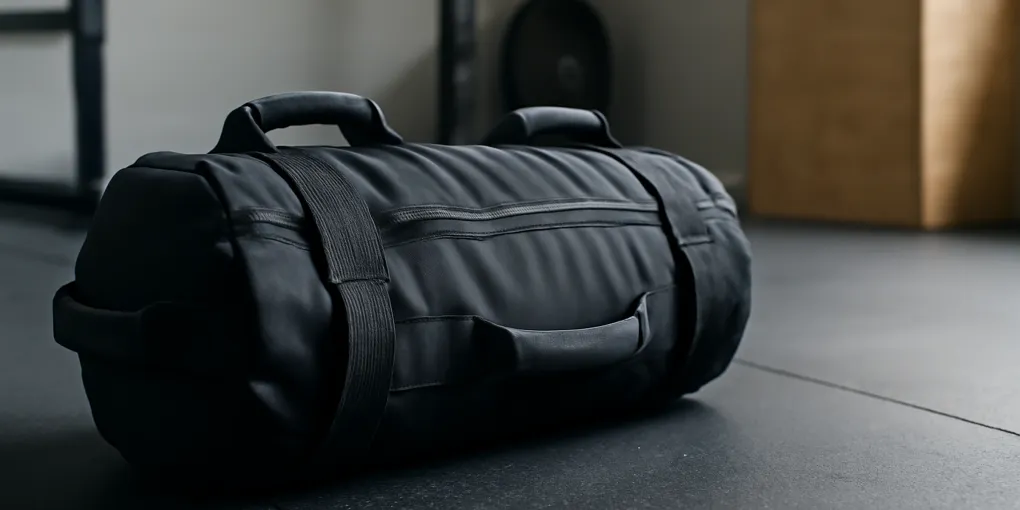
Handle layout determines exercise options. Parallel top handles work for carries and rows. End handles help with cleans and drags. Neutral handles make some users more comfortable during front carries. A strongman-style bag with no handles is excellent for bear-hug work but less versatile for a beginner.
Seams and zippers matter more than color or tactical styling. Look for reinforced stitching, covered zippers, and inner filler bags that can be removed individually. If a review pattern mentions seam blowouts, zipper creep, or sand dust after ordinary use, move on.
What to train first
Start with simple patterns before complexes:
- Bear-hug carry for 20 to 40 seconds.
- Sandbag deadlift from the floor for 6 to 10 reps.
- Front-loaded squat for 5 to 8 controlled reps.
- Bent-over row using top handles for 8 to 12 reps.
- Ground-to-lap or ground-to-shoulder only after the lift from the floor is smooth.
Use a load that lets you breathe through your nose or speak a short phrase during carries. Conditioning should not require collapsing into spinal flexion. If your grip fails before your legs or trunk, reduce the load or shorten the interval.
Fit checks before you order
Measure where the bag will live and where you will carry it. A long rectangular bag can work well for rows and front-loaded squats, but it may hit the thighs during short hallway carries. A round strongman bag can be excellent for bear-hug walks, yet frustrating if you need handles for rows or cleans. If you train in an apartment, prioritize a smaller shell that fills firmly at 30 to 60 pounds and can be set down quietly.
Check the closure system in the product photos. The best home bags usually have an outer zipper or flap plus separate inner filler bags, so one small leak does not turn the whole room into a cleanup job. If the listing shows only one large liner, plan for slower load changes and more mess. Also look for handle photos from multiple angles. Flat webbing handles can fold under sweaty hands; rounded, reinforced handles are easier to hold for repeated 30-second carries.
Return terms matter because sandbag capacity claims can be confusing. A shell that says 100 pounds may mean 100 pounds of dense sand, not rubber crumb filler, and the final shape can change by filler type. Before pouring anything inside, dry-fit the empty bag, check stitching, zip and unzip it several times, and confirm that your first working load fills the shell enough to stay stable.
Home setup and floor protection
Train on rubber flooring, a driveway, or a firm mat that will not slide. Sandbags can scuff wood floors, and filler can leak if the bag is dropped repeatedly. If you train indoors, avoid overhead throws, slams, and uncontrolled drops unless the product is specifically built for that use.
Store the bag dry. Moist sand makes the load heavier and can create odor. If the bag lives in a garage, check the filler bags every few weeks during humid weather.
Who should skip or modify sandbag work
Modify sandbag work if you have acute back pain, uncontrolled blood pressure, recent surgery, or shoulder symptoms that worsen with hugging or shouldering. The American College of Sports Medicine and physical activity guidelines support progressive resistance training for many adults, but the starting exercise and load matter. Choose carries and deadlifts before fast cleans if you are rebuilding strength.
Sandbag FAQ
Is a training sandbag good for beginners?
Yes, if the load is light enough and the first exercises are simple. A beginner should start with carries, deadlifts, and squats before fast rotational movements or shouldering.
How heavy should my first sandbag be?
Many home users do well with a shell that works cleanly around 30 to 75 pounds. Stronger lifters may need more. Buy around your real working range, not your future goal.
Are sandbags better than kettlebells?
They solve different problems. Kettlebells are more precise for swings, presses, and skill work. Sandbags are better for awkward carries and loading patterns. Our best kettlebells for home workouts guide covers the fixed-load option.
Sources
- American College of Sports Medicine. Physical activity and resistance-training guidance. https://www.acsm.org/education-resources/trending-topics-resources/physical-activity-guidelines
- U.S. Department of Health and Human Services. Physical Activity Guidelines for Americans, 2nd edition. https://health.gov/our-work/nutrition-physical-activity/physical-activity-guidelines
- National Strength and Conditioning Association. Education resources for strength-training principles, load progression, and exercise selection. https://www.nsca.com/education/