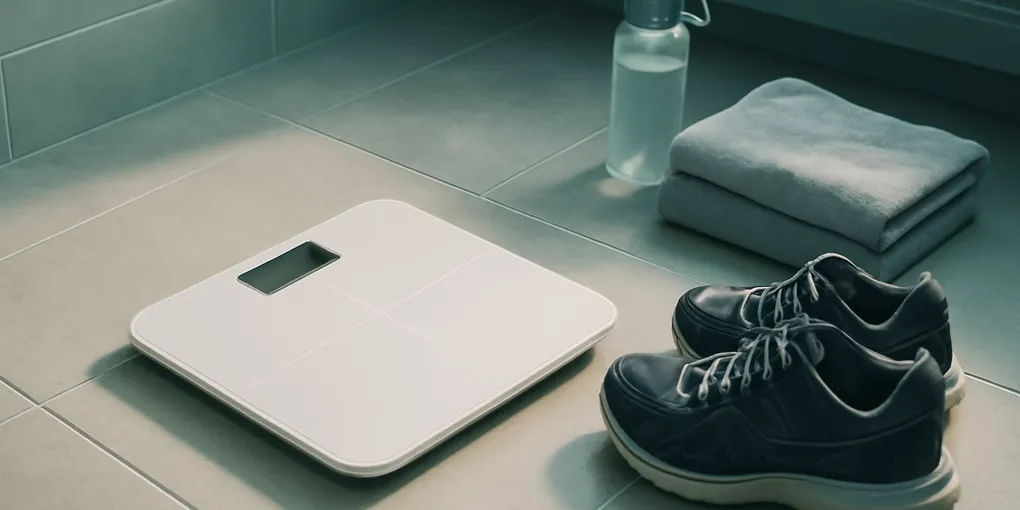
Garmin Index S2 Review: A Smart Scale for Garmin Users, Not a Body-Fat Verdict
ReviewGarmin Index S2 Smart Scale
Best for Garmin householdsBest Use: Automatic weight trends inside Garmin Connect
$120-160
Quick picks
| Product | Key Specs |
|---|---|
| See price on Amazon |
|
| See price on Amazon |
|
| See price on Amazon |
|
Product availability, certifications, and retailer details can change; check the current Amazon page before buying.
Bottom line
Garmin Index S2 is a good smart scale for people already living in Garmin Connect who want body-weight trends to appear beside training load, sleep, and activity data. It is not a good buy if you expect a bathroom scale to measure body fat, muscle, water, or bone mass with lab-grade precision.
The strongest reason to buy it is friction reduction. If automatic syncing will help you collect consistent weight data, Check current Garmin Index S2 pricing on Amazon. If you are not committed to Garmin Connect, compare it with Check current Withings Body Smart options on Amazon or Check basic digital scale prices on Amazon.
Product snapshot
Index S2 is Garmin’s Wi-Fi smart scale. It records weight and estimates body composition using bioelectrical impedance analysis, then syncs data into Garmin Connect. That ecosystem fit is the product’s main advantage. Runners, cyclists, and gym users who already check Garmin dashboards may value seeing weight trends without manual entry.
The body-composition features need restraint. Home BIA estimates are affected by hydration, skin temperature, recent exercise, food intake, alcohol, menstrual cycle phase, and measurement timing. A good scale routine can show directional patterns, but the exact body-fat percentage should not decide whether yesterday’s training worked.
Quick buying comparison
| Check price | Option | Best for | Main caveat |
|---|---|---|---|
| Search Amazon for Garmin Index S2 | Garmin Index S2 | Garmin Connect users who want automatic weight trends | Premium price for ecosystem convenience |
| Search Amazon for Withings Body Smart | Withings Body Smart | Users who prefer Withings app trends and household scale features | Not as integrated with Garmin training data |
| Search Amazon for basic digital scales | Basic digital scale | Low-cost weight tracking | Manual logging if you want app trends |
For a related app-focused scale review, see our Withings Body Smart scale review. For readers using wearable training signals, compare how scale trends sit beside heart-rate strap training data rather than treating scale estimates as the main performance metric.
Practical score
| Factor | Weight | Score | Rationale |
|---|---|---|---|
| Research | 30% | 6.0 | Body weight tracking is reliable; home body-composition estimates are much less certain. |
| Evidence Quality | 25% | 5.0 | BIA validity varies by population, device, and hydration state. |
| Value | 20% | 6.2 | Worth it for Garmin users, less compelling as a standalone scale. |
| User Signals | 15% | 7.2 | Ecosystem convenience and Wi-Fi sync are the main strengths. |
| Transparency | 10% | 6.0 | Garmin discloses features, but proprietary estimates remain opaque. |
| Composite | 100% | 6.0 | A useful Garmin data accessory when body-composition claims are kept in perspective. |
Accuracy expectations
Body weight is the most trustworthy number if the scale is on a hard, level surface and used consistently. Body-fat percentage, skeletal muscle mass, water percentage, and related estimates are more fragile. Bioimpedance sends a small electrical signal through the body and estimates composition through equations. Small changes in body water can look like body-composition changes.
A 2021 review in the European Journal of Clinical Nutrition describes how BIA can be useful in some contexts while remaining sensitive to device equations, hydration, and population differences (https://pubmed.ncbi.nlm.nih.gov/33619379/). That is why home smart scales should be interpreted as trend tools, not diagnostic devices.
If you are pursuing fat loss, use weekly averages, waist measurement, strength performance, photos, and clinician guidance when appropriate. If you are pursuing endurance performance, do not let a single scale reading override training quality, recovery, or symptoms.
Who should buy it
Buy Index S2 if you already use a Garmin watch, open Garmin Connect often, and want weight to appear automatically beside steps, workouts, sleep, and training metrics. It is also useful for multi-user households where automatic recognition and Wi-Fi sync reduce friction.
It makes less sense if you weigh infrequently, dislike connected devices, or will obsess over body-fat changes after salty meals or hard workouts. The scale is most valuable when it makes a boring habit easier.
Who should skip it
Skip it if body-composition numbers trigger anxiety or if your health plan should not involve frequent weighing. Pregnant users, people with implanted electronic devices, and people with medical conditions affected by body-composition interpretation should follow manufacturer and clinician guidance before using BIA features.
Skip it if the Garmin ecosystem is not part of your daily routine. In that case, a cheaper smart scale or basic digital scale may provide the same practical value.
How to use it well
Weigh at the same time of day, ideally after using the bathroom and before breakfast. Keep the scale on hard flooring. Avoid interpreting readings taken after hard training, sauna use, alcohol, high-salt meals, long flights, or dehydration.
Use a weekly average or monthly trend. If the body-fat estimate jumps after a race weekend, assume water and glycogen shifts before assuming real tissue change. If the trend matters medically, share the pattern with a clinician rather than troubleshooting from a device screen.
FAQ
Is Garmin Index S2 worth it if I already use Garmin Connect?
It can be worth it if automatic weight trends inside Garmin Connect will make tracking easier. If you only need occasional weight, a basic scale is enough.
Is Garmin Index S2 accurate for body fat?
Treat body-fat percentage as a rough trend, not a precise measurement. Hydration, timing, recent training, food, and skin temperature can shift home bioimpedance estimates.
How should I use the scale for better trend data?
Weigh under similar conditions, ideally after using the bathroom and before breakfast, and judge weekly or monthly trends rather than single readings.
Who should skip a smart scale?
Skip it if body-composition numbers cause anxiety, if app setup is a barrier, or if your clinician has advised against bioimpedance features.