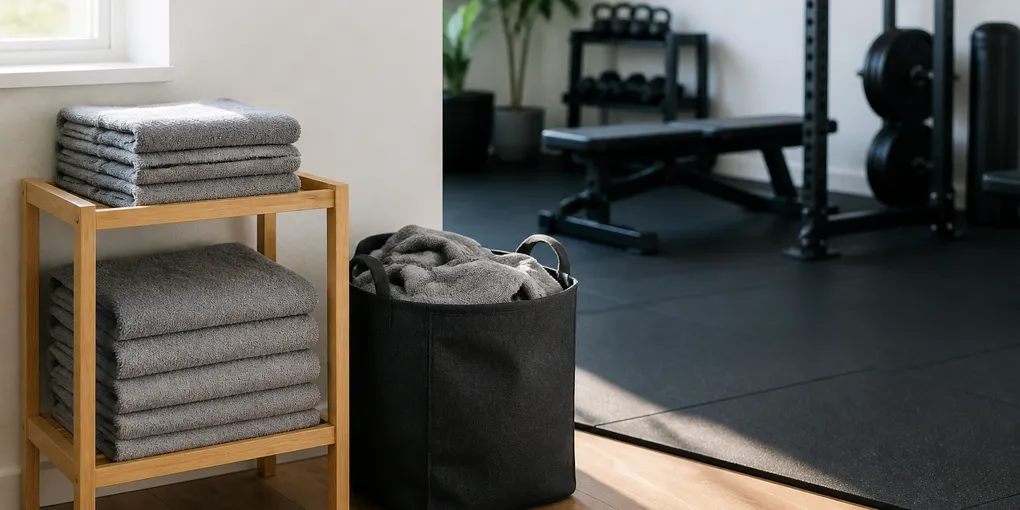
A Simple Towel Laundry Flow for Home Gyms
Evidence ExplainerWhen the towel from yesterday is on the bench and the clean stack is on a chair, the towel has no clear next stop. Give your gym one clean-towel shelf, one used-towel endpoint, and one wash trigger. That small route makes the right move obvious at the beginning and end of a session.
The goal is a short, repeatable route that keeps towels from drifting onto equipment, flooring, and furniture because the closest available surface becomes the default.
Make the clean-towel spot easy to reach before training
Pick one place for the towels you would take at the start of a workout: a shelf by the door, a basket on a cabinet, or one drawer near the bench. Choose a spot you can reach before beginning, such as a shelf near the gym door rather than storage elsewhere in the house.
Keep the spot narrow in purpose. Reserve it for folded, ready-to-use towels. A shallow shelf or open basket works when the stack is visible at a glance. A drawer works when dust or a shared room makes an open stack impractical.
Try this quick placement check:
- Stand where you normally enter the gym.
- Take the shortest path to the towel spot.
- Carry a towel to the bench, mat, or bike.
- Notice whether the shelf, basket, or drawer blocks that path or asks you to move equipment first.
If it takes an extra trip or a cabinet reshuffle to get a clean towel, the chair arm will win again. Put the clean stack where the pre-workout motion already happens.
Give used towels a different landing place
The used-towel endpoint can be a small hamper, a handled basket, or a hook with a separate basket below it. The format matters less than the location: it needs to be the easiest thing to reach after the workout, before you leave the room.
Set it near the exit, laundry route, or the place where you already put down a water bottle. Keep enough distance from the clean stack that the two locations feel distinct. A shelf on one side of a doorway and a hamper on the other is more memorable than two open baskets side by side.
For a compact room, a few physical cues keep the zones distinct:
- Put folded towels above waist height and the used-towel container on the floor or a low shelf.
- Use different materials, such as a wood shelf for clean towels and a fabric hamper for used ones.
- Leave enough open space that a towel cannot casually slide from the bench into the clean-towel area.
Those cues make the route easier to recognize. The useful test is simple: when you finish a workout, can you drop the towel in one place without opening a cupboard or crossing the room?
Choose a wash trigger you can actually notice
A pile becomes harder to manage when the decision is always “later.” Pick one clear trigger that tells you to move the used towels into the normal laundry routine. The right trigger depends on how often you train and how much room the used-towel container has.
Three workable options are:
| Wash trigger | Best fit | What to set up |
|---|---|---|
| Hamper reaches a marked fill line | A dedicated gym with room for a container | Put the line where the load still fits your normal wash routine |
| A regular laundry day | A household with an established wash day | Place the used-towel endpoint on the route to the laundry area the evening before |
| The clean shelf is nearly empty | A small setup with a limited towel rotation | Refill the shelf only after the used towels are moved to the laundry queue |
Use a cue that is visible without an app, note, or mental tally. A full small hamper is easier to act on than a vague promise to wash towels more often. If multiple people use the gym, choose a shared cue and keep it in the same place every time.
Let the laundry routine handle the laundry decisions
The towel station is only the handoff point. Once towels enter the laundry load, follow the care instructions for the towel and the directions for the products and machine you use. The American Cleaning Institute’s laundry guidance starts with sorting by color, fabric type, and care instructions, then selecting the appropriate washer and dryer settings. It also notes that new towels can shed lint, which is a practical reason to keep a first wash separate from lint-attracting items.
The gym flow has one job: get towels out of the training area and into the household routine you already use. If a towel has special care instructions, keep that decision with the care label rather than trying to encode it into the storage setup.
Reset the station in two minutes
After a wash day, return only fully dry, folded towels to the clean shelf. Empty the used-towel endpoint. Then clear any towel left on the bench, bike handle, or floor and move it to the endpoint instead of placing it back with the clean stack.
This reset is a useful moment to check whether the flow is too ambitious. If the hamper is always overflowing, make the container smaller or move the wash trigger earlier. If clean towels migrate to a chair, bring their shelf closer to the door. If the used basket keeps collecting clothes or bands, give those items their own home rather than enlarging the towel zone.
The system is working when there are only three obvious states: folded towels on the clean shelf, used towels in the endpoint, and towels already in the household laundry routine. Everything else is a placement problem you can see and adjust.
Evidence boundary
This is organization guidance, not a hygiene, infection-prevention, or safety protocol. The CDC describes hygiene broadly as behaviors that support cleanliness in people and home environments; it does not supply a home-gym towel schedule. Use the care instructions for the specific towels, your appliance manuals, and any household needs that apply to you.
Frequently asked questions
Where should clean towels go in a home gym?
Put them on one shelf, basket, or cabinet spot that is easy to reach before a session and separate from the place used towels land.
What is a used-towel endpoint?
It is one named place—a hamper, basket, or hook—where a towel goes after use instead of returning to the bench, floor, or clean-towel shelf.
How do I choose a wash trigger for gym towels?
Choose a cue you can see and follow, such as a full hamper, a planned laundry day, or the point when the last clean towel is taken from the shelf. Then follow each towel’s care label.