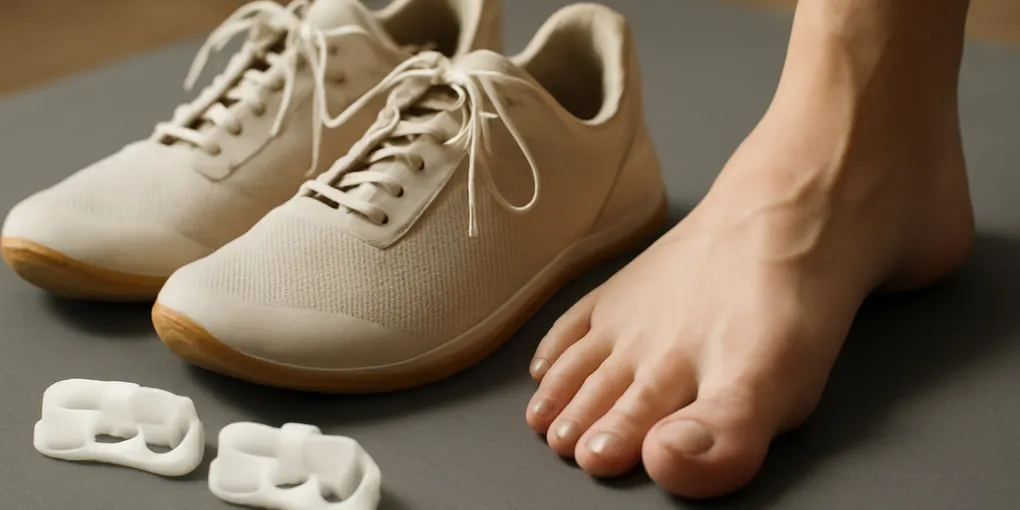
Toe Spacers for Foot Comfort: Evidence, Fit, and When They Are Not Enough
Evidence ExplainerQuick picks
Soft silicone toe spacers
★ Top pick Best first test- Best Use: Short at-home sessions for toe crowding, mild bunion rubbing, or shoe-fit experiments
- Caveat: They should not create numbness, skin breakdown, or new joint pain
Gel bunion spacer with loop
More targeted- Best Use: Separating the big toe from the second toe during brief home wear
- Caveat: A loop can rub if the size or material is wrong
Bottom line
Toe spacers are worth a cautious trial if your toes feel crowded, your big toe rubs the second toe, or you want to test whether more toe splay makes walking or light training feel better. Start by searching Amazon for soft silicone toe spacers, wear them at home for short blocks, and judge comfort by skin response, numbness, and whether your shoes still fit correctly.
Do not buy them expecting a bunion cure. A spacer can change toe position while it is on your foot. It cannot remodel a painful joint deformity, replace wide shoes, or make a narrow toe box safe for long walks.
Quick picks for foot-comfort trials
- Best first test: soft silicone toe spacers that flex easily, fit barefoot, and can be abandoned if they create numbness or skin marks.
- Better for big-toe rubbing: a gel bunion spacer with a loop, used briefly at home before any shoe-wear experiment.
- Bigger lever when shoes feel tight: wide toe-box walking shoes, because a spacer cannot fix a narrow upper that keeps compressing the forefoot.
What toe spacers can realistically do
A toe spacer creates temporary room between toes. That can reduce skin-on-skin rubbing, make toe-splay exercises easier to feel, and show whether a wider shoe might solve part of the problem. The most useful test is simple: put the spacer on for ten to twenty minutes at home, then check whether pressure points calm down or whether the device creates a new hot spot.
The effect is mechanical and local. If the problem is a tight shoe, a spacer may make that shoe feel worse because it spreads the toes into fabric that has no room. If the problem is a tender bunion bump, a big-toe spacer may reduce second-toe pressure but still leave the bump rubbing against the side of the shoe.
Evidence and limits
Toe spacers sit in a conservative-care category, not a miracle-device category. Orthopedic guidance for bunions usually starts with shoe changes, pads, spacers, activity modification, and pain control before surgery is considered. That does not mean every spacer works; it means low-risk mechanical comfort tools can be reasonable when symptoms are mild and skin stays healthy.
Small studies and clinical discussions of hallux valgus exercises often combine separators with foot exercises, taping, or shoe changes, which makes it hard to credit the spacer alone. For a buyer, that uncertainty matters. The sensible claim is not “toe spacers rebuild feet.” It is “a soft separator may reduce crowding discomfort and help you practice toe control if the fit is comfortable.”
How to choose a spacer
Choose soft silicone first. It should flex when you squeeze it and should not force the big toe aggressively outward. A four-toe yoga-style spacer can feel useful for barefoot mobility work, but it is often too bulky for shoes. A small gel bunion spacer with a loop is more targeted when the big toe and second toe rub.
Avoid hard plastic separators for a first test. They can create concentrated pressure, especially under the toes or between joints. Also avoid products that promise permanent correction without discussing shoes, symptoms, or fit. The device should feel boring, not like a brace fighting your foot.
Fit protocol for the first week
Day one: wear the spacer barefoot at home for ten minutes. Walk around, sit, and check the skin between each toe afterward. Stop if you notice numbness, tingling, sharp pain, skin blanching, or a red mark that does not fade.
Days two through four: increase to twenty or thirty minutes only if the first session was quiet. Add gentle toe spreading, short barefoot standing, or easy foot drills. Do not add long walks yet.
Days five through seven: test the spacer with your roomiest shoes only if the device fits without pushing the upper tight. If the shoe squeezes the toes once the spacer is in, the shoe is the wrong environment. Search Amazon for wide toe-box walking shoes before blaming the spacer.
When shoes matter more than spacers
If your toes immediately feel cramped with the spacer in place, the shoe is probably the bigger lever. A wider toe box, lower heel-to-toe drop, and upper material that does not press on the bunion bump can do more than a separator that only works when you are barefoot. Our treadmill-desk walking shoe guide is a useful comparison point because it treats toe-box room, quiet cushioning, and long-session comfort as fit variables rather than style details.
For runners and walkers, changing shoes too aggressively can irritate calves, Achilles tendons, or plantar fascia. Move gradually. Use the spacer at home, keep walks normal, and change one variable at a time. If a new shoe plus spacer makes your foot sore, you will not know which change caused it.
Who should be careful
Be careful if you have diabetes, neuropathy, poor circulation, fragile skin, recent foot surgery, open sores, or unexplained swelling. In those cases, pressure that feels minor can still create skin trouble. Get clinical guidance before wearing any device between toes for long periods.
Also stop shopping and get help if pain is worsening, the big toe is crossing under or over another toe, walking is changing, or a bump is red and inflamed. A spacer is not the right tool for every foot problem.
A practical buy-or-skip test
Buy a soft spacer only if you can name the exact pressure problem it is meant to test: big-toe rubbing, toe crowding during barefoot drills, or mild bunion irritation in otherwise roomy shoes. The first week should answer a narrow question: does a flexible separator reduce rubbing without numbness, skin marks, or new joint pain?
Skip the device if the real problem is a narrow shoe, worsening deformity, nerve symptoms, or a promise of permanent correction. In those cases, the better next step is roomier footwear or clinical guidance, not a harder spacer.
Sources and safety notes
The American Academy of Orthopaedic Surgeons describes bunion symptoms and conservative options such as shoe changes, padding, and spacers before surgical discussions (AAOS: bunions). StatPearls’ hallux valgus review summarizes the deformity and notes conservative management options for symptom relief rather than reversal (NCBI Bookshelf: Hallux Valgus).
Toe spacer FAQ
Do toe spacers fix bunions?
No. They can hold toes apart while worn and may reduce rubbing, but they do not reverse the bony alignment changes of hallux valgus.
Should toe spacers hurt at first?
No. Mild stretching awareness is different from pain. Remove the spacer if you feel numbness, tingling, sharp pressure, or skin irritation.
Are toe spacers better than wide shoes?
Usually no. Roomier shoes often matter more because they reduce the daily pressure that crowds the toes. A spacer is best used as a short comfort or mobility test alongside better footwear.