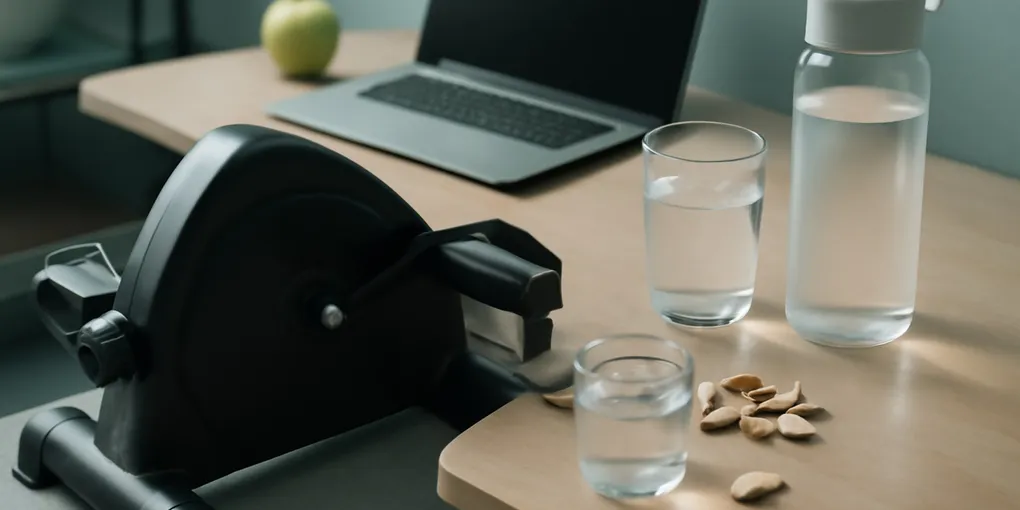
Under-Desk Exercise Bikes: Useful Movement Break or Another Chair Gadget?
Evidence ExplainerQuick picks
Magnetic under-desk exercise bike
★ Top pick Best quiet office choice- Best Use: Quiet seated movement breaks during calls, reading, or light work
- Caveat: Desk clearance and chair height decide whether it actually fits
Compact desk pedal exerciser
Best low-cost test- Best Use: Testing whether seated pedaling fits your workday before buying a larger unit
- Caveat: Cheaper friction units can feel jerky or noisy
Bottom line
An under-desk exercise bike is useful if it turns long sitting blocks into light, repeatable movement without disrupting work. It is not a substitute for brisk walking, strength training, or purposeful cardio. The best first choice for most offices is to search Amazon for a magnetic under-desk exercise bike, because magnetic resistance is usually quieter and smoother than cheap friction pedals.
If you are unsure whether you will use one, search Amazon for a compact desk pedal exerciser and treat it as a fit test. Desk clearance, chair stability, knee comfort, and noise matter more than the calorie number on the display.
Quick picks
- Best quiet office choice: magnetic under-desk exercise bikes with a low pedal height, wide base, and return policy in case your knees hit the desk.
- Best low-cost test: compact desk pedal exercisers that let you try 10-minute seated movement blocks before paying for a larger unit.
- Skip for now: high-resistance mini bikes with tall crank paths if your desk is low, your chair rolls, or you need silent calls.
What problem it solves
The real problem is not that office workers lack one more gadget. The problem is that long uninterrupted sitting makes movement harder to fit into a normal day. A desk bike can lower the activation cost: you can pedal lightly while reading, answering routine email, or taking an audio-only meeting.
That convenience matters. Public health guidance encourages adults to reduce sedentary time and accumulate regular physical activity across the week (WHO: physical activity). A desk bike helps only if it increases total movement rather than replacing walks or workouts you already do.
What the evidence supports
Desk pedaling is best viewed as light activity. It can raise energy expenditure above sitting and may help some people break up sedentary time, but it usually will not feel like a real cycling workout. The resistance is low, the posture is constrained, and the work must stay quiet enough to coexist with tasks.
That is not a failure. Light movement has a different job. It keeps the legs moving, adds low-intensity volume, and gives people a way to interrupt long chair blocks. If your goal is structured cardio fitness, compare it with a mini stepper for low-impact cardio or a walking plan instead.
Buyer checklist
Before buying, measure three things: floor-to-desk clearance, chair height, and knee path. Your knees need room at the top of the pedal stroke. If the desk is low or the chair is soft and rolling, you may end up leaning back awkwardly.
Prioritize these features:
- magnetic resistance for smoother quiet use;
- a wide base that does not rock under the desk;
- low pedal height if your desk has limited clearance;
- enough resistance settings to stay easy during work;
- a return policy in case your desk geometry fails.
Do not overpay for a console. The built-in distance and calorie estimates are often rough. Time used, comfort, and whether you still stand up between tasks are better success markers.
How to use it without irritating knees
Start with 5 to 10 minutes at very low resistance. Keep the seat close enough that the knee is not reaching at the bottom, and far enough that the hip is not cramped at the top. If the bike forces your knees outward, your desk setup is wrong for that model.
Use it for easy blocks. A desk bike should not make typing sloppy, shoulders tense, or breathing hard. If you want a harder session, move away from the desk and use equipment designed for exercise posture.
Who should skip it
Skip the desk bike if you need silence and cannot tolerate any floor vibration. Skip it if you already have knee pain with cycling motion, a very low desk, or a chair that rolls backward unless locked. Also skip it if the device becomes an excuse to avoid standing, walking outside, or doing resistance training.
People with cardiovascular, neurologic, or orthopedic limits should follow clinician-specific advice. Low intensity is not the same as universally appropriate.
Sources and practical limits
Research on workplace sitting consistently supports interrupting prolonged sedentary time, but no desk gadget erases the need for broader physical activity. The CDC summarizes adult activity targets and the value of combining aerobic and muscle-strengthening work (CDC: adult physical activity basics). Device-specific claims should be checked against manufacturer dimensions and return policies because fit under a desk is a geometry problem, not a generic health claim.
How to test one during the return window
Use the first week to answer fit questions, not fitness questions. Can you pedal without your knees hitting the desk? Does the chair stay planted? Can you use it for 10 minutes without changing your typing posture or shrugging your shoulders? Does anyone nearby hear the resistance unit? These decide whether the device will survive normal workdays.
Run three short trials: one reading block, one audio call, and one routine email block. If the bike distracts you during all three, it will probably become clutter. If it works for one or two, keep it for those specific windows instead of forcing all-day use.
Where it fits in a weekly routine
A desk bike pairs best with a simple floor rule: use it for light pedaling, then still stand up between tasks. For example, pedal 10 minutes during a morning call, walk for two minutes at lunch, and keep normal strength or cardio sessions separate. That mix prevents the desk bike from becoming a false sense of completion.
If you already do structured zone 2 or walking workouts, keep those. The desk bike is a supplement for sedentary gaps. If you do almost no activity, it can be a useful on-ramp, but the next step should still be regular walking and basic resistance work.
FAQ
Does an under-desk bike count as cardio?
It can count as light aerobic activity if your heart rate rises and you pedal continuously. For most users, it is better classified as movement-break volume rather than a full cardio workout.
Is magnetic resistance worth it?
Usually yes for work settings. Magnetic units tend to be smoother and quieter than the cheapest friction pedals, which matters if you plan to use it during calls.
Will it bother my knees?
It can if the desk is too low, the chair position is wrong, or resistance is too high. Start easy and stop if you feel joint pain rather than mild muscle work.
Is a desk bike better than a walking pad?
It depends on your workspace. A desk bike is easier to use seated and often cheaper. A walking pad usually gives more whole-body movement but requires more space, attention, and noise tolerance.