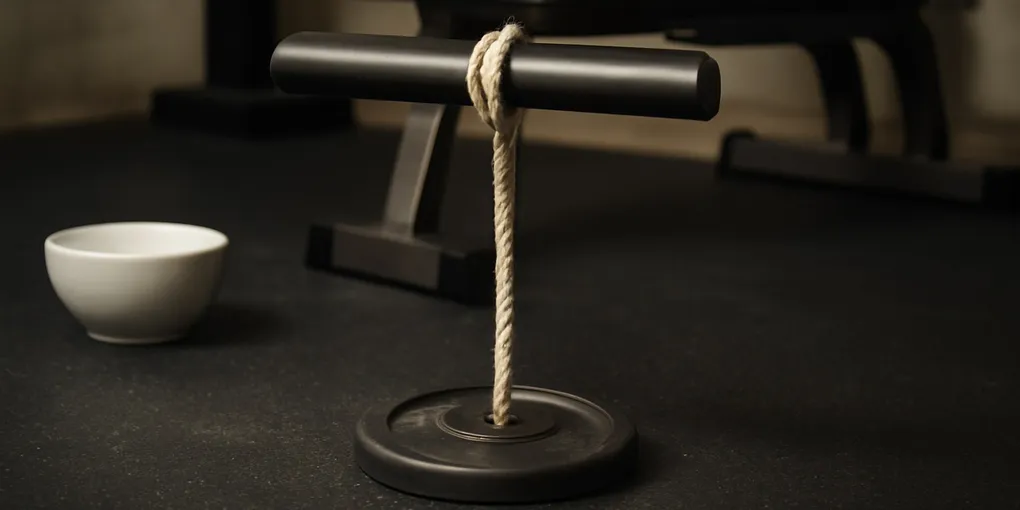
Wrist Roller and Forearm Trainer Buyer Guide: Grip Strength Without Elbow Drama
Buyer's GuideYes4All wrist and forearm blaster style roller
$18-30
Quick picks
| Product | Key Specs |
|---|---|
| See price on Amazon | — |
| See price on Amazon | — |
| See price on Amazon | — |
Product availability, certifications, and retailer details can change; check the current Amazon page before buying.
Bottom line
A wrist roller is worth buying only if it solves a specific forearm problem: weak wrist extension under a barbell, grip endurance that fades before your back work, or a need for low-skill forearm loading at home. It is not the safest first tool for angry elbows. The same movement that makes the forearms burn can overload wrist flexor and extensor tendons if you chase fatigue every session.
For most home gyms, a plate-loaded roller such as a Search Amazon for Yes4All wrist roller options is the best starting point because it is cheap, simple, and easy to load in small jumps. If your goal is tendon-friendly forearm work rather than maximal rolling, a Search Amazon for TheraBand FlexBar forearm trainers is usually the calmer purchase.
Quick picks
- Best simple home-gym pick: Yes4All-style wrist roller with a straight handle, rope, and plate loading. Buy it if you have small plates and can progress in 2.5 to 5 pound jumps.
- Best heavier grip-athlete pick: IronMind Twist Yo Wrist style roller. Buy it only if you already tolerate forearm training and want a thicker, harder handle.
- Best elbow-cautious pick: TheraBand FlexBar. It is not the macho option, but it lets you train pronation, supination, and eccentric control with less setup.
What a wrist roller actually trains
A classic wrist roller loads wrist flexion on the way up and wrist extension on the reverse. That matters for lifters because grip is not just finger squeeze. Deadlifts, rows, pull-ups, carries, climbing, and racket sports all ask the wrist to keep position while the fingers hold tension.
The catch is that the forearm tendons are small compared with the enthusiasm most people bring to grip work. Clinical guidance for lateral elbow pain generally favors progressive loading, symptom monitoring, and avoiding sudden spikes in tendon demand rather than testing pain tolerance every day (see the American Academy of Orthopaedic Surgeons overview of tennis elbow). That is why the best wrist roller for a beginner is not the one that makes the forearms cramp fastest. It is the one you can load gently and repeat.
How to choose the right style
Handle diameter changes the job. A thin handle feels easier to wrap and can be better for smaller hands. A thick handle shifts more work to the fingers and can become a grip event before the wrists get useful volume. If you are buying for general lifting, choose a moderate handle before a novelty thick grip.
Loading matters more than branding. A roller that accepts standard small plates is easier to progress than a fixed-resistance gadget. If your gym only has large 10-pound jumps, buy fractional plates or choose the FlexBar route. Tendons often tolerate weekly consistency better than aggressive load jumps.
Rope length is practical. A very long rope turns one set into a high-fatigue burn. A shorter rope lets you keep sets crisp. If the rope frays or slips, replace it before it becomes a dropped-plate problem.
Practical score
We score the simple plate-loaded wrist roller category at 8.4/10 for a home strength accessory. Load control is 30% of the score, handle comfort 20%, setup durability 20%, elbow-friendliness 15%, price 10%, and claim restraint 5%.
The FlexBar scores lower for maximal strength but higher for irritated forearms. If your elbow complains during pull-ups, rows, or keyboard work, the calmer tool may be the better tool.
First-month programming
Use the wrist roller after main lifting, not before heavy deadlifts or pull-ups. Start with one or two up-and-down passes, twice weekly. Stop the set while the motion is still smooth. If pain rises during the session or the next morning, reduce load or switch to unloaded wrist extension and rotation work.
A simple start is:
- One light plate, elbows near the ribs, shoulders relaxed.
- Roll up under control, then lower with the same control.
- Rest at least 90 seconds.
- Repeat once if the first pass stayed smooth.
Do not add weight until two sessions feel easy. The forearm pump is not the progress metric. Better signs are steadier rows, cleaner pull-up grip, and less wrist collapse under a bar.
Wrist roller vs grippers vs FlexBar
Hand grippers are useful when crushing strength is the target, but they do not train wrist extension or loaded lowering very well. Wrist rollers are better for lifters who lose wrist position. FlexBars are better for low-load rotation and gradual exposure.
If you already own a gripper and your elbow is fine, add a roller. If you have elbow symptoms, start with clinician-approved loading and consider the FlexBar before a heavy roller. If your sport is climbing, a roller is only a supplement. It does not replace fingerboard programming, recovery days, or skin management.
How this fits with other grip tools
If the wrist roller is your first grip purchase, compare it with our grip strength trainer guide before buying. Spring grippers are better when the goal is crush strength for a handshake, carry handle, or closing strength test. A wrist roller is better when the weak point is wrist position during rows, pull-ups, deadlifts, or racket-sport swings.
Climbers should be especially conservative. Finger tendons already get high-specificity stress from holds. Use a wrist roller as general forearm balance work after climbing days, not as a second high-intensity finger session. Lifters can place it after pulls, but should avoid pairing maximal gripper attempts, heavy farmer carries, and wrist roller burnouts in the same workout.
Buying mistakes to avoid
Do not buy a roller that requires a loading pin you do not own unless the total price still makes sense. Do not buy a doorway or cable attachment if you do not have a stable anchor and enough clear space. Do not choose a thick-handle model just because it looks harder; hand size and training age matter.
For apartments, check noise. A metal plate swinging against a door frame or rack upright is annoying and can damage paint. A short rope, rubber-coated plate, and controlled lowering make the tool more livable. For shared gyms, choose a compact roller that fits in a bag and does not monopolize a cable stack.
Small specs that matter
A useful wrist roller should be boringly solid. Look for a handle that is wide enough for both hands without forcing the wrists into an awkward narrow position. A rotating sleeve is nice but not mandatory. Knurled metal can feel secure, but aggressive knurling may tear skin during high-rep lowering. Rubber handles are kinder to hands but can get slippery with sweat.
Check the loading method before buying. Some budget rollers use a thin cord and clip that works with small plates but feels sketchy near heavier loads. Others use a strap that tracks more smoothly but is harder to replace. If the product photo shows the plate swinging near the knees, plan to use slow lowering and a clear stance so the plate cannot hit your shins.
Storage matters in small gyms. A short-handled roller fits in a drawer. A long bar-style roller may need wall storage. If you train in a living room, the quieter and smaller tool is the one you will actually use twice a week.
If you are unsure between two models, choose the one that lets you use the smallest load change. Forearm training improves through repeatable exposure, not through one heroic set. The best purchase is the tool that makes the easy version easy enough to repeat through several normal training weeks, including weeks when pulls, carries, and computer work already leave the forearms tired already.
Return-window test
Run three short sessions before the return window closes. Session one should confirm that the handle is not slippery and the rope tracks smoothly. Session two should test whether you can add or remove small plates quickly. Session three should happen after a normal pulling workout, because that is when elbow irritation usually reveals itself.
Keep the tool if the forearm work feels local, controllable, and repeatable. Return it if the handle tears your palms, the rope slips, or the only available load jumps make every set an elbow gamble. A cheap wrist roller is a good buy only when the setup lets you train gently.
Wrist Roller FAQ
Can wrist rollers cause elbow pain?
They can if load, volume, or frequency jumps faster than the tendons tolerate. Keep the first month boring: light plates, smooth reps, and no daily burnouts.
Should I roll with arms straight out?
Straight-arm rolling makes the shoulder the limiting factor for many people. For grip work, elbows near the ribs and shoulders relaxed usually keep the focus on the forearms.
Is a wrist roller useful for desk workers?
Maybe, but only if symptoms are not active. Desk workers often need breaks, ergonomic changes, and gentle extension/rotation work before loaded rolling. Persistent numbness, tingling, or night pain deserves medical evaluation.
Sources
- American Academy of Orthopaedic Surgeons: Tennis elbow overview
- NHS: Tennis elbow treatment and self-care
- American College of Sports Medicine: Resistance training progression position stand
Frequently Asked Questions
- A wrist roller trains wrist flexion, extension, and forearm endurance under load, while grippers emphasize crushing strength. Many lifters need less load and more control than a heavy gripper provides.
- Start so light that the final turn is smooth. For many people that is a 2.5 to 5 pound plate, not a heavy dumbbell plate.
- Avoid loaded wrist rolling during active elbow, wrist, or nerve symptoms unless a clinician has cleared a progression.