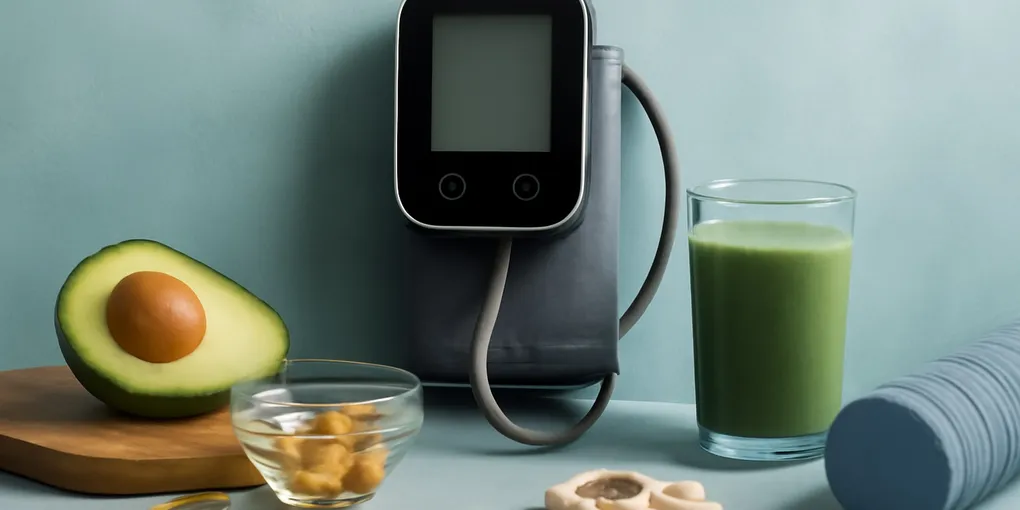
Wall Sit Protocol for Blood Pressure: How to Test Isometric Training Safely
ProtocolQuick picks
Validated upper-arm blood pressure monitor
★ Top pick Best safety baseline- Best Use: Home baseline readings and post-session trend checks
- Caveat: Choose the right cuff size and confirm accuracy with your clinician when possible
Non-slip exercise mat
Best setup support- Best Use: Foot traction during wall sits on smooth floors
- Caveat: A mat does not fix knee pain or poor wall-sit depth
Bottom line
Wall sits are the simplest way to test isometric training for blood pressure because they need no gym equipment and are easy to standardize. The goal is not to turn a blood-pressure problem into a leg endurance contest. The goal is a controlled, repeatable, submaximal hold that you can log alongside home blood-pressure readings (isometric exercise blood-pressure meta-analysis: PMID: 37491419).
If your blood pressure is uncontrolled, if you have chest pain, unexplained shortness of breath, fainting, dizziness, new neurological symptoms, or significant knee, hip, or back pain, do not start this protocol on your own. Get medical clearance first. If symptoms appear during a hold, stop, sit down, breathe normally, and seek urgent care when symptoms are severe or do not resolve.
Quick picks
- Search Amazon for validated upper-arm monitors — use this if you do not already have a reliable cuff for resting measurements.
- Search Amazon for non-slip exercise mats — useful if your shoes slide on tile, wood, or laminate.
For a non-exercise timing stack, see our morning bright light protocol. Keep experiments separate enough that you can tell which habit changed your readings.
Gear checks for a safe trial
The useful purchase here is usually the monitoring setup, not a complicated training tool. Check:
- Blood pressure monitor: use a validated upper-arm cuff that fits your arm and stores repeat readings.
- Wall and floor setup: choose a stable wall, shoes or a non-slip mat, and a knee angle you can hold without breath-holding.
- Stop conditions: chest pain, dizziness, unusual shortness of breath, or clinician restrictions override the protocol; the NHLBI lists chest pain, shortness of breath, and sudden neurological symptoms as urgent blood-pressure warning signs: https://www.nhlbi.nih.gov/health/high-blood-pressure.
Why wall sits may affect blood pressure
Isometric exercise loads muscle without visible joint movement. During a wall sit, the quadriceps, glutes, and trunk brace to hold position. That brief pressure stimulus is followed by vascular recovery, and repeated training may improve resting blood pressure in some adults. Meta-analyses generally suggest isometric training can lower systolic and diastolic blood pressure, but the response is individual and should not be treated as medication withdrawal advice (earlier isometric-training review: PMID: 24174307; newer network meta-analysis: PMID: 37491419).
The advantage of wall sits is standardization: wall angle, hold time, breathing, frequency, and rest periods are easy to repeat. The risk is turning a measured protocol into a max-effort challenge. For blood pressure, cleaner and calmer beats deeper and longer (the 2023 exercise-mode network analysis included isometric protocols as a distinct training category; PMID: 37491419).
Before session one: establish baseline BP
Use an upper-arm cuff that fits your arm. Sit quietly for five minutes with back supported, feet flat, and arm supported at heart level. Avoid caffeine, nicotine, hard exercise, and a large meal for about 30 minutes beforehand. Take two readings one minute apart and write down both numbers, the time, and any medication timing. If the two readings differ a lot, take a third and average the last two.
Do this for at least three mornings before judging the protocol. A seven-day baseline is better if you have time: morning and evening, two readings each, averaged in a simple spreadsheet or notebook.
The 4-week wall sit protocol
Step 1: set the wall angle
Stand with your back against a sturdy wall. Walk your feet forward until your knees bend to about 120 degrees, not a deep 90-degree chair position. Shins should stay roughly vertical, heels down, and knees tracking over toes. If your knees hurt, come higher. If your feet slide, use shoes with traction or a non-slip mat.
Step 2: choose the starter hold
Begin with 2 to 4 holds of 20 to 30 seconds. Rest 1 to 2 minutes between holds. Effort should feel like 5 to 7 out of 10 by the final seconds, not a trembling maximum. Stop the set if your form changes, you feel chest pressure, dizziness, unusual shortness of breath, headache that feels sudden or severe, or joint pain.
Step 3: breathe normally
Do not use the Valsalva maneuver. That means no breath-holding, hard bracing, or bearing down as if lifting a maximal weight. Use quiet nasal or mixed breathing. A simple cue is: inhale for two to three seconds, exhale for two to three seconds, jaw unclenched. If you cannot breathe smoothly, the hold is too hard.
Step 4: frequency and progression
Train three days per week on nonconsecutive days for four weeks. After week one, progress one variable at a time: add 5 to 10 seconds per hold, add one hold, or move slightly lower on the wall. Do not do all three in the same session. A practical ceiling for most self-tests is 4 holds of 45 to 60 seconds at a controlled angle. Longer maximal holds are not necessary for a blood-pressure experiment.
Step 5: keep other variables steady
Do not start a new supplement, sauna routine, aggressive diet, or hard interval block during the same four weeks if your goal is to learn whether wall sits help. Sleep, sodium intake, alcohol, stress, and medication adherence can move blood pressure more than a small training change, so keep the rest of the trial boring and documented (NHLBI high-blood-pressure basics: https://www.nhlbi.nih.gov/health/high-blood-pressure).
How to record blood pressure during the trial
Measure resting blood pressure at the same time of day, preferably before the wall-sit session or on waking. Do not judge the workout by a reading taken immediately after a hold; exercise can acutely raise pressure and make the number misleading. For trend tracking, compare weekly averages from the same measurement window and follow standard home-measurement positioning (CDC measurement guide: https://www.cdc.gov/high-blood-pressure/measure/index.html).
Your log only needs six fields: date, time, systolic/diastolic readings, pulse, wall-sit prescription, symptoms. Example: “May 31, 7:10 a.m., 128/79 and 126/78, pulse 62, 3 x 25 seconds at high angle, no symptoms.” Bring this log to your clinician if you are managing hypertension.
Who should skip or get clearance first
Skip unsupervised wall sits if you have uncontrolled hypertension, recent heart attack or stroke, unstable angina, chest pain with exertion, fainting spells, severe aortic stenosis, advanced heart failure, pregnancy complications involving blood pressure, or clinician instructions to avoid isometric strain. Also skip if knee, hip, or back pain worsens in the position.
People taking blood-pressure medication can still exercise, but changes in readings should be discussed with the prescribing clinician. Do not reduce or stop medication because a two-week average looks better.
FAQ
How hard should a blood-pressure wall sit feel?
Moderate-hard, not maximal. You should be able to breathe smoothly and stop under control. If you are shaking violently or holding your breath, raise the wall angle or shorten the hold.
Should I measure blood pressure right after wall sits?
Not for your main trend. Use resting readings taken under the same conditions each day. Immediate post-exercise readings reflect the acute exercise response, not your resting baseline.
Is a 90-degree wall sit better?
Not necessarily. A deeper angle is harder and may increase breath-holding, knee discomfort, and dropout. Start higher and progress only if the session stays symptom-free.
How long before I might see a change?
Use four weeks as the minimum trial and eight to twelve weeks for a stronger read. Judge weekly averages, not single numbers.
Sources
- Carlson DJ, Dieberg G, Hess NC, Millar PJ, Smart NA. Isometric exercise training for blood pressure management: a systematic review and meta-analysis.
- The CDC explains how to measure blood pressure correctly.
- The National Heart, Lung, and Blood Institute summarizes high blood pressure basics.