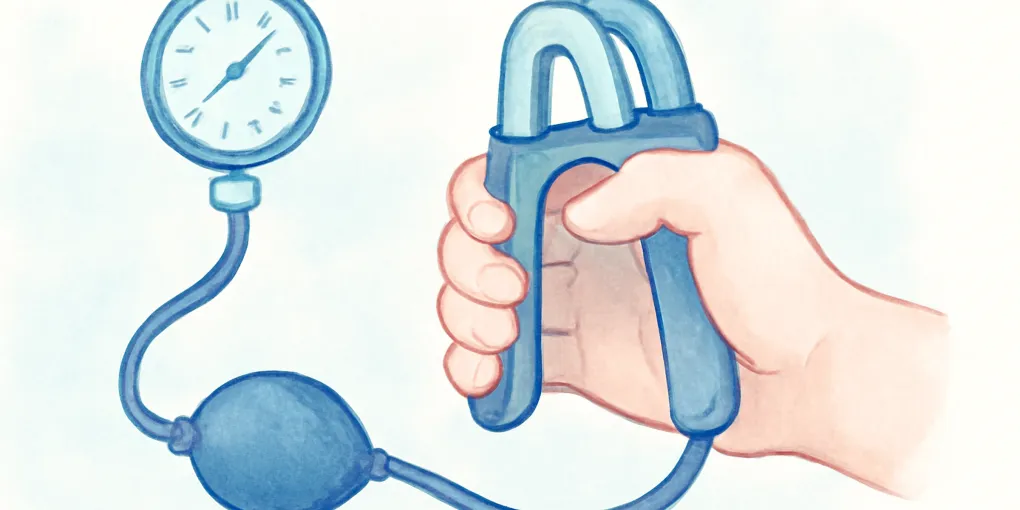
Isometric Handgrip for Blood Pressure: A Safe Starter Protocol
ProtocolQuick picks
| Product | Key Specs |
|---|---|
| See price on Amazon |
|
| See price on Amazon |
|
| See price on Amazon |
|
Product availability, certifications, and retailer details can change; check the current Amazon page before buying.
Isometric handgrip training is one of the simplest blood-pressure support habits to try at home, but it is also easy to oversell. The practical version is not a heroic squeeze until your forearms burn. It is a brief, moderate, repeatable protocol paired with home blood-pressure tracking and medical common sense.
Why Isometric Handgrip Gets Attention
Most people think of exercise for blood pressure as walking, cycling, or weight training. Those are still important. Isometric exercise is different because the muscle contracts without visible joint movement. With handgrip training, you squeeze a device and hold a steady contraction for a short period.
The reason this became interesting is that several reviews have found meaningful reductions in resting blood pressure after isometric exercise programs. Cornelissen and Smart’s exercise training meta-analysis in the Journal of the American Heart Association reported blood-pressure benefits across exercise modalities and helped establish that exercise type matters (doi:10.1161/JAHA.112.004473). A later network meta-analysis in the British Journal of Sports Medicine by Edwards and colleagues reported especially strong blood-pressure effects for isometric exercise training compared with some other modalities (doi:10.1136/bjsports-2022-106503).
That does not mean a handgrip tool cures hypertension. Blood pressure is affected by sodium intake, sleep apnea, alcohol, body weight, medications, stress, kidney function, and genetics. Isometric handgrip is best framed as a low-time-cost adjunct that may help some people build consistency while they keep doing the bigger things.
The Four-Week Starter Protocol
Start with three sessions per week on nonconsecutive days. Each session uses four two-minute holds, alternating hands, with one to two minutes of easy rest between holds. The effort should feel firm and controlled. You should be able to breathe normally and stop instantly if symptoms appear.
Week one is a familiarization week. Use a very light to moderate squeeze and learn what steady breathing feels like. Do not chase maximum effort. If you own a dynamometer or a smart handgrip trainer, estimate a comfortable percentage of maximum. If not, use a subjective effort around 4 to 5 out of 10.
Week two repeats the same session structure, but the holds can become slightly more consistent. The goal is not to squeeze harder every time. The goal is to make the four holds boring, symmetrical, and symptom-free.
Weeks three and four are where you decide whether this habit fits. If sessions remain easy and your blood-pressure tracking is stable, keep the moderate effort. If hand, elbow, shoulder, chest, or head symptoms appear, stop the protocol and reassess. Higher effort is not automatically better for a person managing cardiovascular risk.
Breathing Is Not Optional
The most important safety cue is breathing. Breath-holding during a hard squeeze can create a Valsalva maneuver, which may spike blood pressure acutely. That is the opposite of the conservative goal.
Use a simple rhythm: inhale before the hold, then exhale slowly while the contraction starts. Keep the jaw relaxed. If you notice your face tightening or your breath stopping, the contraction is too hard. Reduce effort before you add any more training time.
A good home protocol should feel almost underwhelming. The benefit, if it appears, comes from repeated exposure over weeks, not from turning each hold into a test of willpower.
How to Track Blood Pressure Properly
A validated upper-arm cuff is more important than a fancy handgrip device. The American Heart Association blood-pressure guideline emphasizes accurate measurement technique because bad technique can make numbers look better or worse than reality (Whelton et al., Hypertension, doi:10.1161/HYP.0000000000000065).
Measure at the same time of day, seated, after five minutes of rest, with feet flat and the cuff at heart level. Avoid caffeine, nicotine, hard exercise, and a large meal shortly before measuring. Take two readings one minute apart and record the average.
Do not judge the protocol from one reading. Blood pressure varies from hydration, sleep, stress, timing, and measurement error. A useful home trial compares weekly averages over at least four weeks. If you are already under medical treatment, share the log with your clinician before changing anything.
Product Selection
You can search Amazon for adjustable hand gripper — see current price on Amazon, digital hand dynamometer — see current price on Amazon, and validated upper arm blood pressure monitor — see current price on Amazon. Compare current listings by grip range, measurement readout, validation claims, recent reviews, and return policy before buying.
For the handgrip tool, prioritize adjustability, smooth handles, and a resistance range that includes easy settings. For the cuff, prioritize an upper-arm design, correct cuff size, memory storage, and validation by a recognized listing when available. Wrist cuffs are convenient but more sensitive to position error.
Avoid any product that implies it treats hypertension by itself. A gripper is a training aid. A cuff is a measurement aid. Neither replaces diagnosis, medication, or clinician-directed risk management.
G6 Composite Scoring Framework
| Criterion | Weight | What earns a high score |
|---|---|---|
| Research | 30% | Protocol aligns with isometric exercise literature and conservative home monitoring |
| Evidence Quality | 25% | Claims stay limited to adjunct blood-pressure support, not treatment promises |
| Value | 20% | Low-cost gripper plus reliable cuff, not unnecessary gadgets |
| User Signals | 15% | Comfortable handles, easy tracking, repeatable routine |
| Transparency | 10% | Clear safety warnings, cuff sizing, and no disease-cure claims |
Use this scorecard to choose the habit and equipment, not to crown a magic device. The highest-value setup is usually a reliable cuff, a simple gripper, and a boring log.
Who Should Not Start Without Medical Clearance
Do not start this protocol casually if your blood pressure is uncontrolled, if you have recent chest pain, recent stroke or heart attack, fainting, severe aortic stenosis, unstable arrhythmia, advanced vascular disease, or any clinician exercise restriction. Also be careful if gripping aggravates arthritis, carpal tunnel symptoms, tendon pain, or shoulder pain.
Symptoms matter. Stop immediately for chest pressure, unusual shortness of breath, dizziness, severe headache, vision changes, numbness, or pain that feels neurological or vascular. A two-minute handgrip hold should never feel medically dramatic.
How It Fits With the Bigger Plan
Isometric handgrip training is not a substitute for aerobic activity, resistance training, sleep, sodium awareness, alcohol moderation, or medication adherence. It is a small support habit. The best use is to attach it to an existing routine, such as after brushing teeth or before a walk, so it does not compete with larger health behaviors.
If your main issue is sedentary time, walking matters more. If your main issue is high sodium intake, food choices matter more. If your main issue is untreated sleep apnea, a handgrip tool is not the bottleneck. Match the intervention to the real constraint.
Common Mistakes
The first mistake is squeezing too hard. A moderate protocol repeated calmly beats an intense protocol that causes breath-holding. The second mistake is measuring blood pressure immediately after the session and treating that number as progress. Track resting readings at a consistent time instead.
The third mistake is buying a device before buying a cuff that fits. Without reliable measurement, you cannot tell whether the habit is helping. The fourth mistake is using the protocol to rationalize skipping medical follow-up. If your readings are high, bring the log to a clinician.
Troubleshooting the Protocol
If your forearms fatigue before the two-minute hold ends, lower the effort rather than shortening every hold. The protocol is designed around a steady cardiovascular stimulus, not grip-strength failure. A person who turns each hold into a max-effort crush is training a different quality and may create unnecessary spikes in pressure, tendon irritation, or breath-holding.
If one hand is much weaker than the other, use the weaker side to set the effort target. The goal is symmetry and repeatability. It is fine if one side feels slightly easier. What you should avoid is squeezing the stronger side hard and the weaker side desperately just to make the numbers match.
If your blood-pressure readings rise during the first week, do not panic from one or two readings. Review measurement technique, timing, caffeine, stress, and sleep. If averages remain higher or symptoms appear, stop the protocol and ask a clinician. A supportive habit should not create a confusing safety problem.
Pairing It With Walking and Strength Training
The best weekly plan is usually boring: walk most days, lift or do resistance training twice weekly, and use handgrip sessions as a tiny add-on. Place handgrip work after an easy walk or during a calm part of the day. Avoid doing it during an argument, after a large caffeine dose, or immediately after hard intervals.
If you already lift weights, do not treat handgrip work as a forearm finisher. Keep it separate from heavy deadlifts, farmer’s carries, climbing, or other grip-intensive sessions until you know how your elbows and hands tolerate the volume. Tendons often complain after the enthusiasm phase, not during the first easy week.
People who enjoy metrics can track resting heart rate, average morning blood pressure, sleep duration, sodium intake, and session adherence. Do not track so many numbers that the habit becomes stressful. A simple paper log with date, readings, and session completion is enough.
When to Retest and Decide
Give the protocol four to eight weeks before deciding whether it earned a place in your routine. Blood pressure changes are noisy, and a short trial can be distorted by travel, illness, poor sleep, or a stressful work week. Compare weekly averages, not isolated best readings.
If your average improves and the sessions feel safe, continue at the same dose rather than escalating endlessly. If nothing changes, that is useful information. Drop the handgrip habit and invest the time in walking, resistance training, nutrition, sleep, or clinician follow-up. The goal is better risk management, not loyalty to a gadget.
Quick Setup Checklist
Before the first session, set up the environment. Put the cuff, gripper, timer, and log in one place. Sit in a chair that lets your feet rest flat. Choose a time that is not immediately after caffeine, hard exercise, nicotine, or a stressful meeting. The more repeatable the setup, the easier it is to interpret your readings.
Record baseline blood pressure for several days before judging the training effect. This baseline prevents a common error: starting a new protocol on a randomly high day and celebrating regression to the mean as success. Baseline data also helps your clinician see whether home readings are consistent with office readings.
During each hold, keep shoulders down, wrist neutral, and jaw relaxed. If the gripper digs into the palm, use a different handle or reduce force. Small comfort problems become adherence problems. A protocol designed to support cardiovascular health should be easy enough that you can repeat it calmly for weeks.
Bottom Line
Isometric handgrip training is promising because it is simple, brief, and supported by exercise-blood-pressure research. Use it conservatively: three sessions weekly, four controlled holds, normal breathing, and consistent cuff tracking. If it lowers your weekly average, great. If it does not, stop treating it as the centerpiece and focus on higher-impact health levers.
Frequently Asked Questions
- Meta-analyses suggest isometric exercise can reduce resting blood pressure in some adults, but it should be treated as an add-on to medical care, not a replacement for medication or clinician guidance.
- Most published protocols use moderate effort, often around 30 percent of maximum voluntary contraction. At home, use a conservative effort that feels firm but controlled and does not cause breath-holding.
- People with uncontrolled hypertension, recent cardiovascular events, chest pain, fainting, severe vascular disease, or clinician exercise restrictions should not start without medical clearance.
- A measurable adjustable gripper is useful, but a validated upper-arm blood pressure cuff and consistent tracking routine matter more than an expensive grip tool.