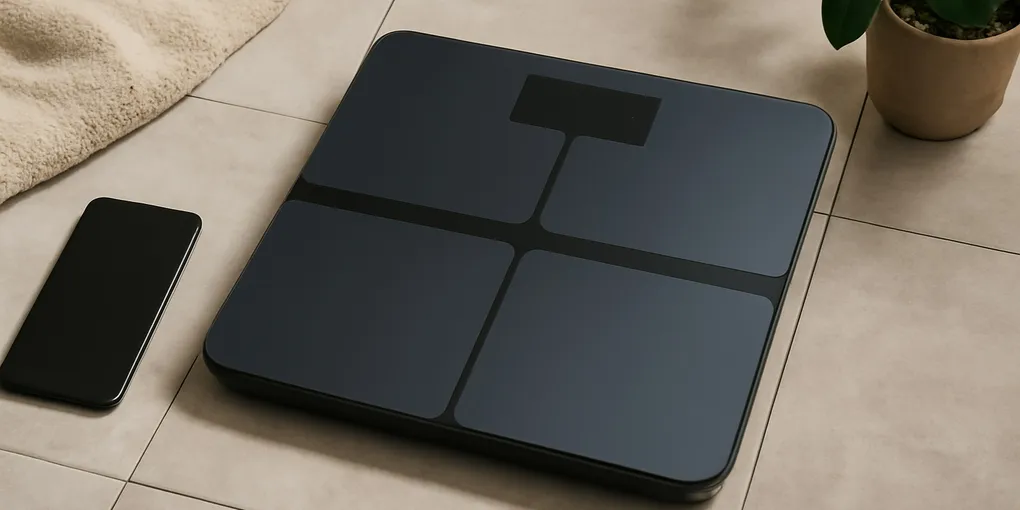
Withings Body Scan Review: Smart Scale Data Without Overreacting
ReviewWithings Body Scan Scale
Premium scaleBest Use: Advanced app trends
$300–400
Quick picks
| Product | Key Specs |
|---|---|
| See price on Amazon |
|
| See price on Amazon |
|
Product availability, certifications, and retailer details can change; check the current Amazon page before buying.
Bottom line
The Withings Body Scan is most useful for people who want a consistent home trend dashboard, not a clinical diagnosis from a bathroom scale. Its value comes from repeated measurements under similar conditions, app clarity, and whether the data changes behavior in a calm way. Treat body-composition, vascular-age, and nerve-health outputs as screening-style signals to discuss with a clinician when concerning, not as standalone medical answers. If daily numbers trigger anxiety or compulsive checking, reduce measurement frequency or skip this category; FDA consumer-device guidance makes the same distinction between wellness information and diagnosis/treatment claims (FDA wellness devices).
Who this is for
This guide is for adults who want a premium smart scale for weight trends, household syncing, and Withings-specific body-composition estimates without treating the dashboard as diagnosis. It is not medical advice. If you have an implanted electronic device, are pregnant, have an eating-disorder history, have severe edema, or are following a clinician-prescribed monitoring plan, check device warnings and clinician guidance before using impedance or ECG-style features.
A useful purchase decision starts with a narrow Withings question: do you need the Body Scan handle and advanced estimates, or would a lower-cost Body Smart/Body Comp scale give enough weekly trend data? Vague goals such as “optimize health” make it too easy to pay for metrics you will not interpret well.
Practical score
| Factor | Weight | Score | Rationale |
|---|---|---|---|
| Research | 30% | 6.9 | Related physiology and adjacent clinical evidence exist, but direct consumer-product trials are limited (FDA wellness devices). |
| Evidence Quality | 25% | 6.4 | Best evidence supports careful use in specific contexts rather than universal claims. |
| Value | 20% | 7.1 | A simple, durable product can be worthwhile if it replaces guesswork or improves adherence. |
| User Signals | 15% | 7.0 | Most users can judge comfort, adherence, and obvious downsides within a short trial. |
| Transparency | 10% | 7.6 | Specs, materials, sizing, return policies, and outcome tracking are checkable before purchase. |
| Composite | 100% | 6.9 | Worth considering with conservative expectations and a stop rule. |
Evidence snapshot
References worth checking before trusting a smart scale include: CDC guidance on setting weight-management goals and using weight measures in context: https://www.cdc.gov/healthy-weight-growth/losing-weight/index.html; a review of bioelectrical impedance analysis assumptions and limitations: https://pubmed.ncbi.nlm.nih.gov/30974817/; FDA information on digital health device considerations and software functions: https://www.fda.gov/medical-devices/digital-health-center-excellence/device-software-functions-including-mobile-medical-applications; and Withings safety/legal information for Body Scan impedance and ECG features: https://www.withings.com/us/en/legal/body-scan.
The evidence base is strongest for trend tracking, not precise diagnosis. Bioelectrical impedance estimates are affected by hydration, timing, skin temperature, recent exercise, meals, and algorithms, so a premium scale should be judged by consistency, exportability, privacy settings, and whether the data changes useful behavior.
A good rule is to separate weight trend, impedance estimate, and medical features. Weekly body-weight averages can be useful; single body-fat readings and app flags should not override clinician guidance, especially for people with implanted devices or known cardiovascular concerns.
Buying criteria
| Criterion | What to look for | Why it matters |
|---|---|---|
| Measurement purpose | weight trend, multi-user household tracking, athlete body-composition estimates, or cardiometabolic curiosity | Body Scan is overkill if a basic scale answers the real question |
| Impedance warnings | clear manufacturer guidance for pacemakers, implanted devices, pregnancy, and neuropathy features | premium health signals are not appropriate for every user; check manufacturer warnings before use (Withings Body Scan safety) |
| Data export | Apple Health/Google Fit/CSV compatibility and easy weekly averaging | keeps trends usable outside the Withings app |
| Subscription/app friction | what works without paid add-ons, how ads/prompts appear, and whether the app supports every household member | avoids buying premium hardware for a frustrating dashboard |
| Bathroom fit | stable surface, readable display, handle storage, and Wi-Fi/Bluetooth reliability | daily friction determines whether trend data stays consistent |
Before buying, compare current price, return terms, app requirements, and whether the handle-based segmental measurements matter enough to justify the premium over a cheaper Withings model: See current Withings Body Scan options on Amazon.
Practical protocol
Use the scale as a weekly trend tool, not a daily verdict. Weigh under similar conditions, then compare seven-day weight averages and longer body-composition trends rather than single impedance readings. If you use the handle, stand consistently and treat segmental readings as directional estimates, not proof that one limb gained muscle overnight.
Set app boundaries before the novelty wears off. Turn off noisy notifications, decide which household members can see shared data, and export trends if your clinician or coach needs them. If the dashboard pushes anxiety, restriction, or repeated checking, the premium feature set is working against the purpose.
For a health device with clearer clinical stakes, see our home blood pressure monitor protocol. The same principle applies here: consistent timing and trend interpretation beat reacting to one surprising number.
Safety notes
Stop using impedance and nerve/vascular-style features until you have checked the manufacturer guidance if you have an implanted electronic device, are pregnant, have severe neuropathy, have open foot wounds, or have been told to avoid bioelectrical impedance. A bathroom scale cannot diagnose cardiovascular, neurologic, or metabolic disease.
Be careful with shared household profiles. Children, teens, and anyone with a history of disordered eating may be harmed by frequent body-composition dashboards. In those cases, a basic weight-only scale, blind weights at a clinic, or no scale at all may be safer.
Common mistakes
The first mistake is treating body-fat percentage changes of a few tenths as real tissue change. Hydration, sodium, alcohol, recent training, and foot contact can move impedance estimates. The second is ignoring app lock-in: if the scale does not export in a way you will use, the premium sensors become decoration.
Another mistake is upgrading for ECG-style, vascular-age, or nerve-health language without knowing what the result will change. If a concerning reading would send you to a clinician anyway, the device should be viewed as a prompt for follow-up, not a diagnostic substitute.
FAQ
Is a premium body-composition scale necessary?
No. A basic digital scale or the lower-cost Withings Body Comp is enough for many people who only want body-weight trends. Body Scan makes more sense if you specifically want the handle, household syncing, app ecosystem, and premium health-estimate features.
How long should body-scale trends be tracked?
Look at weekly averages for at least a month before interpreting trend direction. Daily weight is useful for smoothing noise, but daily body-fat or vascular-style changes should not drive diet or training decisions.
Who benefits from the premium Withings features?
People who already use the Withings ecosystem, share a scale across multiple adults, want automatic trend export, or specifically value segmental handle measurements are the best candidates. If you will ignore the app, buy a simpler scale.
Should supplement changes be judged by scale metrics alone?
No. Creatine, carbohydrate intake, sodium, hydration, and menstrual-cycle phase can all move water and impedance estimates. Judge supplements by the outcome they were bought for, not by a single body-composition dashboard; bioimpedance estimates are hydration-sensitive enough that standardized measurement conditions matter (PMID: 30974817).
Final recommendation
Consider Withings Body Scan if you want a premium connected scale, understand impedance limitations, and will use weekly trends rather than daily dashboard drama. Skip it if body-composition numbers increase anxiety, if a basic scale already answers your question, or if implanted-device/pregnancy/manufacturer warnings apply (Withings Body Scan safety).
Smart-scale options worth comparing
| Check current price | Product | Why compare it |
|---|---|---|
| Search Amazon | Withings Body Scan | Premium pick for people who specifically want the handle-based segmental and vascular/nerve-health feature set |
| Search Amazon | Withings Body Comp | Lower-cost Withings alternative when trend tracking matters more than the Body Scan handle |
| Search Amazon | Medical tape measure | Useful companion for waist trend checks because impedance estimates can swing with hydration |
Do not buy based on star rating alone. Read the one-star and three-star reviews for fit problems, durability complaints, confusing setup, and return friction. Those details often predict whether a product will survive normal use better than the marketing page does.
Smart scale review details
A smart scale is a trend tool, not a body-composition truth machine. Bioelectrical impedance estimates shift with hydration, sodium intake, menstrual cycle phase, skin temperature, recent exercise, alcohol, and meal timing. The most useful protocol is boring: weigh at the same time under similar conditions and compare weekly averages. Ignore tiny day-to-day changes in body fat percentage.
The appeal of a premium scale is convenience. Automatic syncing, multi-user recognition, and a stable app can reduce manual logging. The downside is false precision. If a dashboard makes you anxious, changes eating behavior in a harmful way, or turns normal fluctuations into failure, the product is a poor fit no matter how polished the hardware feels.
Before buying, check whether the app exports data, whether required subscriptions exist, whether the scale supports your household, and whether privacy settings are clear. People with implanted medical devices should review manufacturer warnings and clinician advice before using impedance features.