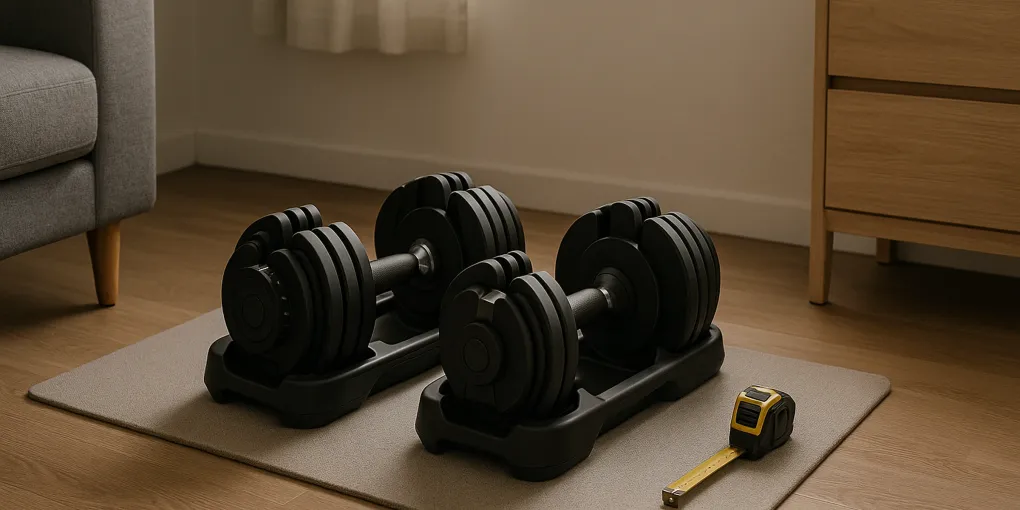
Best Adjustable Dumbbells for Small Spaces
Buyer's GuideQuick picks
Core Fitness Adjustable Dumbbell Weight Set
PowerBlock Elite EXP Adjustable Dumbbells, Stage 1
What small-space shopping means
The useful question is not whether adjustable dumbbells are compact in the abstract. It is whether the dumbbells, their storage cradle, and the access route fit the location you have in mind. Start with the floor or shelf area where the set will live, then compare that space with current product documentation.
Two details deserve separate attention: the stored footprint and the adjustment design. A set can occupy a modest area in its cradle while still having a shape or change process that does not suit the way you plan to store it. This guide keeps the comparison to just those observable details rather than treating any design as a universal winner.
For broader context, see our adjustable-dumbbell buying guide, home-gym adjustable dumbbell comparison, and compact equipment planning guide.
How to compare a system in a tight room
Before shopping, note the intended storage area, nearby furniture, and the route from delivery point to that location. Then use current manufacturer documentation to check the dumbbell and cradle dimensions. Do not rely on a product photo alone to answer whether the arrangement fits your room.
Next, compare the adjustment system in neutral terms. A quick-change design and a selectorized design can present different storage forms and handle shapes. The relevant decision is whether the documented configuration answers your space and storage questions—not whether one format is inherently better.
Two product options
Core Fitness Adjustable Dumbbell Weight Set
Core Fitness Adjustable Dumbbell Weight Set is one of the two product identities verified for this refresh. Use the current manufacturer documentation to check its dimensions, storage cradle, and adjustment details against your intended location. Skip it if those current details do not fit the space you measured.
PowerBlock Elite EXP Adjustable Dumbbells, Stage 1
PowerBlock Elite EXP Adjustable Dumbbells, Stage 1 is the other verified candidate. Compare its current documented dimensions, handle form, and storage arrangement with the same measurements you used for the first option. Skip it if the current documentation leaves a material room-fit question unanswered.
A simple storage check before checkout
Use this short checklist before you buy:
- Measure the planned storage location and the access route to it.
- Read the current manufacturer documentation for the dumbbell and cradle dimensions.
- Check how the system is stored between uses and whether that arrangement suits the room.
- Confirm the return and warranty terms directly with the seller or manufacturer before purchase.
The current Amazon listing is a purchase destination, not a substitute for product documentation. Product pages, dimensions, and policies can change, so confirm the details that matter to your setup at the time you shop.
Read the dimensions as a storage map
Product dimensions are most useful when you map them to a particular location. Write down the width, depth, and height of the intended storage area, then keep that note beside the current product documentation while you compare models. A flat floor area, a shelf, and the bottom of a closet are different storage situations even when they appear to have similar square footage.
The dumbbell set is only one part of the footprint. Look for the dimensions of the stored system, including its cradle or tray when that is how the product is supplied. If a listing presents dimensions without explaining whether the cradle is included, check the manufacturer material or ask the seller before treating the number as a room-fit answer. A measurement that describes one component may not describe the space needed for the complete stored arrangement.
Height can matter too. A low shelf may accommodate a dumbbell but not leave room to lift it from a cradle. A cabinet can fit the listed dimensions while still making the handle difficult to reach. Those are logistical questions, not product-quality judgments. The right response is to compare the current documentation with the actual location rather than assume that a compact category label resolves them.
Compare the adjustment layout, not a marketing label
The Core Fitness and PowerBlock candidates use different product names and design descriptions. That difference is a reason to inspect the current product material, not a reason to infer that either one is better for every room. Product photos, manuals, and current listing images can help show how the dumbbell sits in its storage arrangement and how the selected configuration is presented.
When reviewing an adjustment layout, keep the questions concrete. Does the documentation show a storage cradle? Is the handle shape visible? Does the product description identify the exact model or stage? Is there a current manual, support page, or warranty page that applies to the variant in the listing? If any of those answers is unclear, pause before purchase instead of filling the gap with an assumption from a similar-looking product.
This approach also helps when sellers bundle accessories or use abbreviated titles. Confirm the exact product identity and included configuration on the current listing. A changed model name, different cradle, or different included component can alter the storage comparison even when the general product family looks familiar.
Plan the path to the storage location
The final room-fit check begins before the dumbbells reach their permanent spot. Consider the route from the entry point to the planned location: hallways, turns, stairs, doors, closets, and the available space around furniture. The goal is simply to avoid discovering after delivery that the intended storage position is awkward to reach.
If the set will be stored out of sight, check the door opening and the usable depth behind it. If it will be stored beside furniture, leave enough room to return the dumbbells to their documented arrangement without moving unrelated items. A stable, repeatable storage location is easier to maintain than an improvised corner that changes each time the room is used for something else.
Do not turn this into a universal clearance rule. Apartment layouts and storage furniture vary too much for one number to answer every case. Treat your own measurements and the current product documentation as the comparison record.
Warranty, returns, and documentation checks
Before using either Amazon CTA, review the current seller and manufacturer information for warranty and return terms. Those policies are part of the purchase decision because they explain where to verify the configuration and what documentation is available if the listing changes. The article does not make a claim about any particular policy; readers should check the current terms directly.
Keep a short record of the model name, the source page used for dimensions, and the date you checked it. That is especially helpful when comparing the two candidates over more than one browsing session. It also prevents a product photo, a retailer headline, and a manufacturer page from being treated as though they all describe the same variant without confirmation.
For readers who have not yet decided that an adjustable system is the right category, the linked buying guides above explain the broader category. This page has a narrower job: compare the documented storage form of the two verified candidates against a specific compact location.
Keep the comparison current
Use the same check each time you return to the comparison: confirm the exact product title, the current documentation source, and the storage components shown for that listing. Product pages can be revised, and a listing can present a different configuration from a prior visit. This is why the decision path here stays deliberately narrow. It asks whether the current documented product details match the room you measured, rather than promising that either candidate will fit an unspecified space.
If you decide neither candidate has enough current documentation for your setup, pause the purchase. A bounded comparison can end with an unanswered question; it does not need to turn that uncertainty into a recommendation.
Save the measurements and the documentation links with your notes. That small record makes it easier to revisit the decision if the room changes, the listing changes, or you compare another model later.
Keep the record current.
FAQ
What should I measure before buying adjustable dumbbells for a small room?
Measure the storage location and access route, then compare those measurements with current product documentation for the dumbbells and their cradle.
Are compact adjustable dumbbells automatically a good fit for every apartment?
No. A compact label does not establish that a particular tray, dumbbell shape, or adjustment process fits a specific storage location.
Where can I verify current product dimensions?
Check the current manufacturer documentation and the Amazon product listing before purchase.
Should I rely on a product photo to judge storage footprint?
No. Use photos as context, then compare the current documented dimensions and included components with the location you measured.
Why check the exact model name or stage?
Product families can have different configurations. Confirming the exact current model helps ensure that the dimensions, storage arrangement, warranty information, and listing details refer to the same item.