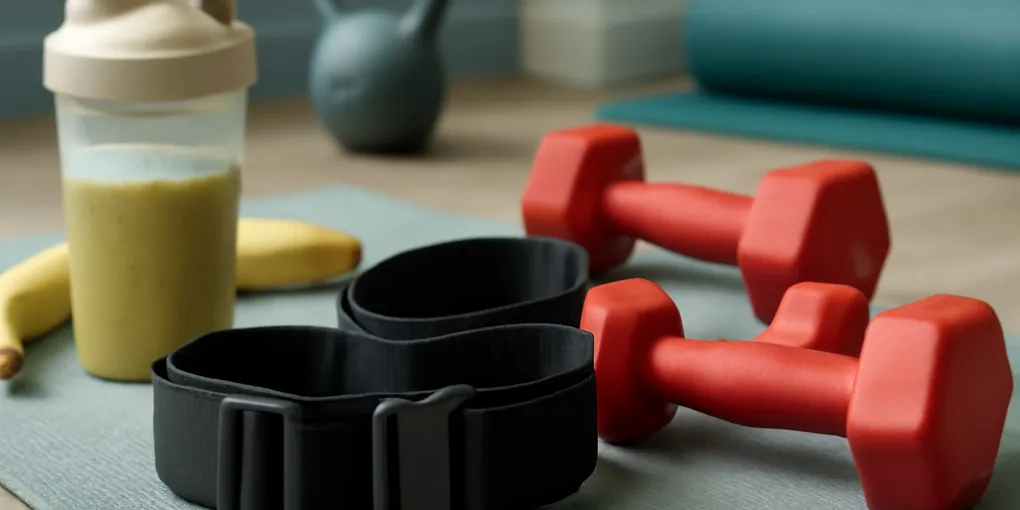
Best Blood Flow Restriction Bands for Home Training: Evidence-Based Buyer Criteria
Buyer's GuideSmartCuffs 4.0-style pneumatic BFR cuffs
Best pressure controlBest Use: Structured light-load training
$300-500
Quick picks
| Product | Key Specs |
|---|---|
| See price on Amazon |
|
| See price on Amazon |
|
| See price on Amazon |
|
Product availability, certifications, and retailer details can change; check the current Amazon page before buying.
Bottom line
The best blood flow restriction bands for home training are not the tightest straps or the most aggressive social-media kit. The better choice is a cuff system that lets you use light loads, apply pressure conservatively, repeat the setup, and stop quickly if numbness, unusual pain, dizziness, or color changes appear. Blood flow restriction can be useful for lifters who cannot tolerate heavy loads, people rebuilding muscle after a layoff, or athletes adding low-joint-stress accessory work. It is not a shortcut around screening, technique, or sensible programming.
If you are healthy, experienced with basic resistance training, and willing to start light, a wide pneumatic cuff set is the most sensible home entry point. If you need tighter repeatability or are working with a clinician or coach, a higher-control pneumatic system may justify the price. If you have cardiovascular disease, clotting history, uncontrolled blood pressure, pregnancy, neuropathy, vascular disease, or post-surgical restrictions, do not self-prescribe BFR. Ask a qualified clinician first.
Quick picks
- Check current SmartCuffs-style BFR cuffs on Amazon — best when you want repeatable pressure control and can justify the higher price.
- Search B Strong-style BFR kits on Amazon — best for buyers who want a guided kit and are not chasing exact arterial occlusion numbers.
- Compare wide pneumatic BFR cuffs on Amazon — best low-cost starting point if the cuff is wide enough, quick to release, and paired with conservative pressure.
The useful shopping question is simple: can you reproduce a mild-to-moderate pressure without guessing? If the answer is no, the kit is not ready for home training. Start with bodyweight or very light loads, not heavy sets plus restriction.
Practical score
| Factor | Weight | Score | Rationale |
|---|---|---|---|
| Research | 30% | 7.8 | BFR has a growing exercise-science literature, especially for low-load strength and hypertrophy. |
| Evidence Quality | 25% | 7.0 | Results depend on pressure, cuff width, supervision, population, and training status. |
| Value | 20% | 7.1 | Useful for a defined constraint; poor value if it becomes a novelty strap. |
| User Signals | 15% | 6.8 | Home users benefit from quick release, setup repeatability, and clear discomfort limits. |
| Transparency | 10% | 7.4 | Good systems make pressure, cuff size, set structure, and release criteria visible. |
| Composite | 100% | 7.3 | A conditional buy for screened users who need low-load training, not a universal upgrade. |
Who should consider BFR bands
BFR makes the most sense when heavy loading is temporarily undesirable or hard to recover from. Examples include a trained person returning after a minor layoff, a lifter adding quad or arm volume without more joint stress, or a recreational athlete doing light accessory work at home. The key is not maximum tightness. The key is creating a repeatable, tolerable stimulus with low external load.
The method is commonly studied with loads around 20 to 30 percent of one-repetition maximum, higher repetition sets, and short rests. That makes it different from heavy strength training and different from simply tying a strap around a limb. If your current program already includes progressive squats, hinges, pushes, pulls, sleep, and protein, BFR is an accessory. If your program is inconsistent, fix the basics before buying cuffs. For a broader home-strength starting point, see our adjustable dumbbell guide.
Who should skip self-directed BFR
Skip unsupervised BFR if you have a history of blood clots, vascular disease, uncontrolled hypertension, severe varicose veins, neuropathy, fainting episodes, active infection, recent surgery without clearance, pregnancy, or a condition where limb blood flow matters clinically. Also skip it if you cannot tell normal muscle burn from numbness, tingling, or alarming pain.
BFR is often described as safe when appropriately screened and applied, but that phrase does real work. It means the user, cuff, pressure, load, and progression fit together. A random elastic strap cannot provide that assurance. A cautious buyer treats safety features as the product, not as boring extras.
What to look for in a cuff
Cuff width matters because narrow bands can require higher localized pressure and may feel harsh. For most home buyers, wider cuffs with a clear pressure mechanism are easier to control than thin elastic wraps. A quick-release design is valuable because stop rules only work when you can remove pressure immediately. The cuff should sit high on the limb, stay flat, and not bunch into a rope.
Pressure feedback is the next issue. Some systems use a pump and gauge. Others use elastic tension and subjective tightness. Exact limb occlusion pressure measurement is not always available at home, but a device that gives some repeatable feedback is better than guessing. Look for instructions that discuss conservative setup, limb differences, and pressure progression rather than promising extreme pumps.
Options worth comparing
SmartCuffs 4.0-style pneumatic BFR cuffs
This is the premium direction for buyers who want repeatability. A pneumatic cuff with a pump, app or pressure reference, and quick release helps you keep sessions consistent and comparable. The value is highest if you will use BFR regularly for several months or coordinate with a professional. The downside is price. If you only want to experiment twice, this is likely too much kit.
Check current SmartCuffs-style options on Amazon.
B Strong-style elastic BFR system
Elastic systems are often marketed toward general fitness users. They can be convenient, but the buyer should be honest about pressure uncertainty. The better use case is guided, conservative accessory work rather than trying to match lab protocols. Look for clear instructions, support materials, and easy removal.
Search B Strong-style BFR kits on Amazon.
Wide pneumatic occlusion cuff set
A wide pneumatic set can be a reasonable budget option if the cuff lies flat, the pump works smoothly, and the release mechanism is immediate. Avoid very narrow tourniquet-like straps sold mainly for appearance. Read recent reviews for leaking valves, sizing problems, and confusing instructions. A cheap cuff that makes pressure unpredictable is not a bargain.
Compare wide pneumatic BFR cuffs on Amazon.
A conservative first session
Use one limb pair and one simple exercise. For example, try bodyweight squats or very light leg extensions for lower body, or light curls for upper body. Apply the cuff high on the limb. Use a pressure that feels snug but not painful. You should not feel numbness, pins and needles, or coldness. Start with one short block: one set of 20 to 30 easy reps, rest, then one or two shorter sets. Remove the cuffs after the exercise.
Do not combine BFR with heavy training on day one. Do not use it for long circuits. Do not leave cuffs on between unrelated exercises. The first test is about tolerance, not achievement. If soreness, bruising, nerve symptoms, or anxiety shows up, stop and reassess.
Programming rules that keep it useful
Use BFR one to three times per week for a small number of accessory movements. Track exercise, load, pressure or tightness rating, sets, reps, rest, limb, and symptoms. Progress only one variable at a time. If you increase pressure, keep load stable. If you increase load, keep pressure stable. If you add exercises, keep volume conservative.
A good home protocol should make your regular training easier to sustain. If BFR sessions leave you so sore that your main workouts suffer, the method is not serving you. The goal is low-load stimulus, not proof that you can tolerate discomfort.
FAQ
How tight should blood flow restriction bands feel during a first home session?
They should feel snug and clearly present, but not painful, numbing, cold, or alarming. Many home users do better with a conservative perceived tightness and light loads than with aggressive pressure chasing.
Are cheap elastic BFR straps enough for muscle gain?
They may create a sensation, but the problem is repeatability. If you cannot control or reproduce pressure, it is harder to know whether changes come from training or random tightness.
Can I use BFR bands for walking?
Some protocols study BFR walking, but home users should be cautious. Start with simple resistance exercises first, keep sessions short, and avoid outdoor walking where you cannot quickly stop and remove cuffs.
Should I use BFR on arms and legs in the same workout?
Not at first. Test one area, learn your response, and build gradually. More limbs and more exercises increase complexity without necessarily improving the decision.
Evidence notes
Reviews and position-style papers generally support BFR as a way to improve strength or hypertrophy with low loads when pressure is controlled and screening is appropriate. The evidence is not a license for maximal restriction. Studies vary by cuff width, pressure prescription, training age, and supervision. That is why product choice should emphasize controllability and conservative use instead of the strongest pump.
Short keep-or-skip check
Use the first few sessions to answer BFR-specific questions, not to chase a pump. Can you place the cuff high on the limb the same way each time? Can you remove pressure immediately without fumbling? Do light loads feel productive without numbness, coldness, bruising, dizziness, or unusual pain? Keep the device only if it solves a defined low-load training problem and the release criteria are easy to follow.
Fit checks before checkout
Before buying, measure your limb circumference and confirm that the cuff size range actually fits. A cuff that barely closes or overlaps awkwardly will be harder to position consistently. Check whether the pump, gauge, valve, or app can be used without another person. If you train alone, setup should be simple enough that you can apply and release the cuff while calm.
Also check return terms. BFR is highly personal: skin sensitivity, limb shape, and comfort vary. The right product should feel stable without digging into one narrow line. If a listing emphasizes extreme tightness, vascular tricks, or dramatic before-and-after claims more than sizing and pressure control, choose another option.
What to log after purchase
A useful log has five fields: cuff model, limb, pressure or tightness rating, exercise/load, and symptoms. Add session duration and next-day soreness if you are comparing programs. This log is not busywork. It is the difference between a controlled low-load method and random constriction.
If performance improves, ask whether the cuffs caused the improvement or whether the new consistency did. That distinction matters less than safety, but it helps you decide whether to keep buying accessories. If the same benefit appears with ordinary light sets, the simpler method wins.
Sources
- Blood flow restriction training methodology and application review: https://pubmed.ncbi.nlm.nih.gov/27941492/
- Low-load resistance training with BFR review: https://pubmed.ncbi.nlm.nih.gov/30258033/
- BFR safety considerations and screening review: https://pubmed.ncbi.nlm.nih.gov/31710547/
Final recommendation
Buy BFR bands only when you have a specific low-load training problem and a conservative plan. Choose a wide, quick-release cuff with pressure feedback when possible. Skip thin, harsh straps that turn the method into guesswork. For most readers, the best first investment remains consistent strength training, sleep, protein, and a program that does not require a workaround.