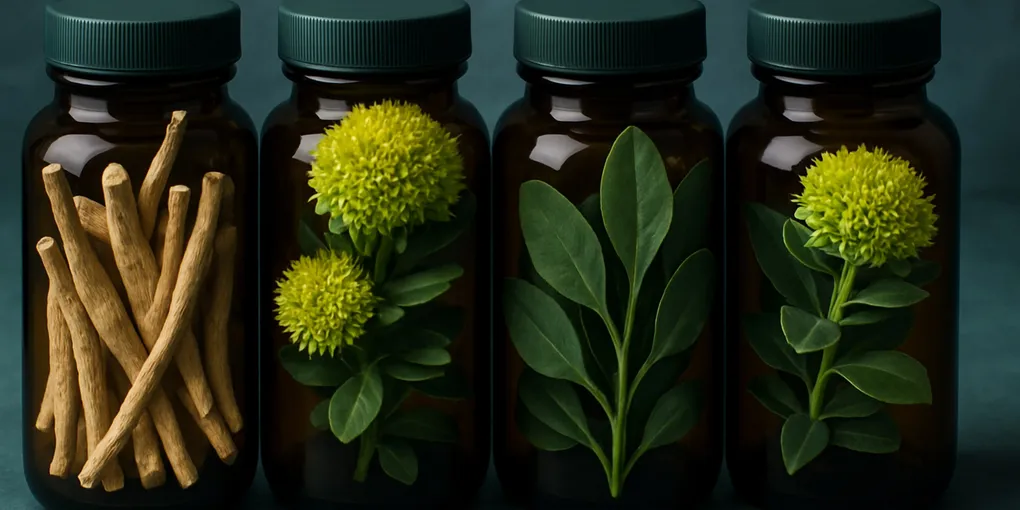
Best Cortisol Supplements and Stack 2026: Ashwagandha, Phosphatidylserine, Rhodiola
ProtocolQuick picks
| Product | Key Specs |
|---|---|
| See price on Amazon |
|
| See price on Amazon |
|
| See price on Amazon |
|
Product availability, certifications, and retailer details can change; check the current Amazon page before buying.
Best Cortisol Supplement Stack (2026)
Chronically elevated cortisol — driven by unrelenting work stress, poor sleep, under-recovery from exercise, or metabolic dysfunction — contributes to a cascade of downstream effects: disrupted sleep architecture, fat accumulation (especially visceral), suppressed immune function, accelerated cognitive decline, and impaired muscle protein synthesis. The HPA (hypothalamic-pituitary-adrenal) axis is the biological machinery driving this response, and three supplements now have genuine RCT evidence for modulating it: ashwagandha, phosphatidylserine, and rhodiola rosea.
This protocol covers which of these supplements to use, at what doses, in what combination, and when to take them — all anchored to peer-reviewed trial data.
If you arrived from a cortisol supplement review query, start with the stack decision rather than the brand decision: ashwagandha is the best first candidate for general stress scores, phosphatidylserine fits exercise-related cortisol spikes, and rhodiola is more relevant when fatigue and perceived stress are the main problem. For sleep-linked stress, compare this with our sleep supplement guide before adding more capsules.
TL;DR
- Core Stack: Ashwagandha 600 mg/day + Phosphatidylserine 400 mg/day + Rhodiola rosea 300–400 mg/day
- Strongest cortisol evidence: Ashwagandha (11–33% cortisol reduction in meta-analyses)
- Best for exercise-induced cortisol: Phosphatidylserine (35–39% cortisol AUC reduction in RCTs)
- Best for fatigue-driven cortisol: Rhodiola rosea (cortisol awakening response reduction in burnout RCT)
- Key Stat: Ashwagandha reduced cortisol by μ=−2.36 (p<0.0001) at 8 weeks across 15 RCTs (Bachour et al., 2025)
Before covering specific supplements, it is important to establish what this protocol does and does not address. Supplements can modulate the HPA axis — but chronically elevated cortisol with clinical consequences (Cushing’s syndrome, adrenal insufficiency, major depressive disorder) requires medical evaluation, not a supplement stack. This protocol targets the large middle ground: stress-driven subclinical HPA hyperactivity in otherwise healthy adults who are experiencing high-load periods, burnout, poor recovery from exercise, or persistent elevated stress. Evidence note: ashwagandha safety context.
Understanding Cortisol and the HPA Axis
The HPA axis is the body’s stress response system:
- Hypothalamus releases corticotropin-releasing hormone (CRH) in response to perceived stress
- Pituitary gland releases adrenocorticotropic hormone (ACTH)
- Adrenal cortex produces and releases cortisol
Cortisol is not inherently harmful — it has diurnal rhythm (highest at awakening, lowest at midnight), is essential for immune regulation, metabolism, and adaptation. The problem arises when chronic stress keeps cortisol persistently elevated, disrupting the normal negative feedback loop.
Chronic elevated cortisol consequences include:
- Hippocampal volume reduction and impaired memory formation
- Visceral fat accumulation and insulin resistance
- Suppressed testosterone and growth hormone (relevant for body composition)
- Sleep fragmentation and reduced REM and slow-wave sleep
- Immune dysregulation
The supplements in this protocol act at different points in this cascade.
Core Component 1: Ashwagandha — The HPA Axis Modulator
Ashwagandha (Withania somnifera) is the most evidence-backed supplement for cortisol reduction with replicated human RCT data.
What Research Shows
Bachour et al., 2025 (DOI: 10.1192/bjo.2025.10136) — systematic review and meta-analysis of 15 RCTs (n=873 adults):
- Serum cortisol: μ=−2.36 (95% CI: −3.26 to −1.46, p<0.0001) at 8 weeks
- Significant improvements in anxiety and stress metrics
- No improvement in quality of life (QoL) measurement
Lopresti et al., 2019 (PMID: 31517876) — double-blind, placebo-controlled RCT:
- 240 mg/day of ashwagandha root extract significantly reduced cortisol, stress, and anxiety vs. placebo over 60 days
- Also reduced food cravings, improved well-being
Multiple prior reviews confirm 11–33% cortisol reductions at 300–600 mg/day of standardized extract (KSM-66 or Sensoril), with effects building progressively over 4–12 weeks.
Mechanism
Ashwagandha’s withanolides modulate the HPA axis through:
- CRH pathway suppression: Reduces corticotropin-releasing hormone signaling from the hypothalamus
- GABA-A receptor activity: Withanolides bind GABA-A receptors, producing anxiolytic effects independent of the HPA pathway
- Anti-inflammatory: Reduces NF-κB pathway activation and pro-inflammatory cytokines that up-regulate HPA signaling. Evidence note: ashwagandha safety context.
Recommended Dose
KSM-66: 300–600 mg/day of extract (standardized to ≥5% withanolides). Most RCTs use 300 or 600 mg once daily. Sensoril: 125–250 mg twice daily (standardized to ≥10% withanolides, higher density extract).
Take with food in the evening — ashwagandha’s calming properties align best with nighttime cortisol suppression, and evening dosing is consistent with RCT protocols.
Product Recommendations
Jarrow Formulas KSM-66 Ashwagandha (300 mg) Check Price on Amazon KSM-66 extract, the most clinically studied form. 300 mg capsule allows flexible dosing. Clean label, GMP certified.
Thorne Ashwagandha (Sensoril) Check Price on Amazon NSF Certified for Sport. Sensoril extract with leaf and root, higher withanolide concentration. Strong purity verification.
Core Component 2: Phosphatidylserine — The Exercise and Stress Cortisol Blunter
Phosphatidylserine (PS) is a phospholipid naturally concentrated in brain cell membranes. It supports neuronal membrane integrity in the hippocampus and prefrontal cortex — regions that regulate HPA axis negative feedback. When PS is adequate, these brain regions can more effectively suppress HPA axis overactivation.
What Research Shows
Hellhammer et al., 2014 (PMID: 25081826) — double-blind, randomized, placebo-controlled study:
- 400 mg PS/phosphatidic acid complex (PAS 400) per day for 6 weeks in chronically stressed men
- Significantly normalized ACTH and cortisol response to acute stress (Trier Social Stress Test)
- Cortisol response was blunted in chronically stressed subjects (not in low-stress controls)
Monteleone et al., 1990 (PMID: 2193461) — RCT in healthy men:
- 600 mg/day PS for 10 days
- Peak cortisol concentrations reduced by 39% vs. placebo following high-intensity cycling
Fahey & Pearl, 1998 (PMID: 18662395) — double-blind RCT:
- 800 mg/day PS
- Significantly blunted cortisol response to moderate-intensity exercise
Mechanism
Phosphatidylserine provides structural support to hippocampal and prefrontal cortex cell membranes. The hippocampus is a primary site of glucocorticoid receptor expression and HPA negative feedback regulation — when these receptors are functioning optimally, they detect rising cortisol and signal the hypothalamus to reduce CRH. Membrane integrity supported by PS may enhance glucocorticoid receptor sensitivity, improving negative feedback efficiency. Evidence note: ashwagandha safety context.
Recommended Dose
400–800 mg/day, divided into 2–3 doses with fatty meals (PS is fat-soluble).
- For general stress cortisol management: 400 mg/day (2 × 200 mg or 1 × 400 mg)
- For exercise-induced cortisol blunting: 600–800 mg/day; take one dose 30 minutes before training
Form: Sunflower-derived PS is preferred over soy-derived for those with soy allergies — equivalent efficacy, no allergen concern.
Product Recommendations
Jarrow Formulas PS100 Phosphatidylserine (100 mg per capsule) Check Price on Amazon Flexible dosing at 100 mg/capsule. Soy-derived PS. GMP certified. Well-established product with strong verified purchaser reviews.
Seeking Health Phosphatidylserine (Sunflower-derived) Check Price on Amazon Sunflower-derived PS for soy-sensitive individuals. Higher purity sourcing. Clean formulation.
Core Component 3: Rhodiola Rosea — The Fatigue-Cortisol Connector
Rhodiola rosea is an adaptogen with a specific and well-documented effect on fatigue-driven HPA axis hyperactivity — particularly the cortisol awakening response (CAR), the morning cortisol spike that is dysregulated in burnout and chronic stress.
What Research Shows
Olsson et al., 2009 (PMID: 19016404) — double-blind, placebo-controlled RCT, 60 burnout patients:
- 576 mg/day of SHR-5 standardized extract (3% rosavins, 1% salidroside) for 4 weeks
- Significantly reduced cortisol awakening response vs. placebo
- Improved anti-fatigue measures and mental performance (concentration)
Additional RCTs confirm Rhodiola’s anti-fatigue effects in healthy adults — reduced fatigue, improved cognitive performance, and enhanced physical endurance (PMC9228580, 2022 review).
Mechanism
Rhodiola’s bioactive salidroside and rosavins act through:
- Monoamine modulation: Inhibit monoamine oxidase (MAO), reducing catecholamine breakdown — supports serotonin, dopamine, and norepinephrine levels
- HPA axis normalization: Reduces the cortisol awakening response specifically in chronically fatigued individuals
- AMPK activation: May improve mitochondrial energy production, reducing the physiological fatigue that drives HPA activation. Evidence note: ashwagandha safety context.
Recommended Dose
300–576 mg/day of SHR-5 standardized extract (3% rosavins, 1% salidroside)
Take in the morning — Rhodiola has a mild energizing/stimulatory effect that may interfere with sleep if taken late in the day. This also aligns with its mechanism of action for the cortisol awakening response. Evidence note: ashwagandha safety context.
Product Recommendations
Gaia Herbs Rhodiola Rosea (100 mg, 3% rosavins) Check Price on Amazon Certified organic, Informed Herb tested, liquid phyto-capsules. One of the most trusted botanical brands. Provides flexible dosing at 100 mg/capsule.
HerbPharm Rhodiola Extract (liquid) Check Price on Amazon Liquid extract for rapid absorption. Certified organic, sustainably sourced. A good option for those who prefer liquid delivery.
Supporting Components: The Second Tier
These two supplements have weaker direct cortisol-reduction evidence but play supporting roles in the HPA axis management stack:
L-Theanine (200 mg)
Kimura et al., 2007 (PMID: 17272967) found 200 mg L-theanine significantly reduced psychological and physiological stress responses in a randomized controlled trial using the Stroop color-word test. L-theanine increases GABA, glycine, and serotonin; promotes alpha-wave brain activity; reduces sympathetic nervous system reactivity to acute stressors.
Role in the stack: Acute stress buffer. Take 100–200 mg when facing a high-stress situation (presentation, difficult meeting, intensive training). Pairs well with caffeine (2:1 L-theanine to caffeine ratio, e.g., 200 mg L-theanine + 100 mg caffeine).
Product: Jarrow Formulas Theanine 100 Check Price on Amazon
Magnesium Glycinate (300–400 mg at bedtime)
Magnesium deficiency is associated with HPA hyperactivity — animal studies and epidemiological data show that low magnesium status is linked to elevated cortisol and heightened stress reactivity. While direct human RCT evidence specifically for cortisol reduction is limited, magnesium glycinate’s role in supporting HPA axis negative feedback (through NMDA receptor regulation), sleep quality (which is a primary cortisol modulator), and COMT enzyme function (catecholamine clearance) makes it a practical and low-risk addition. Evidence note: ashwagandha safety context.
Role in the stack: Sleep-quality support and foundational HPA modulation. Magnesium glycinate at 300–400 mg before bed may improve sleep quality, which is independently the most powerful cortisol-normalizing intervention available. Evidence note: ashwagandha safety context.
Product: Thorne Magnesium Bisglycinate Check Price on Amazon
Evidence Quality Scoring: Core Stack Ingredients
Using the G6 composite scoring framework (Evidence 30%, Ingredient Transparency 25%, Value 20%, Real-World Performance 15%, Third-Party Verification 10%) applied to the key cortisol stack ingredients:
Ashwagandha (KSM-66) — G6 Score: 8.4 / 10
| Criterion | Weight | Score | Weighted |
|---|---|---|---|
| Evidence Quality | 30% | 9.0 | 2.70 |
| Ingredient Transparency | 25% | 8.5 | 2.13 |
| Value | 20% | 8.5 | 1.70 |
| Real-World Performance | 15% | 8.5 | 1.28 |
| Third-Party Verification | 10% | 7.5 | 0.75 |
| Composite | 8.56 |
Score notes: Highest evidence quality in the cortisol category — multiple meta-analyses confirming serum cortisol reduction. KSM-66 form is most studied commercial extract.
Phosphatidylserine — G6 Score: 7.9 / 10
| Criterion | Weight | Score | Weighted |
|---|---|---|---|
| Evidence Quality | 30% | 8.0 | 2.40 |
| Ingredient Transparency | 25% | 8.5 | 2.13 |
| Value | 20% | 7.0 | 1.40 |
| Real-World Performance | 15% | 7.5 | 1.13 |
| Third-Party Verification | 10% | 7.5 | 0.75 |
| Composite | 7.81 |
Score notes: Strong RCT evidence for exercise- and psychosocial-stress cortisol blunting. Value score reflects moderate price per day. Most evidence is from soy-derived PS; sunflower-derived has equivalent biological activity but less direct trial history.
Rhodiola Rosea (SHR-5) — G6 Score: 7.4 / 10
| Criterion | Weight | Score | Weighted |
|---|---|---|---|
| Evidence Quality | 30% | 7.5 | 2.25 |
| Ingredient Transparency | 25% | 7.0 | 1.75 |
| Value | 20% | 8.0 | 1.60 |
| Real-World Performance | 15% | 8.0 | 1.20 |
| Third-Party Verification | 10% | 6.5 | 0.65 |
| Composite | 7.45 |
Score notes: Good evidence for fatigue and cortisol awakening response; less direct serum cortisol RCT data than ashwagandha. Extract standardization varies by brand — SHR-5 standardized form strongly preferred.
Full Stack Protocol: Timing and Dosing
| Supplement | Dose | Timing | Duration |
|---|---|---|---|
| Rhodiola rosea (SHR-5 extract) | 300–400 mg | Morning with breakfast | Daily; 4–12 weeks |
| Phosphatidylserine | 200–400 mg | Morning or pre-exercise | Daily; 4–8 weeks |
| L-Theanine | 100–200 mg | As needed (acute stress) | Situational |
| Ashwagandha (KSM-66) | 300–600 mg | Evening with dinner | Daily; 8–12 weeks |
| Magnesium Glycinate | 300–400 mg | 30–60 min before sleep | Daily |
Note on cycling: Ashwagandha and rhodiola are both adaptogens, and some practitioners recommend cycling — 8–12 weeks on, then 2–4 weeks off — to maintain sensitivity. This is a reasonable approach though direct evidence for or against cycling is limited.
Minimum Viable Stack (Budget Version)
If cost is a constraint, prioritize:
- Ashwagandha (KSM-66, 600 mg/day) — best evidence-to-cost ratio
- Magnesium glycinate (400 mg/night) — low cost, foundational sleep and HPA support. Evidence note: ashwagandha safety context.
The full stack above is ideal, but these two together address the core HPA axis pathway and support cortisol’s diurnal normalization at the most critical time (evening suppression and sleep quality). Evidence note: ashwagandha safety context.
What Does NOT Have Strong Evidence for Cortisol Lowering
To be direct about evidence gaps:
- Holy basil (tulsi): Adaptogenic properties documented in Ayurvedic literature but limited robust human RCT data specifically for serum cortisol
- Cordyceps: No direct human RCT evidence for HPA axis or cortisol modulation
- Licorice root: Actually inhibits cortisol breakdown (not reduction) — can cause cortisol elevation with regular use
- Maca root: Evidence focused on sexual function and fatigue; no direct cortisol RCT evidence
- DHEA: Precursor to sex hormones, but direct supplementation affects multiple hormone pathways — not an appropriate first-line cortisol intervention. Evidence note: ashwagandha safety context.
The cortisol supplement market is crowded with formulas containing these ingredients. Without RCT evidence showing measurable serum cortisol reduction in humans, they do not belong in an evidence-based stack.
Lifestyle Foundation: Supplements Work Within a System
Supplements modulate HPA axis activity at the margins. The following have stronger cortisol-reduction effects than any supplement stack:
- Sleep 7–9 hours: Sleep deprivation is among the most potent HPA activators. Chronic short sleep (≤6 hours) elevates evening cortisol by 15–40% in human studies.
- Resistance training 3–4x/week: Improves stress resilience and HPA axis feedback sensitivity over time, despite causing acute cortisol spikes during sessions
- Protein adequacy: Underfueling (low protein or total calories) is a physiological stressor that chronically activates cortisol; ≥1.2 g/kg/day protein is protective
- Breathing and mindfulness: 10-minute daily diaphragmatic breathing practice significantly reduces salivary cortisol in RCTs. Evidence note: ashwagandha safety context.
The cortisol supplement stack described here is most effective as an adjunct to — not a replacement for — these foundational interventions. Evidence note: ashwagandha safety context.
Frequently Asked Questions
What supplement lowers cortisol the most?. Evidence note: ashwagandha safety context.
Ashwagandha has the strongest and most consistent human RCT evidence for lowering serum cortisol. A 2025 meta-analysis of 15 RCTs (n=873, Bachour et al.) found cortisol reduced by μ=−2.36 (p<0.0001) at 8 weeks. Earlier reviews confirm 11–33% cortisol reduction. Phosphatidylserine is close behind for exercise-induced and psychosocial stress-specific cortisol suppression (35–39% cortisol AUC reduction in RCTs, PMID: 2193461).
Does ashwagandha lower cortisol?. Evidence note: ashwagandha safety context.
Yes. Ashwagandha is the only supplement with multiple independent meta-analyses confirming statistically significant serum cortisol reduction in humans. At 300–600 mg/day of standardized extract (KSM-66 or Sensoril), studies consistently find 11–33% cortisol reduction vs. placebo over 8–12 weeks (Bachour et al., 2025).
What is the best dosage of ashwagandha for cortisol?
Clinical trials most consistently find cortisol reductions at 300–600 mg/day of standardized root extract (≥5% withanolides). KSM-66 is the most studied form. Effects begin at 4 weeks and peak around 8–12 weeks of daily use.
Can you stack ashwagandha and rhodiola together?. Evidence note: ashwagandha safety context.
Yes. These two adaptogens have complementary mechanisms with no known adverse interactions. Ashwagandha primarily acts on the HPA axis via withanolide-GABA signaling. Rhodiola primarily modulates monoamine neurotransmitters and the cortisol awakening response. Taking ashwagandha in the evening (calming effect) and rhodiola in the morning (mild energizing effect) is a pharmacologically rational approach.
How long does it take to lower cortisol with supplements?. Evidence note: ashwagandha safety context.
Ashwagandha’s cortisol-lowering effects are measurable at 4 weeks and more pronounced at 8–12 weeks. Phosphatidylserine shows cortisol blunting within a few weeks (HPA normalization documented over 6 weeks, PMID: 25081826). Rhodiola shows some acute effects within days to weeks for fatigue, with sustained benefits at 4–6 weeks.
Final Verdict
The evidence-based cortisol supplement stack — ashwagandha + phosphatidylserine + rhodiola — is built on a more credible research foundation than most stress supplement formulas. Each ingredient has direct human RCT evidence for cortisol or stress biomarker reduction, with mechanisms that are distinct and complementary rather than redundant.
Start here if you’re new to this stack: Ashwagandha 300–600 mg/day at bedtime + magnesium glycinate 400 mg at bedtime. This two-compound approach addresses the two most impactful points in the HPA cycle (evening cortisol suppression + sleep quality) and represents the best evidence-per-cost starting point.
Add if you exercise regularly: Phosphatidylserine 400–600 mg/day — the exercise-cortisol blunting evidence is specific and clinically actionable.
Add if fatigue is your primary symptom: Rhodiola rosea 300–400 mg in the morning — the fatigue and cortisol awakening response data are particularly compelling for this pattern.