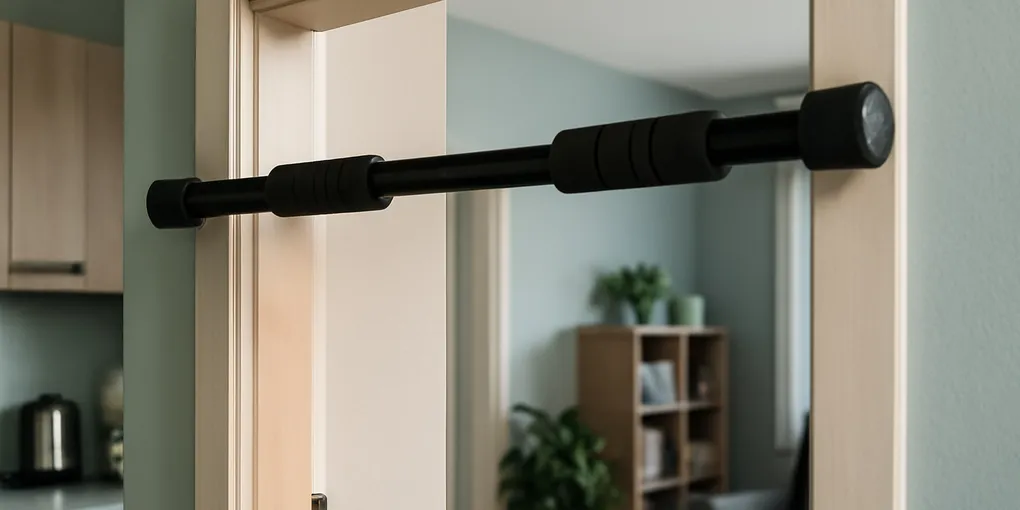
Best Doorway Pull-Up Bars for Apartments: Removable Options That Do Not Treat Trim Like Gym Steel
Buyer's GuideIron Gym Pull Up Bar
$25-45
Quick picks
| Product | Key Specs |
|---|---|
| See price on Amazon | — |
| See price on Amazon | — |
| See price on Amazon | — |
| See price on Amazon | — |
Product availability, certifications, and retailer details can change; check the current Amazon page before buying.
A doorway pull-up bar is a space saver only if it fits the actual doorway. In an apartment, the buying decision is less about how many grips the bar advertises and more about trim depth, wall thickness, door width, clearance above the frame, contact padding, listed user weight, and whether the bar can be removed without damaging paint or molding. If any of those checks fail, use a freestanding station, rings from a rated mount, or a lat-pulldown alternative instead.
For most standard framed doors, search Amazon for the Iron Gym Pull Up Bar. If you want a familiar padded design with several grip choices, search Amazon for the Perfect Fitness Multi-Gym Doorway Bar. Check the current listing measurements, seller, and return terms before buying.
Quick picks
- Best default: Iron Gym Pull Up Bar, if your door has standard trim and enough top clearance.
- Best padded-contact option: Perfect Fitness Multi-Gym Doorway Bar, especially when current listings show the exact model width.
- Best budget pick: ProsourceFit Multi-Grip Pull-Up Bar, if you are doing controlled reps and band assistance rather than swinging.
- Best compact option: Jayflex RYZE-UPS Portable Pull Up Handles, for travel or doors where a wide bar is awkward.
Fit comes before grip choice
Measure before you shop. A leverage-style doorway bar usually hooks over the top trim and braces against the opposite side of the frame. That means the trim lip, trim thickness, wall thickness, and door width all have to match the product instructions. A bar that is too wide can sit crooked. A bar that is too shallow can miss the trim. A bar placed on loose decorative molding can turn one pull-up into a repair bill.
Also check the door itself. You need room above the frame for the hook, enough side clearance for the handles, and a door that does not need to close while the bar is installed. If your apartment has metal commercial frames, unusually thin trim, damaged wood, or rental rules against pressure marks, skip removable doorway bars.
The American Academy of Orthopaedic Surgeons’ safe-exercise guidance emphasizes equipment condition, clear space, and avoiding exercise through pain (https://orthoinfo.aaos.org/en/staying-healthy/safe-exercise/). For doorway bars, translate that into a simple rule: no cracked trim, no wobble, no kipping, no guessing about the weight rating.
Practical score
| Factor | Weight | Score | Rationale |
|---|---|---|---|
| Research | 30% | 5.5 | Pull-ups are useful strength work, but the removable doorway category is mostly governed by fit and installation, not brand-specific trials. |
| Evidence Quality | 25% | 5.0 | Safety guidance supports careful equipment setup; product claims still need buyer verification. |
| Value | 20% | 8.0 | A good doorway bar is inexpensive and supports pull-ups, hangs, and band-assisted work. |
| User Signals | 15% | 6.5 | Complaints usually involve door fit, trim marks, padding wear, or misunderstanding model dimensions. |
| Transparency | 10% | 6.0 | Better listings publish width range, trim requirements, weight rating, and contact-point photos. |
| Composite | 100% | 6.1 | Worth buying only after the doorway passes the measurement check. |
Which bar fits your apartment?
Iron Gym is the practical default because the design is common, cheap, and easy to understand. It is best for controlled pull-ups, chin-ups, hanging knee raises, and band-assisted reps in a normal residential doorway. It is not a good match for wide molding, weak trim, or any workout that includes swinging.
Perfect Fitness Multi-Gym models are attractive if you want padded contact points and a recognizable design. The catch is that marketplace listings often mix model names and generations. Compare the current width range, doorway depth, and listed capacity against your measured frame before you click buy.
ProsourceFit is the budget route. It can make sense for someone building from negatives, holds, and band-assisted reps. Do not buy it because it looks like a commercial pull-up station. It is still a removable bar relying on your door frame.
Jayflex RYZE-UPS handles are different. They save storage space and travel more easily, but they do not feel like a straight pull-up bar. They are best for people who value portability and can tolerate a narrower grip setup.
Setup rules that prevent most bad outcomes
Install the bar exactly as the current instructions show, then tug down gradually before putting your full weight on it. Do not jump into the first rep. Start with a dead hang for a few seconds, step down, and inspect the contact points. If the bar shifts, creaks, or leaves fresh trim damage, stop.
Keep the reps strict. Doorway bars are poor choices for kipping pull-ups, toes-to-bar swings, aggressive band slingshots, or weighted pull-ups near the listed limit. If you want those movements, buy a rack-mounted or wall-mounted solution installed into structure.
Use a step or box for assisted reps instead of yanking yourself from the floor. This reduces shock load and makes it easier to control shoulder position. If grip strength is the limiter, build it with the wrist roller and forearm trainer guide or controlled hangs before chasing high rep sets.
Small-space programming examples
Use the bar for short strength practice rather than random max sets. A beginner session can be three rounds of 3 slow negatives, 20 to 30 seconds of feet-assisted hanging, and 8 to 12 band rows anchored somewhere rated for band work. Rest enough that every rep starts from a quiet bar.
An intermediate session can be 4 to 6 sets of 2 to 5 strict pull-ups, then one or two controlled dead hangs. Leave at least one good rep in reserve. Doorway hardware is not the place to grind twisting half-reps while your feet kick the wall.
If you are not yet doing pull-ups, use a chair for assistance before using thick bands. Chair assistance is boring but predictable. Bands can be useful, but they add elastic force that can pull the bar forward or make the bottom position unstable. If you do use a band, keep it centered, step in carefully, and make sure the bar does not roll or lift when the band stretches.
Alternatives when the doorway fails the test
A freestanding pull-up tower is uglier and takes more floor space, but it removes the trim question. It may be a better choice if your rental has fragile molding, unusual door dimensions, or a landlord who cares about contact marks. Check ceiling height, base width, wobble reports, and whether the station supports the exercises you actually plan to do.
A wall-mounted bar can be excellent when installed into real structure, but it is usually a poor renter project unless the lease and landlord allow it. Mounting into drywall alone is not a solution. If you cannot verify studs, hardware, and load path, do not improvise.
A suspension trainer over a door is another option for rows, assisted squats, and core work, but it is not a substitute for vertical pulling. It also has its own door-or-anchor requirements. Choose it when rows and assisted movement are enough, not because it looks safer by default.
Maintenance checks
Inspect the foam and contact pads every few weeks. Flattened padding, cracked plastic, loose screws, or a bar that no longer sits evenly are reasons to stop using it. Sweat can also make grips slick, so wipe the handles instead of adding chalk dust to apartment carpet.
Recheck the doorway after moving the bar. A different room can have different trim, paint, wall thickness, and top clearance. Do not assume every door in the apartment is equivalent. Measure again after repainting or trim repairs because even small surface changes can alter how the hooks seat.
Keep the area below clear. Pull-ups over shoes, dumbbells, toys, or a coffee table turn a small slip into a worse fall. A clear landing zone is part of the equipment setup, not an optional detail.
One more renter-specific check: look at the opposite side of the doorway after the first session. Some bars leave marks on the back face of the trim or wall before the front looks damaged. If you see new dents, gray smudges that will not wipe away, or trim separating from the wall, retire that doorway and choose a different pulling option.
Doorway Pull-Up Bar FAQ
Will a doorway pull-up bar damage trim?
It can. Padding reduces contact marks, but it does not make weak trim strong. Fresh paint, soft wood, old molding, and narrow trim are higher-risk setups. Renters should photograph the frame before use and avoid any bar that visibly dents the surface during the first test hang.
Should I buy a screw-in telescoping bar instead?
Only if the product is designed for that installation and you are allowed to put hardware into the frame. Pressure-only telescoping bars can slip when installed poorly. A removable leverage bar is usually easier for renters, but neither option beats a properly installed structural mount.
What exercises make sense on a doorway bar?
Strict pull-ups, chin-ups, dead hangs, scapular pulls, slow negatives, and light hanging knee raises are the cleanest uses. Keep bands vertical and controlled. Avoid swinging leg raises if the bar or doorway was chosen for convenience rather than structural strength.
Frequently Asked Questions
- They can be, but only when the door frame, trim depth, bar width, and user weight fit the model instructions. Damaged trim or hollow framing is a stop sign.
- Measure the door width, trim depth, top clearance, wall thickness, and whether the landlord allows contact marks or removable fitness gear.
- Only if the bar is seated securely and the band pulls straight down. Heavy angled band tension can shift a leverage-style bar.