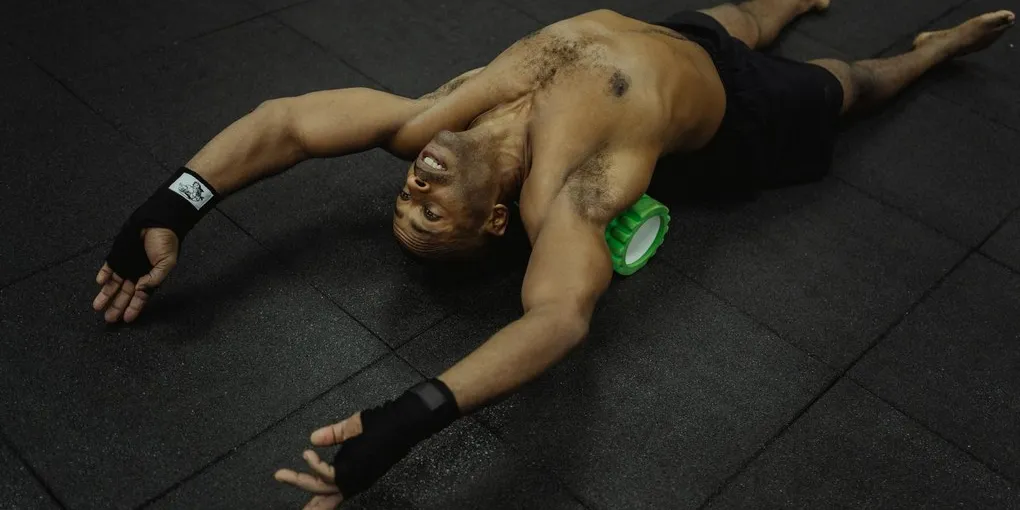
Best Foam Roller for Muscle Recovery 2026: Ranked and Reviewed
Foam rolling is one of the most accessible, evidence-supported recovery tools available. A growing body of research confirms that self-myofascial release with a foam roller reduces delayed onset muscle soreness (DOMS), improves range of motion, and accelerates recovery between training sessions — without any of the cost or appointment booking of massage therapy.
The catch: not all foam rollers are equal. Density, texture, size, and vibration features all affect which tissues you can target and how effectively. This guide cuts through the options.
What the Research Says About Foam Rolling
Key findings from systematic reviews and RCTs on foam rolling:
- DOMS reduction — Rolling for 60–120 seconds per muscle group post-exercise reduces perceived soreness by 20–40% compared to no treatment. Stack with magnesium supplementation for additive muscle relaxation and recovery benefits.
- ROM improvement — Consistent pre-exercise rolling improves range of motion without reducing muscle force output (unlike static stretching)
- Recovery acceleration — Rolling before a second training session restores sprint performance and vertical jump better than passive rest
- Fascial release vs. blood flow — The mechanism is debated; current evidence points to neurological (pain threshold modulation) and blood flow increases rather than literal fascial elongation
Types of Foam Rollers
Standard Smooth Density Rollers
Even pressure across the surface. Good for beginners and general use. Less aggressive, more comfortable for sensitive areas.
Textured/Grid Rollers
Raised ridges and knobs that increase pressure in specific points. Better for myofascial trigger point work. More targeted but more intense.
Vibrating Rollers
Battery-powered rollers that add vibration (typically 1–53 Hz). Research suggests vibration enhances the blood flow and pain-modulation benefits. More expensive.
Half-Rollers
Flat on one side — useful for balance training and less intense rolling.
Best Foam Rollers for Muscle Recovery
1. TriggerPoint GRID 2.0 — Best Overall
Price: ~$30–45 Density: Medium-firm Size: 13” standard / 26” long
The GRID is the most widely used foam roller in physical therapy, sports medicine, and athletic training settings. The patented multi-density GRID surface combines three different surface zones — a “tubes” channel, a “ridges” zone, and a “flat” zone — that mimic fingers, thumbs, and palms of a massage therapist’s hands.
The hollow-core construction provides consistent firmness without the foam deterioration you get in solid foam rollers. The 13” format is portable; the 26” long version handles full back rolling and IT band work.
Pros:
- Hollow core maintains firmness — doesn’t flatten over time
- Multi-density surface provides targeted and broad-area rolling
- Industry standard with documented clinical use
- Portable 13” version fits in gym bags
- 1-year guarantee
Cons:
- Price premium over basic smooth rollers
- Texture can be too aggressive for beginners on their first session
→ Check TriggerPoint GRID 2.0 on Amazon
2. Hyperice Vyper 3.0 — Best Vibrating Foam Roller
Price: ~$180–200 Vibration: 3 speeds (up to 53 Hz) Size: 12” × 5.5” diameter
The Vyper 3.0 is the premium vibrating foam roller used by professional sports teams. The combination of foam rolling pressure with vibration has been shown to produce greater range of motion improvements and faster DOMS reduction compared to standard rolling in several studies.
The three vibration speeds allow customization — low for sensitive areas, high for dense muscle groups like the IT band and quadriceps. The battery lasts approximately 2.5 hours of continuous use; charges via USB-C.
Pros:
- Research-supported vibration enhancement over standard rolling
- 3-speed vibration covers both gentle and aggressive use cases
- Durable construction used by professional athletes
- USB-C charging
Cons:
- Expensive — roughly 4–5× the price of standard rollers
- Heavier than standard rollers (not ideal for travel)
- Overkill for casual or occasional users
→ Check Hyperice Vyper 3.0 on Amazon
3. LuxFit Speckled Foam Roller — Best Budget
Price: ~$12–18 Density: Extra-firm (2 lb/ft³ EPP foam) Size: 36” standard (also in 12”, 18”)
LuxFit offers dense EPP (expanded polypropylene) foam at a price point that undercuts most competitors by 50–60%. The extra-firm density is ideal for larger muscle groups — quads, hamstrings, glutes — where deep tissue pressure is needed.
The solid construction means it won’t deteriorate as quickly as cheaper polyethylene foam. For anyone building a home gym or wanting a simple, durable rolling solution, LuxFit delivers more than its price suggests.
Pros:
- Best value per density and durability
- Extra-firm EPP foam holds shape over time
- 36” length covers full-back rolling
- Available in multiple sizes
Cons:
- Smooth surface only — no texture for trigger point work
- No vibration, no accessories
- Extra-firm density can be uncomfortable for beginners or upper body rolling
→ Check LuxFit Foam Roller on Amazon
4. RumbleRoller Beastie Ball + Roller — Best Trigger Point Targeting
Price: ~$30–55 (roller), ~$20–25 (ball) Density: Extra-firm with aggressive texture Size: 12” compact / 22” full / 31” XL
RumbleRoller takes textured rollers to the extreme — their aggressive bumps dig into connective tissue and muscle knots more than any other roller on the market. The “Beastie” line also includes a specialized ball for isolated trigger point work on hard-to-reach areas (piriformis, subscapularis, pec minor).
This is a “feels like it hurts so good” product — not for beginners, and not appropriate for sensitive areas. For athletes with dense, problematic muscle knots (IT band syndrome, plantar fascia, piriformis syndrome), the extra penetration produces results that a gentler roller cannot match.
Pros:
- Most aggressive surface texture on the market
- Beastie Ball provides isolated trigger point work
- Extra-firm core maintains shape
- Range of sizes including compact travel option
Cons:
- Too aggressive for beginners or sensitive areas
- Not suitable for bony regions (spine, shins)
- Takes time to learn proper technique to avoid bruising
→ Check RumbleRoller on Amazon
5. Brazyn Life Morph Collapsible Foam Roller — Best for Travel
Price: ~$50–70 Density: Medium-firm Size: 13” (collapses to 2” flat)
The Brazyn Morph uses an accordion-fold mechanism to collapse to ~2” flat — fitting in a carry-on or gym bag where standard 4–5” diameter rollers won’t. Performance is solid but not quite at TriggerPoint GRID levels for heavy-duty use.
For frequent travelers who want a recovery tool that actually fits in luggage, the Morph is the best option on the market.
Pros:
- Collapses to 2” flat — fits in any bag
- Solid rolling performance when expanded
- Great for hotel room recovery, travel days
- Lightweight
Cons:
- More expensive than comparable non-collapsible options
- Durability is lower than solid hollow-core rollers
- Some users find the folding mechanism adds a slight unevenness underfoot
→ Check Brazyn Morph Collapsible Foam Roller on Amazon
Foam Roller Comparison Table
| Roller | Price | Type | Best For |
|---|---|---|---|
| TriggerPoint GRID 2.0 | ~$35–45 | Multi-texture | Best overall, versatile |
| Hyperice Vyper 3.0 | ~$180–200 | Vibrating | Maximum recovery enhancement |
| LuxFit EPP | ~$12–18 | Smooth, firm | Best value, home gym |
| RumbleRoller | ~$30–55 | Aggressive texture | Stubborn knots, advanced users |
| Brazyn Morph | ~$50–70 | Collapsible | Travel |
Foam Rolling Protocol for Recovery
Post-Workout (DOMS prevention):
- Roll each targeted muscle group for 60–90 seconds
- Pause on tender spots for 5–10 seconds (pin-and-stretch technique)
- Focus on the most-worked muscles of that session
- Follow with light dynamic stretching
Pre-Workout (mobility):
- 30–60 seconds per muscle group
- Follow with active range of motion movements
- Do not overdo it — pre-workout rolling should activate, not fatigue
General maintenance: 3–5 days per week on problem areas. Daily rolling is appropriate for the lower back, IT band, and thoracic spine if these are chronically tight.
Muscles to Target (and How)
| Muscle Group | Technique | Caution |
|---|---|---|
| IT Band | Side-lying, lat to lateral | Very painful — go slowly |
| Quadriceps | Prone, knees slightly bent | Avoid kneecap contact |
| Hamstrings | Seated, hands supporting weight | Standard pass and pause |
| Glutes/Piriformis | Seated, cross leg over | Piriformis relief, sciatic pain |
| Upper back (thoracic) | Seated support on spine | Never roll directly on lumbar spine |
| Calves | Seated, one leg crossed over other | Standard pass technique |
| Lats | Side-lying, arm extended | Slow, deliberate passes |
Frequently Asked Questions
How often should I foam roll?
For DOMS reduction, foam rolling works best immediately post-workout and again the next morning. For general mobility and maintenance, 3–5 sessions per week is practical for most athletes. Daily foam rolling is safe and beneficial for chronically tight areas.
Should I foam roll before or after workouts?
Both have value but different goals. Pre-workout rolling (30–60 sec/muscle) improves range of motion without impairing strength. Post-workout rolling (60–120 sec/muscle) reduces DOMS and accelerates recovery. If time-pressed, post-workout rolling produces more meaningful recovery benefits.
Does foam rolling actually break up scar tissue?
The “breaking up scar tissue” explanation is not supported by current biomechanical research. The actual mechanisms appear to be neurological pain modulation (raising the pain threshold in targeted tissue) and increased local blood flow. The practical outcome is the same — tissue feels looser and recovery is faster — but the mechanism is different than the common explanation.
Can I foam roll my lower back?
Avoid direct lumbar spine rolling. The lumbar spine’s anatomy (lack of rib attachment, mobile vertebrae) makes direct pressure risky. Instead, roll the glutes, piriformis, and thoracic spine (upper back). For lower back tension, a lacrosse ball on the paraspinals (beside, not on the spine) is safer.
Is an expensive vibrating roller worth it?
Research shows vibrating rollers produce greater range of motion improvements than standard rollers. For serious athletes, regular rollers, or people with persistent recovery issues, the Hyperice Vyper’s performance uplift justifies the cost. For casual users, the TriggerPoint GRID provides 85% of the benefit at 20% of the price.
Verdict
Best overall: TriggerPoint GRID 2.0 — the best balance of performance, durability, and versatility for most athletes. Best value: LuxFit EPP — unbeatable price for a durable, firm roller that outlasts cheap polyethylene options. Best for serious recovery: Hyperice Vyper 3.0 — if you train hard and recovery is a professional priority.
How We Score
We evaluate each product using a 5-factor composite scoring system:
| Factor | Weight | What We Measure |
|---|---|---|
| Research Quality | 30% | Clinical evidence, study count, peer review status |
| Evidence Quality | 25% | Dosage accuracy, bioavailability, form effectiveness |
| Value | 20% | Cost per serving, price-to-quality ratio |
| User Signals | 15% | Real-world reviews, verified purchase data |
| Transparency | 10% | Label clarity, third-party testing, company credibility |
Related Articles
- Best Massage Gun for Muscle Recovery — Percussion therapy vs. foam rolling: when to use each.
- Best Compression Recovery Boots — Pair foam rolling with pneumatic compression for faster clearance.
- Cold Plunge Benefits — Cold therapy is the most powerful recovery modality to combine with rolling.
- Best Tart Cherry Supplement for Recovery — Supplement the physical recovery tools with the best-evidenced recovery supplement.
Frequently Asked Questions
- The TriggerPoint GRID 1.0 is the best all-around foam roller for muscle recovery — durable, moderately firm, with a textured surface that mimics manual therapy. For vibration-enhanced recovery, the Hyperice Vyper 3.0 is the top pick. Budget-conscious buyers should consider the LuxFit Premium High Density roller for basic recovery needs.
- Daily use for 5–10 minutes is safe and beneficial for most people. Post-workout rolling is most common for reducing delayed onset muscle soreness (DOMS). Pre-workout rolling improves tissue mobility and reduces injury risk. Foam rolling 24–48 hours after intense exercise is especially effective for DOMS management.
- Yes — multiple meta-analyses confirm foam rolling reduces DOMS severity and speeds recovery of force production after intense exercise. Effects are most consistent when rolling lasts at least 60–90 seconds per muscle group. Foam rolling does not repair muscle damage directly but improves blood flow, reduces fascial adhesions, and modulates pain perception.
- Beginners should start with a medium-density roller (like the TriggerPoint GRID or AmazonBasics medium). High-density or firm rollers can cause excessive discomfort before connective tissue adapts, reducing compliance. After 2–4 weeks, progressing to a firmer roller increases myofascial release effectiveness.
- For most people, a standard foam roller provides 80% of the benefits at 20% of the cost. Vibrating rollers (like Hyperice Vyper) add a mechanical stimulus that can enhance blood flow and pain modulation, but evidence for superior outcomes over standard rollers is limited. They're worth it for serious athletes or people with chronic soft tissue issues.