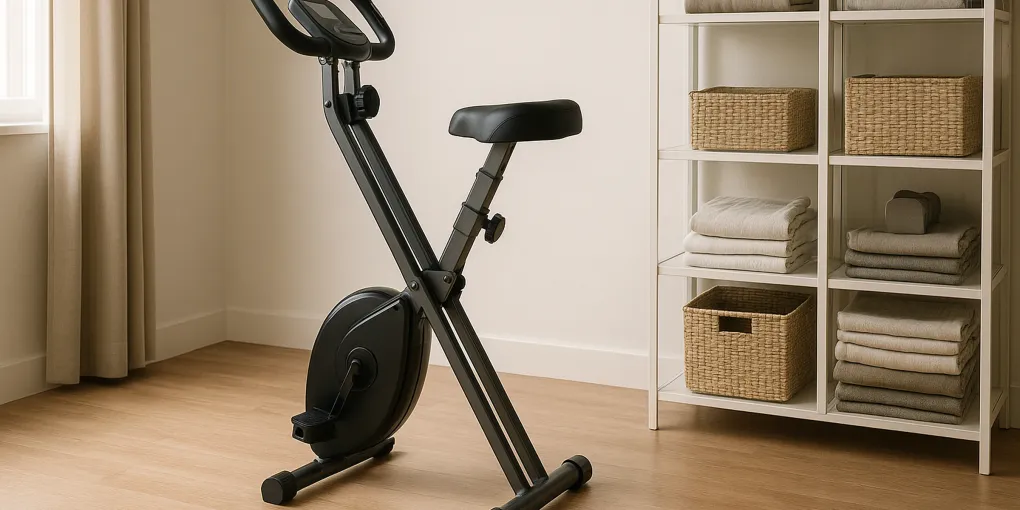
Best Folding Exercise Bikes for Small Spaces: 3 Exact Models to Compare
Buyer's GuideQuick picks
XTERRA FB150 Folding Exercise Bike
YOSUDA 5-in-1 Folding Exercise Bike
YOSUDA 2-in-1 Folding Exercise Bike
This guide is a narrow exact-model comparison for a buyer who wants to start with a folding stationary-bike format and documented dimensions. It does not rank a universal winner or make a claim about fitness, safety, noise, body fit, or results. The practical job is to keep the model name, current listing, and any source-supported configuration notes together before deciding what to investigate further.
Quick picks
- XTERRA FB150 Folding Exercise Bike: The official XTERRA guide identifies an X-frame folding format, lists assembled and folded dimensions, and states eight manual resistance levels. View the current XTERRA listing on Amazon.
- YOSUDA 5-in-1 Folding Exercise Bike: The verification packet confirms this exact model identity and listing availability. Confirm all current configuration details directly on its listing. View the current YOSUDA 5-in-1 listing on Amazon.
- YOSUDA 2-in-1 Folding Exercise Bike: The verification packet confirms this exact model identity and listing availability. Confirm all current configuration details directly on its listing. View the current YOSUDA 2-in-1 listing on Amazon.
Start with the exact model name
Folding-bike listings often place several versions near one another. Begin by recording the exact model name from the page you are considering, then compare only documentation that names that same model. A product title can describe a category without establishing its dimensions, configuration, or included parts.
The three listings above are the complete approved product set for this guide. That keeps the comparison from drifting into generic product claims or features that have not been verified for an exact model.
Read a listing as a current record
A listing is useful only when the title, photos, and written details all point to the same exact model. Start by saving the product name you see, then compare it with the name in your notes and the model you opened through the link. If a seller has changed the title or grouped several versions on one page, pause the comparison until the exact model is clear.
Treat the available information as a record to inspect, not a promise about the product. A retailer can change copy, included parts, photographs, seller terms, or return details. That is why this guide uses the current listing as the place to confirm a fact before an order. It does not turn an older screenshot, a similarly named version, or a general category description into a specification.
For this shortlist, the distinction matters most for the two YOSUDA models. Their names establish which current listings to examine, but they do not establish dimensions, a frame shape, or another configuration detail. Keep those fields blank in a comparison note until the current exact-model listing supports them.
Separate a documented fact from a decision
It helps to make two short columns while you compare models. In the first column, write only the fact and its source: for example, the XTERRA FB150 guide’s stated folded dimensions. In the second column, write the question you still need to answer from current documentation, such as whether a listing names the configuration you are considering. Keeping those columns separate makes it easier to see what has been verified and what still needs checking.
The same approach prevents a common category error: assuming that a detail on one folding bike applies to all folding bikes. The XTERRA guide is an exact-model source for the FB150. It is not a source for either YOSUDA listing. A retail name, an image, or a search result is not a substitute for an exact-model source.
Use the current listing to verify seller terms as well. Return and warranty details can change independently of product copy. Those terms do not establish product quality or suitability, but they are part of the record a buyer can review before purchasing.
Why this guide does not name a winner
The approved evidence supports a limited comparison, not a universal ranking. Calling one model the best would require a broader set of verified facts and would invite unsupported assumptions about use, comfort, performance, or fit. Instead, the article gives you three exact product identities and one manufacturer-backed configuration reference point.
That narrow approach is useful when a listing changes. You can return to the same three questions, re-check the exact model, and compare only the details that a current source actually states. If a detail is absent, it remains unknown rather than becoming an inferred advantage or disadvantage.
Before leaving a listing, write down the date you checked it and the source you used. That small record makes a later re-check straightforward: open the same model, compare the title and documented details again, and update only the facts that have changed. It also keeps a purchase decision tied to current information instead of to a remembered product description.
Keep the note short: exact model name, source URL, date checked, and any documented dimension or configuration detail. A short note is easier to re-read than a broad summary, and it makes an unknown detail visible instead of encouraging a guess.
Keep the article’s categories separate
This guide does not replace a general fitness plan, an under-desk-pedal comparison, or a single-product review. It is limited to folding stationary-bike listings. The separate pages linked below cover other equipment categories, and each one has its own facts and boundaries. Comparing categories is fine; borrowing an unverified claim from one category to make a claim about another is not.
Use documented dimensions as a comparison input
For the XTERRA FB150, the manufacturer guide lists assembled dimensions of 31.89 by 18.1 by 43.30 inches and folded dimensions of 18.1 by 18.1 by 50.79 inches. Those are manufacturer-stated dimensions for that exact model, not a promise about where any bike will work. Compare the current product documentation with the area you are evaluating, including the position you would use while the bike is open and the location you would use for storage.
The same method applies to the YOSUDA listings, but this packet does not establish their dimensions or configurations. Treat a missing exact-model source as a reason to confirm the current listing rather than filling in a comparison row from a name, photo, or similar-looking bike.
What the XTERRA source supports
The current XTERRA FB150 guide describes an X-frame folding design and eight manual resistance levels. Those are configuration notes only. They do not establish a performance result, a comfort outcome, or a recommendation for a particular person.
If you use the XTERRA model as a reference point, keep the comparison limited to the named format, the manufacturer-stated dimensions, and the stated manual-resistance configuration. Do not transfer those details to either YOSUDA listing.
Keep the YOSUDA comparison intentionally narrow
The approved evidence confirms the identity and listing availability of the YOSUDA 5-in-1 and 2-in-1 models. It does not establish a fresh exact-model primary source for their features. That means the useful next step is simple: open the current listing, confirm the exact title, and decide whether its current documentation provides the facts you need.
This is less dramatic than assigning feature labels from a product name, but it keeps the comparison accurate. A changing retail listing should be checked at the time of purchase rather than treated as a permanent specification sheet.
A short comparison routine
Use the same three questions for each listing:
- Does the listing name the exact model you intend to compare?
- Does its current documentation state the folding format or dimensions you need to review?
- Are the current seller terms, return policy, and warranty information clear enough for your purchase decision?
If any answer is unclear, leave that detail unranked. This guide is meant to organize current model facts, not fill gaps with assumptions.
Plan the rest of a small equipment area
The bike is one item in the room. For another compact equipment category, see our adjustable dumbbells guide for small apartments. If you are comparing storage formats for fixed dumbbells, our home gym storage rack guide covers A-frame, bundled-set, and tiered options. For the surface under an equipment area, see our home gym flooring tiles guide for small spaces.
Keep those comparisons separate: a floor guide does not establish bike placement, and a rack guide does not establish a bike’s documented dimensions. Use each page for its own product category, then check the current documentation for every item you plan to buy.
FAQ
What should I compare before choosing a folding exercise bike?
Compare the exact model name, its current listing, and any documented folding dimensions or configuration details. Do not assume one model’s details apply to another.
What facts are verified for the YOSUDA listings in this guide?
This guide uses the YOSUDA model identities and their current listing availability. Confirm all current features and dimensions directly on the listing before buying.
What should I confirm on Amazon before ordering?
Confirm the exact model title, current listing details, seller terms, return policy, and warranty information before placing an order.