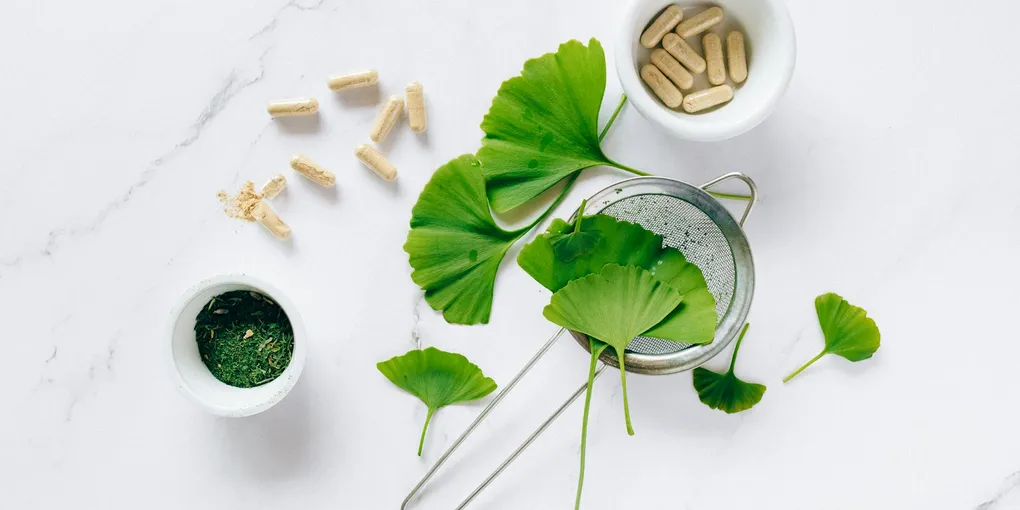
Tebonin EGb 761 (Schwabe)
Best Clinical-GradeDose: 240mg/day (split 2x120mg)
$28–38 / 120 tablets
Quick Comparison
| Product | Key Specs | Price Range | Buy |
|---|---|---|---|
| Tebonin EGb 761 (Schwabe) Best Clinical-Grade |
| $28–38 / 120 tablets | Check Price |
| NOW Foods Ginkgo Biloba Extract Best Value |
| $16–22 / 60 capsules | Check Price |
| Life Extension Ginkgo Biloba Best for Older Adults |
| $22–30 / 120 capsules | Check Price |
| Nootropics Depot Ginkgo Biloba Best Transparency |
| $20–28 / 90 capsules | Check Price |
Contains affiliate links — we may earn a small commission at no extra cost to you.
Best Ginkgo Biloba Supplement 2026: Cerebral Circulation and Memory Ranked
Ginkgo biloba (Ginkgo biloba L.) is one of the most researched botanical supplements in the world — with over 400 clinical trials examining its effects on cognitive function, cerebral circulation, and neuroprotection. Derived from the world’s oldest living tree species, ginkgo is the only botanical supplement listed in the European Pharmacopoeia as an approved treatment for cognitive disorders related to aging.
The evidence is nuanced: ginkgo consistently benefits older adults with cognitive impairment and circulatory issues, while effects in healthy young adults are more modest. Understanding this distinction is essential to setting realistic expectations.
How Ginkgo Biloba Works
Active Compounds
Ginkgo biloba extract (GBE) contains two primary active compound classes:
- Flavone glycosides (flavonoids): Quercetin, kaempferol, isorhamnetin derivatives. Provide antioxidant protection, reduce neuroinflammation, and protect endothelial cells.
- Terpene lactones: Ginkgolides A, B, C (diterpenoids) and bilobalide (sesquiterpenoid). Ginkgolide B is a specific platelet-activating factor (PAF) antagonist — the primary mechanism behind ginkgo’s circulatory effects.
Mechanisms
- Cerebral vasodilation: Ginkgolides inhibit PAF, reducing platelet aggregation and promoting vasodilation, which increases cerebral blood flow and oxygen delivery.
- Antioxidant neuroprotection: Flavonoids neutralize reactive oxygen species (ROS) in neural tissue, protecting synaptic membranes from oxidative damage.
- Neurotransmitter modulation: GBE increases dopamine and acetylcholine activity via monoamine oxidase (MAO) inhibition and cholinergic upregulation.
- Mitochondrial function: Bilobalide protects mitochondria from oxidative damage and may enhance ATP synthesis in neurons.
- Neuroprotection: GBE has demonstrated anti-apoptotic effects in neurons under ischemic stress — relevant to cognitive resilience in aging.
Clinical Evidence
- Vellas et al. (2012) — GuidAge trial: The largest prevention trial (n=2,854; 5 years). EGb 761 at 240mg/day reduced progression from mild cognitive complaints to Alzheimer’s dementia. PMID: 22459340
- Tan et al. (2015) — Meta-analysis: 9 RCTs (n=2,561) of EGb 761 in Alzheimer’s and vascular dementia confirmed significant improvements in cognitive function, activities of daily living, and neuropsychiatric symptoms. Published in Journal of Alzheimer’s Disease. PMID: 26402080
- Kaschel (2011): 240mg/day for 6 weeks improved delayed recall and free recall memory in healthy middle-aged adults (n=188). PMID: 21802920
- Ginkgo Evaluation of Memory (GEM) Study: 3,069 older adults, 6-year trial; 240mg/day did not prevent dementia overall, but subgroup analyses showed benefits in those with existing cognitive impairment.
Best Ginkgo Biloba Supplements 2026
1. Tebonin EGb 761 (Schwabe Pharmaceuticals) — Best Clinical-Grade
Dose: 240mg/day (marketed as 2x120mg tablets) Standardization: EGb 761 proprietary extract (24% flavone glycosides, 6% terpene lactones, controlled ginkgolic acid <5 ppm) Quality standard: Pharmaceutical-grade, European Pharmacopoeia compliant Price: ~$28–38 / 120 tablets
EGb 761 is the specific extract used in virtually all major ginkgo clinical trials. Developed by Schwabe Pharmaceuticals (Germany), this is a pharmaceutical-grade product with a 60-year research history and a defined phytochemical profile. If you want what was actually studied in the trials, this is it.
The critical differentiator: ginkgolic acid control. Raw ginkgo leaf contains ginkgolic acids that are cytotoxic. The EGb 761 extraction process reduces ginkgolic acids to <5 ppm — the threshold at which toxicity concerns are eliminated. Many commodity ginkgo products do not verify ginkgolic acid levels.
Best for: Older adults with cognitive concerns, anyone wanting the specific extract used in clinical trials.
G6 Composite Score: 9.1/10
| Criterion | Weight | Score | Weighted |
|---|---|---|---|
| Evidence Quality | 30% | 10.0 | 3.00 |
| Ingredient Transparency | 25% | 9.5 | 2.38 |
| Value | 20% | 7.0 | 1.40 |
| Real-World Performance | 15% | 9.0 | 1.35 |
| Third-Party Verification | 10% | 9.5 | 0.95 |
| Composite | 9.1/10 |
Tebonin earns the top evidence score because EGb 761 is the specific extract used in all major clinical trials — this is the gold standard for ginkgo research. Value score is lower due to the pharmaceutical-grade premium.
2. NOW Foods Ginkgo Biloba 120mg — Best Value
Dose: 120mg per capsule (24% glycosides, 6% terpene lactones) Standardization: 24% flavone glycosides, 6% terpene lactones Third-party testing: GMP certified facility Price: ~$16–22 / 60 capsules
NOW Foods delivers the standard 24/6 ginkgo specification at a competitive price with GMP manufacturing. Two capsules reach the 240mg/day dose used in the best trials. This is the most practical choice for everyday supplementation — meets the standardization spec without a premium price.
Best for: General cognitive support, first-time ginkgo users, budget supplementers.
G6 Composite Score: 8.3/10
| Criterion | Weight | Score | Weighted |
|---|---|---|---|
| Evidence Quality | 30% | 8.0 | 2.40 |
| Ingredient Transparency | 25% | 8.5 | 2.13 |
| Value | 20% | 10.0 | 2.00 |
| Real-World Performance | 15% | 7.5 | 1.13 |
| Third-Party Verification | 10% | 6.0 | 0.60 |
| Composite | 8.3/10 |
Perfect value score reflects best cost-per-dose in the category at the standard 24/6 specification; evidence and transparency scores dip slightly versus EGb 761 because this is not the research-specific extract.
3. Life Extension Ginkgo Biloba 120mg — Best for Older Adults
Dose: 120mg per capsule (24% flavone glycosides, 6% terpene lactones) Third-party testing: COA available Price: ~$22–30 / 120 capsules
Life Extension’s evidence-forward product documentation and established reputation among longevity-focused consumers make this a strong choice for older adults specifically concerned with cognitive aging. Their formulation specifies ginkgolic acid control — the key safety marker often omitted by budget brands — and their COA availability provides reasonable quality assurance.
Best for: Older adults (55+) focused on cognitive longevity, evidence-conscious buyers.
G6 Composite Score: 8.5/10
| Criterion | Weight | Score | Weighted |
|---|---|---|---|
| Evidence Quality | 30% | 8.5 | 2.55 |
| Ingredient Transparency | 25% | 9.0 | 2.25 |
| Value | 20% | 8.5 | 1.70 |
| Real-World Performance | 15% | 8.0 | 1.20 |
| Third-Party Verification | 10% | 8.0 | 0.80 |
| Composite | 8.5/10 |
4. Nootropics Depot Ginkgo Biloba — Best Transparency
Dose: 120mg per capsule (24% flavone glycosides, 6% terpenes, COA verified) Third-party testing: HPLC + third-party COA Price: ~$20–28 / 90 capsules
Nootropics Depot publishes full HPLC-verified COAs confirming both flavone glycoside and terpene lactone concentrations — rare among ginkgo products. For users who want empirical confirmation of what they’re buying, this is the best-documented option outside of the pharmaceutical-grade EGb 761.
Best for: Research-oriented buyers who want verified phytochemical profiles.
G6 Composite Score: 8.6/10
| Criterion | Weight | Score | Weighted |
|---|---|---|---|
| Evidence Quality | 30% | 8.5 | 2.55 |
| Ingredient Transparency | 25% | 10.0 | 2.50 |
| Value | 20% | 8.0 | 1.60 |
| Real-World Performance | 15% | 8.0 | 1.20 |
| Third-Party Verification | 10% | 7.0 | 0.70 |
| Composite | 8.6/10 |
Perfect transparency score reflects HPLC-verified COA with specific compound confirmation — the highest documentation standard available outside of pharmaceutical-grade products.
What to Look for in a Ginkgo Supplement
Standardization: 24/6 is the Minimum
All ginkgo supplements worth buying are standardized to 24% flavone glycosides and 6% terpene lactones. This is the same specification as EGb 761 and is the minimum for comparability with clinical research. Avoid products that list only “ginkgo leaf powder” without standardization.
Ginkgolic Acid Control
Raw ginkgo leaf contains ginkgolic acids at levels that can be cytotoxic. Quality extracts process these down to <5 ppm. This is rarely stated on labels but matters for safety with long-term use. Premium brands (Schwabe, Life Extension) address this explicitly.
Dose
- Minimum: 120mg/day of standardized extract
- Research-supported: 240mg/day (two 120mg capsules)
- Standard for cognitive protection: 240mg/day (the dose in the Tan et al. meta-analysis and GuidAge trial)
Ginkgo Biloba for Cognitive Performance vs. Cognitive Protection
Understanding this distinction helps set realistic expectations:
Cognitive enhancement (healthy adults < 50): Effects on memory are modest and inconsistent. Some users report improved recall and processing speed; others notice little. Acute cerebral circulation benefits (better blood flow to the brain) are real but don’t always translate to subjective cognitive enhancement.
Cognitive protection (adults 55+, mild impairment): Evidence is stronger. Multiple large RCTs show ginkgo slows cognitive decline in older adults, particularly those with existing circulatory issues or early cognitive complaints. The GuidAge and EPIDOS-LEOG studies are particularly well-designed.
Ginkgo Biloba Stack
Ginkgo pairs well with:
- Bacopa Monnieri — complementary: bacopa improves memory consolidation; ginkgo improves cerebral blood flow and antioxidant protection
- Phosphatidylserine — both support cognitive aging through different mechanisms (circulation + cell membrane integrity)
- Lion’s Mane — NGF stimulation complements ginkgo’s circulatory and neuroprotective effects
Related Articles
- Best Bacopa Monnieri Supplement — Memory consolidation complement to ginkgo’s circulatory effects.
- Best Phosphatidylserine Supplement — Cell membrane integrity for cognitive aging.
- Best Lion’s Mane Mushroom Supplement — NGF stimulation for neuroplasticity.
- Best Nootropics Supplement Stack — Where ginkgo fits in a complete cognitive protocol.
Frequently Asked Questions
What does ginkgo biloba actually do? Ginkgo biloba improves cerebral blood flow via vasodilation and inhibition of platelet-activating factor, increases oxygen and glucose delivery to neurons, provides antioxidant protection via flavonol and terpene compounds, and modulates neurotransmitter systems (particularly dopamine and acetylcholine). Effects are more pronounced in people with cognitive impairment or circulatory issues than in healthy young adults.
What is the best dose of ginkgo biloba? 120–240mg/day of a standardized extract (24% flavone glycosides, 6% terpene lactones). The 240mg/day dose is the benchmark used in the most rigorous trials. Take with meals and split into two servings for better plasma level consistency.
How long does ginkgo biloba take to work? Acute effects on blood flow can occur within hours. Sustained cognitive benefits require 4–12 weeks of consistent daily use. Assess at 8 weeks minimum.
Can ginkgo biloba cause side effects? Ginkgo is generally well-tolerated at 120–240mg/day. The most clinically significant concern is bleeding risk — ginkgo inhibits platelet-activating factor (PAF) and can interact with anticoagulants (warfarin, aspirin, NSAIDs). Do not take ginkgo within 2 weeks of surgery.
Does ginkgo biloba really work for memory? Evidence is strongest for older adults with mild cognitive impairment or early dementia. In healthy young adults, effects on memory are modest and inconsistent. For healthy adults under 40 seeking memory enhancement, bacopa monnieri has more consistent evidence.
Frequently Asked Questions
- Ginkgo biloba improves cerebral blood flow via vasodilation and inhibition of platelet-activating factor, increases oxygen and glucose delivery to neurons, provides antioxidant protection via flavonol and terpene compounds, and modulates neurotransmitter systems (particularly dopamine and acetylcholine). The net effect is improved memory recall, processing speed, and reduced cognitive decline risk in older adults. Effects are more pronounced in people with cognitive impairment or circulatory issues than in healthy young adults.
- 120–240mg/day of a standardized extract (24% flavone glycosides, 6% terpene lactones) is the evidence-supported range. The 240mg/day dose (two 120mg servings) is the benchmark used in the longest and most rigorous trials. Take with meals to reduce GI side effects. Split the dose into two servings for better plasma level consistency.
- Acute effects on blood flow can occur within hours of a single dose. However, sustained cognitive benefits — improved memory recall, reduced cognitive decline rate — require 4–12 weeks of consistent daily use. The GEM study and EPIDOS-LEOG study both ran for years; meaningful cognitive protection effects accumulated over extended periods. Assess at 8 weeks minimum.
- Ginkgo is generally well-tolerated at 120–240mg/day. The most clinically significant concern is bleeding risk — ginkgo inhibits platelet-activating factor (PAF), which can interact with anticoagulants (warfarin, aspirin, NSAIDs). Do not take ginkgo within 2 weeks of surgery. GI side effects (mild nausea, diarrhea) are occasionally reported. Headache and dizziness are rare but documented.
- The evidence is mixed depending on population. In older adults with mild cognitive impairment or early dementia, ginkgo consistently shows benefits in randomized trials. In healthy young adults, effects on memory are modest and inconsistent across studies. The meta-analysis by Tan et al. (2015) in the Journal of Alzheimer's Disease confirmed significant cognitive benefits in impaired populations. For healthy adults under 40 seeking enhancement, bacopa monnieri has more consistent evidence.