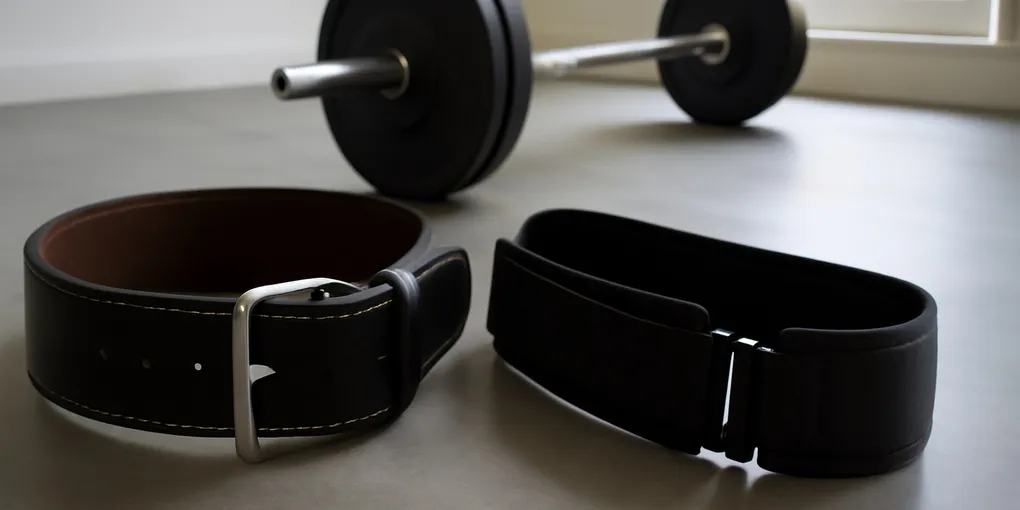
Best Lifting Belts for Home Gym Strength: Stable Bracing Without Buying a Powerlifting Costume
Buyer's GuideGymreapers 10 mm lever lifting belt
Best heavy barbell shortlistBest use: Squats and deadlifts where a rigid brace and repeatable tightness matter
Quick picks
| Product | Key Specs | Pros / Cons |
|---|---|---|
| See price on Amazon |
|
|
| See price on Amazon |
|
|
| See price on Amazon |
|
|
| See price on Amazon |
|
|
Product availability, certifications, and retailer details can change; check the current Amazon page before buying.
Lifting-belt bottom line
A lifting belt helps you brace against pressure; it does not fix technique. Home-gym buyers should choose stiffness, closure, and belt height around the lifts they actually perform. If you want a fast shortlist, start with Gymreapers 10 mm lever lifting belt, Dark Iron Fitness leather lifting belt, Element 26 self-locking weightlifting belt, then verify the current listing, dimensions, label, size chart, warranty, and return terms before buying.
Lifting-belt quick picks
- Best heavy barbell shortlist: Search Amazon for Gymreapers 10 mm lever lifting belt - Squats and deadlifts where a rigid brace and repeatable tightness matter.
- Best softer leather option: Search Amazon for Dark Iron Fitness leather lifting belt - General home-gym lifters who want leather without maximal stiffness.
- Best adjustable nylon pick: Search Amazon for Element 26 self-locking weightlifting belt - Mixed sessions, Olympic lifts, kettlebells, machines, and quick changes.
- Best budget gym-style belt: Search Amazon for Harbinger padded leather lifting belt - Beginners who want bracing feedback without a competition belt feel.
Stiffness, closure, and torso checks
- 10 mm leather rigidity versus flexible nylon
- lever, prong, or self-locking closure
- torso length and belt height comfort
- one-user fit versus shared home-gym use
- whether the belt supports bracing without changing technique
These checks keep the page focused on the actual purchase. Use the named shortlist only after the specs fit your room, body, training plan, and risk tolerance. Do not treat the order above as a live ranking of price, availability, or star ratings.
Belt notes for home-gym lifts
Gymreapers 10 mm lever lifting belt
Best for: Squats and deadlifts where a rigid brace and repeatable tightness matter.
Why it made the shortlist: 10 mm lever-belt family, powerlifting-style support.
Main caveat: Lever sizing is less flexible between users.
Search Amazon for Gymreapers 10 mm lever lifting belt
Dark Iron Fitness leather lifting belt
Best for: General home-gym lifters who want leather without maximal stiffness.
Why it made the shortlist: Tapered leather belt family, easier break-in for many users.
Main caveat: Less rigid than a 10 mm power belt.
Search Amazon for Dark Iron Fitness leather lifting belt
Element 26 self-locking weightlifting belt
Best for: Mixed sessions, Olympic lifts, kettlebells, machines, and quick changes.
Why it made the shortlist: Self-locking nylon design, fast tension changes.
Main caveat: Not as rigid for max-effort squats/deadlifts.
Search Amazon for Element 26 self-locking weightlifting belt
Harbinger padded leather lifting belt
Best for: Beginners who want bracing feedback without a competition belt feel.
Why it made the shortlist: Padded back and familiar gym-belt shape.
Main caveat: Padding is not the same as 360-degree stiffness.
Search Amazon for Harbinger padded leather lifting belt
Match belt style to the lift
A 10 mm lever belt is the shortlist for heavy squats and deadlifts when one primary user wants repeatable tightness. A prong leather belt is slower to adjust but easier to share or fine-tune across bodyweight changes. A self-locking nylon belt fits mixed training better because it can loosen quickly between cleans, kettlebell work, machines, and accessory sets.
Torso length decides more purchases than brand loyalty. If the belt jams into ribs or hips at setup, stiffness becomes a problem rather than support. Measure belt height against your own squat and hinge positions before paying for the most rigid option.
Lifting-belt deal-breakers
Avoid buying the stiffest belt because it looks serious. If it pinches ribs, blocks setup, or takes too long to adjust, it will not be used well.
Also skip listings that make medical promises, hide key specs, or use urgency copy instead of useful documentation. For supplements, do not buy a label that hides the active form or serving math. For equipment, do not buy a product whose dimensions, capacity, or setup requirements are unclear.
Bracing and strength context
The evidence behind this page supports the behavior more than any single retail listing. Strength equipment should make progressive resistance training easier to perform safely. Cardio tools should support repeatable aerobic minutes. Recovery products should be used with realistic expectations and should not replace medical care, sleep, programming, nutrition, or gradual progression.
Use conservative setup on the first week. For equipment, test the lightest load, slowest speed, or shortest session before trusting the product under fatigue. For supplements or hydration products, read the full label and check with a qualified clinician if you have kidney disease, cardiovascular disease, pregnancy, medication interactions, circulation problems, or a condition that changes fluid, sodium, or training advice.
Belt checkout checkpoint
Name the job before you buy. A useful shortlist sounds specific: a foldable walking pad for 30-minute work calls, a 10 mm lever belt for heavy squat days, compression socks sized by calf circumference after long runs, or a creatine gummy that still reaches 3-5 grams of creatine monohydrate per day. If the product does not solve that named job, skip it for now.
Lever, nylon, and torso-fit details
For Gymreapers-style 10 mm lever belts, sizing accuracy is the purchase. A lever belt can feel excellent for one lifter and awkward for shared households because adjustments take more work. For Dark Iron-style softer leather, expect easier break-in and less maximal stiffness. For Element 26-style self-locking nylon, the value is quick tension changes during mixed sessions.
A belt should be tested with the lifts you actually do: squat, deadlift, press, row, or loaded carry. If it jams into ribs during deadlift setup or blocks depth during squats, it is the wrong shape for you even if the materials look premium. Home gyms also need storage. Hanging the belt near the rack or bench makes it more likely to be used only on the sets that need it.
For adjacent buying context, see our small home-gym bench setup.
Lifting-belt scenario shortlist
For a garage-gym powerlifting block, prioritize a rigid leather belt with a closure you can set consistently. For general strength training, prioritize comfort, adjustability, and whether the belt lets you brace without changing your bar path. For shared home gyms, avoid lever-only setups unless extra adjustment time is acceptable.
Do not buy a belt to mask pain or technique collapse. It should amplify a brace you can already create, not turn every set into a max-effort costume.
Lifting-belt listing audit
Before checkout, verify belt thickness, height, sizing method, closure hardware, break-in expectations, return terms, and whether the lever or buckle is included. Measure around the abdomen where you brace, not at pants size; belt sizing mistakes are common and expensive to ship back.
Home-gym fit checks
Measure where the belt will sit during a brace, then compare that measurement with the brand chart. Pants size is a bad proxy because a lifting belt usually rides higher and tighter. Also check belt height against your torso: a short lifter may hate a tall rigid belt during deadlifts, while a taller lifter may want more contact area for squats.
Closure style changes daily use. Lever belts are fast once set but annoying when multiple people share the gym or bodyweight changes. Prong belts are familiar and adjustable but slower between attempts. Self-locking nylon belts are practical for mixed sessions but usually give less rigid support for maximal barbell lifts. The best home-gym belt is the one you will tighten correctly for the right sets and loosen when the lift no longer needs it.
Break-in expectations also matter for home gyms. A stiff leather belt may feel awkward for the first sessions and should be tested with submaximal warmups before heavy attempts. Nylon belts usually feel usable faster but give less feedback under maximal bracing. If you train alone, pick the closure you can set and release confidently without rushing between rack height, plates, and video checks.
Bracing practice before heavy sets
A belt should be tested during warmups before it appears on work sets. Put it on for a light squat or hinge, take a normal breath, brace into the belt, and confirm that the buckle or lever does not force a different torso position. If the belt pinches ribs during deadlifts or rides into the hips at depth, the height or stiffness may be wrong for your build. Home-gym buyers should solve that fit problem before chasing a heavier leather model.
Repeat the fit check in a press and a loaded carry if those lifts are part of your plan. A closure that clears the thighs during squats may still catch the forearm or shift when walking under load.
FAQ
Is a Gymreapers 10 mm lever belt too stiff for beginners?
It can be. A rigid lever belt is best for heavy barbell work; many beginners do better with softer leather or self-locking nylon while learning bracing.
When is an Element 26 self-locking belt the better home-gym buy?
It is a strong fit for mixed sessions where quick tension changes matter more than maximum squat or deadlift rigidity.
What lifting belt fit problem should stop the purchase?
If the belt jams into ribs, blocks deadlift setup, prevents depth, or cannot be adjusted for your torso and waist, choose another style.