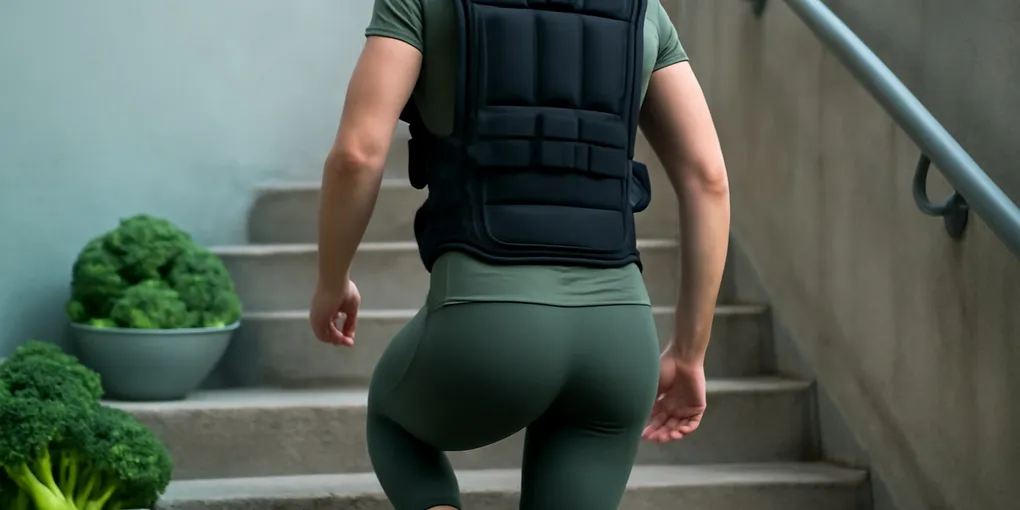
Best Weighted Vests for Walking and Stairs: Load That Does Not Bounce or Bruise
Buyer's GuideCAP Barbell Adjustable Weighted Vest
Best budget progressive-load searchBest Use: Walking loops, stair sessions, and users who want removable weight packets
$40-120
Quick picks
| Product | Key Specs |
|---|---|
| See price on Amazon |
|
| See price on Amazon |
|
| See price on Amazon |
|
Product availability, certifications, and retailer details can change; check the current Amazon page before buying.
A weighted vest can make an easy walk feel more like training without turning it into a run. That is useful for people who want low-impact conditioning, short stair sessions, or a way to progress bodyweight work at home. The wrong vest does the opposite: it bounces, digs into the ribs, overheats the chest, and makes stairs feel sketchy before the legs are ready.
If you want a vest you can progress slowly, search Amazon for CAP Barbell adjustable weighted vests. If comfort matters more than maximum load, search Amazon for Hyperwear Hyper Vest FIT. For longer outdoor miles, search Amazon for GORUCK Rucker 4.0 if a vest feels too cramped or lacks storage. For related low-impact conditioning context, see our walking pad zone 2 guide.
Quick picks for weighted walking vests
- Best progression choice: Search Amazon for CAP Barbell Adjustable Weighted Vest if you want removable packets and a lower-cost starting point.
- Best low-profile walking choice: Search Amazon for Hyperwear Hyper Vest FIT if bulky plate carriers bother your ribs or collarbones.
- Best longer-walk alternative: Search Amazon for GORUCK Rucker 4.0 if you want storage, water, and easier load removal.
Practical score for weighted vests
| Factor | Weight | Category Score | Why it matters for weighted walking |
|---|---|---|---|
| Research | 30% | 6.0 | Loaded walking is a form of progressive exercise, but vest-specific outcome data is narrower than general aerobic and resistance training evidence. |
| Evidence Quality | 25% | 5.8 | The strongest guidance supports gradual physical activity progression and strength training principles, not a specific vest design. |
| Value | 20% | 7.3 | A good vest can upgrade walking, stairs, push-ups, and carries without another machine. |
| User Signals | 15% | 7.0 | Bounce, shoulder pressure, heat, and plate noise determine whether the vest gets used. |
| Transparency | 10% | 6.6 | Better listings show exact load range, increments, torso length, closure type, and plate dimensions. |
| Composite | 100% | 6.4 | Useful when the load stays close, light, and adjustable enough for repeatable walks. |
What to check before buying
Start with load, not looks. A vest that begins too heavy is hard to progress safely, especially on stairs. Many walkers should start around 5 to 10 percent of body weight and spend several sessions there before adding more. If your goal is brisk walking rather than tactical-style rucking, you do not need a vest that reaches 40 or 60 pounds.
Fit matters as much as weight. A good walking vest should sit high and close to the torso, with minimal bounce when you step quickly. If it hangs low on a shorter torso, it can hit the stomach, interfere with breathing, or swing during stair climbing. Check owner photos from people with similar body size, not only studio photos on a model.
The American College of Sports Medicine position stand on resistance training progression emphasizes gradual loading, appropriate technique, and individualization (PMID: 19204579, https://pubmed.ncbi.nlm.nih.gov/19204579/). That principle applies here. Loaded walking is not complicated, but the load still changes joint and tissue demand.
Plate vest vs soft vest
Plate vests usually feel more stable once fitted because the weight is concentrated in front and back panels. They are easier to load precisely if the system accepts small plates. The downside is comfort. Hard plates can press into the sternum, ribs, or collarbones, and some short users find the panel too long for stairs or incline walking.
Soft vests spread small weight packets around the torso. They can feel friendlier for beginners and are less likely to clack or shift. The tradeoff is that the weight is often fixed or adjusted in larger, fiddlier increments. If a soft vest uses many small pockets, inspect stitching and closure quality because a loose packet can rub during longer walks.
For most walking plans, choose the vest that lets you forget it is there after the first five minutes. A technically heavier vest is not a better buy if you avoid wearing it.
Stairs change the decision
Flat walking and stairs are not the same. Stairs increase knee and hip demand, raise heart rate faster, and make balance errors more consequential. If you plan to climb stairs, choose a vest that leaves your arms free, does not block your view of your feet, and does not swing when you turn on a landing.
Start stairs with less load than you use on flat ground. Use a rail when learning the vest, avoid carrying other objects, and stop before form gets sloppy. CDC physical activity guidance notes that adults benefit from aerobic and muscle-strengthening activity, but the activity still needs to match current ability and health status (https://www.cdc.gov/physical-activity-basics/guidelines/adults.html). Loaded stairs are a progression, not a starting test.
Who should skip or delay the purchase
Delay the vest if ordinary walking already causes knee, hip, foot, back, chest, dizziness, or balance symptoms. A vest makes those issues harder to interpret. People with osteoporosis concerns, pregnancy, significant joint pain, or cardiovascular symptoms should get individualized medical guidance before adding external load.
Also skip the vest if you mainly want speed. A light vest can make walking more demanding, but it is not the best tool for fast running, agility work, or high-impact intervals. If you want conditioning with less load on the joints, a bike, rower, incline walk, or step platform may be more appropriate.
How to size the first month
Treat the first month as a fit and tolerance block, not a toughness test. Session one can be as simple as 10 to 15 minutes of flat walking with the lightest usable load. If that feels calm during the walk and normal the next day, add time before adding weight. A practical progression is 15 minutes, then 20 minutes, then 25 minutes with the same vest load.
Add stairs only after flat walking is boring and repeatable. Start with one or two short flights inside a normal walk rather than a dedicated stair workout. If the vest changes foot placement, makes you rush the descent, or encourages hand-free stair climbing when you normally use the rail, the setup is too aggressive.
For people using a vest alongside lifting, place loaded walks away from heavy squat, lunge, or deadlift sessions at first. Calves, feet, knees, and low back may notice the extra load before your breathing does. If the vest is part of a fat-loss plan, remember that the purchase is just a way to make walking more demanding; it does not remove the need for a sustainable weekly activity dose.
Product details that matter online
Look for a real size chart, not just a model photo. Torso length, chest range, and strap adjustment decide whether the vest sits close enough for brisk walking. For plate systems, check whether the included plate weight matches the listed vest weight. Some listings show a vest shell but sell plates separately, which changes the real price.
Read the negative reviews for bounce, odor, stitching, and shoulder rub. A vest can look durable in studio photos and still have weak seams where the weight pockets meet the body. If several owners mention sand leaking, plate corners digging, or straps loosening mid-walk, choose a different model.
For hot climates, breathable panels and easy cleaning matter. A vest traps heat across the chest and back. Dark, thick materials may be fine in a garage gym but miserable on summer walks. If you already use a running hydration belt, check whether the belt and vest compete for the same waist space before buying both.
How to use it after checkout
On the first walk, wear the vest over the shirt and route straps exactly as the manual shows. Walk five minutes, tighten only enough to stop bounce, then finish the session without adjusting every block. Skin redness at the shoulders can be normal pressure; burning, numbness, or chafing means the fit is wrong.
Keep a simple log for the first two weeks: load, minutes, route, stairs, and next-day notes. If the same load feels fine on flat sidewalks but rough on downhill sections, your route is the variable. If the vest feels fine for 10 minutes and annoying after 25, build duration before weight. This log also prevents the common mistake of adding plates just because the vest can hold them. Comfort predicts adherence. Daily use matters.
Weighted vest FAQ
How should a weighted vest fit for walking?
It should sit snugly against the torso without bouncing, pinching the neck, or blocking normal arm swing. If the bottom edge hits your abdomen with every step, choose a shorter vest or a rucking pack.
Are weighted vests good for bone health?
Loaded movement can be one part of a bone-supportive exercise plan, but a vest is not a standalone osteoporosis treatment. The safest choice depends on fall risk, current strength, medication history, and clinician guidance.
Can I use ankle weights instead?
For walking, ankle weights can alter gait and swing load at the knees and hips. A close-fitting vest or rucking pack is usually a cleaner way to add load to walking.
Frequently Asked Questions
- Most beginners should start around 5 to 10 percent of body weight, or less if stairs, hills, knee pain, or balance issues are involved.
- A vest keeps load close to the torso and can bounce less. A rucking backpack is better when you want storage, longer walks, or easier load removal.
- Use stairs cautiously. Start with very light load, hold the rail if needed, and stop if knee, hip, back, or balance symptoms appear.