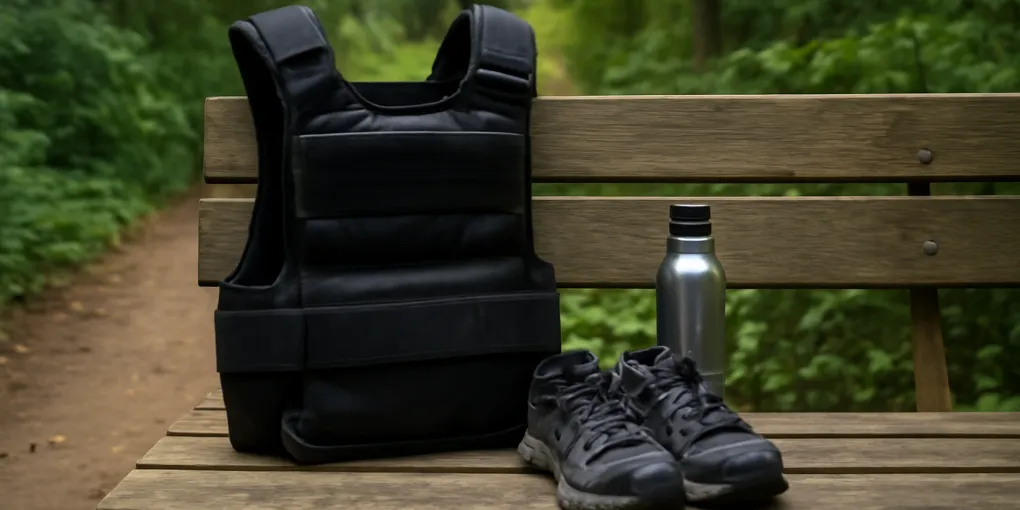
Best Weighted Vests for Walking and Rucking: Fit, Load, and Bounce Control
Buyer's GuideHyperwear Hyper Vest Elite
Best low-bounce walking searchBest Use: Brisk walks, treadmill incline sessions, and users who want load close to the torso
Quick picks
Hyperwear Hyper Vest Elite
★ Top pick Best low-bounce walking search- Best Use: Brisk walks, treadmill incline sessions, and users who want load close to the torso
- Caveat: Costs more than basic sand-filled vests and may not be the right choice for heavy rucking
CAP Barbell Adjustable Weighted Vest
Best budget adjustable search- Best Use: Lower-cost progressive walking loads when you want removable weight packets
- Caveat: Check shoulder padding, packet security, and bounce complaints before choosing a load
Rogue Plate Carrier
Best plate-carrier search- Best Use: Heavier rucking-style training for users who already tolerate loaded walking
- Caveat: Requires compatible plates and can feel harsh for casual neighborhood walks
Zelus Weighted Vest
Best entry walking search- Best Use: Beginners comparing lighter fixed-weight vests for short walks
- Caveat: Fixed loads limit progression and fit can vary by torso size
Bottom line
A weighted vest for walking should make a familiar walk slightly more demanding without bouncing, cutting into your neck, or turning every hill into a joint complaint. The fit should feel boring during the first five minutes because irritation usually gets worse, not better, after the turnaround point. For most people, the first search should be a snug, body-hugging vest such as Search Amazon for Hyperwear Hyper Vest Elite. If you need a lower-cost adjustable option, compare current CAP Barbell Adjustable Weighted Vest options. Heavier rucking users can search Rogue Plate Carrier options, while beginners can Search Amazon for lighter Zelus Weighted Vest listings.
The best vest is not the heaviest vest. It is the one that lets you keep a normal stride, breathe steadily, and increase load slowly. If two options look similar, choose the one with clearer sizing guidance, smaller load jumps, and a return policy that lets you inspect fit before committing to long walks. If your goal is basic aerobic work, pair vest walking with the intensity-control principles in our heart rate variability training readiness guide rather than treating extra weight as a shortcut.
Quick picks
- Low bounce for brisk walking: Search Amazon for Hyperwear Hyper Vest Elite when close fit matters more than maximum load.
- Budget progression: Search Amazon for CAP Barbell Adjustable Weighted Vest if removable packets and price are the main constraints.
- Rucking-style load: Search Amazon for Rogue Plate Carrier for experienced users who want plate-based loading.
- Lighter first vest: Search Amazon for Zelus Weighted Vest if you are comparing simple fixed-weight walking vests.
How much weight to start with
Start lower than your ego wants. A practical first vest load is often 5 to 10 percent of body weight for healthy adults who already walk regularly. Smaller users, older adults, and anyone returning from injury should start with less. The load should let you maintain posture, stride length, and foot placement. If you start leaning back, shortening every step, or feeling knee pain on descents, the vest is too heavy for that route.
Progress by time first, then load. For example, use a 10-minute vest walk twice in the first week, then 15 to 20 minutes, then add a small amount of weight only if feet, knees, hips, and back feel normal the next day. Do not add steep hills and extra load in the same week.
Fit features that matter
Bounce control is the feature that separates a useful walking vest from a closet weight. A snug torso fit keeps the load from swinging with each step. Wide shoulder contact reduces hot spots. Front and back loading should feel balanced enough that you do not arch your low back to stand tall.
For longer walks, avoid vests that put all the weight high on the traps or low on the belly. A plate carrier can be excellent for short heavy rucks, but it may feel stiff and unforgiving during casual neighborhood walking. A low-profile vest can be better for treadmill incline work because it lets your arms swing and does not hit the console.
Adjustable versus fixed weight
Adjustable vests are better for progression. Removable packets let you add two to five pounds at a time instead of jumping from one fixed vest to another. Before ordering, check whether each packet has its own secure pocket and whether users report shifting or leakage.
Fixed-weight vests can be simpler and cheaper. They work best when the listed load already matches your starting plan. The risk is buying 20 pounds because it sounds useful, then discovering that 20 pounds is too much for your knees or too bouncy for a brisk pace.
When a backpack is a better choice
A rucking backpack can carry water, layers, and a flatter load. It may also fit better on people who dislike front pressure from a vest. A vest can be simpler for short walks because the load is symmetrical and does not require packing. Choose the tool by the route: vest for short controlled walks, backpack for longer rucks where water and storage matter.
Route matching
Flat sidewalks, steep hills, treadmills, and trails ask different things from a vest. On flat routes, bounce and shoulder comfort matter most because the stride repeats for thousands of steps. On hills, the vest must stay put while breathing gets harder. On trails, balance and footing become the limit before heart rate does. Do not use a heavy plate carrier on uneven ground until you have tested it on predictable pavement.
Treadmill users should also check clearance. A bulky vest can hit the console or change arm swing. Start at a lower speed than your usual walk, clip the safety key to clothing, and avoid gripping the rails to manage a load that is too high.
Inspection before the first loaded walk
Before adding weight, put the vest on empty or lightly loaded and walk around the house. Tighten straps until it moves with your torso but does not restrict breathing. Bend forward, step up onto a curb, and swing your arms. If the vest rides into your throat or bounces on a simple step-up, it will be worse outside.
For packet-style vests, confirm every pocket closes securely. For plate carriers, confirm the plate size, plate curve, and carrier pocket match. A shifting plate can bruise the ribs or turn downhill walking into a constant adjustment.
Cleaning and heat management
Weighted vests trap heat. In warm weather, reduce load, shorten the walk, and carry water. Wash removable liners or wipe contact surfaces according to the product instructions. Sweat salt can stiffen fabric and irritate skin, especially around the neck and armpits. If the vest cannot be cleaned easily, it is a poor choice for frequent walking.
Safety limits and who should be cautious
Weighted walking increases musculoskeletal load. The Physical Activity Guidelines for Americans support aerobic and muscle-strengthening activity, but they do not require adding external weight to walking. People with osteoporosis, balance problems, neuropathy, uncontrolled blood pressure, pregnancy-related symptoms, recent surgery, or active joint pain should get individualized guidance before adding load.
If you feel chest pain, unusual shortness of breath, dizziness, new numbness, or sharp joint pain, stop the session. The vest should never make a walk feel like a medical stress test.
Practical score
| Factor | What earns a high score |
|---|---|
| Fit and bounce control | Load stays close to the torso during brisk walking |
| Load progression | Small enough increments for gradual increases |
| Shoulder comfort | Wide contact, no neck digging, stable straps |
| Use-case match | Low-profile for walking, plate carrier for heavier rucking |
| Return practicality | Easy inspection before adding full load |
Product red flags
Skip listings that hide the loaded weight range, show no close view of the closure, or rely on vague training claims instead of fit details. For walking, the photos should show how the vest closes around the ribs and shoulders. For plate carriers, confirm whether plates are included; many carriers are sold empty, and plate cost can change the total budget.
Also read negative reviews for the right failure mode. A vest can have cosmetic complaints that do not matter, but repeated notes about torn pockets, sand leakage, broken buckles, chemical odor, or shoulder rubbing during short walks are more important than a high star average. If several reviewers with your body size mention poor fit, choose another search result.
Example first month
Week one: two 10-minute walks at the lightest useful load. Week two: two 15-minute walks at the same load. Week three: one 20-minute walk and one 15-minute walk. Week four: either add five minutes or add a small amount of weight, not both. Keep normal unweighted walks on other days so the vest does not replace basic aerobic volume.
This progression is intentionally conservative. The goal is to notice foot, knee, hip, back, and skin responses before the vest becomes a habit.
Weighted vest FAQ
Is walking with a weighted vest good cardio?
It can raise effort during a walk, especially on hills, but it is still only one way to increase training load. Pace, route, heat, and current fitness matter.
How heavy should my first weighted vest be?
Many people should start around 5 to 10 percent of body weight or less. The right load lets you walk normally and feel fine the next day.
Is a weighted vest better than ankle weights?
For walking, a vest is usually more practical because it keeps load near the center of mass. Ankle weights can change leg swing mechanics and are not ideal for brisk outdoor walks.
Can I run in a weighted vest?
Most people should not start there. Running adds impact forces, and a bouncing vest can worsen the problem. Build loaded walking tolerance first.
Sources
- U.S. Department of Health and Human Services. Physical Activity Guidelines for Americans, 2nd edition. https://health.gov/sites/default/files/2019-09/Physical_Activity_Guidelines_2nd_edition.pdf
- Westcott WL. Resistance training is medicine: effects of strength training on health. Current Sports Medicine Reports. https://www.ncbi.nlm.nih.gov/pmc/articles/PMC3445097/
- Knapik JJ, Reynolds KL, Harman E. Soldier load carriage: historical, physiological, biomechanical, and medical aspects. Military Medicine. https://pubmed.ncbi.nlm.nih.gov/15379064/