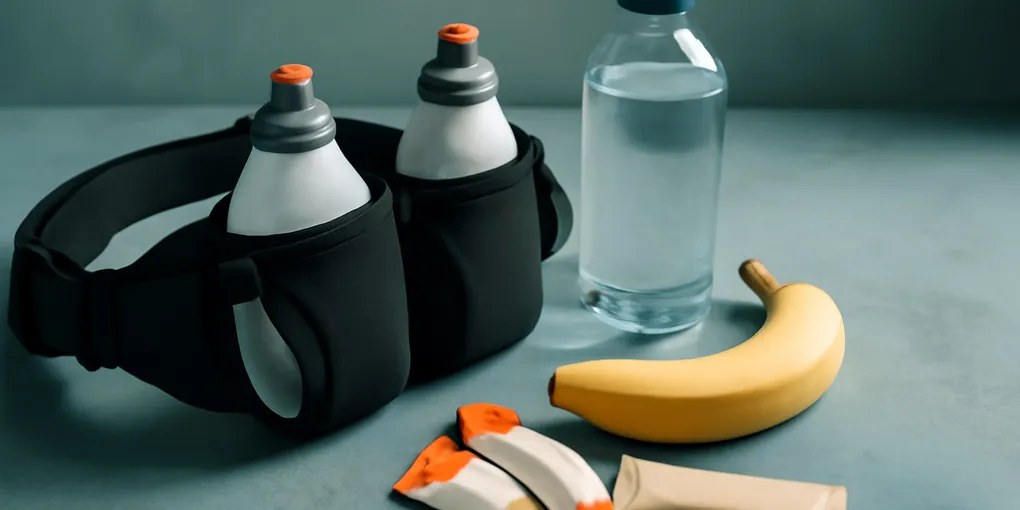
Best Running Hydration Belts for Half-Marathon Training: Stable Water Without a Vest
Buyer's GuideFitletic-style two-bottle hydration belt
Best balanced belt layoutBest Use: Half-marathon training runs where aid stations are not available
$25-45
Quick picks
| Product | Key Specs |
|---|---|
| See price on Amazon |
|
| See price on Amazon |
|
| See price on Amazon |
|
Product availability, certifications, and retailer details can change; check the current Amazon page before buying.
Bottom line
A running hydration belt is the practical middle ground between carrying a bottle in your hand and wearing a full vest. For half-marathon training, the best belt is not the one with the largest pocket. It is the one that holds enough water for your route, keeps bottles from bouncing, and lets you grab gels without changing your stride.
For most road runners, start with a two-bottle belt that carries roughly 16-24 ounces total and has a pocket large enough for your phone plus two gels. Search Amazon for two-bottle running hydration belts, then filter by bottle position, pocket size, and return policy rather than color.
Quick picks by running situation
- Best first belt: a Fitletic-style two-bottle belt with bottles on both sides of the low back. It spreads weight better than one large front bottle.
- Best for easy bottle access: a Nathan TrailMix-style angled-bottle belt if your shoulders dislike reaching far behind you.
- Best low-profile carry: a FlipBelt Arc-style bottle setup for routes with water fountains or shorter long runs.
A belt is not the right choice for every run. If your long run takes more than two hours in heat, if you need rain gear, or if you are on trails away from refill points, a hydration vest is safer and less annoying.
What matters before brand choice
Bottle position matters more than total storage. Bottles worn directly in front can slap the abdomen. One heavy bottle at the back can bounce if the belt is loose. Two smaller bottles near the hips usually feel better because the weight is split. Try the belt with full bottles before race week, not just empty bottles in a store.
Sizing is the second decision. Many belts are designed to sit on the top of the pelvis, not high on the soft waist. If the belt rides up, you tighten it, then it rubs. Measure where you actually plan to wear it and check the brand chart. A belt that is slightly too loose will feel fine while standing and miserable after four miles.
Pocket shape is the third decision. A phone pocket that barely closes in your living room will be worse with sweat, gloves, and gels. If you use a large phone, case, keys, salt capsules, or an inhaler, verify dimensions before buying.
How much water should the belt carry?
There is no single ounce target because sweat rate, heat, pace, and route access vary. The American College of Sports Medicine position stand on exercise and fluid replacement recommends starting activity well hydrated and replacing fluid according to individual sweat losses rather than forcing a fixed number for everyone (ACSM: PMID 17277604). For half-marathon training, that usually means a belt should solve the gap between your route and your actual thirst pattern.
A simple buying rule: if your route has reliable fountains, a single curved bottle or two small bottles may be enough. If your route has no refill option, choose two bottles or move to a vest. If you regularly finish with an empty belt and still feel thirsty, the belt is under-sized for that route.
Fit and bounce test
Load the belt exactly as you will run: bottles full, phone in the pocket, gels in place. Jog in place for 60 seconds, then run downhill or down stairs carefully if you can do so safely. Listen and feel for bottle slap. If the belt rotates, the weight is too uneven or the size is wrong.
Check skin after the first run. Red marks at the hip bones are common, but raw skin or a hot spot means the belt edge, buckle, or bottle cage is landing badly. Do not save first use for race day. The belt should disappear during an easy run before you trust it during a hard long run.
Belt versus handheld versus vest
Choose a handheld bottle if you only need a little water and do not mind switching hands. Choose a belt if you want hands-free road running with a phone and gels. Choose a vest if you need more water, layers, trail gear, or stable storage for several hours.
A belt is also easier to clean than many vests. Bottles can be removed, washed, and dried separately. That matters if you use sports drink. Sugar residue in soft flasks or bottle caps can become sticky and unpleasant quickly.
Three specific buying paths
Choose a two-bottle belt if your training plan includes weekly long runs between 75 and 120 minutes on roads or paved paths. Split plain water and sports drink, or keep both bottles as water and carry gels separately. The two-bottle layout is also useful for runners who dislike the sloshing feel of one larger bottle. If that sounds like your use case, search Amazon for two-bottle half-marathon hydration belts and prioritize angled cages, replaceable bottles, and a pocket that closes with your phone inside.
Choose a single curved-bottle belt if you run familiar loops with water fountains. The advantage is less bulk. The tradeoff is that one bottle can create a noticeable heavy spot, so the belt has to lock down well. This is a good choice for 45-75 minute training runs, not for remote summer routes.
Choose a vest instead of a belt if you need more than two small bottles, soft flasks, a light jacket, first-aid items, or trail storage. A belt should simplify a run. If you keep adding items until the belt feels like a bouncing tool roll, you bought the wrong carry system.
BSR buyer score
We score running hydration belts on bounce control 30%, bottle access 20%, pocket usability 20%, cleaning and bottle replacement 15%, and value 15%. The winning belt is the one you actually wear for long runs, not the most elaborate belt on the product page.
A two-bottle road belt with replaceable bottles is the safest first purchase. Upgrade to a vest only when your route, climate, or carry list outgrows the belt. If two models look equal, choose the one with easier bottle replacement because caps and bottles wear out before the belt fabric.
Cleaning and bottle details
Look for bottles with wide enough openings to clean and caps that can be replaced. Tiny caps are easy to lose in a dishwasher rack. Very stiff bottles can be annoying to squeeze while running. Very soft bottles can collapse awkwardly in rigid cages. Neither problem is obvious in a product photo, so reviews that mention cap leaks, bottle taste, and replacement availability matter.
If you use carbohydrate drink, rinse bottles the same day. Let them dry uncapped. A belt that smells like old sports drink after three weeks is not a motivation problem; it is a cleaning-design problem. Dark pockets also hide gel leaks, so turn pockets inside out when possible.
Race-day practice
Do at least one long run with the exact race setup: same shorts, same shirt, same gels, same bottle fill, and same phone. Waistband layers can change belt position. A shirt hem caught under the belt can create chafing. If you plan to use aid stations too, practice drinking from the belt between stations rather than waiting until you are already thirsty.
For hot races, do not assume a belt means you can skip the event hydration plan. Use it to supplement the course, not to prove toughness. If your hands swell, your stomach sloshes, or your pace drops sharply in heat, the problem may be pacing and heat stress rather than a belt capacity issue.
Setup before your first long run
Rinse bottles, fill them, and practice removing and replacing each bottle while walking. Then test during a short easy run. Keep water in one bottle and sports drink in the other only if the bottles are easy to tell apart by position or feel.
Pack gels where you can reach them without opening a pocket near traffic. If the belt has a key clip, use it. Loose keys can bounce into a phone screen for an hour. For treadmill or indoor days, our best treadmill desk walking shoes guide covers a different kind of low-impact training setup; this belt guide is for outdoor fueling and carry.
Sources and safety notes
ACSM guidance emphasizes individualized fluid replacement rather than universal overdrinking (PMID: 17277604). CDC heat guidance notes that hot conditions increase heat illness risk and that people should pay attention to heat exposure, hydration access, and warning signs (CDC: heat health basics).
Running hydration belt FAQ
Can I race a half marathon with a hydration belt?
Yes, especially if you train with it first. Many runners still use aid stations, but a belt lets you sip on your schedule and carry the gels you tolerate.
Do hydration belts bounce less than handheld bottles?
They can, but only when sized correctly and loaded evenly. A loose belt with one large bottle can bounce more than a handheld.
Can I put electrolyte drink in belt bottles?
Yes, but clean bottles and caps promptly. Sticky sports drink residue is harder to remove after it dries.
Frequently Asked Questions
- Yes for many road long runs, especially if the route has refill options. Hot weather, trail routes, or slower long runs may need a vest.
- Most runners get less bounce when bottles sit behind or just beside the hips, with the belt snug over the pelvis rather than loose at the waist.
- Choose a belt for road runs and lighter carry. Choose a vest when you need more fluid, layers, first-aid items, or trail storage.