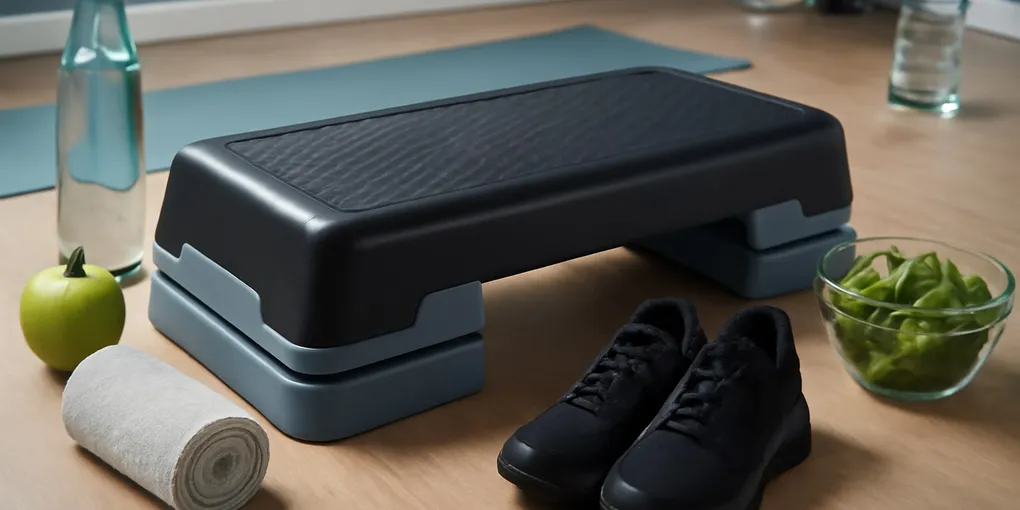
Best Aerobic Step Platforms for Home Cardio: Stable Risers Without a Wobbly Living-Room Workout
Buyer's GuideThe Step Original Aerobic Platform
Best classic stepBest Use: Traditional step classes, low-impact intervals, and stable home cardio
Quick picks
| Product | Key Specs |
|---|---|
| See price on Amazon |
|
| See price on Amazon |
|
| See price on Amazon |
|
| See price on Amazon |
|
Product availability, certifications, and retailer details can change; check the current Amazon page before buying.
Bottom line
A good aerobic step platform should feel boring under your feet. The platform should not slide, flex, tip, or force your foot to land on a narrow ledge. For most home users, the best first buy is a full-size adjustable platform with secure risers and rubber feet. Tiny budget steps are fine for light beginner cardio, but they become frustrating when workouts add lateral movement or larger shoes.
Start by comparing Search Amazon for The Step Original Aerobic Platform with a Search Amazon for Yes4All adjustable aerobic step. Consider the Search Amazon for Escape Fitness Deck only if you want a higher-priced multi-use station, not just a simple step.
Use four decision criteria before price: deck width for full-foot contact, riser security under repeated stepping, rubber feet that do not creep on your floor, and a stated load rating that covers your bodyweight plus any light dumbbells you plan to hold. Those checks matter more than the number of workout videos attached to the listing.
Quick picks
- Best first platform: a full-size step with two height levels and wide risers.
- Best budget route: a lower-cost adjustable step for controlled beginner cardio.
- Best upgrade: a deck-style platform if you also want incline push-ups, supported rows, or bench-like accessory work.
- Best skip: ultra-narrow steps if you have large shoes, balance concerns, or plan lateral drills.
Practical score
| Factor | Weight | Score | Rationale |
|---|---|---|---|
| Research | 30% | 6.5/10 | General aerobic and resistance-training principles support step work, but product-specific evidence is limited. |
| Evidence Quality | 25% | 6.0/10 | The safest claims are about activity dose, step height, and surface stability. |
| Value | 20% | 8.0/10 | A durable step can support cardio, warm-ups, mobility, and light strength accessories. |
| User Signals | 15% | 8.0/10 | Wobble, sliding, cracked risers, and storage problems show up quickly in reviews. |
| Transparency | 10% | 8.0/10 | Width, height, riser design, rubber feet, and load rating are visible before purchase. |
| Composite | 100% | 7.1/10 | A useful small-space cardio tool if you buy for stability before fancy workout variety. |
How to choose a platform that will not wobble
Measure the landing area first. A step that looks fine in a listing can feel cramped when your whole shoe needs to land flat while you are breathing hard. Full-size platforms give more room for up-up-down-down patterns, knee lifts, slow step-downs, and controlled lateral movements. Compact platforms save storage space but punish sloppy foot placement.
Risers matter as much as the top deck. Look for risers that stack securely, lock into the underside, or have a stable contact area. Rubber feet help, but they do not rescue a platform used on dust, rugs, wet floors, or uneven tile.
Height should start lower than ego wants. The CDC adult activity guidelines support regular moderate-to-vigorous movement for health, but the dose still has to match the person and joints doing it (CDC adult activity basics). A lower platform used consistently is more valuable than a tall platform that turns every set into knee irritation.
Best uses for an aerobic step
The cleanest use is low-impact cardio intervals. Set the platform low, step up with full-foot contact, step down under control, and keep the tempo smooth enough that your knee tracks over the foot. Add arms later. Add height last.
A step also works for warm-ups and accessories: incline push-ups, supported mountain climbers, calf raises, split-squat setup practice, and slow step-downs. For knee-control work, our lateral step-down protocol is a better model than random fast choreography.
Do not turn a cardio step into a plyo box. If you want jumping work, buy a stable plyo box and read our best plyo boxes for small home gyms guide. Many aerobic steps are designed for stepping, not repeated jump landings with heavy impact.
Product notes by buyer type
The Step Original pattern is the safe default if you have the floor space. The wider deck and familiar riser design make it better for classic step workouts than many tiny platforms. Check which size you are buying, because brands often sell multiple deck widths and riser bundles.
Yes4All-style adjustable steps are better for budget shoppers who want to test step workouts before spending more. The tradeoff is usually deck width, plastic feel, and long-term durability. Read recent reviews for sliding and cracked-riser complaints, not just star averages.
The Escape Fitness Deck type is an upgrade for people who want one piece of equipment to cover step work, bench-like angles, and some floor strength exercises. It costs enough that the extra functions need to be real. If you only plan 15-minute step intervals twice a week, a simpler step is easier to justify.
Floor and safety checks
Place the platform on a flat surface with enough clearance to step off in every direction. Test it with slow bodyweight steps before turning on a video. If the step moves during slow practice, it will move more when you are tired.
Use shoes that grip the deck. Socks on plastic are a bad idea. Keep pets, children, dumbbells, and loose mats away from the landing zone. If you feel knee pain, ankle instability, dizziness, or calf cramping, stop and lower the height or choose a different cardio tool.
The federal Physical Activity Guidelines emphasize that adults can accumulate health-supporting activity through many modes, not one specific device (Physical Activity Guidelines PDF). An aerobic step is useful only if it helps you move regularly without creating avoidable joint or fall risk.
Match the step to the workout
For follow-along step classes, prioritize a platform wide enough for repeated choreography. The deck needs room for diagonal steps, knee lifts, and basic turn patterns. If you constantly look down to find the deck, the platform is too small or the routine is too advanced for the current setup.
For low-impact conditioning, keep the step low and use intervals such as two minutes on, one minute easy. The goal is steady breathing and clean foot contact, not a frantic pace. This is where a classic full-size step beats a tiny bargain platform because it lets you focus on rhythm instead of landing precision.
For strength accessories, treat the step like a low bench only when it is stable. Bodyweight split squats, incline push-ups, calf raises, and slow step-downs are reasonable. Heavy dumbbell step-ups are a different question. If the platform flexes, the risers shift, or the deck is too narrow to plant the full foot, use a sturdier box or bench.
For mobility work, a lower step can help with supported hip flexor transitions, calf raises, and controlled ankle work. Do not stack risers high just to create a bigger stretch. More range is useful only when the foot stays planted and the ankle, knee, and hip remain calm.
What to avoid
Avoid platforms with vague dimensions. A listing that hides deck size, height settings, or weight limit is asking the buyer to guess the most important details. Also avoid steps that rely on loose risers with little surface contact, especially if the product photos show the step on carpet or a soft rug.
Avoid buying for the hardest workout clip you saw online. Many viral step routines include pivots, hops, and fast lateral moves that are not appropriate for every living room. If you want jumping, buy jumping equipment. If you want step cardio, buy a stable step and keep at least one foot controlled at a time.
Avoid using the step as household furniture. Sitting on it, storing weights on top, or leaving risers scattered around the room creates trip hazards and can stress plastic parts in ways the workout did not. Store risers together and check the platform before each session.
Buying checklist
Before buying, confirm the platform length and width, the minimum and maximum height, the stated weight limit, the riser design, the foot material, and the storage footprint. If the listing hides the platform dimensions, choose a different product with clearer fit details and better recent owner photos and measurements.
For apartments, also consider noise. A step platform on a dense mat is usually quieter than jumping, but repeated stepping can still transmit sound through floors. Low height and controlled cadence matter more than a louder workout that annoys everyone below you.
Aerobic step FAQ
Is step aerobics enough cardio?
It can count as cardio if the intensity and duration are appropriate for you. Start with short sessions and build toward a weekly activity target rather than making the first workout exhausting.
How wide should the platform be?
Wide enough for your whole foot to land confidently without looking down on every rep. If you wear large shoes or plan lateral movements, choose a full-size deck rather than a compact step.
Can I use dumbbells while stepping?
Use caution. Hand weights raise balance and fatigue demands. Master the footwork first, keep the step low, and avoid loaded choreography if knee or ankle control is inconsistent.
What is the biggest buying mistake?
Buying the cheapest narrow platform and then asking it to handle fast lateral drills, high risers, and loaded step-ups. Buy for the hardest safe use you actually plan.
Sources
- CDC adult physical activity guidelines: https://www.cdc.gov/physical-activity-basics/guidelines/adults.html
- Physical Activity Guidelines for Americans PDF: https://health.gov/sites/default/files/2019-09/Physical_Activity_Guidelines_2nd_edition.pdf
- Body Science Review lateral step-down protocol: /blog/lateral-step-down-knee-control-protocol/
For a compact stationary-cardio category, see our folding exercise bike guide for small spaces.
Frequently Asked Questions
- Start low, often around 4 inches, and increase only if knees, ankles, balance, and breathing stay controlled.
- No. It can provide low-cost indoor cardio intervals, but treadmills are better for steady walking volume and controlled incline work.
- Use rubber feet and a stable mat, and test for sliding before workouts. Do not use a step that creeps across the floor.
- Only if the platform is wide, stable, rated for the load, and low enough for clean knee control. Many cardio steps are not ideal for heavy loaded work.