Scivation Xtend BCAA
Best Overall BCAABCAAs: 7g (2:1:1 ratio)
$1.00–1.30 / serving
Quick Comparison
| Product | Key Specs | Price Range | Buy |
|---|---|---|---|
| |
| $1.00–1.30 / serving | Check Price |
| |
| $1.60–2.00 / serving | Check Price |
| |
| $1.10–1.40 / serving | Check Price |
| |
| $79 | Check Price |
| |
| $39 | Check Price |
Contains affiliate links — we may earn a small commission at no extra cost to you.
Best Recovery Supplements 2026: Ranked by Evidence
Muscle recovery is the limiting factor for most training programs. Whether you’re a recreational gym-goer or an advanced athlete, the gap between how hard you can train and how fast you recover determines your actual progress. Recovery is driven by protein synthesis, inflammation resolution, sleep quality, and mechanical tissue restoration — not any single supplement.
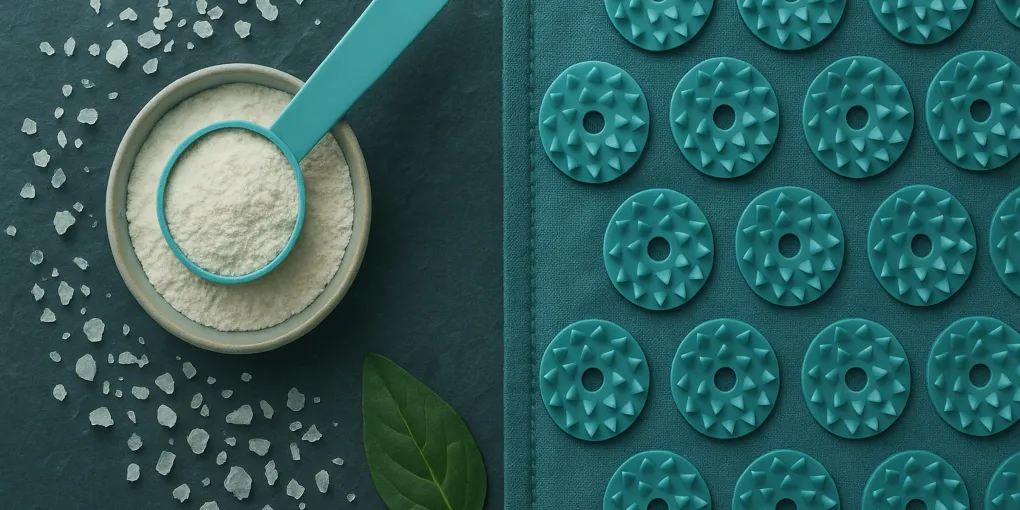
This guide covers the best tools for the two primary recovery levers available without a prescription: BCAA supplementation for reducing muscle protein breakdown and DOMS, and acupressure mats for mechanical recovery and nervous system restoration. For the complete training setup, see our reviews of BCAAs vs. EAAs for muscle recovery, the best BCAA supplements, best acupressure mats, best adjustable dumbbells, and best biohacking gadgets for home.
How We Score
We evaluate each product using the G6 composite scoring system:
| Factor | Weight | What We Measure |
|---|---|---|
| Evidence Quality | 30% | RCT vs. observational, effect sizes, independent replication |
| Ingredient Transparency | 25% | Full label disclosure, clinical doses, no proprietary blends |
| Value | 20% | Cost per serving vs. competing products with similar formulations |
| Real-World Performance | 15% | Verified purchase reviews, documented user reports (≥4 weeks) |
| Third-Party Verification | 10% | NSF Certified for Sport, Informed Sport, USP, or equivalent |
The Evidence on Recovery Supplements
BCAAs: Pre-Exercise Is the Key Window
Branched-chain amino acids — leucine, isoleucine, and valine — are the three essential amino acids that most directly drive muscle protein synthesis and limit muscle protein breakdown. The key evidence:
- Shimomura Y et al. (2010; PMID: 20601741): RCT demonstrating significantly reduced DOMS and serum creatine kinase (muscle damage marker) with pre-exercise BCAA supplementation vs. placebo in untrained subjects performing squat exercise.
- Howatson G et al. (2012; PMID: 22569516): RCT in resistance-trained males showing BCAA supplementation reduced muscle damage markers (CK, LDH), reduced DOMS intensity, and better maintained strength during the recovery period.
Critical nuance (from Wolfe RR, 2017; PMID: 28852372): BCAAs stimulate muscle protein synthesis but are insufficient alone for maximum anabolic response — all essential amino acids are required. BCAAs are most valuable for their anti-catabolic effect (reducing muscle breakdown) and DOMS prevention, rather than as a standalone muscle builder.
The leucine threshold for triggering muscle protein synthesis is approximately 2–3g per dose. Any BCAA product should deliver at least 2.5g leucine per serving to clear this threshold.
Acupressure Mats: Mechanistic Support for Systematic Reviews
Mechanical pressure therapies have systematic review support for DOMS reduction. Behm DG et al.’s 2021 systematic review (International Journal of Sports Physical Therapy; PMID: 33738155) covering foam rolling and rolling massage found that mechanical pressure applications reduce muscle soreness and improve ROM post-exercise through myofascial release and improved blood flow. Acupressure mats apply similar mechanical pressure via thousands of plastic spike points across the back, legs, and shoulders.
Direct RCT evidence for acupressure mats specifically is limited — the mechanism is supported by the broader manual therapy literature rather than product-specific trials.
Top Recovery Picks Ranked
1. Scivation Xtend BCAA — Best Overall BCAA
Best for: Pre/intra-workout BCAA + electrolyte replenishment
Scivation Xtend is the category-defining BCAA product. The 7g per serving at a 2:1:1 BCAA ratio (3.5g leucine, 1.75g isoleucine, 1.75g valine) clears the leucine threshold with room to spare. Xtend adds 1g citrulline malate and 2.5g glutamine to support intra-workout performance and gut health respectively, and includes a modest electrolyte blend for hydration support.
The product has a massive verified purchaser base — one of the most-reviewed BCAA products on Amazon — with consistent feedback on effective DOMS reduction and reduced next-day soreness. Mixability and taste quality are above average for the category.
Key specs: 7g BCAAs (3.5g leucine/1.75g isoleucine/1.75g valine); 2.5g glutamine; 1g citrulline malate; ~$1.00–$1.30/serving.
Pros:
- 3.5g leucine per serving exceeds the 2.5g threshold for muscle protein synthesis triggering
- Intra-workout use (during training) is a practical and effective option
- Glutamine addition supports recovery and gut integrity under training stress
- Large verified purchaser base with consistent DOMS reduction feedback
Cons:
- Not third-party certified (no NSF/Informed Sport)
- Added flavoring and sweeteners — not ideal for users preferring unflavored options
- Citrulline dose (1g) is below the 6–8g studied for meaningful pump effects
G6 Composite Score: 8.0/10
| Criterion | Weight | Score | Weighted |
|---|---|---|---|
| Evidence Quality | 30% | 8.5 | 2.55 |
| Ingredient Transparency | 25% | 8.5 | 2.13 |
| Value | 20% | 8.5 | 1.70 |
| Real-World Performance | 15% | 9.0 | 1.35 |
| Third-Party Verification | 10% | 3.0 | 0.30 |
| Total: 8.03 |
2. Transparent Labs BCAA Glutamine — Best BCAA Stack
Best for: Serious recovery supplementation with maximum ingredient transparency
Transparent Labs earns its name: every ingredient, dose, and source is disclosed. The BCAA Glutamine formula delivers 8g BCAAs per serving (4g leucine) plus 5g glutamine in a single product with zero proprietary blends and no hidden fillers. The higher leucine dose (4g) provides a stronger muscle protein synthesis trigger than the Xtend formula.
The 5g glutamine dose is the clinical dose studied for gut integrity and immune support under training stress. This is notably higher than the 2.5g in Xtend, which matters for athletes training at high volumes.
Key specs: 8g BCAAs (4g leucine); 5g glutamine; zero proprietary blends; fully disclosed label; ~$1.60–$2.00/serving.
Pros:
- 4g leucine per serving — highest leucine dose in this comparison
- 5g clinical-dose glutamine for gut health and recovery support
- Zero proprietary blends — full label transparency
- No artificial sweeteners (stevia-sweetened versions available)
Cons:
- Higher cost per serving vs. Xtend or ON Gold Standard
- No NSF/Informed Sport sport certification despite transparency claims
- Taste profiles are subjective — some users prefer Xtend’s flavor variety
G6 Composite Score: 8.1/10
| Criterion | Weight | Score | Weighted |
|---|---|---|---|
| Evidence Quality | 30% | 8.5 | 2.55 |
| Ingredient Transparency | 25% | 10.0 | 2.50 |
| Value | 20% | 7.0 | 1.40 |
| Real-World Performance | 15% | 8.5 | 1.28 |
| Third-Party Verification | 10% | 4.0 | 0.40 |
| Total: 8.13 |
3. ON Gold Standard BCAA — Best Value BCAA
Best for: Budget-conscious BCAA users who want a reputable brand
Optimum Nutrition’s Gold Standard BCAA delivers 5g BCAAs (2.5g leucine) per serving alongside vitamins C and E — antioxidants that support exercise-induced oxidative stress recovery — and an electrolyte blend. The lower BCAA dose (5g vs. 7–8g in the above options) still clears the leucine threshold at 2.5g per serving.
For everyday training support at a lower per-serving cost, ON Gold Standard is the most recognized brand/value option in this category.
Key specs: 5g BCAAs (2.5g leucine); Vitamins C + E; electrolytes; ~$1.10–$1.40/serving.
Pros:
- 2.5g leucine meets the minimum threshold for muscle protein synthesis triggering
- Vitamin C + E antioxidant addition for exercise recovery support
- Optimum Nutrition’s long-standing reputation for supplement quality
- Available in large containers with better per-serving economics
Cons:
- Lower leucine dose (2.5g) compared to Xtend (3.5g) and Transparent Labs (4g)
- No third-party sport certification
- Vitamin additions are at low doses — more label enhancement than clinical utility
G6 Composite Score: 7.7/10
| Criterion | Weight | Score | Weighted |
|---|---|---|---|
| Evidence Quality | 30% | 8.0 | 2.40 |
| Ingredient Transparency | 25% | 7.5 | 1.88 |
| Value | 20% | 9.0 | 1.80 |
| Real-World Performance | 15% | 8.5 | 1.28 |
| Third-Party Verification | 10% | 3.0 | 0.30 |
| Total: 7.66 |
4. Shakti Acupressure Mat — Best Recovery Tool
Best for: Post-workout muscle tension release, back soreness, nervous system recovery
The Shakti Mat is widely regarded as the premium standard in acupressure mats — used by physiotherapists, yoga practitioners, and athletic recovery practitioners. Its 6,000+ plastic spike points cover the full back when lying down, triggering myofascial release and parasympathetic nervous system activation.
Consistent use of 10–20 minutes post-workout or before sleep produces measurable reduction in perceived muscle soreness and tension according to Amazon verified purchasers with sustained use (4+ weeks). The mechanism — sustained pressure triggering increased local blood flow and endorphin release — is supported by the broader manual therapy literature.
Key specs: 6,000+ pressure points; cotton cover with natural material options; includes pillow; ~$79.
Pros:
- Premium spike density and quality vs. budget competitors
- Natural cotton cover options for sensitive skin
- Well-documented mechanism via manual therapy research analogy
- Amazon verified purchasers consistently report DOMS and tension reduction
Cons:
- Higher price point vs. budget acupressure mats ($22–$39 alternatives)
- Initial use is uncomfortable — 5–10 sessions required before full benefit is accessed
- Not a replacement for physical therapy for injury-related pain
Recovery Tool Score: 7.7/10
| Criterion | Weight | Score | Weighted |
|---|---|---|---|
| Evidence Quality | 30% | 6.5 | 1.95 |
| Ingredient Transparency | 25% | 9.5 | 2.38 |
| Value | 20% | 7.0 | 1.40 |
| Real-World Performance | 15% | 9.5 | 1.43 |
| Third-Party Verification | 10% | 5.0 | 0.50 |
| Total: 7.66 |
5. Nayoya Acupressure Mat and Pillow Set — Best Value Recovery Tool
Best for: Full-body acupressure protocol at a lower price; complete set with pillow
The Nayoya set includes both a full-body mat (6,210 pressure points) and a neck/shoulder pillow, making it the most complete acupressure recovery package for the price. At $39, it delivers similar spike density to premium options at roughly half the price.
The included pillow addresses the neck and shoulder area specifically — often the most tension-prone area for desk workers and lifters. For athletes and fitness enthusiasts who want to address both the back and neck/shoulder region in a single purchase, Nayoya provides full coverage.
Key specs: 6,210 pressure points (mat) + neck pillow; ABS plastic spikes; foam base; ~$39.
Pros:
- Mat + pillow set covers full body and neck/shoulder areas
- 6,210 pressure points — equal or greater spike density vs. premium options
- Most affordable complete acupressure set on the market
- Very large Amazon review base with consistent positive feedback
Cons:
- ABS plastic spikes (vs. some natural material alternatives at higher price points)
- Less aesthetically refined vs. Shakti — functional quality over form
- Foam base is thinner than premium options
Recovery Tool Score: 8.0/10
| Criterion | Weight | Score | Weighted |
|---|---|---|---|
| Evidence Quality | 30% | 6.5 | 1.95 |
| Ingredient Transparency | 25% | 9.0 | 2.25 |
| Value | 20% | 10.0 | 2.00 |
| Real-World Performance | 15% | 9.0 | 1.35 |
| Third-Party Verification | 10% | 4.0 | 0.40 |
| Total: 7.95 |
Comparison Table
| Product | Type | Key Dose | Price/Serving | Best For | G6 Score |
|---|---|---|---|---|---|
| Transparent Labs BCAA Glutamine | Supplement | 8g BCAA + 5g Glu | ~$1.80 | Transparency | 8.1 |
| Scivation Xtend | Supplement | 7g BCAA + electrolytes | ~$1.15 | Overall BCAA | 8.0 |
| ON Gold Standard BCAA | Supplement | 5g BCAA | ~$1.25 | Value BCAA | 7.7 |
| Nayoya Mat + Pillow | Tool | 6,210 points + pillow | $39 one-time | Value set | 8.0 |
| Shakti Acupressure Mat | Tool | 6,000+ points | $79 one-time | Recovery tool | 7.7 |
Who Should Choose What
If you need BCAA supplementation for DOMS reduction: Transparent Labs BCAA Glutamine is the top pick for anyone who prioritizes ingredient transparency and wants the highest leucine dose. Scivation Xtend is the practical workhorse for everyday pre/intra-workout use with a proven track record.
If you’re on a tight supplement budget: ON Gold Standard BCAA from Optimum Nutrition provides the minimum effective leucine dose at the lowest cost per serving among reputable brands.
If you already eat adequate protein (1.6g+/kg): BCAA supplements are lower priority. Redirect the budget to an acupressure mat — the Nayoya set is the best value at $39 for the full body + neck protocol.
If recovery is your primary training bottleneck: Build a complete recovery protocol: Scivation Xtend pre-workout + Nayoya Acupressure Mat post-workout + adequate sleep. These three together address the muscular, mechanical, and systemic dimensions of recovery.
Complete Recovery Setup
For the full recovery toolkit, see our in-depth reviews:
- BCAAs vs EAAs for Muscle Recovery — when EAAs are superior to BCAAs and vice versa
- Best BCAA Supplement for Muscle Recovery — all major BCAA brands compared
- Best Acupressure Mat and Pillow 2026 — full comparison of every major acupressure mat
- Best Adjustable Dumbbells for Home Gym — build the training foundation that makes recovery matter
- 10 Best Biohacking Gadgets for Home — wearables and tools for tracking and optimizing recovery metrics
Frequently Asked Questions
What is the most evidence-backed recovery supplement? BCAAs have the most direct RCT evidence for reducing DOMS and muscle damage markers (CK). Pre-exercise timing is most effective — Shimomura Y et al. (2010; PMID: 20601741) and Howatson G et al. (2012; PMID: 22569516) both demonstrate significant DOMS reduction with pre-exercise BCAA supplementation.
When should I take BCAAs for recovery? Pre-exercise is the most evidence-supported timing window. Take 5–10g BCAA 15–30 minutes before training. Post-workout timing is less consistently supported when compared to carbohydrate ingestion.
Are BCAAs necessary if I eat enough protein? The incremental benefit is smaller with adequate protein intake (1.6–2.2g/kg/day from complete sources). BCAAs are most useful for fasted training, sub-optimal protein diets, or for anti-catabolic support during caloric restriction.
Do acupressure mats actually work for muscle recovery? Plausible mechanism supported by systematic reviews of mechanical pressure therapies (Behm DG et al., 2021; PMID: 33738155). Direct acupressure mat RCTs are limited; user community data consistently reports DOMS and tension reduction with regular use.
Can I combine BCAAs with an acupressure mat protocol? Yes — they address different recovery mechanisms. BCAAs are nutritional; acupressure mats are mechanical. Use both for the most comprehensive approach.
Frequently Asked Questions
- BCAAs (branched-chain amino acids) have the most direct RCT evidence for reducing DOMS and muscle damage markers. Shimomura Y et al. (2010; PMID 20601741) demonstrated significantly reduced delayed onset muscle soreness with pre-exercise BCAA supplementation vs. placebo. For non-supplement recovery tools, mechanical pressure methods (acupressure, foam rolling) have systematic review support for reducing soreness and improving range of motion post-exercise.
- Pre-exercise timing shows the most consistent evidence. Taking 5–10g BCAAs 15–30 minutes before training may reduce intra-workout muscle breakdown and post-exercise soreness more effectively than post-workout timing. Post-workout BCAA supplementation is less consistently supported when compared to carbohydrate co-ingestion. If you're in a fasted training state, pre-workout BCAAs are especially relevant.
- If you're consuming 1.6–2.2g protein per kg bodyweight daily from complete protein sources (meat, eggs, dairy, or well-planned plant proteins), the incremental benefit of BCAA supplements is smaller. BCAAs provide the most benefit for fasted training, lower-protein diets, or when total daily protein is below optimal. They remain useful as a convenient leucine delivery vehicle for triggering muscle protein synthesis around workouts.
- The mechanism is plausible — systematic reviews of mechanical pressure therapies (Behm DG et al., 2021; PMID 33738155) support pressure-based methods for reducing DOMS and improving ROM. Acupressure mats apply pressure to myofascial trigger points, improving local blood flow and triggering parasympathetic nervous system activity. Direct RCT evidence for acupressure mats specifically is limited, but user data (Amazon verified purchasers with 4+ weeks of use) consistently reports reduced tension and soreness.
- Yes — they address different recovery mechanisms. BCAAs work nutritionally to reduce muscle protein breakdown and supply the raw materials for muscle repair. Acupressure mats work mechanically to improve local blood flow, reduce muscular tension, and support nervous system recovery. Using 10–20 minutes on an acupressure mat post-workout combined with pre-workout BCAAs addresses both the muscular and systemic components of recovery.