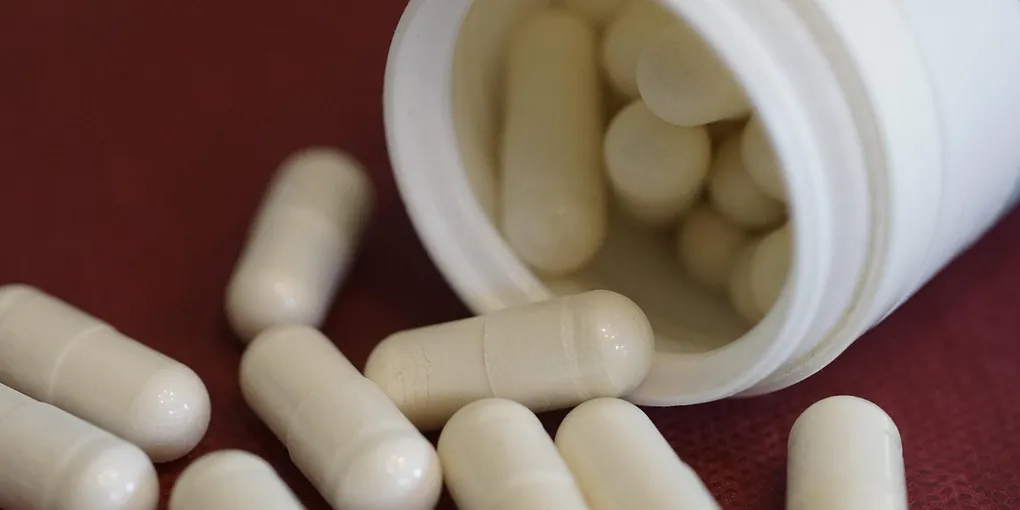
Life Extension L-Tryptophan
Best OverallDose: 500 mg per capsule
$20–28 / 90 capsules
Quick Comparison
| Product | Key Specs | Price Range | Buy |
|---|---|---|---|
| Life Extension L-Tryptophan Best Overall |
| $20–28 / 90 capsules | Check Price |
| Jarrow Formulas L-Tryptophan Best Value |
| $18–24 / 60 capsules | Check Price |
| NOW Foods L-Tryptophan Best Budget |
| $14–20 / 60 capsules | Check Price |
| Thorne L-Tryptophan Best Premium |
| $28–38 / 90 capsules | Check Price |
Contains affiliate links — we may earn a small commission at no extra cost to you.
Best L-Tryptophan Supplement 2026: The Serotonin-Melatonin Precursor
L-tryptophan is the only dietary amino acid that your body converts to both serotonin and melatonin — two of the most critical molecules for mood regulation and sleep. As an essential amino acid, your body cannot synthesize it; it must come from diet or supplementation.
The sleep and mood effects of tryptophan supplementation operate through a well-understood pathway:
L-Tryptophan → 5-HTP → Serotonin → Melatonin
Supplementing L-tryptophan provides substrate for this entire pathway. Unlike direct serotonin supplementation (which can’t cross the blood-brain barrier), L-tryptophan reaches the brain and is converted locally where it’s needed.
The Science Behind L-Tryptophan and Sleep
Mechanism
The tryptophan-to-melatonin pathway in the pineal gland:
- L-Tryptophan → (tryptophan hydroxylase) → 5-HTP
- 5-HTP → (aromatic amino acid decarboxylase) → Serotonin
- Serotonin → (arylalkylamine N-acetyltransferase, AANAT) → N-Acetylserotonin
- N-Acetylserotonin → (ASMT) → Melatonin
The first step (tryptophan hydroxylase) is the rate-limiting step and is regulated by substrate availability — meaning more dietary tryptophan typically produces more downstream melatonin in the pineal gland.
Additionally, serotonin itself (step 2 product) has mood-regulatory effects independent of melatonin conversion. Low serotonin is associated with depression, anxiety, and poor sleep quality.
Clinical Evidence
Hartmann (1977, Psychopharmacology): One of the first rigorous tryptophan sleep RCTs. 1g tryptophan before bed significantly reduced sleep onset latency in normal subjects and more markedly in insomniacs. Effect was dose-dependent up to 2g; higher doses showed diminishing returns.
Hartmann & Spinweber (1979): Tryptophan (1g and 2g) reduced sleep onset latency and increased total sleep time compared to placebo in a crossover study. Effect was clearest in those with normal but delayed sleep onset (mild sleep difficulty), less dramatic in those with severe insomnia.
Schneider-Helmert & Spinweber (1986, Psychopharmacology): Meta-analysis of tryptophan sleep studies: consistent reduction in sleep onset latency of approximately 10 minutes across studies; no significant effects on sleep architecture (unlike sedatives which suppress REM).
Key limitation: Most tryptophan sleep studies predate modern sleep research standards. Effect sizes are modest, and tryptophan is not effective for all sleep problems — it works best for sleep onset difficulty in people with mild insomnia or normal-range sleep.
L-Tryptophan vs. 5-HTP: Which Is Better for Sleep?
Both work via the serotonin pathway, but with important differences:
| Factor | L-Tryptophan | 5-HTP |
|---|---|---|
| Dose range | 500–2000 mg | 50–300 mg |
| Speed of action | Slower (2+ conversions) | Faster (1 conversion) |
| Serotonin specificity | Lower (other metabolic fates) | Higher (more direct) |
| Sleep RCT evidence | Moderate (multiple older studies) | Moderate (fewer studies) |
| Serotonin syndrome risk | Lower | Higher (more direct) |
| Safety track record | Longer (decades of research) | Shorter |
| Best for | Gentle, first-line option | Faster-acting, mood-dominant |
Practical recommendation: Start with L-tryptophan as the more conservative option. If tryptophan doesn’t produce sufficient response after 2–4 weeks, consider switching to 5-HTP — it bypasses the first conversion step for faster-acting serotonin support, particularly when mood is the primary concern.
Best L-Tryptophan Supplements 2026
1. Life Extension L-Tryptophan — Best Overall
Dose: 500 mg per capsule Third-party testing: NSF Certified Purity: USP-grade pharmaceutical
Life Extension is a clinically-oriented supplement brand with rigorous quality standards. NSF certification on L-tryptophan is important given the 1989 EMS contamination incident — it confirms each lot is tested for the specific contaminants associated with that outbreak.
Take 2–4 capsules (1–2g) on an empty stomach or with a small carbohydrate snack 30–60 minutes before bed.
2. Jarrow Formulas L-Tryptophan — Best Value
Dose: 500 mg per capsule Third-party testing: Yes Purity: Pharmaceutical grade
Jarrow Formulas is a well-established brand with consistent quality control. Their L-tryptophan uses pharmaceutical-grade (not feed-grade) raw material — a critical distinction. Good mid-range price for the quality tier.
3. NOW Foods L-Tryptophan — Best Budget
Dose: 500 mg per capsule Third-party testing: UL Verified
NOW Foods consistently delivers reliable supplements at budget pricing. UL Verification provides meaningful quality assurance for those cost-conscious. Pharmaceutical-grade raw material confirmed.
4. Thorne L-Tryptophan — Best Premium
Dose: 500 mg per capsule Third-party testing: NSF Certified for Sport (highest standard)
Thorne’s NSF for Sport certification is the most demanding third-party standard — covering not just label accuracy and purity but also banned substance testing. Appropriate for competitive athletes or those who want the highest available assurance of purity.
Sleep Stack with L-Tryptophan
L-tryptophan works well as part of a multi-mechanism approach:
- Best Magnesium Supplement for Sleep — Magnesium glycinate supports GABA; tryptophan supports the serotonin/melatonin pathway — complementary mechanisms
- Best Sleep Supplement Stack for Insomnia — Full multi-ingredient protocol
- Best Melatonin Supplement — Tryptophan supports endogenous melatonin production; exogenous melatonin can be added for circadian timing
- Best Ashwagandha Supplement — For cortisol-driven mood disruption affecting sleep; ashwagandha + tryptophan addresses both HPA axis and serotonin pathways
Frequently Asked Questions
Does L-tryptophan help you sleep? Yes. Clinical evidence supports reduced sleep onset latency and improved subjective sleep quality, particularly for mild sleep difficulty. Effect is modest and cumulative — not a knock-you-out sedative. Allow 1–2 weeks for full effect.
What is the best tryptophan dosage for sleep? 500 mg–2g on an empty stomach or with a small carbohydrate snack, 30–60 minutes before bed. Start at 500 mg and increase as needed. Most clinical studies show meaningful effects at 1–2g.
Is tryptophan safe? Yes, at standard doses from reputable manufacturers. The 1989 EMS outbreak was caused by a manufacturing contaminant, not tryptophan itself. NSF or UL-certified products from established brands carry negligible risk. Do not combine with serotonergic medications (SSRIs, MAOIs) without medical supervision.
Should I take tryptophan or 5-HTP? Start with L-tryptophan — more conservative, longer safety record, and works for most people. Switch to or add 5-HTP if tryptophan doesn’t produce sufficient effect after 2–4 weeks.
Does eating turkey make you sleepy from tryptophan? The turkey-tryptophan-sleep myth is largely unfounded. Turkey contains comparable tryptophan to other protein sources. Post-Thanksgiving sleepiness is primarily from calorie load and alcohol, not tryptophan specifically. Dietary protein sources don’t provide tryptophan in sufficient quantities (or in the right food matrix) to produce meaningful sedation.
What else can I stack with tryptophan for sleep? Glycine pairs well with tryptophan — it lowers core body temperature to support sleep onset through a different mechanism than the serotonin pathway, making the combination complementary rather than redundant. For a broader sleep protocol, the sleep optimization guide outlines how to layer supplements and behavioral strategies for cumulative effect.
Related Articles
- Best Passionflower Supplement
- Best Lemon Balm Supplement
- Best Chamomile Supplement for Sleep
- Best Magnesium Supplement for Anxiety and Sleep
Frequently Asked Questions
- Yes. L-tryptophan is the dietary precursor to serotonin, which is then converted to melatonin — the hormone that regulates sleep timing. Multiple RCTs show 1–4g of L-tryptophan before bed reduces sleep onset latency and improves subjective sleep quality. It works best in people with mild sleep onset difficulty and may take 2–4 weeks of consistent use for full effect. It is not as acutely sedating as pharmaceutical sleep aids but has a much better side effect profile.
- L-tryptophan converts to 5-HTP, which then converts to serotonin and melatonin. 5-HTP bypasses the first conversion step and is a more direct serotonin precursor. 5-HTP acts faster and at lower doses (50–300 mg vs. 500–2000 mg tryptophan). However, L-tryptophan has a longer safety track record and the conversion step provides a natural regulatory buffer. Both are reasonable choices; 5-HTP is faster-acting, tryptophan is gentler.
- 500 mg–2g taken 30–60 minutes before bed on an empty stomach (or with a small carbohydrate snack to improve crossing the blood-brain barrier). Start at 500 mg and increase by 500 mg increments as needed. Most clinical sleep studies use 1–4g; therapeutic ranges for mood disorders go higher but are medically supervised.
- L-tryptophan is an essential amino acid and is fundamentally safe. The 1989 eosinophilia-myalgia syndrome (EMS) outbreak linked to tryptophan was traced to a contaminant from one manufacturer (Showa Denko), not to tryptophan itself. Supplements from reputable manufacturers with pharmaceutical-grade purity have an excellent safety record. Do not combine with SSRIs, MAO inhibitors, or other serotonergic drugs without medical supervision (serotonin syndrome risk).
- Take L-tryptophan on an empty stomach or with a small carbohydrate snack (like a few crackers). Tryptophan competes with other large neutral amino acids (LNAAs) for the same transporter across the blood-brain barrier. Protein-rich meals provide competing amino acids that reduce tryptophan's CNS uptake. Carbohydrates trigger insulin, which clears competing amino acids from the blood, increasing tryptophan's relative advantage.