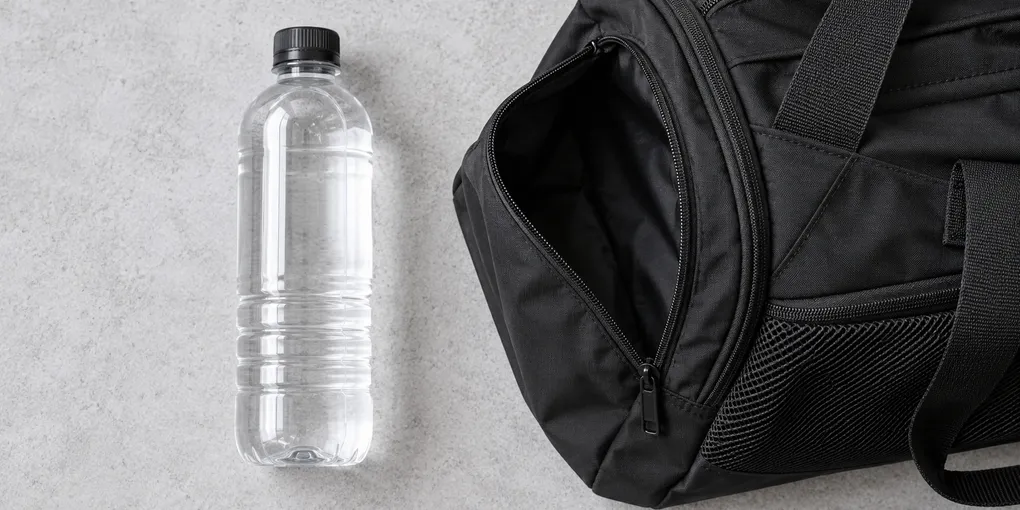
How to Check a Water Bottle Against a Gym-Bag Pocket
Evidence ExplainerThe bottle may look small in your hand and still refuse to sit in the side pocket of a gym bag. The quick answer is to measure the pocket’s narrowest width and usable height, then compare them with the bottle’s widest body and full height. A 32-ounce Nalgene Wide Mouth bottle, for example, is listed at 3.5 inches in diameter and 8.25 inches high; a bag pocket needs room for both dimensions, not just a tall opening.
Do the comparison before packing the rest of the bag. It takes a few minutes and makes the decision less dependent on a product photo, a loosely stretched mesh panel, or the hope that the bottle will settle in once the bag is full.
Start with the bottle’s widest body
Set the bottle upright and find the point that sticks out farthest. That is usually the body, not the cap. Measure straight across that point with a ruler or tape measure. If the bottle has a boot, sleeve, carrying loop, or a broad molded grip, include the part that will meet the pocket wall.
The Nalgene listing gives its 32-ounce Wide Mouth bottle a 3.5-inch diameter and a 2.5-inch cap diameter. The larger body number is the one to compare with a pocket’s width. A narrow pocket can clear the cap while still stopping at the bottle’s shoulder or lower body.
Capacity does not make bottles one standard size. Hydro Flask lists its 32-ounce Wide Mouth bottle at 3.55 inches in diameter and 11 inches high, which is taller than the Nalgene example. Match the pocket to the dimensions for the bottle you carry, even when another bottle has the same volume.
Write down the result without rounding it from memory. Small differences matter here: a pocket that is a little narrower than the bottle may not become practical just because its outer fabric looks flexible.
Measure the pocket where it is least forgiving
Empty the pocket and lay the bag on a flat surface. Measure the inside width at three places: the opening, the middle, and close to the bottom seam. Use the smallest of those numbers. A tapered pocket often looks generous at the top but narrows where the bottle needs support.
Then check the opening itself. An elastic edge, zipper track, gusset, or stitched fold can create a tighter entry than the pocket’s interior. If you need to push the empty bottle hard through that point, the pocket is not a dependable fit when the bag is loaded.
For a mesh pocket, pull only as much as you normally would when packing. Stretch is not a fixed measurement, and the bag may behave differently when clothing or shoes press against the inside wall. Treat obvious resistance as information, not a challenge to force past.
Check usable height, not the outside panel
Measure from the bottom seam inside the pocket to its lowest effective opening. That is the usable height. A diagonal opening may leave less vertical support on one side, while a shallow pocket can let a tall bottle tip or ride high against your arm.
Compare that number with the bottle’s full height, including its cap and any loop that cannot fold down. The same Nalgene listing gives the 32-ounce Wide Mouth bottle an 8.25-inch height. That does not mean every pocket needs to be 8.25 inches deep: a bottle can extend above the edge. It does mean the pocket needs enough depth to hold the lower body securely while you carry the bag.
Look for the practical stopping point. If the pocket holds only the lowest few inches, a bottle can swing, lean out, or catch on a doorway. If it reaches well up the body, the pocket can provide more support without covering the cap.
Make one dry fit before relying on it
Put the empty bottle in the pocket with the bag still empty. Notice whether it enters without snagging, sits upright, and stays there when you lift the bag by its handles. Next, add the items you usually carry, such as a towel, shoes, or a change of clothes, and repeat the check. Interior contents can push a side pocket outward or collapse its usable space.
Try these three movements:
- Lift the bag from the floor and let it hang naturally.
- Turn the bag as if you were putting it in a car or locker.
- Set it down and pick it up again without holding the bottle in place.
These movements show whether the pocket keeps the bottle from shifting out of position in the ordinary moves that happen between home, a locker room, and the gym floor.
Leave room for the rest of the carry
A fit can be technically possible and still inconvenient. Check whether the bottle blocks a zipper pull, presses against a shoulder strap, or hits your side while the bag is carried. A tall bottle may fit the pocket but make a compact bag awkward in a locker. A wide bottle may be stable but take away the external pocket you use for keys or a phone.
Use a simple note when comparing a bag and bottle:
| Check | Record | Why it matters |
|---|---|---|
| Bottle body | Widest diameter | Determines the pocket width you need |
| Pocket width | Narrowest inside point | Reveals tapers and tight seams |
| Bottle height | Full height with cap | Shows how high the bottle will sit |
| Pocket depth | Bottom seam to effective opening | Indicates how much support the bottle gets |
| Loaded-bag fit | Stable, tight, or loose | Accounts for items pressing on the pocket |
The note separates what you measured from what you guessed from the bag’s shape. If a bag manufacturer lists a pocket size, use it as a starting point, then check the physical entry and depth when you have the bag in front of you.
Evidence boundary
This physical-dimensions checklist helps you make a fit decision before packing. Bottle accessories, pocket construction, fabric stretch, and the contents of the main compartment can all change the result. Recheck the exact bottle and bag measurements before buying or packing for a trip.
Frequently asked questions
What bottle measurement should I compare first?
Start with the bottle’s widest body diameter, because a pocket that is too narrow will not accept it even if the pocket is tall enough.
Does a stretchy mesh pocket always fit a wider bottle?
No. Stretch can help, but the pocket seam, opening, and bag fabric may limit how far it expands. Compare the narrowest part before relying on stretch.
Why check usable height instead of the outside height of a pocket?
A pocket can look tall from the outside while its seam, sloped opening, or bag shape leaves less depth for the bottle body. Measure from the bottom seam to the lowest point of the opening.