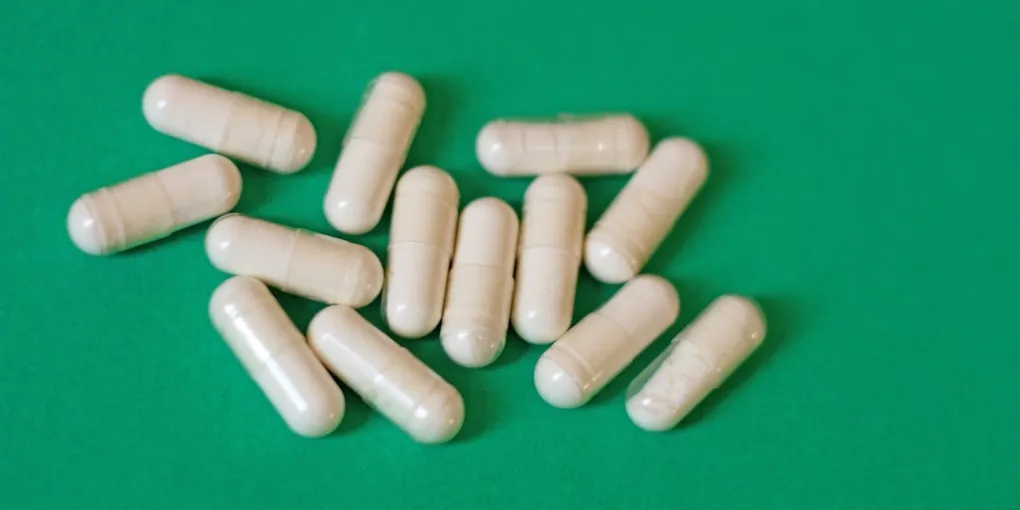
Creatine Monohydrate (Creapure)
Best OverallForm: Monohydrate (Creapure grade)
$20–30 (500g)
Quick Comparison
| Product | Key Specs | Price Range | Buy |
|---|---|---|---|
| Creatine Monohydrate (Creapure) Best Overall |
| $20–30 (500g) | Check Price |
| Creatine HCL (Kre-Alkalyn) Best for GI Sensitivity |
| $25–40 (90 servings) | Check Price |
| Thorne Creatine (Monohydrate) Best for Quality + Testing |
| $35–45 (450g) | Check Price |
Contains affiliate links — we may earn a small commission at no extra cost to you.
Creatine Monohydrate vs HCL: Which Form Should You Take?
Creatine is the most evidence-backed performance supplement ever studied. Over 1,000 peer-reviewed studies confirm its effects on strength, power output, muscle mass, and increasingly — brain health. If you are only going to take one supplement for performance, creatine is the one with the most unambiguous case.
The real question people argue about is not whether to take creatine — it is which form. Creatine monohydrate dominated for decades, then creatine HCL (hydrochloride) arrived claiming superior absorption and fewer side effects at lower doses. The fitness industry ran with this narrative. Supplement companies charged 3–5x more for HCL.
The truth is more straightforward than the marketing suggests — and understanding it will save you money.
How We Score
We evaluate each product using a 5-factor composite scoring system:
| Factor | Weight | What We Measure |
|---|---|---|
| Research Quality | 30% | Clinical evidence, study count, peer review status |
| Evidence Quality | 25% | Dosage accuracy, bioavailability, form effectiveness |
| Value | 20% | Cost per serving, price-to-quality ratio |
| User Signals | 15% | Real-world reviews, verified purchase data |
| Transparency | 10% | Label clarity, third-party testing, company credibility |
What Creatine Does (The Foundation)
Creatine is stored in muscle tissue as phosphocreatine. During maximal-intensity efforts lasting 1–10 seconds — a heavy squat set, a sprint, a jump — phosphocreatine donates a phosphate group to regenerate ATP faster than aerobic metabolism can keep up.
Saturating muscle creatine stores means more high-intensity work before fatigue, faster ATP regeneration between sets, and over time — greater training volume, strength adaptations, and muscle mass gains.
The meta-analyses are consistent: creatine supplementation increases:
- 1RM strength by 5–8% on average
- High-intensity exercise capacity by 10–15%
- Lean mass accrual over training programs of 4–12 weeks
Beyond muscle performance, creatine’s role in brain energy metabolism has emerging evidence for cognitive benefits — particularly for tasks requiring working memory and mental fatigue resistance. See our creatine for brain health article for the full breakdown.
Creatine Monohydrate: The Evidence Standard
Creatine monohydrate is the form used in the vast majority of creatine research. When someone cites a creatine study, they almost certainly mean monohydrate. This matters enormously: the 1,000+ studies showing creatine’s benefits are studies of monohydrate.
Absorption: Monohydrate is approximately 88% creatine by molecular weight. Absorption from the gut is efficient in most people — studies show plasma creatine levels rise predictably within 1 hour of ingestion. The compound itself is not complex; the body absorbs it via sodium-dependent transporters in the small intestine.
The “bloating” claim: Monohydrate opponents often cite GI bloating and water retention as drawbacks. The water retention is real but intramuscular (stored with creatine in muscle cells, not subcutaneous) — and is part of why muscle looks fuller and contracts more powerfully. True GI distress occurs in a minority of users, typically from:
- Loading protocols (20g/day for 5–7 days) — not necessary, and much more likely to cause GI issues
- Taking it with insufficient water
- Impure monohydrate products (common with low-quality bulk creatine)
With Creapure-grade monohydrate (the highest purity standard, manufactured in Germany), GI issues are uncommon at standard 5g/day doses without loading.
Cost: The biggest practical advantage of monohydrate. High-quality Creapure monohydrate costs $0.08–0.15 per 5g serving. This is among the cheapest supplement dollars available.
Creatine HCL: What the Marketing Doesn’t Tell You
Creatine HCL is creatine bound to hydrochloric acid — a salt form that significantly improves water solubility. It dissolves completely in water (monohydrate only partially dissolves and appears cloudy). Manufacturers argue that better solubility = better absorption.
The absorption claim: In vitro (test tube) studies show creatine HCL is approximately 40x more soluble in water than monohydrate. Supplement companies extrapolated this to “40x better absorption.” This is a logical fallacy: solubility and bioavailability are not the same thing. The in vivo (in human body) absorption difference is not remotely 40x.
The human evidence: There are very few human RCTs comparing HCL to monohydrate at equivalent saturating doses. The studies that exist show that when HCL is dosed to achieve equivalent muscle creatine saturation (which requires only slightly less HCL by weight due to the molecular difference), outcomes are similar to monohydrate. No study has shown HCL outperforms monohydrate for strength or mass gains.
The lower dose claim: HCL is ~78% creatine by molecular weight (vs 88% for monohydrate), so to match a 5g monohydrate dose, you need approximately 5.7g HCL. Manufacturers sell “1.5–2g doses” as sufficient — implying their product saturates muscle creatine at a fraction of the monohydrate dose. This is poorly supported. The dose required to saturate muscle creatine phosphate is determined by how much creatine reaches the muscle, not by how soluble the product is in a glass.
The real advantage of HCL: For the minority of people who experience genuine GI distress with monohydrate (rare with high-purity monohydrate), HCL’s superior solubility may reduce gut irritation. This is the one legitimate use case.
Cost: Creatine HCL costs $0.30–0.50 per serving — 3–5x more than monohydrate — with no performance advantage demonstrated in head-to-head human studies.
The Honest Verdict Before Product Picks
Creatine monohydrate is the winner for almost everyone. The evidence base is incomparably larger, the cost is dramatically lower, and the purported advantages of HCL do not hold up in human performance studies.
Creatine HCL has a legitimate role only if: You have tried high-purity monohydrate (Creapure) at 5g/day with adequate water for 4+ weeks and consistently experience GI distress. In this case, HCL’s better solubility may genuinely reduce the issue.
Top Creatine Product Picks
1. Creapure Creatine Monohydrate — Best Overall
Creapure is the gold standard in creatine quality — a patented monohydrate manufactured in Germany by AlzChem, using a synthesis process that achieves >99.9% purity. It is verified free of creatinine (a degradation byproduct) and dihydrotriazine (a synthesis impurity found in lower-quality creatine made in China). Many reputable supplement brands use Creapure as their creatine ingredient (Thorne, Momentous, Klean Athlete, and others).
When buying monohydrate, look for Creapure on the label as an ingredient source.
What we like:
-
99.9% pure monohydrate — virtually no impurities
- Manufactured in Germany to pharmaceutical standards
- The most-tested form of the most-studied supplement in sports science
- Lowest cost per effective dose in the entire supplement market
What to know:
- Partially dissolves in water (a feature, not a bug — absorption is fine)
- Requires adequate water intake (~500ml with the dose)
- No need to load — 5g/day builds muscle creatine stores over 3–4 weeks
Best for: Virtually every creatine user. Athletes, recreational gym-goers, anyone interested in strength or cognitive performance.
Check Creapure creatine on Amazon →
2. Creatine HCL — Best for Genuine GI Sensitivity
For the minority who experience persistent GI issues with monohydrate despite using high-purity product, HCL is the next step to try. The superior solubility reduces the gut residence time and may genuinely reduce discomfort. Multiple brands produce HCL; look for products that disclose the creatine HCL ingredient specifically and avoid proprietary blends.
What we like:
- Better solubility — dissolves completely, easier on sensitive GI tracts
- No loading phase discussions (same as monohydrate — not needed)
- Valid alternative for a specific population
What to know:
- No performance advantage over monohydrate in head-to-head studies
- 3–5x more expensive per effective serving
- Dose equivalency: you still need enough creatine to saturate stores — 1.5g of HCL is not equivalent to 5g of monohydrate in terms of total creatine content
Best for: People with confirmed GI sensitivity to monohydrate after a fair trial.
Check creatine HCL on Amazon →
3. Thorne Creatine — Best for NSF Certified for Sport
Thorne’s creatine monohydrate carries NSF Certified for Sport certification — every batch is tested for banned substances. For competitive athletes subject to drug testing (where contaminated supplements have caused failed tests), NSF certification provides an essential layer of assurance that standard monohydrate products do not.
Thorne uses Creapure-grade monohydrate. You are paying for the NSF certification infrastructure, not a superior ingredient — which is the correct reason to pay more.
What we like:
- NSF Certified for Sport — every batch tested
- Creapure-grade monohydrate ingredient
- Thorne’s strong QC reputation and physician endorsements
- Available unflavored and flavored
What to know:
- Most expensive monohydrate option (~$0.38–0.50/serving vs $0.08–0.15 for basic Creapure)
- NSF certification is the reason for the price — not the monohydrate itself
- Not required for non-competitive athletes
Best for: Competitive athletes in tested sports (CrossFit, powerlifting, NCAA, military); anyone for whom batch-level contamination testing is a priority.
Check current price on Amazon →
Creatine Form Comparison
| Feature | Monohydrate (Creapure) | Creatine HCL | Thorne Monohydrate |
|---|---|---|---|
| Evidence base | 1,000+ studies | Limited | Same as monohydrate |
| Standard dose | 5g/day | 5g equivalent | 5g/day |
| Water solubility | Partial | Complete | Partial |
| GI tolerance | Good (with high-purity) | Better (very sensitive users) | Good |
| Drug test safe | Not certified | Not certified | NSF Certified for Sport |
| Cost/serving | ~$0.08–0.15 | ~$0.30–0.45 | ~$0.38–0.50 |
| Best for | Most users | GI-sensitive users | Tested athletes |
How to Take Creatine
Dose: 3–5g/day of monohydrate. Most research uses 5g. Larger individuals (over 90kg) may benefit from 5g; smaller individuals or those using creatine for cognitive benefits may find 3g/day adequate.
Loading phase: Not necessary. Loading (20g/day for 5–7 days) saturates muscle stores faster but is not required and increases GI distress risk. Taking 5g/day for 3–4 weeks achieves the same saturation. Loading is only relevant if you need performance benefits within days (before a competition).
Timing: Timing matters less than consistency. Post-workout is marginally better than pre-workout in some studies, but the difference is small. Take it whenever it is easiest to remember daily.
With food or fasting: Insulin facilitates creatine uptake — taking creatine with a carbohydrate-containing meal or post-workout meal may improve uptake slightly. Avoid taking it with caffeine in the same drink (caffeine may blunt creatine uptake at high doses, though the evidence is inconsistent).
Water: Take creatine with at least 500ml of water. Dehydration while supplementing creatine can increase GI discomfort and reduce effectiveness.
Frequently Asked Questions
Is creatine monohydrate safe for long-term use?
Yes. Creatine is one of the most extensively safety-tested supplements available. Studies up to 5 years of continuous use show no adverse effects on kidney function in healthy individuals. The “creatine damages kidneys” myth persists despite extensive evidence to the contrary — creatine increases creatinine (a kidney filtration marker) in blood tests, which is not the same as kidney damage. Individuals with pre-existing kidney disease should consult their physician.
Does creatine cause bloating or water retention?
Creatine causes intramuscular water retention — the creatine molecule is stored in muscle cells with water. This is desirable (fuller muscles, better contraction efficiency). Subcutaneous water retention (under-skin bloating that makes you look puffy) is not a well-documented effect of creatine at standard doses. If you experience GI bloating with monohydrate, try Creapure-grade product with more water, or consider HCL.
Do I need to cycle creatine?
No. There is no evidence that creatine requires cycling. Creatine works by saturating muscle stores — continuously maintaining saturation is more effective than cycling on and off. Athletes have used creatine continuously for years without loss of effect.
Is creatine good for women?
Yes. Women respond to creatine similarly to men. The performance and cognitive benefits apply equally across sexes. Women who worry about muscle bulk from creatine: creatine does not make you bulky — progressive resistance training does, and creatine enhances the quality and efficiency of that training.
Which is better — creatine monohydrate or buffered creatine (Kre-Alkalyn)?
Kre-Alkalyn is pH-buffered creatine claiming to avoid conversion to creatinine in the stomach. A 2012 study in the Journal of the International Society of Sports Nutrition directly compared Kre-Alkalyn to monohydrate and found no significant difference in muscle creatine saturation or performance outcomes. Monohydrate is the evidence-based choice.
The Bottom Line
For almost everyone: Buy Creapure creatine monohydrate at 5g/day. It is the most evidence-backed, cheapest, and most effective option. The HCL price premium buys you no performance advantage.
For competitive athletes: Thorne Creatine (NSF Certified for Sport) provides the same monohydrate with batch-level contamination testing. The premium is justified by the certification, not the ingredient.
For genuine GI sensitivity: If you have tried high-purity monohydrate at 5g/day with adequate water for 4+ weeks and still experience consistent GI distress, try creatine HCL. The superior solubility may genuinely help this specific population.
Stop paying 3–5x more for HCL. The marketing narrative about superior absorption has not held up in human studies. Creatine monohydrate — at the lowest price per gram of any effective supplement — remains the correct answer.
Related reading: Best Creatine Supplement Review | Creatine vs Pre-Workout: Do You Need Both? | Best Pre-Workout Supplement | Best Protein Powder for Men for Muscle Gain
Related Articles
- Supplement Stacking Guide
- Best Creatine Supplement Review
- Best Creatine for Women
- Creatine vs Pre-Workout
- Creatine for Brain Health
Frequently Asked Questions
- Yes. Creatine is one of the most extensively safety-tested supplements available. Studies up to 5 years of continuous use show no adverse effects on kidney function in healthy individuals. The "creatine damages kidneys" myth persists despite extensive evidence to the contrary — creatine increases creatinine (a kidney filtration marker) in blood tests, which is not the same as kidney damage. Individuals with pre-existing kidney disease should consult their physician.
- Creatine causes intramuscular water retention — the creatine molecule is stored in muscle cells with water. This is desirable (fuller muscles, better contraction efficiency). Subcutaneous water retention (under-skin bloating that makes you look puffy) is not a well-documented effect of creatine at standard doses. If you experience GI bloating with monohydrate, try Creapure-grade product with more water, or consider HCL.
- No. There is no evidence that creatine requires cycling. Creatine works by saturating muscle stores — continuously maintaining saturation is more effective than cycling on and off. Athletes have used creatine continuously for years without loss of effect.
- Yes. Women respond to creatine similarly to men. The performance and cognitive benefits apply equally across sexes. Women who worry about muscle bulk from creatine: creatine does not make you bulky — progressive resistance training does, and creatine enhances the quality and efficiency of that training.
- Kre-Alkalyn is pH-buffered creatine claiming to avoid conversion to creatinine in the stomach. A 2012 study in the *Journal of the International Society of Sports Nutrition* directly compared Kre-Alkalyn to monohydrate and found no significant difference in muscle creatine saturation or performance outcomes. Monohydrate is the evidence-based choice.