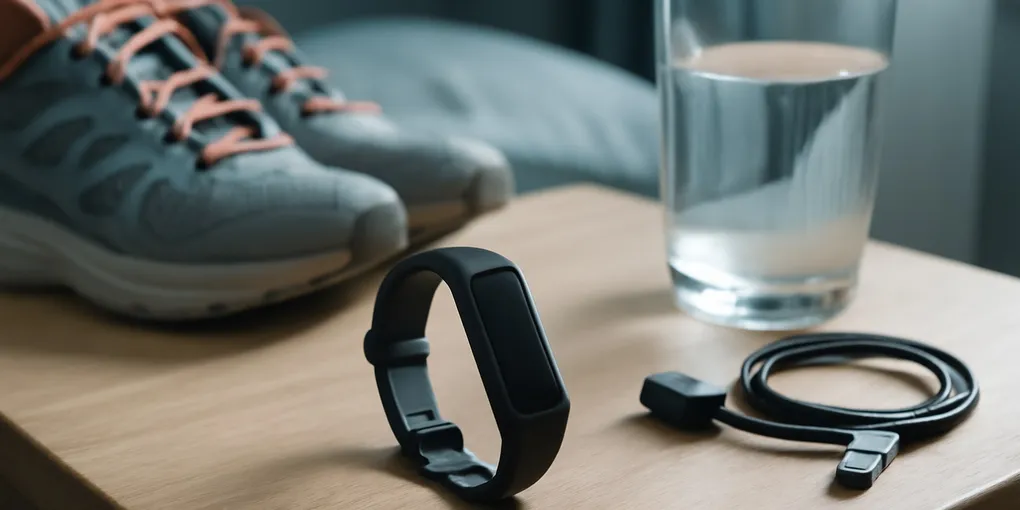
Fitbit Charge 6 Review for Health Metrics: Useful Signals Without Treating It Like a Lab
ReviewFitbit Charge 6 fitness tracker
Best compact habit trackerBest Use: Steps, sleep trends, heart-rate workouts, and compact daily wear
$120-160
Quick picks
| Product | Key Specs |
|---|---|
| See price on Amazon |
|
| See price on Amazon |
|
Product availability, certifications, and retailer details can change; check the current Amazon page before buying.
Bottom line
Fitbit Charge 6 is a good compact tracker for people who want steps, sleep trends, heart-rate workouts, reminders, and a lighter form factor than a smartwatch. It is not a medical device replacement, a perfect calorie counter, or a sleep lab. Buy it if the feedback will help you walk more, keep a steadier sleep schedule, and notice broad trends. Skip it if imperfect wrist data will make you anxious or if you need sport-specific training tools. Reference: FDA software as a medical device overview.
The best use is habit guidance. The tracker can make patterns visible: late caffeine and short sleep, missed walks, inconsistent workouts, or heart-rate drift during easy sessions. It becomes less useful when every nightly score or calorie estimate is treated as precise truth. Evidence note: AHA wearable activity monitoring review.
Best fit and alternative
- Check current Fitbit Charge 6 prices if you want a compact, mainstream health tracker with strong daily-wear appeal.
- See current Garmin Vivosmart fitness band prices if you prefer Garmin’s training ecosystem and do not want Fitbit’s app style.
Practical score
| Factor | Weight | Score | Rationale |
|---|---|---|---|
| Research | 30% | 7.0 | Wearables can support activity and self-monitoring, but consumer metrics vary by signal. |
| Evidence Quality | 25% | 6.5 | Step and heart-rate trends are more dependable than calorie burn and sleep-stage precision. |
| Value | 20% | 7.1 | A compact tracker is cheaper than many smartwatches while covering core habits. |
| User Signals | 15% | 7.6 | Battery life, comfort, and low-profile wear are practical advantages. |
| Transparency | 10% | 6.2 | App features, subscriptions, privacy, and algorithm changes require buyer attention. |
| Composite | 100% | 6.9 | A strong habit tracker if you treat the numbers as directional signals, not clinical measurements. |
| Source context: HHS physical activity guidelines. |
What Fitbit Charge 6 does well
The Charge 6 format is the main selling point. It is smaller than a smartwatch, easier to sleep in, and visible enough to nudge daily movement. For many users, the most valuable features are mundane: step count, active minutes, workout heart-rate trend, bedtime reminders, alarms, and weekly patterns.
Heart-rate tracking during steady exercise can be useful for pacing easy sessions. It is less reliable during rapid intensity changes, cold weather, loose fit, tattoos, or wrist movement. If heart-rate precision matters for interval training, a chest strap remains the stronger tool.
What to ignore or down-weight
Calorie estimates are rough. Sleep stages are rough. A low readiness or sleep score can reflect a real pattern, but it can also reflect sensor noise, poor fit, or an algorithmic guess. The right response is not to redesign your day around one score. Look for repeated patterns over weeks. Clinical source: FDA software as a medical device overview.
The ECG and irregular rhythm features can be useful in the right context, but they do not replace clinical evaluation. If you have chest pain, fainting, stroke symptoms, or severe shortness of breath, do not troubleshoot from a wrist tracker. Guidance note: AHA wearable activity monitoring review.
Who should buy it
Buy it if you want a lightweight tracker that makes daily movement and sleep consistency easier to see. It is especially sensible for people who dislike bulky watches at night, want simple workout logging, and prefer a mainstream app ecosystem.
Do not buy it if you mainly need advanced running metrics, long outdoor navigation, power-meter pairing, or clinical-grade health measurement. A Garmin watch, Apple Watch, chest strap, or clinician-directed device may match those jobs better. Review source: HHS physical activity guidelines.
Buying details to check
Confirm phone compatibility, included band size, charging cable, return terms, and which app features require a subscription. If privacy matters to you, read the data settings before wearing it continuously. A health tracker collects intimate routine data: sleep, location-adjacent activity patterns, heart-rate trends, and sometimes cycle or symptom notes.
Band comfort matters more than many spec sheets. If the band irritates your skin, sleep tracking will fail because you will stop wearing it. Consider whether replacement bands are easy to buy and whether the clasp works for your wrist size.
How to use it for four weeks
Week one is baseline. Wear it consistently, but do not chase scores. Week two is one behavior target: add a post-meal walk, set a bedtime alarm, or keep easy cardio easy. Week three is pattern review: compare weekdays and weekends, short sleep and long sleep, workout days and rest days. Week four is a buy-or-return decision: did the tracker change behavior, or did it only create more checking?
For a more sport-focused wearable, see our Garmin Venu 3 health metrics review. For heart-rhythm snapshots rather than daily wellness trends, see our KardiaMobile 6L review.
Fitbit Charge 6 versus Garmin fitness band
Fitbit is the better fit for simple lifestyle tracking and a familiar wellness-app experience. Garmin is usually stronger for users who already train in the Garmin ecosystem. Neither is automatically more accurate for every metric. The right choice depends on which app you will actually open and which reminders you will obey.
If you already own a Garmin watch, buying a Fitbit band may split your data. If you already use Fitbit and like the app, the Charge 6 is a cleaner upgrade path than switching ecosystems for a small spec difference.
FAQ
Is Fitbit Charge 6 accurate enough for zone 2 training?
It can help with broad heart-rate pacing during steady sessions, but wrist optical heart rate can lag or misread. Use a chest strap if precise zones drive your training plan.
Can Fitbit Charge 6 diagnose sleep problems?
No. It can show sleep timing and trend estimates, but insomnia, sleep apnea symptoms, severe daytime sleepiness, or loud snoring deserve clinical evaluation. Safety source: FDA software as a medical device overview.
Is the subscription required?
Core tracking can be useful without paying for every premium insight, but feature availability changes. Check current app terms before buying if subscription avoidance is important.
Sources
- Wearable activity trackers and physical activity behavior review: https://pubmed.ncbi.nlm.nih.gov/35648375/
- Consumer sleep technology limitations and opportunities: https://pubmed.ncbi.nlm.nih.gov/33971461/
- FDA information on software as a medical device and digital health limits: https://www.fda.gov/medical-devices/digital-health-center-excellence/software-medical-device-samd
- Related reading: Best chest strap heart rate monitors for zone 2 and Garmin Venu 3 health metrics review.