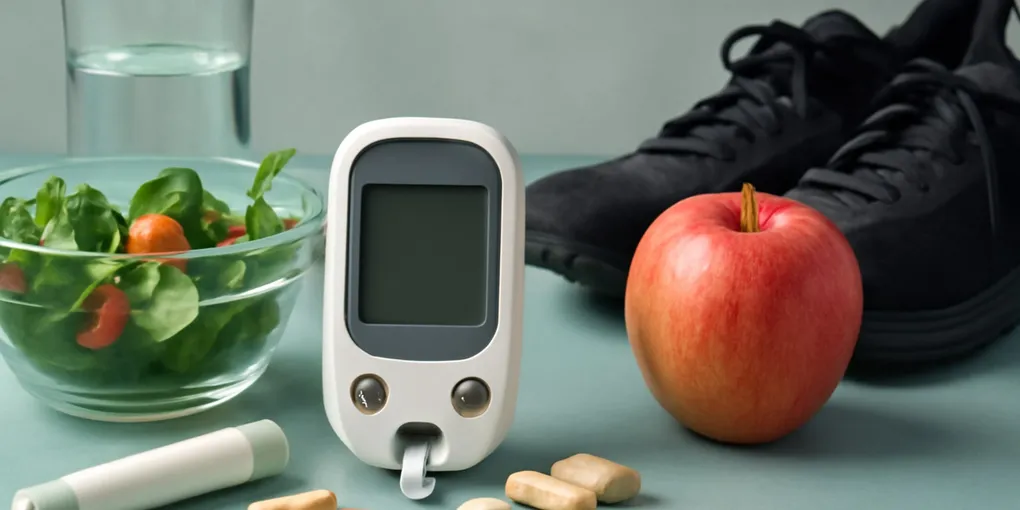
Home Glucose Meter Protocol for Post-Meal Walks: What to Measure Without Overreacting
ProtocolQuick picks
| Product | Key Specs |
|---|---|
| See price on Amazon |
|
| See price on Amazon |
|
| See price on Amazon |
|
Product availability, certifications, and retailer details can change; check the current Amazon page before buying.
Bottom line
A home glucose meter can help you see whether a 10-20 minute post-meal walk changes your own post-meal glucose pattern; post-meal walking and interrupted sitting have evidence for lowering postprandial glucose in some settings (Reynolds et al., 2022). It should not turn a healthy curiosity project into self-diagnosis, food fear, or medical decision-making. Finger-stick meters have normal measurement variability, and a single high or low reading can reflect hand contamination, strip issues, timing, illness, poor sleep, or ordinary biology.
Use the meter only if you can treat it as a structured experiment. The useful question is not “Was this one meal good or bad?” It is whether similar meals produce different 1-hour and 2-hour patterns when you walk after eating versus when you sit. If you have diabetes, prediabetes, pregnancy, medication changes, symptoms, or a clinician-provided testing plan, follow medical guidance over this wellness protocol (CDC diabetes basics).
Where to start if you are buying
- Search Amazon for Contour Next One glucose meter kits — app support can reduce transcription errors if you plan several checks.
- See current Accu-Chek Guide glucose meter kit prices — a familiar strip-vial design for readers who want occasional checks, not continuous tracking.
- Search compatible glucose test strips — verify strip compatibility and expiration date before judging kit price.
Practical score
| Factor | Weight | Score | Rationale |
|---|---|---|---|
| Research | 30% | 7.0 | Post-meal activity has a credible evidence base for glucose handling, especially in higher-risk groups (review). |
| Evidence Quality | 25% | 6.5 | Meter-guided self-experiments are noisy, but repeated paired meals can reveal practical patterns. |
| Value | 20% | 7.2 | Basic meters are inexpensive; long-term strip costs decide whether the habit is sensible. |
| User Signals | 15% | 5.8 | Finger sticks are more friction than a walking habit, so the experiment should be short. |
| Transparency | 10% | 6.8 | Reputable meters list strip compatibility and control-solution instructions; cheap bundles can obscure refills. |
| Composite | 100% | 6.7 | Useful for a bounded experiment, not a lifestyle scoreboard. |
The 7-day post-meal walk protocol
Pick one repeatable meal, not your most chaotic dinner. Breakfast oatmeal, a usual rice bowl, or a normal lunch works better than a restaurant meal. Keep the meal similar across test days: roughly the same carbohydrate source, portion, protein, fat, alcohol, and dessert. Do not change five variables at once.
On two sit days, wash and dry your hands, then measure before the meal, about 60 minutes after the first bite, and about 120 minutes after the first bite. On two walk days, eat the same style of meal, then walk easily for 10-20 minutes starting within about 15-30 minutes after eating, a window that aligns with the postprandial activity evidence rather than a medical dosing rule (Reynolds et al., 2022). Measure at the same 60- and 120-minute points. Use a normal easy pace; this is not a workout test.
Write down meal, time, walk duration, sleep quality, stress, illness, and any unusual training that day. The pattern matters more than precision. If the walk days repeatedly show a lower 1-hour peak or faster return toward baseline without making you feel unwell, that is useful because the activity question is about repeated post-meal patterns, not one isolated number (Reynolds et al., 2022). If readings jump around without a pattern, the meter may not add enough value for you.
How to buy the meter without wasting money
The meter is usually the cheap part. Before buying, check the price and availability of compatible strips, the expiration window, and whether the kit includes a lancing device and lancets. If you only plan a one-week experiment, a small starter kit can be enough. If you plan ongoing checks for a clinician-approved reason, strip cost becomes the main budget item.
Avoid buying a random meter because the device alone is cheap. If strips are hard to find, expensive, or bundled in tiny quantities, the kit becomes annoying quickly. App syncing is helpful only if it makes logging easier; it is not necessary for the protocol.
Reading results without medical overreach
A consumer meter is not a diagnosis. It can show a pattern worth discussing, especially if repeated readings are unexpectedly high or low, but it should not make you start or stop medication, diagnose diabetes, or restrict whole food groups without clinician input. The American Diabetes Association and CDC both emphasize medical testing and care plans for diabetes risk and management (CDC diabetes basics; ADA carbohydrate and blood glucose guidance).
Also remember that glucose response is not the only way to judge a meal. Satiety, total nutrition, fiber, protein, blood lipids, training performance, and long-term adherence all matter; ADA nutrition guidance frames carbohydrates and blood glucose within the broader meal pattern rather than one isolated reading (ADA carbohydrate and blood glucose guidance). A meal that produces a slightly higher reading may still fit your diet if it is nutritious and the overall pattern is healthy.
When walking is the better purchase
If the meter makes you anxious, skip it and spend the effort on the walk. A 10-minute walk after dinner costs nothing, can support daily steps and may improve post-meal glucose patterns without turning meals into a lab project (Reynolds et al., 2022). The meter is most useful when you need concrete feedback to build the habit or compare two common meals.
If you want a home movement setup, see our walking pad zone 2 buyer guide and rucking for beginners. Those tools solve the environment problem; the glucose meter only measures one response in a broader diabetes-risk and nutrition context (CDC diabetes basics).
FAQ
Should healthy people test glucose after every meal?
No. For most people without diabetes or a clinician-directed reason, testing every meal adds friction and can create unnecessary anxiety. A short, structured experiment is more reasonable than constant monitoring; use clinician-directed testing when diabetes risk, symptoms, pregnancy, or medication questions are involved (CDC diabetes basics).
Is a finger-stick meter better than a continuous glucose monitor for this protocol?
A CGM gives more data, but it is more expensive and can encourage overinterpretation. A basic meter is enough if your question is whether post-meal walking changes repeated meal patterns.
What if my post-meal reading looks high?
Repeat the reading with clean, dry hands and a fresh strip if it seems surprising. If repeated results are concerning or you have symptoms or diabetes risk factors, bring the pattern to a clinician rather than self-diagnosing from one number (CDC diabetes basics).