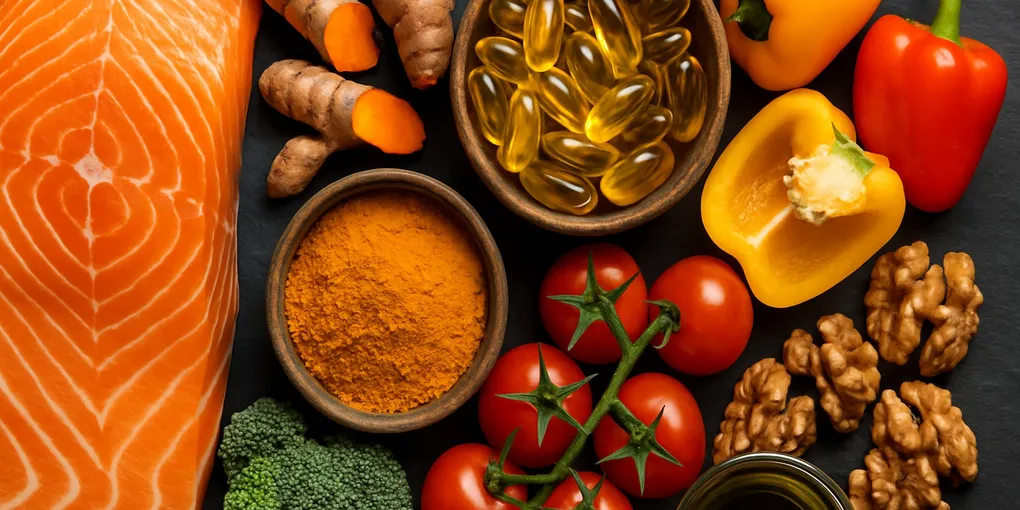
How to Reduce Inflammation Naturally: A Step-by-Step Protocol
Chronic low-grade inflammation is the biological thread connecting most major chronic diseases — cardiovascular disease, type 2 diabetes, Alzheimer’s, and certain cancers all share elevated inflammatory markers as a common feature. The good news is that inflammation responds meaningfully to lifestyle and supplement interventions backed by strong clinical evidence. This protocol gives you a sequenced, evidence-grounded approach to reducing CRP, IL-6, and TNF-alpha — the most commonly measured markers of systemic inflammation.
Direct Answer: The most effective natural interventions for reducing chronic inflammation, ranked by evidence strength, are: (1) consistent moderate-intensity exercise for 12+ weeks, (2) Mediterranean-style dietary pattern, (3) optimizing sleep to 7–9 hours nightly, (4) omega-3 supplementation at 2–4 g EPA+DHA daily, and (5) curcumin supplementation with a bioavailability enhancer. A 2023 meta-analysis (Wang et al., PMID: 37720640) found that long-term exercise reduced CRP by a standardized mean difference of -0.18, TNF-alpha by -0.43, and IL-6 by -0.16 in 38 RCTs with 2,557 healthy participants.
What Is Chronic Inflammation and How Do You Measure It?
Acute inflammation is beneficial — it is the body’s defense against injury and infection. Chronic low-grade systemic inflammation is different: it is a persistent, low-level activation of the immune system that damages tissue over time without a single identifiable cause.
The most practical way to assess chronic inflammation is through blood testing:
- High-sensitivity C-reactive protein (hs-CRP): The most commonly measured inflammatory biomarker. Optimal range: <1 mg/L. Elevated risk: >3 mg/L. Most clinical lifestyle intervention trials track CRP as their primary outcome.
- Interleukin-6 (IL-6): A pro-inflammatory cytokine that drives CRP production in the liver; often elevated with obesity, sleep deprivation, and sedentary behavior.
- TNF-alpha: Tumor necrosis factor alpha; elevated in metabolic syndrome and cardiovascular disease.
If you have not measured your baseline hs-CRP, request it from your physician alongside a standard metabolic panel. Tracking baseline and 12-week levels gives concrete feedback on whether the protocol is working.
Step 1: Exercise — The Most Powerful Anti-Inflammatory Intervention
Exercise is not just physically beneficial — it is one of the most potent anti-inflammatory tools available. A 2023 meta-analysis (Wang et al., PMID: 37720640) of 38 RCTs involving 2,557 healthy subjects found that long-term exercise training significantly reduced all three major inflammatory markers:
- IL-6: SMD -0.16 (p=0.017)
- CRP: SMD -0.18 (p=0.005)
- TNF-alpha: SMD -0.43 (p<0.001)
The mechanism involves multiple pathways: acute exercise triggers IL-6 release from contracting muscle fibers (paradoxically — this muscle-derived IL-6 stimulates production of anti-inflammatory IL-10 and IL-1 receptor antagonist); regular training reduces visceral adipose tissue (a primary source of inflammatory adipokines); and improved insulin sensitivity reduces hyperinsulinemia-driven NF-κB activation.
Critical detail from Wang et al., 2023: Moderate intensity training produced the strongest CRP reductions. High-intensity training weakened the CRP-reducing effect in long-term protocols. More is not always better.
Exercise Protocol for Inflammation Reduction
- Type: Aerobic (walking, cycling, swimming) or combined aerobic + resistance training
- Intensity: Moderate (can hold a conversation; approximately 55–70% maximum heart rate)
- Duration: 30–45 minutes per session
- Frequency: 4–5 days per week
- Minimum program length: 12 weeks for sustained CRP reduction (per PMID 37720640)
- Resistance training addition: 2 sessions/week resistance training significantly reduces CRP, IL-6, and TNF-alpha in middle-aged and older adults (PMID: 38941946)
Step 2: Mediterranean Diet — The Anti-Inflammatory Eating Pattern
No single food reduces inflammation. But consistent adoption of a Mediterranean-style eating pattern — based on olive oil, fatty fish, vegetables, legumes, and nuts — has the most comprehensive evidence base for reducing systemic inflammatory markers.
Key mechanisms:
- Olive oil (oleocanthal): Inhibits COX-1 and COX-2 enzymes with ibuprofen-like activity at high doses; oleic acid reduces NF-κB activation in endothelial cells
- Fatty fish (omega-3s): EPA and DHA directly compete with arachidonic acid, reducing pro-inflammatory prostaglandin E2 and leukotriene B4 production
- Vegetables and fruits (polyphenols): Quercetin, resveratrol, anthocyanins inhibit NF-κB and reduce inflammatory gene expression
- Legumes and whole grains (fiber): Fermented by gut bacteria into butyrate, which directly suppresses NF-κB in colonocytes and reduces systemic LPS translocation
Anti-Inflammatory Dietary Guidelines
| Food Group | Goal | Why |
|---|---|---|
| Fatty fish (salmon, sardines, mackerel) | 3+ servings/week | EPA/DHA directly reduce eicosanoid inflammatory signaling |
| Extra-virgin olive oil | 2–4 tablespoons/day | Oleocanthal (COX inhibition), oleic acid (NF-κB suppression) |
| Vegetables | 400g+/day (varied colors) | Polyphenol diversity across inflammatory pathway targets |
| Nuts (walnuts, almonds) | 30g/day | Alpha-linolenic acid (ALA) precursor, vitamin E, polyphenols |
| Legumes | 4+ servings/week | Fiber → butyrate → gut epithelial NF-κB suppression |
| Ultra-processed foods | Minimize / eliminate | Advanced glycation end products, trans fats, omega-6 overload |
| Sugar and refined carbohydrates | Minimize | Post-prandial glucose spikes activate NF-κB within hours |
Step 3: Optimize Sleep — Often the Most Overlooked Factor
Chronic sleep deprivation (less than 6 hours per night) is one of the most potent drivers of systemic inflammation. Sleep loss activates the sympathetic nervous system and hypothalamic-pituitary-adrenal axis, elevating cortisol and catecholamines that directly stimulate NF-κB — the master transcription factor controlling most inflammatory gene expression.
Short sleep duration consistently predicts elevated CRP and IL-6 across large population studies. In experimental sleep restriction protocols, even one week of 6-hour sleep significantly elevates multiple inflammatory markers compared to adequate sleep.
Sleep Protocol for Inflammation Reduction
- Target 7–9 hours of total sleep time — not just time in bed
- Maintain consistent sleep and wake times, including weekends (anchors circadian rhythm, reduces cortisol awakening response)
- Keep bedroom cool (65–68°F / 18–20°C) — reduces core body temperature, triggers sleep onset mechanisms
- Eliminate screens 60 minutes before bed — blue light suppresses melatonin and delays sleep onset
- Magnesium glycinate 300–400mg 1–2 hours before bed — reduces sleep onset latency and nighttime cortisol peaks (Abbasi et al., PMID: 33865376)
Step 4: Omega-3 Supplementation
Dietary omega-3 intake is rarely sufficient through food alone for meaningful anti-inflammatory effects. The omega-6:omega-3 ratio in typical Western diets is approximately 15:1 to 20:1; most researchers consider a ratio below 4:1 optimal for inflammatory balance.
A 2024 systematic review (Fernández-Lázaro et al., PMID: 38999792) found omega-3 supplementation significantly reduced CRP in 2 of 13 analyzed RCTs and reduced IL-6, with heterogeneous results across studies reflecting dose variability. Fish oil supplementation reduces the availability of arachidonic acid for conversion to pro-inflammatory prostaglandins and leukotrienes, while EPA and DHA-derived resolvins and protectins actively resolve existing inflammation.
Clinical dose: 2–4 g combined EPA+DHA daily. Standard fish oil softgels often contain only 300–600mg EPA+DHA per capsule — check the Supplement Facts panel, not the “fish oil” headline number.
→ Check Price: Nordic Naturals Ultimate Omega (2840mg EPA+DHA per serving) on Amazon
Step 5: Curcumin Supplementation
Curcumin — the primary bioactive in turmeric — targets NF-κB, the master switch of inflammatory gene transcription. A 2023 GRADE-assessed meta-analysis (Dehzad et al., PMID: 36804260) of 66 RCTs found curcumin/turmeric supplementation reduced:
- CRP: -0.58 mg/L
- TNF-alpha: -3.48 pg/mL
- IL-6: -1.31 pg/mL
A 2024 comprehensive meta-analysis (PMID: 39478418) of 103 RCTs with 7,216 participants across 42 outcomes found high-credibility evidence for CRP reduction — the strongest signal in the entire body of curcumin research.
Standard turmeric powder delivers minimal bioavailable curcumin (less than 3% absorption). For therapeutic anti-inflammatory effects, use one of these bioavailability-enhanced formulations:
- BCM-95 (Bioperine-free, phospholipid-enhanced): 500–1,000mg daily
- Meriva (phosphatidylcholine complex): 500–1,000mg daily
- Curcumin + piperine (black pepper extract): 500mg curcuminoids + 5mg piperine increases absorption approximately 20-fold
→ Check Price: Thorne Meriva Curcumin on Amazon
Step 6: Boswellia for Multi-Pathway Coverage (Optional Add-On)
Curcumin primarily inhibits COX-2 and NF-κB. Boswellia (Boswellia serrata) adds 5-lipoxygenase (5-LOX) inhibition — the enzyme responsible for leukotriene production, particularly relevant for joint inflammation and asthma-related inflammation.
The combination of curcumin + boswellia addresses both the prostaglandin (COX-2) and leukotriene (5-LOX) inflammatory pathways simultaneously, providing broader coverage than either alone.
Clinical dose: 100–400mg AKBA (the active boswellic acid) from a 65% standardized extract. 4–6 weeks to full effect.
→ Check Price: NOW Foods Boswellia Extract on Amazon
Complete 12-Week Anti-Inflammation Protocol
| Phase | What to Do | Why |
|---|---|---|
| Weeks 1–2 | Audit diet; eliminate ultra-processed foods and refined sugars; begin 30 min moderate walking 4x/week | Remove acute inflammatory triggers; begin exercise adaptation |
| Weeks 2–4 | Add omega-3 supplement (2–4g EPA+DHA/day); optimize sleep to consistent 7–9 hours | Address omega-6:omega-3 imbalance; reduce cortisol-driven NF-κB |
| Weeks 4–6 | Add curcumin (bioavailable form, 500–1,000mg/day with meals); increase exercise to 4–5x/week | Begin multi-pathway NF-κB suppression; escalate anti-inflammatory exercise stimulus |
| Weeks 6–8 | Optional: add boswellia (100–400mg AKBA) if joint inflammation is a concern; maintain all interventions | Add 5-LOX pathway coverage |
| Weeks 8–12 | Hold protocol steady; retest hs-CRP at week 12; add magnesium glycinate 300mg nightly if sleep remains poor | Document response; address residual sleep-driven inflammation |
How We Score: G6 Evidence Quality for This Protocol
Protocol articles on Body Science Review apply our G6 weighted framework to evaluate the evidence quality supporting each recommended intervention. This helps readers understand which recommendations are strongly evidence-backed versus theoretically supported.
The G6 framework applies these weights (30/25/20/15/10):
- Research Quality (30%): Strength and volume of human clinical evidence — RCTs, replicated findings, dosing consistency across studies.
- Evidence Quality (25%): Mechanistic clarity, bioavailability data, and the quality of outcome measures used in trials.
- Practicality (20%): Whether the recommendation is accessible, affordable, and implementable for most healthy adults.
- Population Relevance (15%): Whether study populations match healthy adults managing chronic low-grade inflammation.
- Methodological Transparency (10%): Whether limitations and conflicts of interest are clearly disclosed in the underlying literature.
Evidence quality scores for each protocol component:
| Intervention | Research Quality | Evidence Quality | Practicality | Population Relevance | Transparency | G6 |
|---|---|---|---|---|---|---|
| Moderate exercise (12+ wks) | 9.5 | 9.0 | 8.5 | 9.0 | 9.0 | 9.1 |
| Mediterranean diet | 9.0 | 8.5 | 8.0 | 8.5 | 8.5 | 8.7 |
| Sleep optimization | 8.5 | 8.5 | 8.5 | 8.5 | 8.0 | 8.5 |
| Omega-3 supplementation | 8.5 | 8.5 | 8.0 | 8.5 | 8.5 | 8.5 |
| Curcumin supplementation | 8.0 | 7.5 | 7.5 | 8.0 | 8.5 | 7.9 |
| Boswellia supplementation | 6.5 | 7.0 | 8.0 | 7.0 | 7.5 | 7.0 |
Score notes: Exercise and Mediterranean diet earn the highest scores because the evidence base spans decades of large RCTs and prospective studies with consistent findings. Sleep optimization earns 8.5 — the mechanistic case is airtight, but fewer long-term RCTs specifically track inflammatory biomarkers as a primary outcome vs. observational data. Boswellia scores 7.0 — excellent mechanistic rationale (5-LOX inhibition) and good short-term RCT data for specific conditions, but fewer large-scale long-term trials in generally healthy populations.
What to Expect: Timeline for Measurable Results
- 2–4 weeks: Early dietary improvements visible in energy and digestion; some sleep quality improvement
- 4–8 weeks: Measurable CRP reduction possible with consistent omega-3 + curcumin + exercise; early anti-inflammatory effects from Mediterranean diet pattern
- 8–12 weeks: Full anti-inflammatory benefit of exercise protocol accumulates; sustained CRP, IL-6, and TNF-alpha reductions documented in 12-week RCTs (PMID: 37720640)
- 12+ weeks: Maintained lifestyle changes consolidate systemic inflammation reduction; retesting at 3–6 months intervals is reasonable
Frequently Asked Questions
What reduces inflammation fastest?
Exercise and dietary changes produce the fastest measurable CRP reductions — often within 4–8 weeks of consistent application. A 2023 meta-analysis (Wang et al., PMID 37720640) of 38 RCTs found long-term exercise significantly reduced CRP, IL-6, and TNF-alpha. Curcumin at 500–1,000 mg daily with a bioavailability enhancer can reduce CRP within 4–8 weeks per a 66-trial meta-analysis (Dehzad et al., 2023, PMID 36804260).
What are the signs of chronic inflammation?
Common signs include persistent fatigue, recurring joint stiffness, elevated CRP or ESR on blood tests, brain fog, unexplained weight gain, frequent infections, skin issues, and digestive problems. Elevated high-sensitivity CRP (hs-CRP above 3 mg/L) is the most objective marker.
How long does it take to reduce inflammation naturally?
Meaningful CRP reductions typically require 8–12 weeks of consistent effort. Exercise meta-analyses show strongest anti-inflammatory effects from programs lasting more than 12 weeks at moderate intensity (PMID 37720640). Curcumin and omega-3 can produce measurable changes in 4–8 weeks.
Is turmeric the same as curcumin?
No. Turmeric contains curcumin at approximately 2–5% by weight, with poor bioavailability (less than 3% absorption). Anti-inflammatory curcumin supplements use concentrated standardized extracts with bioavailability enhancers (BCM-95, Meriva, piperine) that increase absorption 20–2,000-fold vs. turmeric powder.
Does fish oil actually reduce inflammation?
Yes, with multiple RCT support. A 2024 systematic review (Fernández-Lázaro et al., PMID 38999792) found omega-3 supplementation significantly reduced CRP and IL-6. The mechanism — EPA and DHA competing with arachidonic acid for COX and LOX enzymes — is well-established. Clinical doses of 2–4 g combined EPA+DHA daily are required for consistent effects.
Frequently Asked Questions
- Exercise and dietary changes produce the fastest measurable CRP reductions — often within 4–8 weeks of consistent application. A 2023 meta-analysis (Wang et al., PMID 37720640) of 38 RCTs found that long-term exercise training significantly reduced CRP, IL-6, and TNF-alpha in healthy subjects. Curcumin supplementation (with bioavailability enhancer) can reduce CRP within 4–8 weeks at 500–1,000 mg daily per a 66-trial meta-analysis (Dehzad et al., 2023, PMID 36804260). Acute dietary changes (eliminating ultra-processed foods, increasing omega-3-rich fish) can show effects within 2–4 weeks.
- Chronic low-grade inflammation often has no single dramatic symptom. Common signs include persistent fatigue despite adequate sleep, recurring joint stiffness (especially in the morning), elevated CRP or ESR on blood tests, brain fog or difficulty concentrating, unexplained weight gain or difficulty losing weight, frequent infections, skin issues like acne or eczema, and digestive problems including bloating and irregular bowel habits. Elevated high-sensitivity CRP (hs-CRP above 3 mg/L) on a blood test is the most objective marker.
- Meaningful CRP reductions from lifestyle interventions typically require 8–12 weeks of consistent effort. Exercise meta-analyses show the strongest anti-inflammatory effects from programs lasting more than 12 weeks at moderate intensity (PMID 37720640). Curcumin and omega-3 supplementation can produce measurable changes in 4–8 weeks. Dietary changes like Mediterranean diet adoption show measurable inflammatory marker improvements within 4–6 weeks. Sleep optimization can reduce CRP within days to weeks of consistent 7–9 hour nights.
- No. Turmeric is the root/spice that contains curcumin as its primary active compound — at approximately 2–5% by weight. Standard turmeric powder in food provides very small amounts of curcumin with poor bioavailability (less than 3% absorption). Anti-inflammatory curcumin supplements use concentrated standardized extracts (typically 95% curcuminoids) often paired with bioavailability enhancers. BCM-95, Meriva (phospholipid complex), and piperine-enhanced formulas can increase bioavailability 20–2,000-fold compared to plain turmeric powder.
- Yes, with evidence from multiple randomized controlled trials. A 2024 systematic review (Fernández-Lázaro et al., PMID 38999792) found omega-3 supplementation significantly reduced CRP and IL-6 in multiple RCTs. The mechanism is well-established — EPA and DHA compete with arachidonic acid for COX and LOX enzymes, reducing pro-inflammatory prostaglandin and leukotriene production. Clinical doses of 2–4 g combined EPA+DHA daily are required for consistent anti-inflammatory effects; standard fish oil softgels often deliver far less than this.