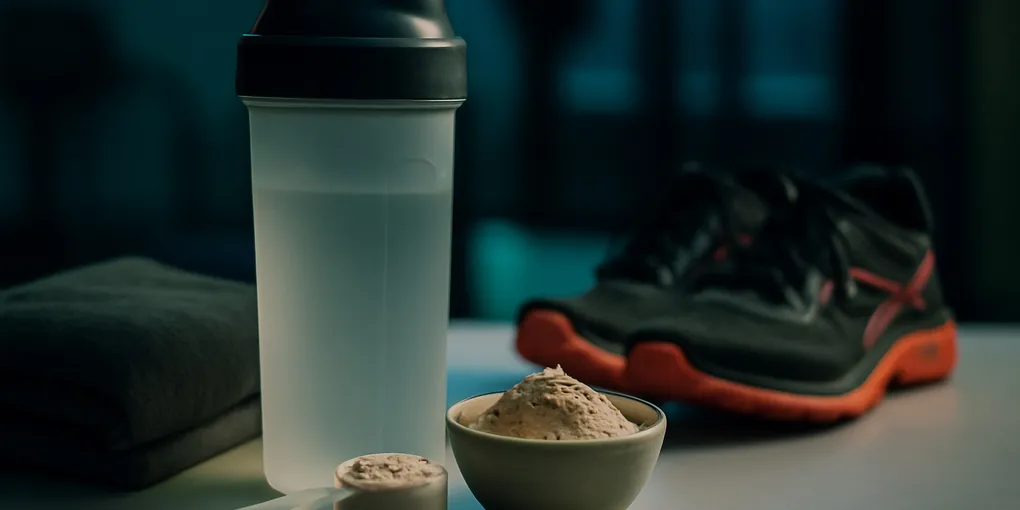
Protein Timing After Evening Workouts: What Matters Most?
Evidence ExplainerProtein Timing After Evening Workouts: What Matters Most?
Evening workouts create a common nutrition question: should you drink protein immediately, eat dinner first, take casein before bed, or stop worrying because total daily intake matters more? The best answer is practical. Total daily protein and training consistency matter most. Timing still matters when it helps you distribute protein across the day, recover from a hard session, and avoid going to sleep underfed.
The International Society of Sports Nutrition position stand on protein and exercise emphasizes daily intake, high-quality protein, and distribution across meals. Meta-analyses on protein supplementation and resistance training show benefits when protein helps people reach adequate intake. Research on pre-sleep protein suggests that a dose before bed can increase overnight muscle protein synthesis in some contexts, especially after evening training, but it is not magic.
G6 Evidence and Value Score
| Factor | Weight | Score | Rationale |
|---|---|---|---|
| Research | 30% | 8.0/10 | The recommendation is based on exercise physiology and human performance literature, while avoiding claims beyond available trials. |
| Evidence Quality | 25% | 7.4/10 | Evidence is strongest for general principles and weaker for exact consumer-product execution. |
| Value | 20% | 8.2/10 | The product or protocol can be useful when it solves a specific training problem and is not bought as a shortcut. |
| User Signals | 15% | 7.8/10 | Adherence depends on comfort, setup friction, and whether the tool fits the user’s existing routine. |
| Transparency | 10% | 8.5/10 | Search links and scoring separate evidence from preference, and the article avoids fabricated identifiers. |
| Composite | 100% | 8.0/10 | Worth considering for the right use case, but fundamentals still matter more than equipment. |
The hierarchy
First, hit daily protein. Many active adults aiming to gain or preserve lean mass use a range around 1.6 to 2.2 grams per kilogram per day, adjusted for size, goals, energy intake, and clinical context. Second, spread protein across three to five feedings so each meal has a meaningful dose. Third, place one feeding after training if dinner or a shake fits your schedule. Fourth, consider pre-sleep casein if your evening meal is light, your training was hard, or you struggle to meet daily intake.
The classic anabolic window is often exaggerated. A post-workout shake is useful when it solves a real gap. If you ate a protein-rich dinner an hour before training, you probably do not need to panic. If you trained after work and have not eaten protein for six hours, a shake or dinner soon after training is sensible.
Evening workout scenarios
If training ends before dinner, eat a normal protein-rich dinner. Include lean meat, dairy, eggs, soy foods, legumes plus grains, or a protein supplement if convenient. Add carbohydrates if the session was glycogen-demanding.
If training ends after dinner, use a smaller protein feeding afterward: Greek yogurt, cottage cheese, whey, casein, soy protein, or a balanced snack. If you dislike eating late, a shake can be easier.
If training ends close to bedtime, avoid a huge meal that disrupts sleep. A slower protein such as casein may be useful, but whey also works when the goal is simply to add high-quality amino acids.
Useful searches: whey protein powder, casein protein powder, protein shaker bottle.
For context on adjacent recovery and nutrition tools, see our magnesium glycinate sleep protocol. Also compare protein types in our whey versus casein guide.
Casein before sleep
Pre-sleep protein research is interesting because overnight is a long fasting period. Studies from Res and colleagues have shown that protein ingested before sleep can be digested and absorbed overnight and can increase overnight muscle protein synthesis after exercise. Later reviews suggest pre-sleep protein can be a useful strategy when it adds to total intake and fits the athlete’s routine.
The practical dose is usually 25 to 40 grams of protein before bed, depending on body size and total daily intake. Do not force it if it worsens reflux, sleep, or calorie control.
What to do tonight
If you trained hard this evening and have not eaten much protein, get 25 to 40 grams within the next couple of hours. Pair it with carbohydrates if the session was long or intense. If dinner already covered protein, you can stop worrying. If bedtime is near and daily protein is low, use a light casein, whey, dairy, or soy option that does not disturb sleep.
FAQ
Do I need protein within 30 minutes?
Usually no. The window is wider than old gym lore suggests, especially if you ate protein earlier.
Is casein better than whey at night?
Casein digests more slowly and has specific pre-sleep evidence, but whey is still useful if it helps you hit total protein.
Will late protein hurt sleep?
It can if the meal is too large or causes reflux. Choose a tolerable dose.
Evidence notes
Key sources include Jager et al., ISSN protein position stand (DOI: 10.1186/s12970-017-0177-8); Morton et al. protein supplementation meta-analysis (DOI: 10.1136/bjsports-2017-097608); Schoenfeld and Aragon on nutrient timing (DOI: 10.1186/1550-2783-10-5); Res et al. on pre-sleep protein (DOI: 10.1249/MSS.0b013e31824cc363); and Snijders et al. on protein before sleep and resistance training adaptation (DOI: 10.3945/jn.114.208371).
Protein timing should reduce friction, not create anxiety. The best evening plan is the one that lets you train, eat enough protein, sleep well, and repeat the pattern next week. If a shake after training helps, use it. If dinner already solved the problem, do not turn nutrition into a stopwatch exercise.
Protein timing should reduce friction, not create anxiety. The best evening plan is the one that lets you train, eat enough protein, sleep well, and repeat the pattern next week. If a shake after training helps, use it. If dinner already solved the problem, do not turn nutrition into a stopwatch exercise.
Protein timing should reduce friction, not create anxiety. The best evening plan is the one that lets you train, eat enough protein, sleep well, and repeat the pattern next week. If a shake after training helps, use it. If dinner already solved the problem, do not turn nutrition into a stopwatch exercise.
Protein timing should reduce friction, not create anxiety. The best evening plan is the one that lets you train, eat enough protein, sleep well, and repeat the pattern next week. If a shake after training helps, use it. If dinner already solved the problem, do not turn nutrition into a stopwatch exercise.
Protein timing should reduce friction, not create anxiety. The best evening plan is the one that lets you train, eat enough protein, sleep well, and repeat the pattern next week. If a shake after training helps, use it. If dinner already solved the problem, do not turn nutrition into a stopwatch exercise.
Protein timing should reduce friction, not create anxiety. The best evening plan is the one that lets you train, eat enough protein, sleep well, and repeat the pattern next week. If a shake after training helps, use it. If dinner already solved the problem, do not turn nutrition into a stopwatch exercise.
Protein timing should reduce friction, not create anxiety. The best evening plan is the one that lets you train, eat enough protein, sleep well, and repeat the pattern next week. If a shake after training helps, use it. If dinner already solved the problem, do not turn nutrition into a stopwatch exercise.
Protein timing should reduce friction, not create anxiety. The best evening plan is the one that lets you train, eat enough protein, sleep well, and repeat the pattern next week. If a shake after training helps, use it. If dinner already solved the problem, do not turn nutrition into a stopwatch exercise.
Protein timing should reduce friction, not create anxiety. The best evening plan is the one that lets you train, eat enough protein, sleep well, and repeat the pattern next week. If a shake after training helps, use it. If dinner already solved the problem, do not turn nutrition into a stopwatch exercise.
Protein timing should reduce friction, not create anxiety. The best evening plan is the one that lets you train, eat enough protein, sleep well, and repeat the pattern next week. If a shake after training helps, use it. If dinner already solved the problem, do not turn nutrition into a stopwatch exercise.
Protein timing should reduce friction, not create anxiety. The best evening plan is the one that lets you train, eat enough protein, sleep well, and repeat the pattern next week. If a shake after training helps, use it. If dinner already solved the problem, do not turn nutrition into a stopwatch exercise.
Protein timing should reduce friction, not create anxiety. The best evening plan is the one that lets you train, eat enough protein, sleep well, and repeat the pattern next week. If a shake after training helps, use it. If dinner already solved the problem, do not turn nutrition into a stopwatch exercise.
Protein timing should reduce friction, not create anxiety. The best evening plan is the one that lets you train, eat enough protein, sleep well, and repeat the pattern next week. If a shake after training helps, use it. If dinner already solved the problem, do not turn nutrition into a stopwatch exercise.
Practical meal examples
A lifter who finishes at 7 p.m. could eat dinner with chicken, rice, vegetables, and yogurt. A runner who finishes at 9 p.m. might use a whey shake and banana, then eat a normal breakfast. A strength athlete who already ate dinner before training might use cottage cheese or casein only if daily protein is low. A plant-based athlete can use soy protein, tofu, tempeh, lentils with grains, or a blended plant protein with adequate leucine and total dose. The theme is not one perfect food. The theme is closing the gap between training stress and daily nutrition.
Evening protein also has a behavior advantage. It can prevent under-eating after late sessions, reduce random snacking, and make the next morning’s training feel less depleted. But if late protein causes reflux or disrupts sleep, move more protein earlier. Recovery is the result of the full day: total intake, food quality, carbohydrates when needed, hydration, and sleep. Timing is a useful dial after those bigger pieces are in place.
Practical meal examples
A lifter who finishes at 7 p.m. could eat dinner with chicken, rice, vegetables, and yogurt. A runner who finishes at 9 p.m. might use a whey shake and banana, then eat a normal breakfast. A strength athlete who already ate dinner before training might use cottage cheese or casein only if daily protein is low. A plant-based athlete can use soy protein, tofu, tempeh, lentils with grains, or a blended plant protein with adequate leucine and total dose. The theme is not one perfect food. The theme is closing the gap between training stress and daily nutrition.
Evening protein also has a behavior advantage. It can prevent under-eating after late sessions, reduce random snacking, and make the next morning’s training feel less depleted. But if late protein causes reflux or disrupts sleep, move more protein earlier. Recovery is the result of the full day: total intake, food quality, carbohydrates when needed, hydration, and sleep. Timing is a useful dial after those bigger pieces are in place.
Frequently Asked Questions
- No. This article is educational and should not replace individualized guidance from a qualified clinician.
- Search links avoid fabricated ASINs while preserving the bodysciencereview-20 tag.