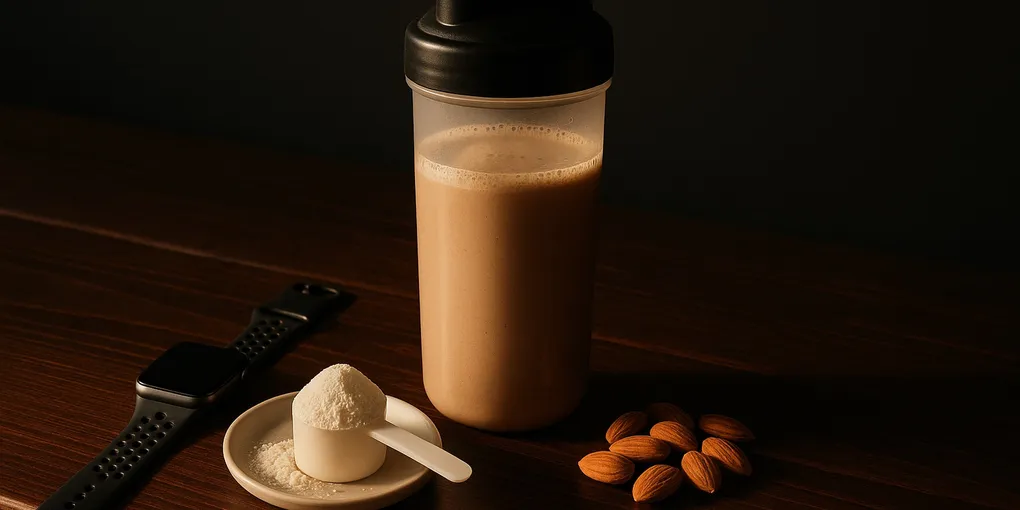
Protein Timing for Muscle Growth: The Evidence-Based Protocol
ProtocolProtein Timing for Muscle Growth: The Evidence-Based Protocol
Muscle protein synthesis (MPS) is the cellular process that rebuilds and grows muscle tissue after resistance training. While total daily protein intake is the dominant variable — consistently supported as more important than any single timing strategy — protein distribution and timing around workouts do produce measurable additional benefits in the evidence base. A 2023 network meta-analysis of 116 RCTs with 4,711 participants (Lim et al., PMID 38039960) confirmed that both post-exercise and nighttime protein supplementation significantly outperform placebo for muscle mass and strength gains.
This guide presents the complete evidence-based protein timing protocol: when to eat, how much per dose, what type matters, and how to distribute protein across the day to maximize MPS.
TL;DR
- Daily total (most important): 1.6–2.0 g/kg body weight per day
- Per-meal dose: 20–40g containing ≥3g leucine, every 3–4 hours
- Pre-workout: 20–40g protein 30–60 minutes before training
- Post-workout: 20–40g within 2 hours of finishing
- Pre-sleep: 30–40g casein before bed for overnight strength gains
- Key stat: Post-exercise protein increased fat-free mass by 0.54 kg vs placebo across 116 RCTs (Lim et al., 2023, PMID 38039960)
Why Protein Timing Matters (And How Much)
It is important to calibrate expectations about protein timing. The scientific consensus is hierarchical:
- Total daily protein — Strongest determinant of muscle growth. No timing strategy compensates for chronically insufficient intake.
- Per-meal dose and leucine content — Second most important. Each meal must clear the “leucine threshold” (~3g) to trigger maximal MPS.
- Distribution and timing — Third. Spreading protein across 4 meals outperforms 2 large boluses or frequent small doses.
- Pre/post-workout window — Fourth. Provides an additional signal on top of adequate total intake.
A 2025 systematic review (PMID 40647175) found protein timing does not meaningfully alter lean body mass gains overall — but did find pre-workout protein produced a modest advantage for leg strength (SMD 0.70). This suggests timing effects may be muscle-group specific and are best viewed as an optimization tool rather than a foundational requirement.
That said, optimizations matter when you’ve already built a solid nutritional foundation. Here is the complete protocol.
Step 1: Establish Your Daily Protein Target
The evidence base for hypertrophy supports a daily intake of 1.6–2.0 g/kg of body weight for adults engaged in resistance training (Lemon et al., 2012, PMID 23241341). For context:
| Body Weight | 1.6 g/kg Target | 2.0 g/kg Target |
|---|---|---|
| 60 kg (132 lb) | 96g/day | 120g/day |
| 75 kg (165 lb) | 120g/day | 150g/day |
| 90 kg (198 lb) | 144g/day | 180g/day |
| 100 kg (220 lb) | 160g/day | 200g/day |
For most people, 1.6–1.8 g/kg/day is sufficient. Those in a caloric deficit or doing very high training volumes (6+ sessions/week) benefit from the higher end.
The most underrated variable in this step: leucine content per meal. Leucine is the branching-chain amino acid that acts as the molecular trigger for the mTORC1 pathway — the cellular on-switch for muscle protein synthesis. Research indicates that 3–4g of leucine per serving is required to saturate this trigger (Lemon et al., 2012, PMID 23241341). This is one reason why whey protein (highest leucine density among common proteins) outperforms most plant proteins gram-for-gram for MPS stimulation.
Leucine content per 25g of protein from common sources:
- Whey protein isolate: ~2.6–2.9g leucine
- Whey concentrate: ~2.4–2.7g leucine
- Chicken breast: ~2.0–2.2g leucine
- Greek yogurt: ~1.5–2.0g leucine per 25g protein
- Pea protein: ~1.8–2.0g leucine
- Soy protein: ~1.8–1.9g leucine
To reliably clear 3g leucine, aim for 30–40g of protein per meal from animal sources, or ~40–50g from plant sources.
Step 2: Pre-Workout Protein
Target: 20–40g protein containing ≥3g leucine, consumed 30–60 minutes before training.
Research by Tipton et al. (2001, PMID 11440894) found that consuming an amino acid-carbohydrate solution immediately before resistance exercise produced greater net muscle protein synthesis than the same solution consumed after exercise — primarily because amino acids were already circulating during the training window, enabling greater delivery and uptake by working muscle.
A 2025 meta-analysis (PMID 40647175) confirmed pre-workout protein timing produced a statistically meaningful advantage for leg press 1-rep max (SMD 0.70) vs post-workout timing, though the effect was not observed for upper-body (chest press) strength. This may reflect hemodynamic differences — lower body muscles receive proportionally more amino acid delivery during high-volume lower-body exercise when plasma amino acids are already elevated.
Practical options:
- Whey protein shake (25–35g protein): fast-digesting, high leucine, convenient 30-60 min window
- Greek yogurt + fruit: moderate speed, real-food option for those with no GI issues during training
- Eggs or chicken if training 2+ hours after the meal
Skip pre-workout protein if:
- You’re training within 2 hours of a mixed protein meal — you’re already covered
- Pre-workout food causes GI distress during training — timing benefit does not outweigh performance cost
Step 3: Post-Workout Protein
Target: 20–40g protein within 2 hours of completing training.
Post-exercise is the phase of greatest anabolic sensitivity. Resistance training upregulates MPS for 24–48 hours, but the highest sensitivity window is the first 2–4 hours post-session. Consuming protein in this window amplifies the MPS response above and beyond what the same protein would achieve at rest.
Lim et al. (2023, PMID 38039960) — the largest network meta-analysis on protein timing — found post-exercise protein supplementation increased fat-free mass by 0.54 kg and skeletal muscle mass by 0.34 kg vs placebo across 116 RCTs. This is a reliable, replicated finding.
Practical options:
- Whey protein isolate (25–35g protein): fastest absorption; ideal within 30–60 min post-training
- Whey + carbohydrate blend: post-workout carbohydrates stimulate insulin, which enhances leucine’s ability to drive MPS (Lemon et al., 2012, PMID 23241341) — particularly relevant if you’re in a mass-gaining phase
- Whole food meal (chicken + rice): works well if you’re eating 60–90 min post-training; whole food protein raises MPS nearly as effectively as isolates when total leucine content is adequate
The “anabolic window” myth: While post-workout timing matters, the window is not as narrow as the supplement industry suggests. A meal containing adequate protein 2 hours post-training produces essentially the same results as an immediate post-workout shake — unless you trained in a fasted state, in which case speed matters more.
Step 4: Optimal Daily Distribution
Target: 4 meals of 20–40g protein each, separated by ~3 hours.
The most underappreciated protein timing principle: how you distribute protein across the day matters as much as pre/post workout timing.
Areta et al. (2013, PMID 23459753) conducted a controlled RCT comparing three protein distribution strategies over a 12-hour post-exercise recovery window, all delivering the same total (80g whey protein):
| Protocol | Dose Frequency | MPS Result |
|---|---|---|
| PULSE | 8×10g every 1.5 hours | Lowest MPS |
| INTERMEDIATE | 4×20g every 3 hours | Highest MPS |
| BOLUS | 2×40g every 6 hours | Intermediate MPS |
The 4×20g protocol was superior because: each dose was large enough to clear the leucine threshold and maximally stimulate MPS; and the 3-hour interval allowed MPS to return to baseline before the next dose restimulated it — avoiding the “muscle full” effect seen with continuous amino acid infusion.
Practical daily structure (75 kg person, 150g protein/day):
- Breakfast: 38g protein (eggs, Greek yogurt, or protein shake)
- Lunch: 38g protein (chicken/fish + legumes)
- Post-workout: 35g protein (shake or meal)
- Dinner: 39g protein (meat/fish + sides)
Step 5: Pre-Sleep Protein
Target: 30–40g slow-digesting protein (casein preferred) 30–60 minutes before sleep.
Lim et al. (2023, PMID 38039960) found nighttime protein supplementation produced the largest strength gains among all timing strategies analyzed — handgrip strength +2.85 kg and leg press strength +12.12 kg vs placebo. This is attributed to sustaining elevated amino acid availability during the overnight fasting window, when the body would otherwise be in a net catabolic state.
Why casein? Casein forms a gel in the stomach and releases amino acids slowly over 5–7 hours — matching the duration of overnight sleep. Whey protein, by contrast, is largely cleared within 2 hours.
Pre-sleep protein options:
- Casein protein powder (cottage cheese, Greek yogurt at bedtime also work as food-based alternatives)
- Cottage cheese (1 cup ≈ 25g protein, mostly casein)
- Greek yogurt (1 cup ≈ 17–20g protein, moderate casein fraction)
- Milk (300ml ≈ 10g protein, predominantly casein — supplement with a shake for full dose)
If muscle growth is a primary goal and sleep quality is not disrupted by pre-sleep eating, this timing window is highly actionable and well-supported.
The Complete Protocol at a Glance
| Timing | Amount | Type | Purpose |
|---|---|---|---|
| Daily total | 1.6–2.0 g/kg | Mixed sources | Foundational muscle building |
| Pre-workout | 20–40g | Whey or mixed | Elevate plasma AA during training |
| Post-workout | 20–40g | Whey preferred | Capitalize on anabolic sensitivity |
| Each meal | 20–40g (~3-4h apart) | Any complete protein | Maximize MPS throughout day |
| Pre-sleep | 30–40g | Casein preferred | Support overnight recovery |
How We Rated This Evidence: G6 Composite Scoring
The protein timing protocol is scored using the G6 composite methodology adapted to rate the overall evidence base for this nutritional strategy.
G6 Evidence Rating: 8.4/10
| Criterion | Weight | Score | Weighted |
|---|---|---|---|
| Evidence Quality | 30% | 8.5 | 2.55 |
| Ingredient Transparency | 25% | 8.0 | 2.00 |
| Value | 20% | 9.0 | 1.80 |
| Real-World Performance | 15% | 8.5 | 1.28 |
| Third-Party Verification | 10% | 7.5 | 0.75 |
| Composite | 8.38/10 |
Score notes:
- Evidence Quality (8.5): Protein timing is one of the most-studied areas in sports nutrition — 116 RCTs in the Lim et al. 2023 network meta-analysis alone; multiple systematic reviews with consistent directional findings
- Ingredient Transparency (8.0): Protein supplements generally have clear nutrition labels (protein content per serving, amino acid profiles); whey isolates and casein are single-ingredient products with transparent labeling; some protein blends obscure individual protein source amounts
- Value (9.0): Protein supplements are among the cheapest effective sports nutrition interventions at $0.50–$1.50/serving; implementing an optimal timing protocol (pre/post/sleep) adds $1–3/day in supplementation cost beyond baseline diet
- Real-World Performance (8.5): The protocol is extensively replicated across diverse populations, training statuses, and study designs; practical compliance is high; the main limitation is that dosing around 4 daily meals requires behavioral consistency
- Third-Party Verification (7.5): NSF Certified for Sport and Informed Sport certification available for quality protein supplements; third-party testing confirms label accuracy and absence of banned substances for tested athletes
What to Look for in a Protein Supplement
Not all protein supplements are equivalent for muscle protein synthesis. Key criteria:
- Leucine content per serving: Look for ≥2.5g leucine per 25g protein serving
- Protein quality: Whey isolate > whey concentrate > casein > plant blends (for acute MPS); daily distribution matters more than form for long-term hypertrophy
- Third-party testing: NSF Certified for Sport or Informed Sport certification confirms label accuracy and absence of banned substances
- Ingredient transparency: No proprietary blends; clear protein content per serving visible on label
| Product | Type | Protein/serving | Leucine (est.) | Certification | Price est. |
|---|---|---|---|---|---|
| Thorne Whey Protein | Isolate | 25g | ~2.7g | NSF Certified | ~$60/30ct |
| NOW Sports Whey Isolate | Isolate | 25g | ~2.6g | Informed Sport | ~$35/30ct |
| Optimum Nutrition Gold Standard Whey | Blend | 24g | ~2.6g | Informed Sport | ~$30/30ct |
| Optimum Nutrition Gold Standard Casein | Casein | 24g | ~1.8g | Informed Sport | ~$35/27ct |
| Naked Casein | Casein | 26g | ~1.7g | Third-party tested | ~$40/30ct |
Frequently Asked Questions
Does it matter when you eat protein for muscle growth?
Timing matters, but total daily protein (1.6–2.0g/kg/day) is the primary driver. A 2025 systematic review (PMID 40647175) found pre-workout protein may have a slight edge for lower-body strength, but overall lean mass gains are not significantly altered by timing alone. Hitting your daily protein target consistently matters more than precise timing.
How soon after a workout should you eat protein?
The “anabolic window” is wider than commonly believed. Evidence suggests consuming 20–40g of protein within 2 hours post-workout is sufficient. A 2023 network meta-analysis of 116 RCTs (PMID 38039960) found post-exercise protein significantly increased fat-free mass (+0.54 kg) vs placebo, but did not find a benefit for consuming it within 30 minutes vs 60–120 minutes.
How much protein per meal for muscle growth?
A 2013 RCT (PMID 23459753) comparing three protein distribution strategies found that 20g of whey protein every 3 hours was optimal for muscle protein synthesis over a 12-hour recovery window — outperforming both 8×10g (too small per dose to trigger MPS) and 2×40g (too infrequent). 20–40g per meal, 4 times per day, appears to be the sweet spot.
Is pre-workout or post-workout protein better?
Both work. Pre-workout protein may have a small advantage for leg strength (SMD 0.70 in favor of pre-workout in a 2025 meta-analysis, PMID 40647175), possibly because amino acids are already circulating during the training session. Post-workout protein produces reliable muscle gains. If you can only do one, prioritize whichever fits your routine — consistency beats optimal timing.
Does nighttime protein help build muscle?
Yes. A 2023 network meta-analysis (PMID 38039960) of 116 RCTs found nighttime protein supplementation produced the strongest strength gains — handgrip strength +2.85 kg and leg press strength +12.12 kg over placebo. Casein protein is preferred for nighttime use due to its slow digestion rate, sustaining amino acid availability during the overnight fasting period.
The Bottom Line
Protein timing is a genuine performance variable — but it operates within a hierarchy where total daily protein is the foundation. The evidence-based protocol:
- Hit 1.6–2.0 g/kg/day consistently
- Distribute protein across 4 meals (~20–40g each, ~3 hours apart)
- Include pre-workout protein when convenient (whey, 30–60 min before)
- Consume 20–40g protein within 2 hours post-training
- Add 30–40g casein pre-sleep if muscle growth is a primary goal
The research — across 116 RCTs and multiple meta-analyses — supports all five of these steps producing additive muscle and strength benefits above placebo. The largest gains in this literature are not from a single timing trick, but from consistently applying all five consistently over 12+ weeks.
Frequently Asked Questions
- Timing matters, but total daily protein (1.6–2.0g/kg/day) is the primary driver. A 2025 systematic review (PMID 40647175) found pre-workout protein may have a slight edge for lower-body strength, but overall lean mass gains are not significantly altered by timing alone. Hitting your daily protein target consistently matters more than precise timing.
- The "anabolic window" is wider than commonly believed. Evidence suggests consuming 20–40g of protein within 2 hours post-workout is sufficient. A 2023 network meta-analysis of 116 RCTs (PMID 38039960) found post-exercise protein significantly increased fat-free mass (+0.54 kg) vs placebo, but did not find a benefit for consuming it within 30 minutes vs 60–120 minutes.
- A 2013 RCT (PMID 23459753) comparing three protein distribution strategies found that 20g of whey protein every 3 hours was optimal for muscle protein synthesis over a 12-hour recovery window — outperforming both 8×10g (too small per dose to trigger MPS) and 2×40g (too infrequent). 20–40g per meal, 4 times per day, appears to be the sweet spot.
- Both work. Pre-workout protein may have a small advantage for leg strength (SMD 0.70 in favor of pre-workout in a 2025 meta-analysis, PMID 40647175), possibly because amino acids are already circulating during the training session. Post-workout protein produces reliable muscle gains. If you can only do one, prioritize whichever fits your routine — consistency beats optimal timing.
- Yes. A 2023 network meta-analysis (PMID 38039960) of 116 RCTs found nighttime protein supplementation produced the strongest strength gains — handgrip strength +2.85 kg and leg press strength +12.12 kg over placebo. Casein protein is preferred for nighttime use due to its slow digestion rate, sustaining amino acid availability during the overnight fasting period.