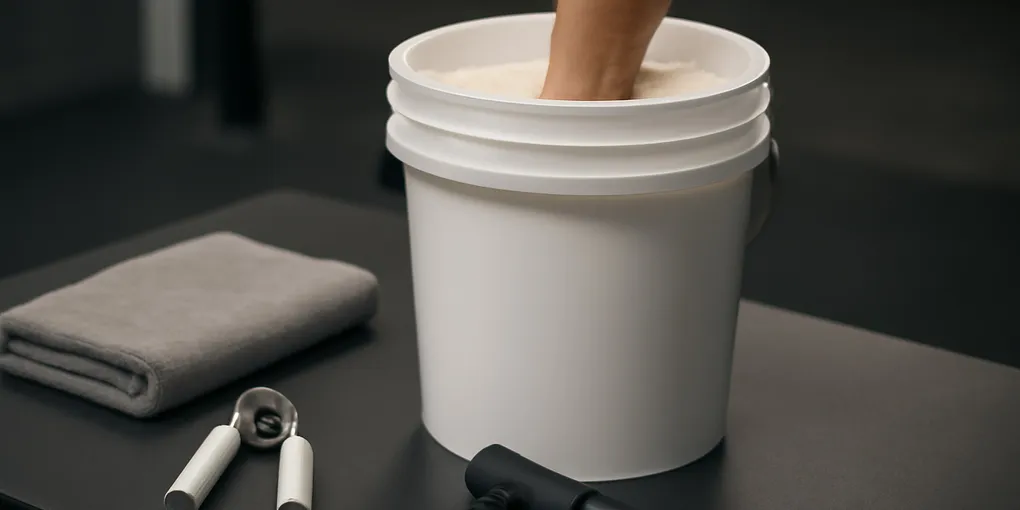
Rice Bucket Forearm Protocol: Grip Endurance Without Turning Wrist Pain Into a Challenge
ProtocolQuick picks
Five-gallon bucket with lid
★ Top pick Best setup base- Best Use: Rice-bucket rotations, finger opens, and wrist circles
- Caveat: Needs enough depth for the hand without scraping knuckles
Bulk dry rice
Best resistance medium- Best Use: Smooth, adjustable resistance around the hand and fingers
- Caveat: Keep dry and covered; replace if dirty or damp
Bottom line
A rice bucket is useful when you want low-cost forearm endurance, finger-opening work, and wrist motion that is easier to scale than grippers. It is not a cure for elbow pain, wrist pain, or weak deadlifts. Start with a clean Search Amazon for bucket with lid and enough Search Amazon for bulk dry rice to cover the hand above the knuckles.
The best protocol is short: four drills, six to eight minutes, two days per week. If your forearms are cooked before climbing, pulling, or lifting, you did too much. For a more conventional pulling accessory, compare this with our lifting straps guide.
Quick picks for rice bucket setup
- Best base: Search Amazon for bucket with lid that is deep enough for the whole hand and easy to seal.
- Best medium: Search Amazon for bulk dry rice, replaced if it becomes dusty, damp, or dirty.
- Optional hygiene add-on: a towel and hand wash nearby so sweat and chalk do not turn the bucket into a mess.
What this protocol is for
Use the rice bucket for wrist motion, finger extension, and forearm endurance. It is especially useful for climbers, lifters, racket-sport athletes, musicians, and people who do a lot of gripping but rarely train the hand-opening side. It is less useful if your only goal is maximum crush grip.
The American Society for Surgery of the Hand lists hand and wrist exercises that include controlled finger, wrist, and forearm motions, which is the same general motion family this protocol uses (ASSH hand and wrist exercises: https://www.assh.org/handcare/condition/hand-and-wrist-exercises). The rice adds light multidirectional resistance around those motions.
Equipment and hygiene
Use a bucket that can be covered. Dry rice should stay dry. If it smells musty, gets wet, or has visible debris, throw it out. Do not share the bucket in a gym without a clear cleaning rule; hands, sweat, chalk, and skin irritation do not mix well with a communal food-based medium.
Fill the bucket deep enough that the hand can move without scraping the bottom. For most adults, that means several inches above the knuckles when the fingers are open. More rice increases resistance and mess potential; less rice makes the drills feel scratchy and shallow.
The six-minute protocol
Set a timer rather than counting perfect reps.
- Finger open and close, 45 seconds each hand. Bury the hand, open the fingers wide, then close into a relaxed fist.
- Wrist circles, 45 seconds each direction per hand. Keep the elbow still and move from the wrist.
- Pronation and supination, 45 seconds each hand. Turn the palm down and up against the rice without cranking the elbow.
- Dig and lift, 45 seconds each hand. Scoop upward gently as if lifting rice, then relax.
Rest as needed. The first session should feel almost too easy. Add a second round only after two weeks of symptom-free sessions.
How hard should it feel?
Aim for a three to five out of ten effort. The forearms should feel warm, not wrecked. Tendons often complain later, so the next morning matters more than the final minute of the session.
If your wrists or elbows ache the next day, cut the time in half. If symptoms persist, stop using the bucket and get assessed. Cleveland Clinic describes tendonitis as tendon inflammation that can cause pain and tenderness around the affected tendon, often related to overuse or repetitive stress (https://my.clevelandclinic.org/health/diseases/10919-tendinitis).
When to use it in a training week
Do rice bucket work after climbing or pulling, not before a session where grip quality matters. You can also use it on a low-intensity recovery day if it does not leave residual soreness. Keep at least one day between sessions at first.
Pair it with progressive pulling work rather than replacing it. Dead hangs, carries, rows, and climbing practice train different qualities. The bucket fills a gap: repeated low-load motion through the wrist and fingers.
Common mistakes
The first mistake is making the rice too deep and treating every motion like a max-effort test. The second is adding daily sessions because the tool feels harmless. The third is using it to push through pain that appeared during climbing, barbell work, or typing.
Another mistake is ignoring the finger extensor side. Many athletes already close the hand all day. Spend time opening the hand against the rice, not just squeezing and digging.
Progression over four weeks
Week one: one round, twice weekly. Week two: same duration, smoother motion. Week three: add 15 seconds to one or two drills. Week four: add a second round only if there is no next-day wrist or elbow irritation.
Do not progress all variables at once. More rice, longer duration, faster motion, and extra sessions are separate stressors. Change one at a time. If grip training also includes hangs, carries, or heavy rows that week, count those sessions as forearm load too rather than pretending the bucket is separate recovery work.
Rice bucket FAQ
Can I use sand instead of rice?
Sand creates more abrasion and can be harder to clean from skin and nails. Rice is smoother and easier for most home users.
Is rice bucket training good for tennis elbow?
It may be part of a broader plan, but elbow pain should not be self-treated by adding random volume. Use clinician guidance if pain is persistent, sharp, or limiting daily tasks.
How much rice do I need?
Enough to cover your hand above the knuckles while it moves freely. The exact amount depends on bucket width and hand size, so buy more than you think and adjust depth.
Frequently Asked Questions
- It can build forearm endurance and finger extensor work, but heavy grip strength still needs progressive loading such as holds, carries, or climbing-specific practice.
- Start with two short sessions per week. Add time only if your wrists and elbows feel normal the next day.
- No. Mild forearm fatigue is fine. Sharp wrist pain, tingling, numbness, or next-day tendon irritation means stop and reduce the plan.