Sauna Heat Therapy for Recovery: Benefits, Risks, and a Beginner Protocol
Evidence ExplainerSauna heat therapy can support recovery routines when it is used conservatively and paired with hydration, sleep, and sensible training. The strongest evidence is not detox hype. It is cardiovascular association data, heat-adaptation physiology, and small athlete studies. This guide gives a beginner protocol, safety guardrails, and product categories worth considering.
Affiliate disclosure: This article contains Amazon affiliate search links. If you buy through those links, Body Science Review may earn a commission at no extra cost to you. We use search links because specific product listings change often.
What the Evidence Actually Says
Sauna bathing has been associated with lower cardiovascular and all-cause mortality in Finnish cohort research, but observational data cannot prove that sauna alone causes every benefit (Laukkanen et al., 2015; PMID: 25705824). Other work suggests passive heat therapy can influence vascular function, and heat adaptation can improve exercise tolerance in hot conditions (Brunt et al., 2016; PMID: 26830520; Tyler et al., 2016; PMID: 26701126).
For athletes, the most relevant question is practical: can heat exposure fit around training without creating more stress than recovery? A small runner study found post-exercise sauna bathing improved endurance performance markers, but that does not mean every athlete should immediately add long heat sessions after hard workouts (Scoon et al., 2007; PMID: 16877041).
Beginner Protocol
Start with 10 to 15 minutes, 2 to 3 times per week. Use a moderate temperature, sit lower if the sauna feels intense, and leave early if you feel dizzy, nauseated, unusually weak, or uncomfortable. Cool down gradually and drink fluids afterward.
Do not stack your first sauna session after the hardest workout of the week. Try it after an easy session, on a rest day, or several hours away from training. The goal is to learn your heat tolerance, not prove toughness.
Athlete Protocol After Tolerance Builds
Once 2 to 3 weeks of beginner sessions feel easy, athletes can experiment with 15 to 25 minutes after lower-priority sessions. Keep key interval days clean until you know whether sauna affects sleep, hydration, or next-day readiness.
If you train for hot-weather events, sauna can be one tool in a heat-adaptation plan. It should still be progressed gradually. Heat stress is training stress.
What to Buy and What to Skip
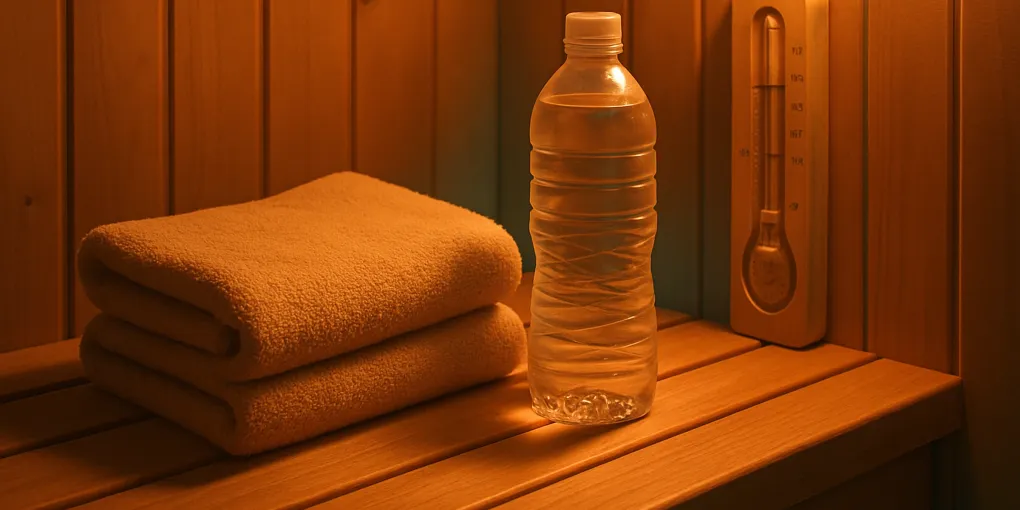
Useful accessories are simple: a reliable sauna thermometer, a timer, a water bottle, and towels that make the routine easier. If you use an at-home infrared or portable sauna, prioritize electrical safety, realistic dimensions, and easy cleaning over dramatic wellness claims.
Search Amazon for sauna thermometer hygrometer, sauna timer, or portable home sauna safety certified. Avoid products that imply guaranteed detoxification, medical treatment, or effortless fat loss.
Safety Guardrails
Skip sauna when you are ill, dehydrated, intoxicated, overheated, or recovering from heat illness. People with cardiovascular disease, fainting history, blood-pressure instability, pregnancy, kidney disease, or medication regimens that affect sweating or blood pressure should ask a clinician before sauna use.
Never treat sauna as a punishment for eating, a weight-cutting shortcut, or a replacement for medical care. Sweating off water is not fat loss.
G6 Composite Scoring Framework
| Criterion | Weight | What earns a high score |
|---|---|---|
| Research | 30% | Claims match heat and cardiovascular evidence without detox hype |
| Evidence Quality | 25% | Clear safety cautions and no disease-treatment promises |
| Value | 20% | Accessories improve consistency and safety |
| User Signals | 15% | Comfort, durability, cleanability, and realistic sizing |
| Transparency | 10% | Clear temperature ratings, materials, and electrical information |
Bottom Line
Sauna can be a useful recovery and heat-adaptation tool, but only when the dose is appropriate. Start short, place sessions away from key training, hydrate, and stop early when symptoms tell you to. The boring protocol is the safer protocol.
Where Sauna Fits in a Recovery Week
A sensible weekly plan treats sauna like a stressor with recovery benefits, not a free bonus. Put it after easy aerobic work, mobility, or low-priority lifting at first. Keep it away from your hardest interval day until you know how sleep and next-day readiness respond.
If you are already under-recovered, sauna can go either way. Some people sleep better after a short evening heat session. Others feel drained, thirsty, or restless. The only way to know is to track dose, timing, and next-day training quality. More heat is not automatically more recovery.
Heat Adaptation Versus Relaxation
There are two different goals. Relaxation sauna is about comfort, routine, and a modest dose that helps you unwind. Heat-adaptation sauna is a more deliberate training stress used to prepare for hot conditions. Confusing the two leads to bad decisions.
For relaxation, keep sessions easy enough that you leave feeling calm. For heat adaptation, progress gradually and respect the total training load. Tyler et al. describe heat adaptation as a physiologic process with performance implications, but it still requires appropriate dosing and context (PMID: 26701126).
Hydration and Electrolytes
Sauna causes sweat loss. For short beginner sessions, water and normal meals may be enough. For longer sessions, heavy sweaters, or athletes training in hot weather, sodium and fluids matter more. A simple body-weight check before and after can show how much fluid you lost, but do not turn this into obsessive scale watching.
Avoid entering sauna already dehydrated. Dark urine, headache, dizziness, or a hard workout in the heat are reasons to delay. Alcohol and sauna are a bad pairing because alcohol impairs judgment and hydration.
Home Sauna Product Considerations
Home sauna shopping can get expensive quickly. Before buying a cabin, infrared unit, or portable tent, decide whether you will use it consistently. A gym sauna or local facility can validate the habit before a major purchase. If you do buy for home, measure the space, ventilation, electrical requirements, cleanability, and warranty.
Portable units should be treated cautiously. Look for clear electrical safety information, stable construction, and materials that can be cleaned. If a product’s marketing centers on detox, miracle weight loss, or disease reversal, that is a red flag even if the hardware is usable.
Common Mistakes
The first mistake is staying in too long to prove toughness. The useful dose is the one you can repeat without harming training or sleep. The second mistake is using sauna for weight loss. Sweating changes water weight, not fat mass. The third mistake is ignoring medications or health conditions that alter heat tolerance.
Another mistake is using sauna immediately before a demanding workout. Heat exposure can reduce readiness if it dehydrates you or raises thermal strain. Beginners should separate sauna from key training until the response is predictable.
A Four-Week Progression
Week 1: two sessions of 10 minutes at a comfortable temperature. Week 2: two or three sessions of 12 to 15 minutes. Week 3: three sessions of 15 minutes if sleep and hydration are fine. Week 4: optionally test one 20-minute session after an easy day.
Stop progression if you feel worse, sleep worse, or struggle to hydrate. Progress is not measured by how long you can endure heat. It is measured by whether the routine supports training and health without adding problems.
Evidence-Aligned Claim Boundaries
The strongest sauna message is conservative: sauna may support cardiovascular wellness routines, relaxation, and heat adaptation when used safely. It should not be framed as medical treatment, detoxification, or a guaranteed recovery accelerator.
That conservative framing still leaves room for a valuable habit. A short sauna session after an easy day can be a practical ritual that encourages downtime, hydration, and better sleep timing. The ritual may matter as much as the heat.
How Body Science Review Would Evaluate Sauna Gear
For accessories, we would prioritize safety and repeatability. A thermometer should be easy to read and reasonably durable. Towels should handle repeated washing. A timer should be simple enough that you do not bring a phone into a hot humid room. Water bottles should be easy to clean and should not encourage staying in longer than planned.
For home saunas, the bar is higher. Electrical requirements, ventilation, materials, cleaning, warranty, and realistic user reviews matter more than influencer claims. A compact sauna that you use safely three times per week is better than an expensive unit that becomes storage.
How to Combine Sauna With Other Recovery Tools
Sauna pairs best with low-friction basics. Use it after easy aerobic work, then eat a normal meal, replace fluids, and keep bedtime consistent. If you also use cold exposure, avoid turning recovery into a competition of extremes. Cold and heat both add stress. The right dose depends on the goal.
For hypertrophy-focused lifters, avoid aggressive cold exposure immediately after lifting if muscle growth is the priority. Sauna is less likely to blunt adaptation in the same way, but dehydration and poor sleep can still hurt progress. The practical rule is simple: if tomorrow’s training gets worse, the recovery tool is too costly.
Final Safety Rule
Leave before you have to leave. That means exiting while you still feel in control, not when dizziness or panic forces the decision. Sauna should feel like a controlled ritual. If it becomes a test of willpower, the risk-reward balance has shifted in the wrong direction.
Bottom-Line Use Cases
Use sauna when you can control the dose, replace fluids, and keep the session from interfering with training quality. It is most useful as a repeatable relaxation habit or as part of a gradual heat-adaptation block. It is least useful when treated as punishment, rapid weight loss, or proof of discipline. Start small, record your response, and progress only when recovery stays stable.
Frequently Asked Questions
Is sauna good after lifting?
It can be fine after easier lifting sessions if you tolerate heat well. Avoid adding long sauna sessions after brutally hard workouts until you know your recovery response.
How many times per week should I use a sauna?
Beginners can start with 2 to 3 sessions per week. More frequent use should be built gradually and adjusted for hydration, sleep, and training load.
Does sauna detox the body?
No strong evidence supports common detox claims. Sauna mainly creates heat stress, sweating, relaxation, and cardiovascular responses.
What should I drink after sauna?
Water is enough for short sessions for many people. Longer or sweat-heavy sessions may require electrolytes and normal meals.
The best recovery signal is how you feel several hours later and the next morning. If sauna leaves you thirsty, lightheaded, or under-recovered, shorten the session before adding frequency.
References
- Laukkanen T et al. JAMA Internal Medicine. 2015. PMID: 25705824.
- Laukkanen T et al. Age and Ageing. 2017. PMID: 27932366.
- Scoon GSM et al. Journal of Science and Medicine in Sport. 2007. PMID: 16877041.
- Brunt VE et al. Journal of Physiology. 2016. PMID: 26830520.
- Tyler CJ et al. Sports Medicine. 2016. PMID: 26701126.
Frequently Asked Questions
- Sauna can support relaxation and heat adaptation for some people, but it is an add-on. It should not replace sleep, hydration, nutrition, or sensible training load.
- Start with 10 to 15 minutes, 2 to 3 times per week, and stop early if you feel dizzy, unwell, or overheated.
- Most athletes should start after easier sessions or away from key workouts until they understand their heat tolerance.
- Sweating loses water and electrolytes. It is not evidence that sauna removes toxins in a clinically meaningful way.