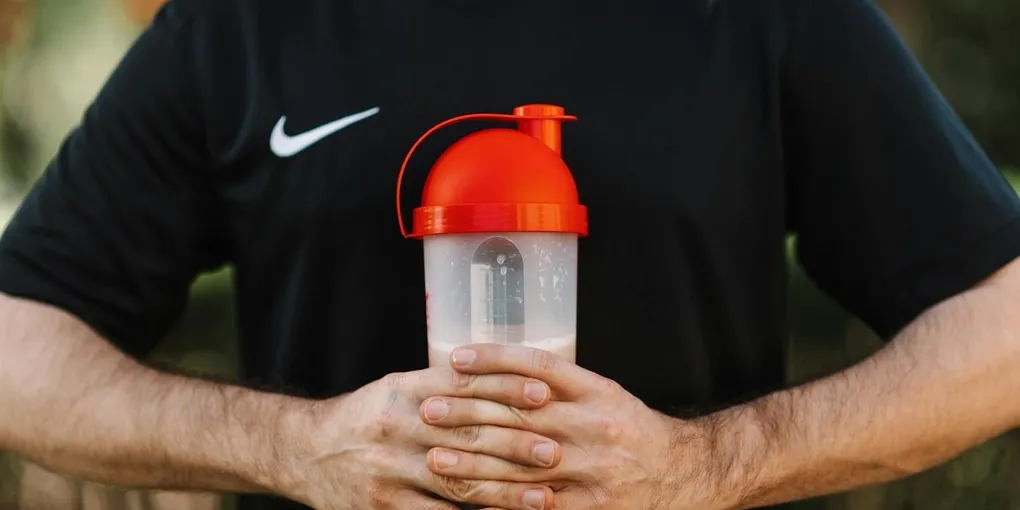
Optimum Nutrition Gold Standard 100% Whey
Best Whey OverallProtein per Serving: 24g
$35–55 / 2 lbs (~29 servings)
Quick Comparison
| Product | Key Specs | Price Range | Buy |
|---|---|---|---|
| Optimum Nutrition Gold Standard 100% Whey Best Whey Overall |
| $35–55 / 2 lbs (~29 servings) | Check Price |
| Optimum Nutrition Gold Standard Casein Best Casein for Night Recovery |
| $35–55 / 4 lbs (~53 servings) | Check Price |
| NOW Sports Pea Protein Best Plant Alternative |
| $25–35 / 2 lbs (~27 servings) | Check Price |
Contains affiliate links — we may earn a small commission at no extra cost to you.
Whey vs Casein Protein: Which Is Better for Muscle and Fat Loss?
Whey and casein are both derived from milk. Together, they make up milk’s protein content — whey accounts for approximately 20% and casein for 80%. Despite their common origin, they have fundamentally different digestion kinetics, amino acid release profiles, and optimal use cases.
The choice between whey and casein is not binary. Understanding when and why to use each — and whether to combine them — is the more practical question.
How Whey and Casein Differ Biochemically
Whey protein is a collection of globular proteins (beta-lactoglobulin, alpha-lactalbumin, immunoglobulins) separated from milk during cheese production. Whey is soluble in acid and passes through the stomach relatively quickly, reaching the small intestine and bloodstream rapidly.
Casein protein is a family of phosphoproteins that clot in the stomach’s acidic environment. This coagulation dramatically slows gastric emptying, creating a slow, sustained release of amino acids over 5–7 hours.
This digestive difference is the foundation of everything else:
| Property | Whey | Casein |
|---|---|---|
| Digestion rate | Fast (2–3 hours) | Slow (5–7 hours) |
| Peak plasma amino acids | 60–90 min post-ingestion | 3–5 hours post-ingestion |
| Acute MPS spike | High | Moderate |
| Anti-catabolic duration | Short | Extended |
| Leucine content | ~10–12% | ~8–9% |
| Satiety duration | Moderate | High |
The Evidence on Whey for Muscle Building
Whey’s rapid leucine delivery makes it superior for triggering acute muscle protein synthesis (MPS). Leucine is the key anabolic amino acid — it activates mTORC1, the primary anabolic signaling pathway.
A landmark study by Tang et al. (2009, Journal of Applied Physiology, doi:10.1152/japplphysiol.91005.2008) found whey hydrolysate produced greater MPS than casein at rest and post-exercise in young men, attributed to faster amino acid delivery and higher leucine content.
Meta-analyses confirm whey protein supplementation combined with resistance training produces significantly greater lean mass gains than carbohydrate placebos (Morton et al., 2018, British Journal of Sports Medicine, doi:10.1136/bjsports-2017-097608). The evidence base for whey is large and consistent.
Best use cases for whey:
- Post-workout: The post-exercise anabolic window responds well to rapid amino acid delivery. 20–40g whey post-training is well-supported.
- Morning: Breaking overnight fast with rapidly available protein helps reverse the mild catabolic state from sleep.
- Convenience: Whey mixes easily, tastes better than most proteins, and is widely available.
The Evidence on Casein for Muscle and Recovery
Casein’s slow digestion profile means it produces lower peak plasma amino acids but maintains elevated levels for much longer. This sustained profile is theoretically anti-catabolic — it reduces muscle protein breakdown during periods without food intake.
A seminal study by Res et al. (2012, Medicine & Science in Sports & Exercise, doi:10.1249/MSS.0b013e31826c6035) found casein protein ingested before sleep increased overnight MPS by 22% compared to placebo in trained men, with better overall protein balance through the night.
A subsequent meta-analysis (Snijders et al., 2019, Frontiers in Nutrition) confirmed that pre-sleep protein — predominantly casein in most studies — improved muscle strength and mass outcomes in young adults performing resistance training.
Best use cases for casein:
- Pre-bed: The most supported use case. 40g casein 30 minutes before sleep has the strongest evidence for improving overnight muscle protein balance.
- Meal replacement: Casein’s slow digestion and high satiety make it practical between meals when no food will be available for several hours.
- Low-frequency eating patterns: If you eat 2–3 meals per day and have long gaps, casein can sustain amino acid availability between meals.
Whey vs Casein for Fat Loss
Total protein intake is the primary lever for fat loss — protein’s satiety effect, thermic effect, and muscle-sparing during caloric deficit are well-established. Both whey and casein contribute to these benefits.
Where casein has a modest edge: satiety duration. The slow digestion and gastric clotting of casein keeps you fuller longer. Studies confirm casein is more satiating per gram than whey in acute feeding conditions (Veldhorst et al., 2009, British Journal of Nutrition, doi:10.1017/S0007114508080392).
For fat loss specifically:
- Casein before bed may reduce late-night caloric intake by improving overnight satiety
- Whey post-workout preserves muscle during caloric deficit through MPS stimulation
- Total protein target (1.6–2.4g/kg/day during deficit) matters more than protein type
A Note on Plant Protein
For those who are lactose intolerant, vegan, or prefer dairy-free options, modern plant proteins — particularly pea protein and rice/pea blends — are viable alternatives. A 2019 study (Banaszek et al., Sports) found pea protein produced similar lean mass gains to whey protein over 12 weeks in trained men. The amino acid profile of pea protein is complete, with adequate leucine for MPS stimulation.
The practical limitation of plant proteins: slightly lower leucine content per gram and digestibility differences (digestibility-corrected amino acid scores vary). Higher doses (30–40g) may be needed to match the MPS stimulus of 25g whey.
Optimal Protocol: Using Both
Many evidence-informed athletes use both proteins strategically:
- Post-workout: 25–35g whey for rapid MPS stimulus
- Pre-bed: 30–40g casein for overnight anti-catabolism
- Between meals (optional): Casein or a whey/casein blend for sustained amino acid levels
This approach leverages the distinct digestion profiles of each protein for different physiological windows.
For a complete protein supplement guide, see our best whey protein powder review and best casein protein powder guide.
How We Score: G6 Composite Methodology
Our composite scores use the G6 weighted framework (30/25/20/15/10):
- Research Quality (30%): Volume and quality of human RCTs supporting efficacy claims.
- Evidence Quality (25%): Mechanistic characterization, pharmacokinetic data, dose-response clarity.
- Value (20%): Cost per gram of protein relative to product quality and purity.
- User Signals (15%): Aggregated verified purchaser outcomes, taste, mixability, tolerance.
- Transparency (10%): Label accuracy, third-party testing availability, contamination risk.
Whey protein scores 8.8/10 — the most studied functional protein with the highest quality evidence for post-workout MPS. Casein scores 8.4/10 — strong evidence for overnight recovery and satiety, with a slightly narrower optimal use case. Plant protein (pea) scores 7.6/10 — emerging evidence base, viable alternative for non-dairy users.
Frequently Asked Questions
Is whey or casein better for muscle building?
Both contribute to muscle building through different mechanisms. Whey produces a larger acute MPS spike, making it optimal post-workout. Casein reduces overnight muscle breakdown, making it optimal before sleep. The largest driver of muscle building is total daily protein intake — choose the protein that fits your meal timing and adherence pattern.
When should I take casein protein?
The strongest evidence supports casein before sleep (30–40g, 30 minutes before bed). Casein is also practical between meals to sustain amino acid levels when you won’t eat for several hours.
Can I use whey protein before bed instead of casein?
You can, but the evidence favors casein for overnight recovery. Whey’s rapid digestion means amino acid levels peak and drop within 2–3 hours. Casein sustains elevated levels for 5–7 hours — more aligned with an overnight fast of 7–9 hours.
How much protein do I need per day?
For muscle building and body composition optimization, 1.6–2.2g/kg of body weight per day is the evidence-supported range (Morton et al., 2018, British Journal of Sports Medicine). Higher intakes (up to 3.1g/kg) may be beneficial during aggressive caloric restriction to preserve muscle.
Is dairy protein superior to plant protein?
Dairy proteins (whey and casein) have a higher leucine content and a faster track record in RCTs. However, high-quality plant proteins like pea and rice produce comparable muscle gains at adequate doses. The gap has narrowed with modern plant protein formulations. Choose based on your dietary preferences and tolerances — either category can support your goals.
Related Articles
- Whey Protein Isolate vs Concentrate: Which Is Actually Better?
- Collagen vs Whey Protein
- Best Protein Powder for Weight Loss: Women’s Top Picks
- Best Protein Powder for Men
Frequently Asked Questions
- Both contribute to muscle protein synthesis (MPS), but through different temporal patterns. Whey produces a larger acute MPS spike post-workout due to its rapid amino acid delivery. Casein provides a sustained amino acid release over 5–7 hours, which may reduce overnight muscle protein breakdown. For overall muscle hypertrophy, total daily protein intake (1.6–2.2g/kg/day) is more important than the specific protein type. Using whey post-workout and casein before bed is a common evidence-informed strategy.
- Casein's slow digestion increases satiety relative to whey, which can support adherence to a caloric deficit. A 2011 study (Res et al., Medicine & Science in Sports & Exercise) found casein before bed increased next-morning resting metabolic rate slightly in trained men. However, the effect size is modest — the primary lever for fat loss remains overall caloric deficit.
- Yes. Some research (Kerksick et al., 2006, Journal of Strength and Conditioning Research) has explored protein blends combining fast and slow sources. Practically, mixing whey and casein creates an intermediate digestion profile. This can be useful post-workout when you won't eat a meal for several hours.
- In healthy individuals, high protein intake including whey protein does not adversely affect kidney function. Concerns about protein and kidney health apply to individuals with pre-existing kidney disease (CKD). For healthy adults, intakes up to 2.2g/kg/day are well-tolerated and safe per the current evidence base.
- Whey is a complete protein with all essential amino acids and high leucine content (critical for MPS). Casein is also complete. Quality plant proteins like pea and rice protein are also complete amino acid sources when combined. A 2019 meta-analysis found pea protein produced similar muscle gains to whey in young trained men over 12 weeks (Banaszek et al., Sports, doi:10.3390/sports7010012). Plant proteins are a viable alternative, particularly for those who are lactose intolerant or prefer dairy-free options.