At-Home Vitamin D Tests Explained: When a Blood Spot Kit Is Worth Buying
Evidence ExplainerQuick picks
| Product | Key Specs |
|---|---|
| See price on Amazon |
|
| See price on Amazon |
|
Product availability, certifications, and retailer details can change; check the current Amazon page before buying.
Bottom line
An at-home vitamin D test can be reasonable when you need a convenient 25-hydroxyvitamin D check and already have a clear reason for testing. It is less useful as a curiosity purchase, a way to self-prescribe high doses, or a substitute for care when symptoms, kidney disease, malabsorption, osteoporosis, pregnancy, or multiple medications are involved.
The result is not a performance score. Vitamin D status depends on sun exposure, skin coverage, latitude, season, diet, supplements, body size, gut absorption, liver and kidney function, and assay variation. Buy a test only if the result will change a concrete next step: discuss dosing, confirm repletion, avoid unnecessary high-dose use, or decide whether a clinician-run lab is needed.
Where to start if you are buying
- See current at-home vitamin D blood spot test kit prices if lab access is inconvenient and you are comfortable collecting a fingerstick sample.
- See current USP-style vitamin D3 supplement prices if your clinician has already recommended routine supplementation and you want a straightforward product category.
Practical score
| Factor | Weight | Score | Rationale |
|---|---|---|---|
| Research | 30% | 7.2 | 25(OH)D is the accepted status marker, and deficiency treatment is well established in appropriate patients. |
| Evidence Quality | 25% | 6.6 | Testing method, lab calibration, and the clinical question affect usefulness. |
| Value | 20% | 6.2 | Convenience is valuable, but many users do not need repeated testing. |
| User Signals | 15% | 6.8 | Fingerstick collection is easy for some and frustrating for others. |
| Transparency | 10% | 6.4 | Better kits identify the lab, specimen type, turnaround, and privacy policy. |
| Composite | 100% | 6.7 | Worth buying for a specific follow-up question, not for vague wellness tracking. |
What the test measures
Most vitamin D testing reports serum or blood 25-hydroxyvitamin D, often written as 25(OH)D. That is the main circulating form used to assess vitamin D status. It is different from 1,25-dihydroxyvitamin D, which is tightly regulated and usually not the right marker for routine deficiency questions.
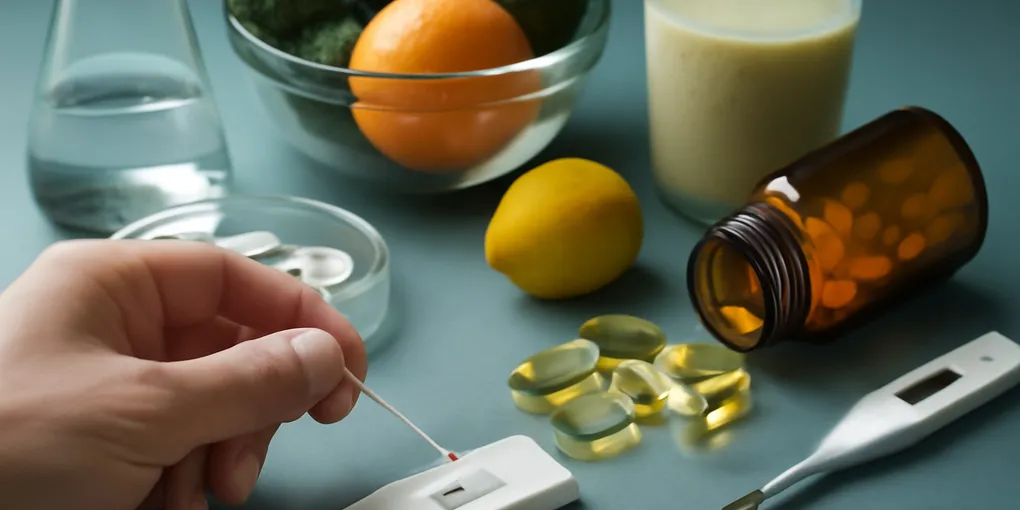
At-home kits usually use a dried blood spot collected from a fingerstick and mailed to a laboratory. That can be convenient, but it adds collection and shipping variables. A poor sample, delayed mailing, or unclear lab methods can make the result less useful. Look for a kit that explains the laboratory, sample requirements, result units, and what support is available if the sample fails.
When a home kit makes sense
A home kit is most defensible for follow-up after a known low result, checking whether a modest supplement dose is achieving the expected range, or testing during a season when lab access is inconvenient. It can also help people with limited appointment availability who still plan to share results with a clinician.
It makes less sense if you are testing because an influencer implied that more is always better. High vitamin D intake can cause harm, especially when combined with calcium or when kidney function is impaired. If you are considering high-dose supplements, testing should be tied to clinical advice, not guesswork.
Blood spot kit buying criteria: lab, units, shipping, and privacy
Choose an at-home vitamin D blood spot kit that reports 25(OH)D clearly in ng/mL or nmol/L, identifies the processing laboratory or lab network, and gives plain instructions for lancet use, card saturation, drying time, and kit registration. Check whether the listed $45-90 price includes return shipping, lab analysis, failed-sample replacement terms, and a downloadable report you can send to a clinician.
Avoid vitamin D kits that make broad claims about energy, immunity, hormones, or athletic performance without explaining what the 25(OH)D result can and cannot show. A useful kit is boring in the right way: specimen type, CLIA-style lab details where available, result units, reference range, support contact, privacy policy, and a clear warning that high-dose vitamin D should not be adjusted from a single mail-in result alone.
Interpreting 25(OH)D results after a mail-in kit
A low 25(OH)D result is a reason to discuss actual vitamin D3 dose, missed capsules, sun exposure, fortified foods, body size, malabsorption risk, and medications such as anticonvulsants or glucocorticoids. A borderline result may not require an aggressive plan. A high result is not a trophy; it may mean supplement dosing should be reduced, especially if calcium intake is high or kidney function is a concern. The right target can vary by medical context, and organizations differ on exact cutoffs.
Retesting too soon can create noise because serum 25(OH)D changes over weeks, not overnight. If you change supplementation, many clinicians wait roughly 8-12 weeks before checking again, but your situation may differ. Keep the supplement bottle, serving size, IU per softgel/drop, and dose schedule so a clinician can interpret the result against what you actually took.
Collection mistakes that ruin the purchase
Read the kit instructions before washing your hands, using the lancet, or touching the collection card. Blood spot kits often need enough sample volume in the marked area, dry time before mailing, and a registered kit ID. Smearing a tiny sample across the card can create a failed test and a support ticket instead of a result.
Check the mailing window too. A kit that sits in a hot car or on a counter for a week is not the same as a promptly mailed sample. If you are squeamish with fingersticks or have poor circulation in your hands, a local lab draw may be less frustrating than repeating a home kit.
FAQ
Is an at-home vitamin D test as good as a clinic lab?
It can be useful when the sample is collected correctly and processed by a reputable lab, but clinician-ordered testing is better when symptoms, medical conditions, pregnancy, kidney disease, malabsorption, or high-dose supplementation are involved.
Should athletes test vitamin D for performance?
Testing may be reasonable for athletes at risk of deficiency, especially indoor athletes or those with limited sun exposure. A normal result does not guarantee better performance, and supplementation above need is not a shortcut to fitness.
Can I just take vitamin D without testing?
Many adults use modest vitamin D doses without testing, but high-dose use should not be casual. Testing is most useful when it changes dosing or confirms a clinical plan.
Sources
- NIH Office of Dietary Supplements vitamin D fact sheet: https://ods.od.nih.gov/factsheets/VitaminD-HealthProfessional/
- Endocrine Society clinical practice guideline on vitamin D deficiency: https://pubmed.ncbi.nlm.nih.gov/21646368/
- Institute of Medicine dietary reference intakes for calcium and vitamin D summary: https://pubmed.ncbi.nlm.nih.gov/21796828/
- Related reading: Omega-3 index testing explained and Withings Body Scan review.