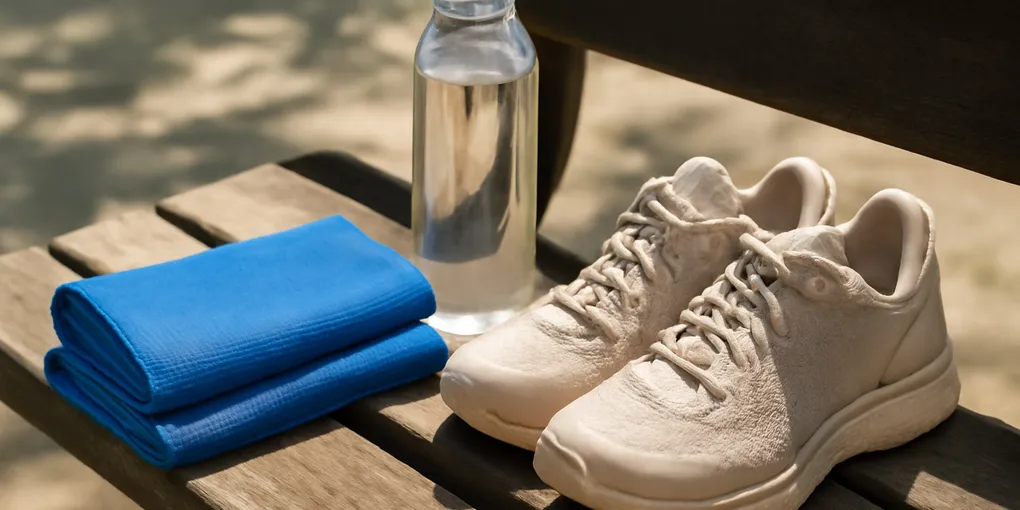
Best Cooling Towels for Hot Workouts: Evaporative Picks That Do Not Pretend to Beat Heat Illness
Buyer's GuideMISSION Original Cooling Towel
$10-20
Quick picks
| Product | Key Specs |
|---|---|
| See price on Amazon | — |
| See price on Amazon | — |
| See price on Amazon | — |
| See price on Amazon | — |
Product availability, certifications, and retailer details can change; check the current Amazon page before buying.
A cooling towel is useful when it helps you keep a hot workout boring: wet it, wring it, snap it, drape it, and get back to sensible pacing. It is not a substitute for heat acclimation, shade, fluids, or the decision to cut a session short. The right towel is a small comfort tool, not a permission slip to train through dangerous heat.
Compare cooling towels by four practical factors before you buy: size around the neck, fabric feel when wet, water capacity versus bounce, and whether the listed dimensions are clear enough to trust. A light microfiber towel is easier during running; a thicker PVA-style pad makes more sense for walking, sidelines, and outdoor chores.
For most runners and gym bags, search Amazon for the MISSION Original Cooling Towel. For slower outdoor work, sidelines, or a car kit, search Amazon for the Frogg Toggs Chilly Pad because the thicker material holds more water.
Quick picks
- Best all-around workout towel: MISSION Original Cooling Towel, because it is light, easy to re-wet, and less annoying during movement.
- Best wet pad for longer heat exposure: Frogg Toggs Chilly Pad, because it holds more water for walks, yard work, and sidelines.
- Best budget workwear pick: Ergodyne Chill-Its 6602, especially for garages, outdoor chores, and walking breaks.
- Best multipack: Sukeen Cooling Towel Multipack for families, teams, or a glove-box backup.
How cooling towels actually help
Cooling towels use evaporation. Water leaves the fabric, heat leaves your skin, and the towel feels cooler while it stays damp and exposed to moving air. That means a thin towel can feel great during a breezy walk and underwhelming during a still, humid run.
The CDC heat-safety guidance emphasizes symptoms, rest, shade, and emergency response rather than gadgets (https://www.cdc.gov/niosh/heat-stress/about/index.html). That matters here. A towel can reduce perceived discomfort around the neck or face, but it cannot prove your core temperature is safe.
If you are training in summer, pair any towel with the pacing ideas in our heat acclimation protocol and the room-temperature checks in our infrared thermometer heat-training protocol. The towel is the comfort layer, not the control system.
Practical score
| Factor | Weight | Score | Rationale |
|---|---|---|---|
| Research | 30% | 6.0 | Evaporative cooling is plausible and widely used, but towel-specific workout trials are limited. |
| Evidence Quality | 25% | 5.5 | Heat-illness guidance supports cooling and rest; product claims vary by fabric and weather. |
| Value | 20% | 8.0 | Most towels are inexpensive and reusable. |
| User Signals | 15% | 7.0 | Comfort depends heavily on size, softness, and whether the towel stays damp without dripping. |
| Transparency | 10% | 7.0 | Listings usually disclose size and material, but sellers sometimes change multipack dimensions. |
| Composite | 100% | 6.5 | Worth buying as a low-cost comfort tool if you respect its safety limits. |
Pick the towel by workout, not by the coldest claim
Runners should usually choose a lighter towel. A thick pad that feels great on a bench can bounce, drip, and feel heavy around the neck during strides. The MISSION towel style is easier to tuck through a belt, loop around the neck during a walk break, or re-wet at a fountain.
Walkers, coaches, parents, and yard-work users can tolerate more bulk. The Frogg Toggs Chilly Pad and similar thicker towels hold more water, which helps when you will be outside for a while and can keep the towel exposed to air.
A workwear towel like the Ergodyne Chill-Its 6602 makes sense for a garage gym, warehouse lunch walk, or hot car kit. It is less about plush feel and more about being cheap, repeatable, and easy to rinse.
Multipacks are practical when the towel will be shared, lost, or left in a backpack. Buy them for availability, not performance. Check the listed dimensions before ordering because some multipacks are smaller than a single fitness towel.
Fit and use checklist
Choose a towel long enough to reach both sides of the neck without tying tightly. A towel that must be knotted to stay put can feel irritating when you are breathing hard. For running, lighter and narrower is usually better. For walking or sidelines, bigger can be fine.
Look at the listed size before you buy. Around 10 by 33 inches is easy to carry but covers less surface area. Around 13 by 33 inches is a better neck towel. Larger pad-style towels can cover shoulders or thighs during breaks but are less comfortable during faster running. If a listing hides dimensions or only shows folded photos, pick a different seller.
Material feel matters more than icy marketing. Smooth microfiber usually feels better against the neck during running. PVA-style cooling pads can hold more water but may dry stiff and feel rubbery until fully soaked. Neither is automatically superior. The right choice depends on whether you value softness, water capacity, or packability.
Wet the towel fully, wring it until it is damp rather than dripping, then expose it to air. If you bury it under a shirt or pack strap, evaporation drops. Re-wet it when it warms. If the towel smells after a few sessions, wash it and dry it fully before storage.
Do not share a damp towel during workouts. Skin irritation, sunscreen, sweat, and bacteria are not worth the convenience. If you buy a multipack, assign colors or bags.
How each pick fits a real workout
The MISSION towel is the best first buy for a runner who wants something small enough to forget about until a water stop. It is the one to choose for 30- to 60-minute summer runs, warm garage strength sessions, and gym bags where space matters. Pair it with a bottle you already carry and re-wet it during walk breaks.
The Frogg Toggs Chilly Pad is better for slower sessions where bulk is not annoying. Think youth sports sidelines, hiking breaks, outdoor stretching, hot dog walks, or a post-run cooldown on a porch. It is not the first pick for tempo work because a wetter, heavier pad can bounce and distract.
The Ergodyne Chill-Its 6602 is the most practical workwear choice. Buy it for a garage gym, mowing, outdoor chores, or a warehouse lunch walk. It does not need to feel luxurious to be useful. It needs to be cheap enough that you keep one where heat actually catches you.
The Sukeen multipack is about logistics. Families, teams, and shared cars need more than one towel. A multipack also lets you keep one in a run bag, one in the car, and one drying at home. The tradeoff is that multipack listings can change size or pouch quality, so verify the current dimensions before ordering.
What not to pay extra for
Do not pay a premium for vague claims that a towel stays cold for hours during hard exercise. Evaporative cooling depends on water, airflow, humidity, and re-wetting. Any towel warms when it dries or sits under clothing.
Do not overpay for a towel bundled with a tiny bottle, a flashy pouch, or vague mineral language. A zip pouch is nice for transport, but storing a damp towel sealed for hours can make it smell. A basic mesh pocket or open drying loop is often better.
Do not buy a black or dark towel for direct sun if lighter colors are available. Color is not the whole story, but a light towel is easier to see in a bag and may feel less heat-loaded when left on a bench.
Pre-run packing checklist
Pack the towel already dry, not sealed damp from yesterday. Add a wide-mouth bottle or know where the next water source is, because a dry towel becomes ordinary cloth fast. If you are driving to a trailhead, wet the towel at the start and keep a second dry towel for the ride home so the seat does not stay damp.
For races or group workouts, test the towel before event day. Make sure it does not chafe your neck, leak dye onto a light shirt, or shed fibers when wet. If you use sunscreen, rinse the towel after the session because sunscreen residue can make the fabric feel slick and stale.
When to skip the towel and change the session
Skip the workout or move indoors when heat index, smoke, illness, poor sleep, or medications make the session risky. The National Weather Service heat-index chart is a better decision tool than a product listing (https://www.weather.gov/safety/heat-index). If you feel chills, confusion, unusual weakness, dizziness, or stop sweating despite heat, stop and seek help.
A cooling towel also does not replace electrolytes when you are sweating heavily. For long hot sessions, use our electrolyte powder guide for hot workouts to decide whether sodium matters for that session.
Cooling Towel FAQ
Should I freeze a cooling towel before a workout?
You can chill it before a short session, but freezing can make the towel stiff and annoying. For most workouts, cold tap water and re-wetting are easier.
Can I wear a cooling towel under a hat?
A small towel or bandana can help under a hat during walking or breaks. During hard running, trapped fabric can reduce airflow and feel hotter once it warms.
What should I avoid when buying one?
Avoid vague listings that do not show dimensions, towels that require special storage when damp, and claims that imply heat illness protection. Buy for size, feel, washability, and ease of re-wetting.
Frequently Asked Questions
- No. They can make skin feel cooler, but pacing, shade, hydration, weather awareness, and stopping for symptoms matter more.
- A light towel such as the MISSION Original is usually easier to carry and re-wet than a thick pad.
- They work less well when evaporation is poor. In humid still air, use them as comfort tools, not safety guarantees.