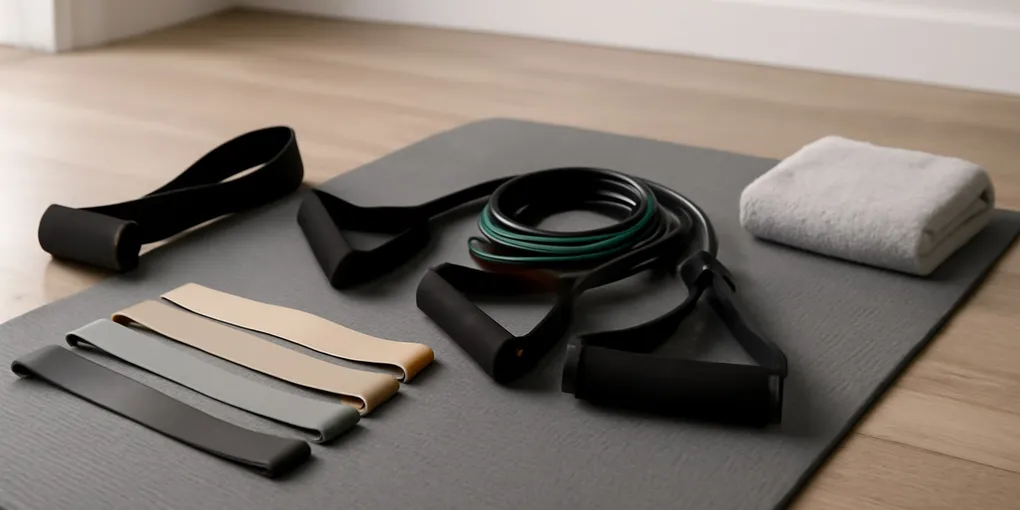
Best Resistance Bands for Shoulder Mobility: Loop, Tube, and Anchor Setups
Buyer's GuideTheraBand CLX Resistance Band
Best shoulder warmup bandBest Use: External rotations, pull-aparts, and low-tension activation with hand-loop options
Check current price
Quick picks
| Product | Key Specs |
|---|---|
| See price on Amazon |
|
| See price on Amazon |
|
| See price on Amazon |
|
Product availability, certifications, and retailer details can change; check the current Amazon page before buying.
Bottom line
For shoulder mobility, the useful shortlist is TheraBand CLX for light warmups, Bodylastics tubes for anchored face pulls and rows, and a light Rogue Monster Band when long-band overhead mobility is the goal. Treat the quick picks as model-specific shortlists, then confirm current dimensions, materials, return terms, and seller details before ordering. If you need broader home-strength bands instead of shoulder warmup tools, compare the options in our resistance bands for strength training guide.
Quick picks
- Best shoulder warmup band: Search Amazon for TheraBand CLX Resistance Band — external rotations, pull-aparts, and low-tension activation with hand-loop options. Choose very light tension; heavy bands can drive compensation.
- Best home cable substitute: Search Amazon for Bodylastics Stackable Tube Resistance Bands — face pulls, rows, pulldowns, and controlled shoulder accessory work with a door anchor. Door safety and clip inspection matter more than color coding.
- Best long flat mobility band: Search Amazon for Rogue Monster Band Light Resistance — lat-biased stretching and assisted overhead range work when tension is light. Heavy pull-up bands can yank the shoulder instead of guiding it.
For shoulder mobility, keep resistance light and attachment points conservative. TheraBand CLX is the simple rehab-style loop choice, Bodylastics is useful when you need handles and door anchoring, and a light Rogue Monster Band belongs in rack-assisted mobility work rather than delicate end-range stretching.
How we evaluated these picks
We compared tension range, drill fit, anchor safety, material risk, and whether the band lets the shoulder move without shrugging, rib flare, wrist bending, or forced end range. The pick changes by exercise: light loop therapy bands are best for cuff warmups, tube bands with a door anchor are better for rows and face pulls, and long flat bands fit overhead mobility only when the tension is light enough to guide rather than yank. Source: AAOS shoulder conditioning guidance.
The supporting sources point to low-load shoulder conditioning, scapular-control work, and measurable differences in elastic-band force, not to one universal band color or brand. Avoid heavy pull-up bands for mobility drills if they pull the arm into pinching, numbness, or passive hanging, and avoid any tube or anchor setup with cracks, thinning, loose clips, or a door that cannot close securely.
Choose by exercise, not by color
Band colors are not standardized. A red band from one brand can feel like a green band from another. The better buying question is: what shoulder drill do you need to perform without compensation?
For external rotations, scapular retraction, and shoulder warmups, choose very light tension. You should be able to keep the ribs down, neck relaxed, and wrist neutral. If the band makes you shrug, twist, or arch your back, it is too heavy for mobility work even if it looks harmless.
For rows, pulldowns, and face pulls, tube bands with handles feel cleaner because you can anchor them at chest height or overhead. For lat stretching, a long flat band gives more length and a broad contact surface.
Light loop therapy bands
Light loop bands are the first purchase for most lifters and desk workers. They are small, cheap, and easy to keep in a gym bag. Use them for band pull-aparts, wall slides with light outward pressure, no-money external rotations, and controlled shoulder warmups before pressing.
The common mistake is buying a mini-band pack meant for glute work and assuming the strongest loop is best. Shoulder warmup drills need control, not maximal burn. A band that forces the elbow away from your side during external rotation is not training the intended motion.
Look for a set with at least three low-to-moderate tension levels. Fabric loops can be comfortable for hips but bulky for small shoulder movements. Thin latex or latex-free therapy loops usually work better for precise upper-body drills.
Tube bands with handles and anchors
Tube bands are useful when you want cable-machine movements at home. Handles make rows and face pulls more comfortable, and a door anchor gives you high, low, and midline angles. This is the best category for people who want a shoulder-friendly pulling routine in an apartment or travel bag.
Anchor safety is the product. The door should close toward you on the hinge side when possible, the anchor should be fully seated, and the band should never point at your face if it snaps. Inspect the tube near the handle, clip, and anchor before each session. Small cracks, cloudy spots, or thinning are replacement signs. Source: AAOS shoulder conditioning guidance.
Do not chase maximum resistance for shoulder work. Smooth sets of 12 to 20 reps beat ugly heavy pulls that turn into low-back extension and neck tension.
Long flat bands for overhead work
Long flat bands can help with lat-biased stretches, assisted shoulder flexion, and gentle overhead patterning. They are also easy to loop around a rack, pull-up bar, or sturdy anchor. The right band should guide the arm, not drag it.
Heavy pull-up assistance bands are often too aggressive for shoulder mobility. They can pull the humeral head forward or make you hang passively into end range. Choose a light or medium band and keep the stretch mild. If overhead positions produce numbness, pinching, or sharp pain, stop and get assessed.
Fit, material, and safety checks
Before buying, check length, tension range, material, and anchor hardware. Latex bands are common and stretchy, but latex-free options matter for allergy-sensitive users. Handles should rotate naturally and not force a bent wrist. Carabiners should close fully. Door anchors should be padded enough to protect the door and wide enough not to slip through the gap.
Before each workout, scan the band under light tension. Replace bands with cracks, tears, sticky spots, or visible thinning. Wear eye protection if you use high tension near the face, and avoid anchoring bands to sharp metal edges.
Match the band to common shoulder drills
For side-lying or standing external rotation, start with the lightest loop in the pack. The elbow should stay close to the body, the forearm should rotate without wrist bending, and the shoulder should not hike toward the ear. If you cannot pause for one second at the end of each rep, the band is probably too heavy.
For band pull-aparts, pick a band that lets you finish with the shoulder blades moving back and down rather than the ribs flaring. A long flat band can work, but many people do better with a light loop or therapy strip because it allows smaller tension changes.
For face pulls, tube bands with handles are usually cleaner. Anchor at forehead height, step back until there is light tension, and pull toward the bridge of the nose or upper chest while keeping the neck quiet. If the band snaps back quickly or the anchor creaks, lower the tension and inspect the setup.
For assisted overhead flexion or lat stretching, use a long flat band and keep the shoulder sensation mild. The band should help you find range, not force you into end range while the ribs flare and the low back arches.
Door anchor checklist
A door anchor is only useful if the setup is predictable. Close the door fully, tug the band lightly before starting, and stand so a failure would not send hardware toward your face. The hinge side is usually safer than the latch side because the door closes against the pull. Avoid hollow, damaged, or loose doors.
If you rent, check whether the anchor leaves dents or rub marks. A padded anchor and smooth band path protect both the door and the band. Never loop tubing around a sharp hinge, rough railing, or thin chair leg that can tip.
How many bands should a beginner buy?
A useful shoulder set has light, medium-light, and medium resistance. You do not need a maximal band for mobility. If the set includes heavy pull-up assistance bands, treat them as lower-body or assisted-pull-up tools rather than default shoulder warmup tools.
For tube sets, more clips and handles are less important than smooth resistance and safe anchors. A five-band stack can be useful for rows, but stacking bands for shoulder rehab-style drills often overshoots the load. Buy enough range to progress slowly, not enough tension to mimic a cable stack.
Shoulder pain boundaries
Bands are helpful for warmups and low-load strengthening, but they are not a universal shoulder treatment. New weakness, traumatic injury, night pain, numbness, instability, major loss of range, or pain that worsens despite easier loads deserves clinical evaluation. If a physical therapist gave you a specific band prescription, follow that plan rather than copying a generic video.
For ordinary pre-lift stiffness, keep the routine short: one or two low-tension movements for 1 to 2 sets, then move into your actual warmup. If band work grows into a 30-minute ritual before every session, it may be compensating for programming, technique, or recovery issues. Source: AAOS shoulder conditioning guidance.
A good band purchase should make the first five minutes of training easier to repeat: light enough to control, long enough for your chosen drill, and safe enough that you are not worried about the anchor. If the band only feels useful when you pull hard, it is probably the wrong tool for shoulder mobility.
FAQ
What band tension is best for rotator-cuff work?
Use light tension that lets you keep the elbow position, shoulder blade, ribs, and wrist still. If the movement turns into a shrug or torso twist, the band is too heavy.
Are fabric bands good for shoulder mobility?
They can work for some pull-aparts, but many fabric loops are too thick and short for precise rotator-cuff drills. Thin therapy loops usually fit shoulder work better.
Is a door anchor safe?
It can be safe if the door is sturdy, closed securely, and the anchor is placed so the door closes against the direction of pull. Inspect the band and avoid pulling a damaged tube toward your face.
Can bands fix shoulder impingement?
Bands can support clinician-guided rehab, but they do not diagnose or fix every painful shoulder. Sharp pain, weakness, numbness, trauma, or night pain needs individualized care.
Sources
- AAOS OrthoInfo. Rotator Cuff and Shoulder Conditioning Program.
- Cools AM, et al. Rehabilitation of scapular dyskinesis: from the office worker to the elite overhead athlete.
- Page P, Labbe A, Topp R. Clinical force production of Thera-Band elastic resistance bands.