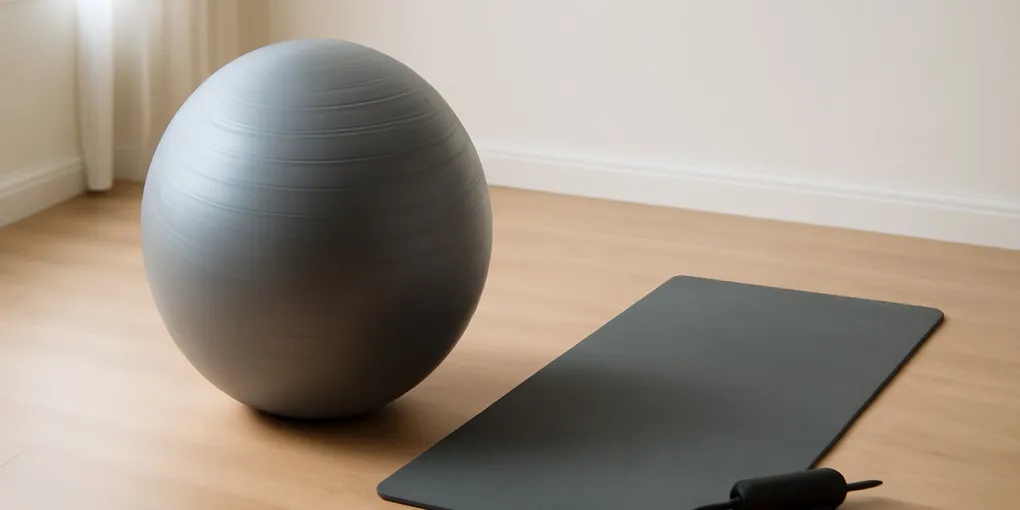
Best Stability Balls for Core Training: Sizes That Do Not Turn Balance Work Into Guesswork
Buyer's GuideTrideer Extra Thick Yoga Ball
$20-35
Quick picks
| Product | Key Specs |
|---|---|
| See price on Amazon | — |
| See price on Amazon | — |
| See price on Amazon | — |
| See price on Amazon | — |
Product availability, certifications, and retailer details can change; check the current Amazon page before buying.
A stability ball is useful when it gives you a scalable unstable surface, not when it becomes a wobbly chair or a circus trick. Compare diameter, anti-burst or slow-deflation claims, listed weight rating, surface grip, pump quality, valve fit, and return policy before you compare colors. For core training, the right ball is the one you can size, inflate, and use without losing positions. That means construction, a clear diameter, and enough floor space matter more than bright colors.
For most home users, search Amazon for the Trideer Extra Thick Yoga Ball. If you want a clinic-familiar option and do not mind paying more, search Amazon for the TheraBand Pro Series SCP Exercise Ball.
Quick picks
- Best all-around: Trideer Extra Thick Yoga Ball, because size options and availability are strong.
- Best budget pick: URBNFit Exercise Ball, if the current listing shows the exact size and weight rating you need.
- Best clinic-style pick: TheraBand Pro Series SCP Exercise Ball, for buyers who value a rehab-familiar brand.
- Best beginner kit: Gaiam Total Body Balance Ball Kit, if you want a simple entry point and will still follow your own progression.
Match the ball to the drill
Size charts are only a starting point. A ball used for seated pelvic tilts can be larger than one used for hamstring curls or prone rollouts. When seated, your hips should be roughly level with or slightly above your knees. For rollouts, a slightly smaller ball can be easier to control.
Inflation changes everything. A soft ball is more stable but can collapse under load. A very firm ball rolls quickly and makes drills harder. Inflate gradually, measure the diameter, and retest after a day because many balls stretch slightly after first inflation.
A stability-ball crunch study found different abdominal muscle activity than a traditional floor crunch, which supports the practical point without making the ball magical: instability changes the task, so the difficulty has to match your control (https://pubmed.ncbi.nlm.nih.gov/17530978/). That is the buying rule: the ball should let you own the rep.
Practical score
| Factor | Weight | Score | Rationale |
|---|---|---|---|
| Research | 30% | 6.5 | Unstable-surface training can challenge trunk control, but it is exercise-specific. |
| Evidence Quality | 25% | 6.0 | Evidence supports careful progression more than any single ball brand. |
| Value | 20% | 8.0 | A good ball is inexpensive and covers core, mobility, and light strength drills. |
| User Signals | 15% | 7.0 | Durability, pump quality, odor, and slow leaks dominate complaints. |
| Transparency | 10% | 7.0 | Better listings show diameter, burst rating, material, and included pump. |
| Composite | 100% | 6.8 | A good low-cost tool if you size it correctly and do not treat wobble as automatic progress. |
Which product fits which user?
Trideer is the simple default for a home gym. It is widely available in common sizes, costs little compared with most strength tools, and works for rollouts, dead bugs, wall squats, hamstring curls, and stretching. The main job is choosing the right diameter.
URBNFit makes sense if you want a budget ball and are willing to inspect the current listing. Check that the chosen color is available in the diameter you need, because some marketplace listings mix sizes in the same page.
TheraBand Pro Series SCP is the conservative pick. It costs more, but the brand is common in clinical and rehab settings. That does not make it medical treatment. It simply makes the sizing and use case easier to understand for cautious buyers.
Gaiam’s kit is for beginners who want a familiar brand and a pump in the box. Do not let the included routine replace good exercise selection. A ball crunch is not a magic core program.
Good first exercises
Start with dead bugs using the ball between hands and knees. Press gently into the ball, brace, and extend one arm or leg without letting your lower back arch. If that is hard, practice the same pattern on the floor first before adding the ball.
Hamstring curls are another good use. Lie on your back, heels on the ball, hips up, and curl slowly. Stop if your hamstrings cramp or your hips twist. A smaller ball often makes this drill harder.
Stir-the-pot planks are advanced. Forearms go on the ball, ribs stay down, and the circles stay small. If your shoulders shrug or your back sags, use a floor plank or the exercise slider core protocol instead.
Safety and maintenance checks
Use the ball on a clean floor away from sharp dumbbell knurling, pet claws, rough concrete, and heat. Anti-burst does not mean puncture-proof. It means a good ball should deflate more slowly under certain failures, not that it can survive abuse.
Recheck firmness monthly. Slow leaks make exercises feel easier until the ball suddenly deforms. Replace a ball that shows deep scratches, tacky patches, cracking, or a valve that will not hold.
Do not use a stability ball as an all-day office chair. The better desk-health move is to change positions, stand sometimes, and take short movement breaks. If sitting discomfort is your real problem, a ball is a poor substitute for a chair that fits.
Size and inflation details that matter
A 45 cm ball usually fits smaller users and short-range floor drills. A 55 cm ball works for many people under roughly 5 feet 6 inches, while 65 cm is common for average-height adults. Taller users may need 75 cm. Those are not medical rules. They are starting points that must be checked against the actual drill.
For seated drills, hips should be near knee height. For wall squats, the ball should roll smoothly without forcing you into a deep squat before you are ready. For hamstring curls, a larger ball can feel easier because it reduces how sharply the knees bend. For rollouts, a larger ball can also be easier because the lever is less aggressive than an ab wheel.
Inflate in stages. Pump until the ball approaches the listed diameter, let it sit, then top it off. Use a tape measure against a wall rather than guessing by feel. A ball that is underinflated may look safer but fold under the hips. A ball that is overinflated may roll quickly and make beginner drills sloppy.
How to choose by training goal
For core control, choose a ball that lets you perform dead bugs, stir-the-pot holds, hamstring curls, and wall squats without slipping. The ball should be grippy enough for forearms and heels. A glossy surface that slides on sweat is a bad tradeoff even if the color matches your room.
For mobility, a slightly larger ball can feel better for supported back extensions, chest openers, and breathing drills. Keep those drills gentle. A stability ball is not a tool for forcing the spine into end range.
For pregnancy or postpartum exercise, do not treat a buyer guide as medical clearance. Many people use balls for comfort and gentle movement, but symptoms, balance, and clinical guidance matter. Choose a conservative size, use a wall or chair nearby, and stop if dizziness, pelvic pain, or instability shows up.
Arrival and replacement checks
When the ball arrives, inspect seams, valve fit, odor, and surface texture. Inflate it, mark the date, and check whether it loses firmness over the next week. A slow leak is a defect, not a training feature.
Keep it away from pet claws, rough garage floors, sharp rack hardware, and direct heat. Clean it with mild soap and let it dry before storage. Replace it if the surface develops cracks, deep scuffs, sticky areas, or a valve that needs constant reinsertion.
If you are using dumbbells nearby, separate the ball work from the lifting area. A rolling ball and loose weights are a poor combination. Finish the ball drill, move it aside, then lift.
What not to use it for
Do not use a stability ball for heavy dumbbell presses, loaded overhead work, or anything where a sudden roll would drop weight toward your face. A flat bench and stable floor are better for heavy loading. The ball is a control and mobility tool, not a replacement for stable strength equipment.
Do not buy the largest ball because it looks more versatile. Oversized balls can force awkward shoulder positions during rollouts and make seated drills less controlled. If two sizes seem plausible, choose the one that lets you keep feet flat, ribs down, and movement slow.
Stability Ball FAQ
Is a 55 cm or 65 cm ball better for core work?
A 65 cm ball fits many average-height adults for seated drills, while 55 cm can be easier to control for some floor exercises. Buy based on the drills and your seated knee angle.
Can a stability ball replace a weight bench?
Only for light exercises where rolling is acceptable. It should not replace a stable bench for heavy pressing, loaded step work, or anything where a slip would be dangerous.
What should I avoid when buying one?
Avoid listings without a real diameter, no weight rating, vague anti-burst claims, or reviews that mention leaks soon after inflation. The pump is a convenience, not the quality signal.
Frequently Asked Questions
- Most adults land between 55 cm and 75 cm. Choose by seated hip position and the exercise, not height charts alone.
- They can make rollouts, stir-the-pot drills, and dead bugs harder, but they are not automatically better than floor work.
- No. Short movement breaks are more defensible than replacing a supportive chair for hours.