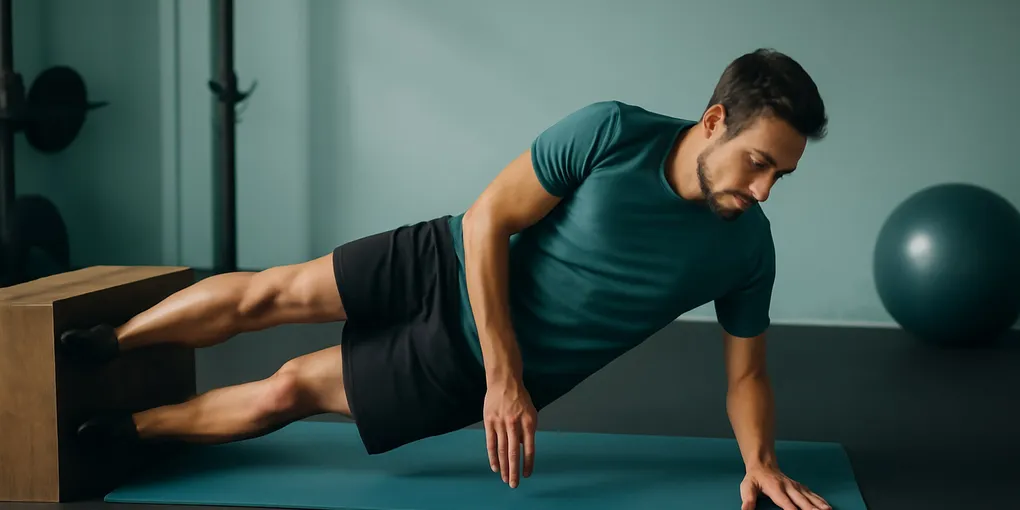
Copenhagen Plank Protocol: Build Adductors Without Turning Groin Pain Into a Project
ProtocolQuick picks
REP Fitness or Yes4All flat bench style support
★ Top pick- Best for: Home lifters who need a stable knee-height support for shortened Copenhagen plank progressions
- Check first: Bench must be stable enough that it will not slide or tip during side support
Manduka or Gaiam exercise mat style pad
- Best for: Protecting the elbow and side knee during early adductor progressions
- Check first: A mat does not fix excessive volume or poor position
Bottom line
The Copenhagen plank is useful because it trains the adductors hard with minimal equipment. It is also easy to overdo. The full version, with the top foot on a bench and the body suspended sideways, is not a beginner entry point. Start shorter, slower, and less often than your ego wants.
For home training, you need a stable support and a comfortable floor contact. Use a simple See current flat home-gym bench prices on Amazon plus a See current exercise mat prices on Amazon setup. Do not buy a special device before you have proven you can tolerate the basic progression.
Quick picks
- Stable support: Search Amazon for a flat home-gym bench if your current chair or box slides during side support.
- Floor comfort: Search Amazon for a Manduka or Gaiam exercise mat if elbow or knee pressure limits the short-lever version.
- No-equipment start: use a stable couch edge only if it cannot tip, slide, or force the knee into a painful angle.
Why adductor strength matters
Groin injuries are common in sports with sprinting, cutting, kicking, skating, and rapid changes of direction. Research in soccer and field-sport settings has found that adductor strengthening programs, including Copenhagen-style exercises, can reduce groin problems when they are programmed progressively. That does not mean one plank fixes every hip or groin issue. It means adductors deserve planned strength work, not random stretching only.
Adductors also help control the pelvis during lunges, lateral work, and single-leg tasks. If side planks are easy but lateral lunges feel unstable, a Copenhagen progression may expose a useful weakness.
Choose the right starting level
Start with the short-lever version. Put the top knee, not the foot, on a stable bench. Support yourself on the forearm. Lift the hips until the body forms a straight line, then hold for a short count. The bottom leg can stay on the floor at first.
Progress only when the next-day response is boring. Mild muscle soreness is expected. Pinching, sharp groin pain, limping, or pain that changes running mechanics is not a useful training signal.
Four-week protocol
Week 1: two sessions. Short-lever knee-supported holds, 2 sets of 8 to 12 seconds per side. Keep effort around 6/10.
Week 2: two sessions. Short-lever holds, 2 to 3 sets of 10 to 15 seconds per side. Add a slow lower only if symptoms stay quiet.
Week 3: two sessions. Longer lever with the lower leg lightly assisting, 2 sets of 8 to 12 seconds per side. Do not jump straight to foot-only support if the adductors cramp.
Week 4: two sessions. Choose either longer holds or harder leverage, not both. Field-sport athletes can place this after warm-up strength work or at the end of training, but not immediately before maximal sprinting if it leaves the groin fatigued.
Practical score
The Copenhagen plank progression scores 8.5/10 for adductor strength when programmed conservatively. Exercise specificity is 30% of the score, evidence fit for field-sport groin prevention 25%, equipment simplicity 20%, progression control 15%, and downside management 10%.
The score drops when people copy the hardest social-media version first. A full Copenhagen plank is a late progression, not the diagnostic test.
Setup details that prevent bad reps
Use a bench or box that will not slide. Put the support near knee height at first. Keep the elbow under the shoulder. Keep ribs down and hips stacked. If the top hip rolls backward, regress. If the support digs painfully into the inside knee, add a folded towel or choose a softer edge.
Breathing matters because breath-holding can hide poor position. Use short holds that let you breathe and keep the pelvis level. Stop the set before shaking turns into twisting.
How to combine it with other training
Pair Copenhagen work with lateral lunges, split squats, and hamstring strength over the week. Do not stack it after maximal sprinting, heavy adductor machine work, and hard cutting drills on the same day at first. If you play soccer, hockey, basketball, or tennis, the goal is durable adductors for sport, not winning a plank contest.
If you are returning from a groin strain, follow a clinician’s plan. Copenhagen variations can appear in return-to-sport programs, but timing depends on pain, strength testing, running exposure, and sport demands.
Where to place it in a lower-body week
Use Copenhagen work on days when adductor fatigue will not interfere with speed, cutting, or heavy squats. For a recreational lifter, that usually means after the main lift or on a separate accessory day. For field-sport athletes, it often fits after practice or strength work, not immediately before repeated sprints.
Pair it with exercises that train the surrounding system. Split squats, lateral lunges, hamstring curls, and calf work all affect how the groin handles sport. If calf capacity is also a gap, our eccentric calf raise protocol shows the same principle: pick the right progression before chasing the hardest variation.
Equipment checks
A bench should be heavy enough that it does not slide when the top leg presses down and inward. A slick vinyl bench on a smooth floor is a bad setup. Put the bench against a rack upright or wall if needed, but do not wedge yourself into a position that twists the knee.
The mat is for the elbow and bottom knee, not for making the exercise unstable. Thick soft mats can let the shoulder sink and make the side plank sloppy. Use enough padding for comfort while keeping the forearm solid.
Copenhagen Plank FAQ
How often should I do Copenhagen planks?
Twice weekly is enough for most lifters and recreational athletes at first. More frequent work can be useful later, but only if soreness and sport performance stay normal.
Can I do Copenhagen planks on a chair?
Only if the chair is heavy, stable, and cannot tip or slide. A flat bench or sturdy plyo box is safer than a light kitchen chair.
Are Copenhagen planks just for soccer players?
No. They are especially studied in field sports, but lifters, runners, skaters, and court-sport athletes can use the progression when adductor strength is a relevant gap.
Sources
- Harøy et al., British Journal of Sports Medicine: Adductor strengthening programme and groin problems in football players
- Ishøi et al., Scandinavian Journal of Medicine and Science in Sports: Copenhagen adduction exercise increases eccentric hip adduction strength
- American Academy of Orthopaedic Surgeons: Muscle strains in the thigh
Frequently Asked Questions
- Adductor-strength programs that include Copenhagen-style progressions have evidence in field-sport populations, but progression and symptom response matter.
- No. Most beginners should start with the knee on a bench or a short lever before trying a full foot-supported version.
- Sharp pain, worsening pain, or pain that changes running or cutting mechanics is a reason to stop and get professional assessment.