Nordic Curl Regression Protocol: Build Hamstring Strength Without Diving Face-First
ProtocolQuick picks
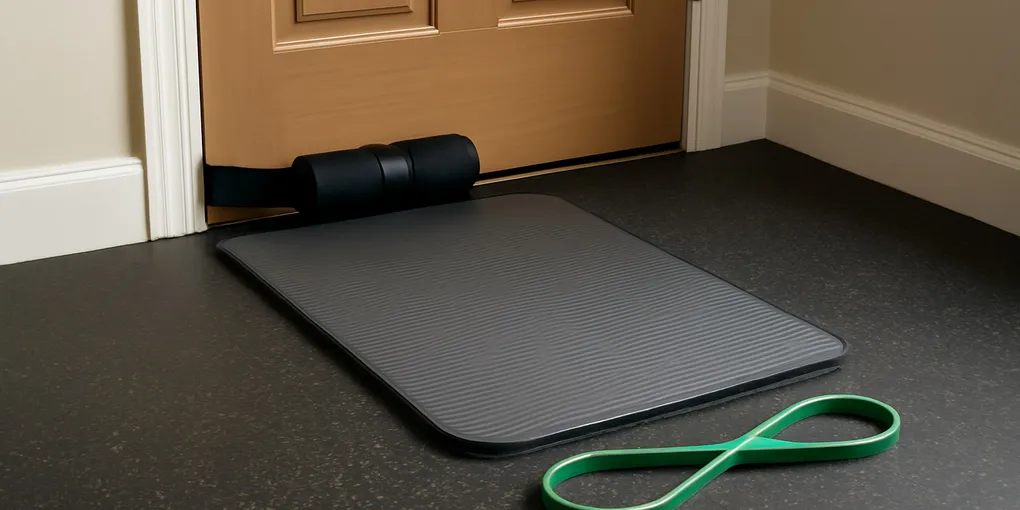
Nordic curl door strap
★ Top pick Best compact setup- Best Use: Apartment and home users who need ankle anchoring without a bench
- Caveat: Door strength and anchor direction must be checked before loading
Nordic hamstring curl bench
Best dedicated option- Best Use: Garage gyms and athletes who will train Nordics regularly
- Caveat: Takes space and is overkill for occasional use
Thick exercise mat
Best knee comfort add-on- Best Use: Knee padding for floor-based regressions
- Caveat: Too-soft foam can make the body wobble
Nordic curls are famous because they look simple and feel impossible. Kneel down, anchor the ankles, keep the hips extended, and lower under control. For many beginners, the first attempt becomes a fast fall. A regression protocol solves that by training the hamstrings eccentrically without pretending you already own the full movement.
For a compact setup, search Amazon for Nordic curl door straps. If you have a garage gym and will use the exercise weekly, search Amazon for Nordic hamstring benches. If your knees hate hard floors, search Amazon for thick exercise mats. For a different low-cost posterior-chain tool, see our exercise slider core protocol.
Quick picks
- Small apartment: Search Amazon for Nordic curl door straps and test the door anchor conservatively.
- Garage gym: Search Amazon for Nordic hamstring benches if the movement will stay in your plan.
- Knee-sensitive floor work: Search Amazon for thick exercise mats with enough firmness to avoid wobble.
Practical score for the protocol
| Factor | Weight | Score | Rationale |
|---|---|---|---|
| Research | 30% | 7.4 | Nordic hamstring exercise has stronger sport-injury-prevention evidence than many accessory lifts. |
| Evidence Quality | 25% | 7.0 | Reviews support hamstring injury risk reduction in field-sport settings, though home users still need conservative progression. |
| Value | 20% | 8.0 | A strap and mat can create a serious hamstring stimulus cheaply. |
| User Signals | 15% | 6.0 | Soreness, anchor confidence, and knee comfort decide adherence. |
| Transparency | 10% | 6.5 | Good equipment listings state strap length, anchor type, padding, and weight limits. |
| Composite | 100% | 7.1 | High-value strength work when progressed slowly and anchored securely. |
Why regressions matter
The Nordic hamstring exercise is demanding because the hamstrings fight knee extension while the body acts like a long lever. That eccentric load is the point, but it is also why beginners get sore. A full-range, unassisted Nordic is not a warm-up drill for most people.
A 2019 systematic review and meta-analysis in the British Journal of Sports Medicine found that programs including the Nordic hamstring exercise reduced hamstring injury rates in athletes (PMID: 30808663, https://pubmed.ncbi.nlm.nih.gov/30808663/). That does not mean every home trainee should max out Nordics. It means the movement is worth respecting enough to progress deliberately.
The 4-week starting protocol
Week 1 is setup and tension practice. Kneel on a firm pad, anchor the ankles, squeeze the glutes lightly, and lean forward only a few inches while keeping the ribs and pelvis stacked. Do 3 sets of 3 to 5 short-range lowers. Use your hands on a box, bench, or wall to catch yourself early. The goal is hamstring tension without panic.
Week 2 adds range. Lower for two to three seconds until you need your hands, then push back up with assistance. Do 3 sets of 3. Stop with two clean reps in reserve. If soreness from the previous session affects walking or stairs, repeat Week 1 instead.
Week 3 adds band or hand-assisted control. Loop a band around the chest from an overhead anchor if you have a safe setup, or place a box in front so the hands can reduce load. Lower farther, catch softly, and reset. Do 3 to 4 sets of 3.
Week 4 keeps the volume low and improves quality. Try one slower eccentric per set, then finish with easier assisted reps. Do not chase fatigue. Nordics punish ego more than most bodyweight exercises.
Anchor safety checklist
A door strap should pull against the direction that keeps the door closed, not open. Check the door, hinges, frame, and strap before every session. Avoid hollow, damaged, or lightweight doors. If the anchor shifts during a warm-up lean, stop.
A bench should hold the ankles comfortably without forcing the feet into a painful angle. Pads should contact above the heels or lower calves securely. If your knees slide forward, add a grippy mat or adjust the pad position. A partner anchor can work, but only if the partner understands that sudden release can cause a fall.
Soreness and recovery rules
Eccentric hamstring work can create delayed soreness. Mild tightness the next day is common. Sharp pain, bruising, cramping that changes gait, or soreness that worsens across sessions is not a badge of progress. Reduce range, reduce sets, or pause the protocol.
Do not place first-time Nordics two days before a race, soccer match, heavy deadlift session, or long hill run. Put them after the main workout or on a separate strength day. Warm up with easy hinges, glute bridges, and short hamstring walkouts before the first set.
Common form errors
The most common error is bending at the hips as soon as the lowering starts. A small hip angle is not dangerous, but it turns the drill into a different movement and hides whether the hamstrings can control the lever. Keep the ribs down, glutes lightly on, and torso long.
The second error is catching too late. Beginners should use the hands early and softly. A dramatic last-second catch may look athletic, but it often irritates the wrists, shoulders, or low back. Put a box or bench in front of you so the catch height is predictable.
The third error is adding volume because the first set feels fine. Nordics often feel worse 24 to 48 hours later. If you are new to them, leave the session thinking you could have done more.
Nordic curl FAQ
Can Nordic curls replace deadlifts?
No. Nordics train knee-flexion hamstring strength under a long lever. Deadlifts train hip hinge strength, back position, grip, and whole-body loading. They overlap but are not interchangeable.
Should I curl back up or only lower down?
Beginners can lower down and use the hands to return. Trying to curl up too soon often causes hip bending, cramping, or a rushed fall.
How much soreness is too much?
If soreness changes your walking, stairs, running stride, or next workout quality, the dose was too high. Repeat an easier week and keep the range shorter.
Frequently Asked Questions
- One or two short sessions per week is enough at first because eccentric hamstring work can cause strong delayed soreness.
- No. A secure strap or partner setup can work, but a bench is cleaner if you will train the movement long term.
- Start with hip-hinged isometric holds, band assistance, short-range lowers, or elevated hand support before attempting full eccentrics.