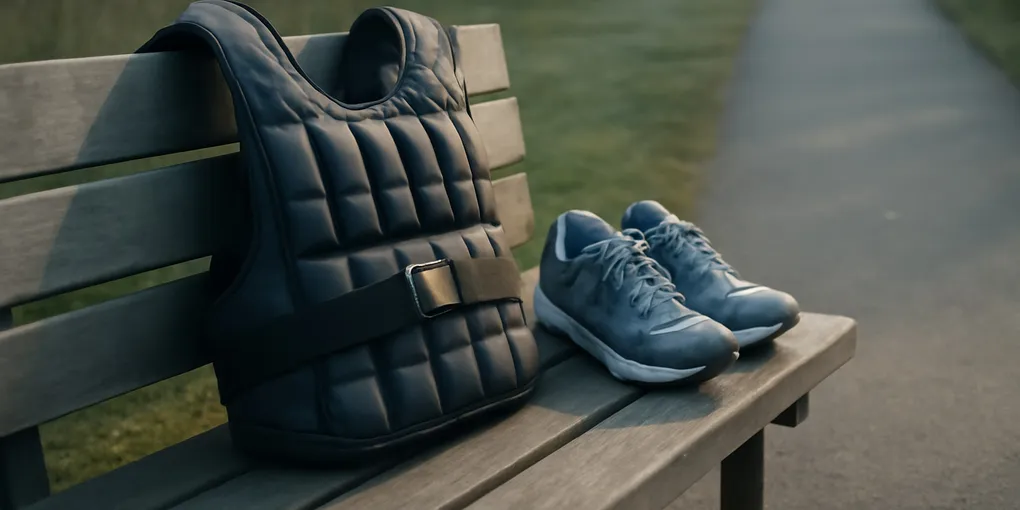
Weighted Vest Walking Protocol: How to Add Load Without Turning Walks Into a Joint Test
ProtocolQuick picks
Adjustable walking weighted vest
★ Top pick Best starting point- Why consider it: Choose a vest that can start light, sit high on the torso, and tighten enough that it does not bounce on hills.
Rucking backpack with hip belt
Best for longer outdoor walks- Why consider it: A pack with a hip belt can be more comfortable for longer walks, but it requires careful packing so weight does not swing.
Bottom line
Weighted vest walking is useful when ordinary walking no longer feels challenging but running is not the right next step. The goal is not to turn every walk into a military ruck. The goal is to add a small, stable load while keeping the gait, breathing, and joint feedback of walking intact.
For most beginners, the best first buy is to search Amazon for adjustable walking vests that can start light and stay snug. A rucking backpack with a hip belt search can make sense for longer outdoor walks, but it is easier to overload or pack poorly.
Quick picks
- Best first purchase: search Amazon for adjustable walking vests with removable small weight increments, side tightening, and a high torso fit.
- Best for longer outdoor routes: search Amazon for rucking backpacks with hip belts if you can pack weight high and close to the back.
- Skip for now: fixed heavy vests, low-slung tactical-style loads, or any setup that changes your stride during the first five minutes.
The starting setup
Start with a load you almost feel underwhelmed by: about 3 to 5 percent of body weight for many healthy adults. A 180-pound person might begin with 6 to 9 pounds, not 25. If you are smaller, new to exercise, returning from injury, or walking on hills, start below that.
The vest should sit high and close to the torso. If it bounces, rubs the neck, pulls the shoulders forward, or changes your stride, the fit is wrong or the load is too heavy. Shoes should be the same pair you already use comfortably for walking. Do not test new shoes, new hills, and new load on the same day.
A four-week protocol
Week 1: wear the vest for 10 to 15 minutes during an easy walk, twice per week. Keep the pace conversational. The test is whether your feet, knees, hips, low back, and neck feel normal during the walk and the next morning.
Week 2: extend to 15 to 20 minutes, still twice per week. If soreness feels local to joints or tendons rather than general muscular work, remove the vest for the next walk and restart lighter.
Week 3: move to 20 to 30 minutes or add a third short session, but do not increase load and frequency at the same time. If hills are part of the route, keep the load unchanged.
Week 4: increase load by the smallest available step only if the prior week felt boring, stable, and repeatable. A two-pound increase can be enough. Bigger jumps are the common mistake.
How hard should it feel?
Use breathing and posture instead of ego. The walk should feel like moderate work, not a grinding strength session. You should be able to speak in short sentences, keep your ribs stacked over your pelvis, and land without heavy foot slaps.
If your calves burn, your stride shortens dramatically, or you lean forward to fight the vest, the load is too high for that route. Weighted walking punishes small setup errors because every step repeats the same stress.
Buying details that matter
A good walking vest is adjustable, compact, and washable enough that you will actually use it. Look for small removable weights, side tightening straps, broad shoulder contact, and minimal hard edges around the ribs. Reflective trim helps if you walk early or late.
Avoid vests that put most of the load low on the belly or swing when you turn. Avoid very heavy fixed-weight vests unless you already know the exact load you tolerate. For long trail or neighborhood walks, a pack with a hip belt can distribute load better than a cheap vest, but it should be packed high and close to the back.
Who should be cautious
Skip weighted walking during an active flare of knee, hip, foot, or back pain. Be cautious if you have balance problems, dizziness, neuropathy, osteoporosis concerns, or a history of stress fractures. Pregnant users and people with cardiovascular disease should get individualized medical guidance before adding load.
Older adults should treat the vest as a balance and fall-risk decision, not only a fitness purchase. A light vest on flat ground may be reasonable for some; stairs, curbs, dogs, ice, and uneven sidewalks change the risk.
How to progress without overdoing it
Progress one variable at a time: load, duration, hills, or frequency. If you add hills, do not add weight that week. If you add a third session, keep the route flat. If you increase load, shorten the first walk with that load.
Pair the protocol with strength work if your goal is durability. Calf raises, step-ups, and basic lower-body resistance training support loaded walking better than simply making every walk heavier. For lower-impact cardio planning, see our zone 2 treadmill protocol for beginners. For recovery between harder sessions, compare this with our Nordic hamstring curl protocol.
FAQ
How heavy should a weighted vest be for walking?
Many beginners should start around 5 percent of body weight or less, then increase only if gait, knees, feet, and back feel normal after several sessions. The right starting load is the one that lets you finish the walk looking like you are still walking normally.
Is weighted vest walking better than running?
It is not better for everyone. It raises walking intensity without requiring running mechanics, but running builds different impact tolerance, speed, and cardiovascular capacity. Weighted walking is a tool, not a replacement for every kind of conditioning.
Should older adults use a weighted vest?
Some can, but fall risk, balance, osteoporosis history, vision, medications, and joint pain matter. Older adults should start very light on flat ground and ask a clinician when the risk picture is unclear.
Sources and further reading
- The CDC summarizes adult physical activity intensity and weekly movement guidance.
- A PubMed-indexed study discusses weighted vest use during exercise in older adults.
- The American College of Sports Medicine explains progressive overload and resistance-training progression principles.