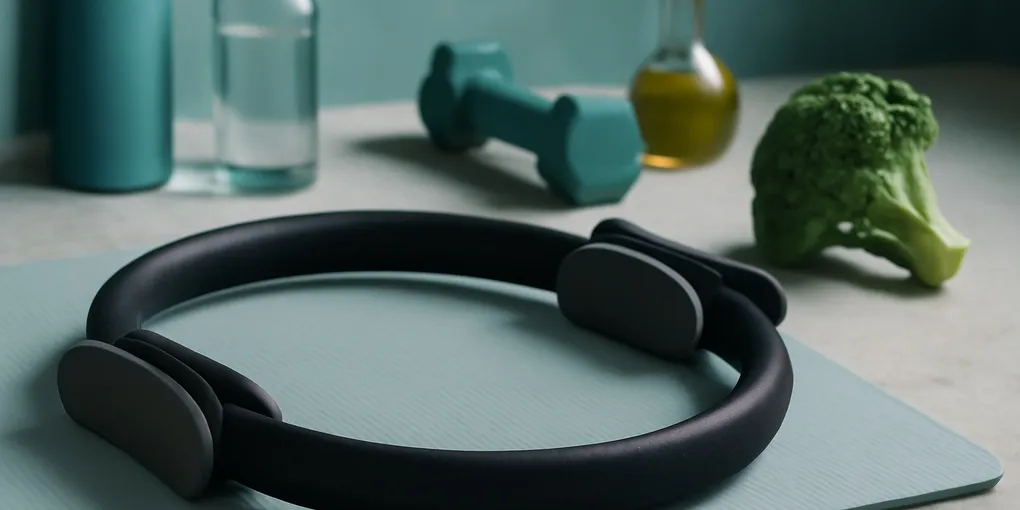
Best Pilates Rings for Home Core and Mobility: Resistance, Grip, and Real Use Cases
Buyer's GuideBalanced Body Ultra-Fit Circle-style Pilates ring
Best firm studio feelBest Use: Users who want a firmer ring for controlled inner-thigh, arm, and core work
$35-55
Quick picks
| Product | Key Specs |
|---|---|
| See price on Amazon |
|
| See price on Amazon |
|
| See price on Amazon |
|
Product availability, certifications, and retailer details can change; check the current Amazon page before buying.
Bottom line
A Pilates ring is worth buying when you want light resistance and position feedback for mat work, not when you expect it to replace a full strength setup. The right ring should compress smoothly, hold its shape, and have pads that stay comfortable between the knees, ankles, palms, or forearms.
For most home users, start with a moderate-resistance ring from a known Pilates brand instead of the cheapest plastic circle. Search Amazon for ProBody Pilates rings if value matters, search Amazon for Balanced Body Pilates rings if you want a firmer studio feel, or search Amazon for STOTT Pilates fitness circles if class-style control matters.
Quick picks for home mat work
- Search Amazon for ProBody Pilates rings if you are new to ring work and want moderate resistance for short mat sessions.
- Search Amazon for Balanced Body Pilates rings if you have Pilates experience and want a firmer squeeze.
- Search Amazon for STOTT Pilates fitness circles if you follow studio-style classes and want predictable spring tension.
If your goal is heavier progressive loading, compare this with our adjustable dumbbell guide. If the main goal is shoulder warm-up work, our resistance band shoulder guide is a better match.
What makes a good Pilates ring
Spring feel is the first buying criterion. A ring should return to shape after repeated compressions and should not fold sharply at one point. If it collapses unevenly, the exercise becomes a fight with the tool instead of a controlled squeeze.
Pad comfort matters because many useful drills place the ring between bony or sensitive areas. Look for wide, softly textured pads that do not rotate easily. Narrow hard pads can bruise the knees or encourage users to grip with the hands instead of controlling the movement.
Diameter affects how natural the drill feels. Around 14 inches works for many adults, but smaller users may feel crowded in arm drills and over-stretched in inner-thigh drills. A ring that is too large can force the hips or shoulders into awkward positions before the exercise even starts.
How the picks score for real home use
| Buying question | Score | What it means for Pilates rings |
|---|---|---|
| Exercise specificity | 6.8 | Rings are useful for Pilates cueing, adductor work, and light resistance, not maximal strength. |
| Evidence confidence | 5.8 | Pilates-style exercise has supportive mobility and function data, but ring-specific trials are limited. |
| Value | 7.4 | A durable ring is inexpensive and easy to store. |
| Repeat-use odds | 6.7 | It gets used when paired with a short class or written sequence. |
| Listing clarity | 6.2 | Size and brand are visible, but exact resistance is often vague. |
| Overall fit | 6.6 | A practical accessory for controlled mat work when expectations stay modest. |
Evidence context
Pilates research generally focuses on supervised exercise programs rather than one accessory. Reviews report potential benefits for balance, flexibility, pain, and function in selected populations, but study quality and program design vary (Complementary Therapies in Medicine review: https://pubmed.ncbi.nlm.nih.gov/22938710/). That supports treating the ring as a cueing and exercise tool, not as a medically proven device.
For resistance training, the American College of Sports Medicine position stand emphasizes progressive overload, technique, and appropriate intensity for strength development (https://pubmed.ncbi.nlm.nih.gov/19204579/). A Pilates ring can support endurance and control, but it cannot provide the loading range of dumbbells, cables, or machines.
Best uses by body area
For inner thighs, place the pads just above the knees and use small controlled squeezes while lying on the back or sitting tall. Stop before the low back arches or the hips roll. The goal is smooth pressure, not crushing the ring.
For arms and chest, press the ring between the palms with shoulders relaxed and ribs down. If the neck tightens, reduce pressure. For many people, this is a posture and control drill rather than a chest-strength exercise.
For core work, the ring can give tactile feedback during dead bugs, bridges, and side-lying drills. Use it to make the movement quieter and more symmetrical. If it makes breathing worse or pushes you into bracing hard, simplify the exercise.
Common buying mistakes
The first mistake is choosing the stiffest ring because it seems more serious. Too much resistance often turns a precise Pilates drill into groin strain or shoulder shrugging. Beginners usually need smoother, easier compression.
The second mistake is buying a ring with tiny pads. The pad is the contact point. If it slides, pinches, or rotates, the ring will stay in a closet.
The third mistake is expecting one ring to solve pain. Hip, back, pelvic-floor, or shoulder symptoms need careful exercise selection. Use the ring only in pain-free ranges and get help if symptoms persist.
Product-by-product buying notes
Search Amazon for ProBody Pilates rings if this is your first ring and you want the safest value path. The useful listing details are pad width, ring diameter, return policy, and recent reviews that mention whether the ring keeps its shape. This is the best fit for short beginner classes, five-minute adductor finishers, and gentle upper-body press drills.
Search Amazon for Balanced Body Pilates rings if you already know you like ring work and want firmer feedback. Firmer rings make sense for experienced users who can keep the pelvis still during bridge squeezes and avoid shrugging during palm presses. They are less forgiving for users who tend to turn every cue into a max-effort squeeze.
Search Amazon for STOTT Pilates fitness circles if you follow class videos or studio programming and want predictable feel. This category is most attractive when the ring will be part of a broader routine with mat, band, and bodyweight work rather than a standalone gadget.
Three sample ways to use the ring
For a beginner core session, use the ring as a pressure cue rather than a strength test. Lie on your back with knees bent, place the ring between the thighs, and perform 2 sets of 8 slow squeezes while breathing normally. Then hold the ring between the palms during dead bugs and press only hard enough to keep the shoulders relaxed. Stop if the low back arches.
For hip-control work, place the ring above the knees during bridges and use a gentle inward squeeze before lifting. The purpose is to keep the hips organized, not to exhaust the inner thighs. If the hamstrings cramp, move the feet closer, reduce the squeeze, or switch to regular bridges.
For desk-break mobility, sit tall and press the ring lightly between the palms for 5 slow breaths, then between the forearms for 5 more. This can remind the ribs and shoulders to settle, but it should not create neck tension. If the drill feels like a trap workout, use less pressure.
What to avoid in listings
Avoid rings that advertise extreme transformation, waist slimming, or medical rehab promises without describing the actual build. A useful listing shows diameter, materials, pad design, and return terms. A weak listing hides those details behind lifestyle claims.
Avoid rings with slick plastic pads if you plan to use shorts or bare legs. Slipping pads cause users to clamp harder, which defeats the purpose of controlled Pilates work. Also avoid bundles where the ring is clearly an afterthought next to unrelated bands, sliders, or generic accessories unless the price is low enough that the ring quality still makes sense.
Avoid buying a ring only because a video shows advanced moves. Many impressive ring exercises depend on trunk control, shoulder mobility, and instructor feedback. Your first purchase should make the basic drills feel cleaner.
Return-window test
During the first week, run the exact three practical drills you bought the ring for at home this week: one inner-thigh drill, one upper-body press, and one core-control drill. Keep the pressure gentle and judge the product, not your strength. The ring should stay centered, the pads should feel secure, and the spring should return evenly after each rep.
Return it if the pads twist, the ring creaks or flattens, the resistance forces you to hold your breath, or the diameter makes basic drills awkward. Keep it if it makes short mat sessions easier to repeat and does not require pain, pinching, or maximal effort to feel useful.
Repeat one drill in leggings and one with bare forearms to check pad grip against different surfaces. The ring should remain centered without a harder squeeze, and the handles should not rotate when pressure changes gradually.
FAQ
What resistance should a beginner Pilates ring have?
Most beginners should start with moderate resistance that compresses smoothly without shaking or pinching. A very stiff ring can make hip and shoulder drills sloppy.
Is a Pilates ring useful for strength training?
It is useful for light resistance, positioning feedback, and controlled endurance work, but it does not replace progressive dumbbell or machine strength training.
What size Pilates ring should I buy?
Many adult rings are around 14 inches. Shorter users or people using the ring mostly between the knees may prefer a slightly smaller, softer-feeling model.
When should I skip Pilates ring exercises?
Skip or modify drills that cause sharp hip, groin, shoulder, pelvic-floor, or low-back symptoms, and ask a clinician or qualified instructor for form help.