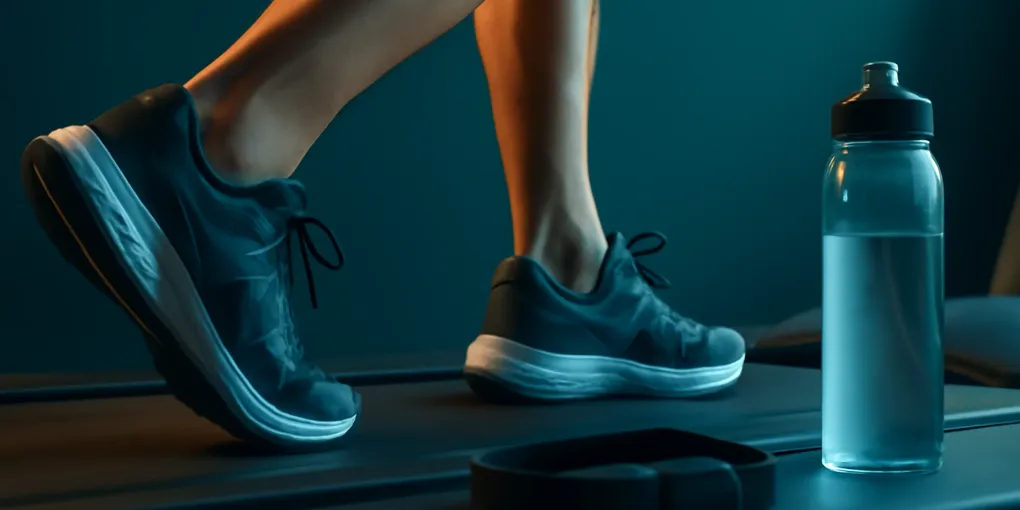
Incline Treadmill Walking Protocol: Zone 2 Cardio Without Turning Every Walk Into a Grind
ProtocolQuick picks
Treadmill Safety Clip Replacement
★ Top pick Small safety check- Best Use: Replacing a missing treadmill stop key before regular incline sessions
- Caveat: Confirm compatibility with your treadmill model
Polar H10 Heart Rate Sensor
Optional heart-rate check- Best Use: Users who want steadier heart-rate readings than wrist sensors during treadmill walks
- Caveat: The talk test and perceived effort still matter
Bottom line
Incline treadmill walking is a useful zone 2 option because it raises effort without requiring running impact. The protocol is simple: choose a speed you can walk with normal mechanics, raise grade until conversation becomes short but possible, and hold that effort without gripping the rails. If your treadmill is missing the stop key, replace it before routine sessions with a treadmill safety clip search. If heart-rate drift matters to you, compare a Search Amazon for Polar H10 Heart Rate Sensor, but do not let a device override breathing, posture, or symptoms.
This pairs well with our heart rate variability training readiness guide because readiness can decide when to shorten the session.
Quick picks before you start
- Missing stop key: Search Amazon for a treadmill safety clip replacement matched to your treadmill model before regular incline walking.
- Optional heart-rate tracking: Search Amazon for Polar H10 Heart Rate Sensor if wrist readings jump around during arm swing.
- No gadget required: use the talk test, normal arm swing, and next-day calf feedback as the main protocol controls.
The 30-minute starter protocol
Use this twice per week for two weeks before adding time.
- Warm up for 5 minutes at 0 to 2 percent grade.
- Raise incline to 3 to 6 percent and keep speed modest.
- Use the talk test: you should speak in short sentences, not sing, and not gasp.
- Hold 15 to 20 minutes at that effort.
- Cool down for 5 minutes at low grade.
- Record speed, incline, heart rate if available, and how your calves and feet feel the next morning.
If you need to hold the side rails to keep pace, the session is too hard. Lower grade or speed until your arms can swing naturally.
How to choose speed and grade
Speed determines coordination demand. Grade determines climbing load. Most beginners do better with a moderate speed and gentle grade than with a fast belt and rail-gripping. Start around a pace you can walk outside comfortably, then add incline gradually.
A useful starting range is 2.5 to 3.5 mph at 3 to 6 percent grade for many adults, but body size, stride, treadmill calibration, and fitness change the answer. The correct setting is the one that keeps effort steady without ankle, calf, or low-back complaints.
Zone 2 cues without pretending precision
Zone 2 is often described as moderate aerobic work below heavy breathing. Lab testing can define thresholds, but most home users need practical cues. Use three checks:
- You can breathe through the nose part of the time or speak in short phrases.
- Effort feels sustainable for 30 to 60 minutes if needed.
- Heart rate rises gradually instead of spiking early.
If your heart rate climbs steadily at the same speed and grade, shorten the session or reduce grade. Heat, dehydration, sleep loss, and caffeine can all move the number.
Progression plan
Progress one variable at a time. Add five minutes to the work block before adding incline. When you can complete 30 minutes comfortably, raise grade by 1 percent or speed by a small increment. Keep at least one easy session between harder incline days.
Calves and feet often limit incline walking before the heart does. If your Achilles tendon is sore the next morning, reduce grade and review our eccentric heel drop protocol only if you are dealing with a longer-term calf capacity plan, not acute pain.
Common form mistakes
The biggest mistake is hanging from the handles. That changes the workload, hides fatigue, and can irritate shoulders. Light fingertip contact for balance is different from unloading body weight through the rails.
The second mistake is overstriding. Keep steps short enough that the foot lands under you, not far ahead. The third mistake is chasing calorie numbers. Treadmill calorie estimates are rough, and grade calibration varies.
Safety and medical boundaries
Stop if you develop chest pain, faintness, unusual shortness of breath, new neurological symptoms, or sharp joint pain. People with known cardiovascular disease, uncontrolled hypertension, diabetic neuropathy, balance problems, or recent injury should ask a clinician about safe intensity and footwear before adding incline.
Incline walking can be low impact, but it is not automatically low stress. The slope increases calf, Achilles, and forefoot demand.
Practical score
| Factor | Strong setup | Watch-out |
|---|---|---|
| Intensity control | Talk test plus optional heart-rate trend | Chasing a generic zone number |
| Joint load | Lower impact than running | Calf and Achilles load rises with grade |
| Equipment | Stop key present, belt stable, shoes secure | Missing safety clip or rail-gripping |
| Progression | Time before grade before speed | Adding hill, speed, and duration together |
Incline treadmill FAQ
What incline should I use for zone 2 walking?
Use the lowest incline that creates moderate, sustainable breathing at a normal walking stride. For many people that starts around 3 to 6 percent, but the talk test matters more than the number.
Is incline walking better than running?
It is different. Incline walking can deliver aerobic work with less impact, while running better trains running-specific mechanics and impact tolerance.
Should I hold the treadmill rails?
No, not for normal training. If you need the rails to continue, reduce speed or grade. Use the safety clip instead of leaning on the console.
How often should I do incline treadmill walking?
Two or three sessions per week works for many people. Add frequency only if calves, feet, and overall fatigue stay quiet.
Sources
- U.S. Department of Health and Human Services. Physical Activity Guidelines for Americans. https://health.gov/sites/default/files/2019-09/Physical_Activity_Guidelines_2nd_edition.pdf
- American College of Sports Medicine. ACSM Guidelines for Exercise Testing and Prescription summary resources. https://www.acsm.org/education-resources/books/guidelines-exercise-testing-prescription
- American Heart Association. Target Heart Rates Chart. https://www.heart.org/en/healthy-living/fitness/fitness-basics/target-heart-rates
- Foster C, Porcari JP, Anderson J, et al. The talk test as a marker of exercise training intensity. https://pubmed.ncbi.nlm.nih.gov/17414804/